-
![]()
John Phillips / Life Magazine via Getty / … The Supply of Disinformation Will Soon Be Infinite
Disinformation campaigns used to require a lot of human effort, but artificial intelligence will take them to a whole new level.
-
![]()
AP / The Atlantic Do You Speak Fox?
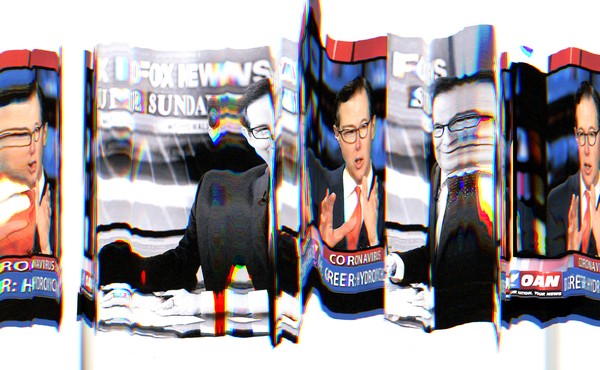
How Donald Trump’s favorite news source became a language
-
-
![]()
Sarah Silbiger / Bloomberg / Getty The Media Learned Nothing From 2016
The press hasn’t broken its most destructive habits when it comes to covering Donald Trump.
-
![]()
Aaron Coleman for Kansas / Facebook / The … The Unending Influence of ‘Boys Will Be Boys’
The saga of 19-year-old Aaron Coleman’s political candidacy has turned into a too-simple parable about forgiving youthful indiscretion.
-
![]()
Arsh Raziuddin / The Atlantic Pop Culture Failed to Imagine Kamala Harris
Her candidacy meets a culture that, too often, still doesn’t know what to make of women who seek to lead.
-
![]()
Chien-Chi Chang / Magnum A Newsroom at the Edge of Autocracy
The South China Morning Post is arguably the world’s most important newspaper—for what it tells us about media freedoms as China’s power grows.
-
![]()
The Atlantic Before the Media Treated Him as a Threat, They Treated Him as a Joke
Roy Den Hollander, now suspected of murder, was once a mini-celebrity—a figure whose misogyny was dismissed as entertainment.
-
-
![]()
Shutterstock / The Atlantic How Americans Became Part of the Trump Family
The president’s dark emotional inheritance has become the nation’s.
-
![]()
The Atlantic The Constitution Doesn’t Work Without Local News
American democracy requires informed citizens. But in many places, the industry responsible is withering before our eyes.
-
![]()
Bettmann / Getty A Deeply Provincial View of Free Speech
Many prominent writers and thinkers seem invested in the notion that simply facing strong public criticism is a threat to free speech.
-
![]()
Shutterstock; Paul Spella / The Atlantic The Threat to American Democracy That Has Nothing to Do With Trump
The disappearance of local news is a slow-moving disaster.
-
![]()
KangHee Kim Americans Are Living in an Alternate History
As the pandemic has raged on, popular culture has found new ways to ask an old question: What could have been instead?
-
-
![]()
Shutterstock / Paul Spella / The Atlantic The Table Stays White
A national discussion has erupted, again, over racism in food media. But that discussion is one part of the problem.
-
![]()
The Mainstream Media Won’t Tell You This
Peddle misinformation. Cry “conspiracy” when no one else reports it. Repeat.
-
![]()
Lisa Maree Williams / Getty / The Atlantic The Headlines That Are Covering Up Police Violence
News reports often use euphemistic phrases that fail to engage the complex realities of the recent protests.
-
![]()
Scott Olson / Getty Don’t Fall for the ‘Chaos’ Theory of the Protests
By invoking the word yesterday, Trump erased the purpose of demonstrators across the country. The media should not follow suit.
-
![]()
Getty / AP CNN Is Picking Ratings Over Ethics
Instead of pressing New York Governor Andrew Cuomo for answers, the cable network had his younger sibling ask him questions.
-
-
![]()
Chad Wys Trump’s Favorite TV Network Is Post-parody
One America News is the straight truth for Trump fans, and completely surreal for everyone else.
-
![]()
Getty / The Atlantic How Uncertainty Became a Weapon in the Tara Reade Story
The treatment of her sexual-assault claim about Joe Biden has revealed a cultural impulse to take refuge in easy absolutes.
-
![]()
Mark Kolbe / Getty Quarantine Could Change How Americans Think of Incarceration
Nationwide forced isolation, along with media coverage of the pandemic’s toll in U.S. jails and prisons, could shift public perceptions of carceral punishment.