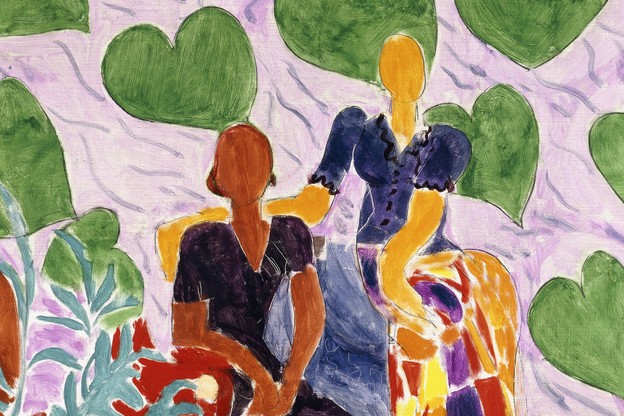
Is Cohabitation the Feminist Future?
Stories about women living together are proliferating—and offering alternative visions to the nuclear family.
Introducing The Atlantic’s expanded books coverage: essays, criticism, fiction, poetry, and recommendations from our writers and editors
Stories about women living together are proliferating—and offering alternative visions to the nuclear family.

A new biography brings the late photographer’s relationship with the artist Paul Thek to vivid life.

We’ve had Henry David Thoreau the environmentalist, the libertarian, the life coach. To understand his influence, think of him first as a dissident.

A minimally speaking autistic man just wrote a best-selling book. Or did he?

Testing has become so advanced that doctors now miss important elements of diagnosis.
Each is animated by the author’s love—for their subject, for language, and for pushing the boundaries of what the genre can do.

These six books demand discussion—with a pal, a date, or a book club.

Each of these titles will widen your perspective, offering you original insight and vision.

These titles are worth picking up, even if you have only a moment to spare.

Our culture editors’ weekly guide to the best in books.
A short story

A short story

A short story

A short story

How did the concept become the solution to society’s most deeply entrenched problems?

At night, she worked on her novels. By day, as an editor at Random House, she championed a new generation of writers.

Literature is often pushed on allegedly reluctant men as a machine for empathy. I read it for a different reason.

How did freedom become synonymous with having lots of options?

A poem

In Pip Adam’s extraordinary, humane book Audition, the stars are both a dystopian place and a site of uncharted possibility.

After I finished college, Leslie Jamison’s The Empathy Exams won my allegiance immediately and forever.

In her new book, Murderland, Caroline Fraser argues that the rise of these criminals has deep roots in the release of industrial waste.

How Richard Ellmann made James Joyce a hero to generations of readers and scholars

A poem