Glyn Maxwell: Breath and Daylight (June 14, 2001)
John DeStefano talks with the poet and playwright Glyn Maxwell—author of Time's Fool and The Breakage—about Auden, Frost, and America's feud with form.
James Fallows: The Soul of a New Flying Machine (May 25, 2001)
James Fallows, the author of Free Flight, argues that the next generation of small planes could usher in a new age of travel.
Nicholson Baker: The Gutenberg Purge (May 10, 2001)
A conversation with the novelist Nicholson Baker, whose latest book, Double Fold: Libraries and the Assault on Paper, makes the case for old news and the long shelf life of the printed page.
Robert Sapolsky: Of Monkeys and Men (April 25, 2001)
The author of A Primate's Memoir talks about his years as a member of a troop of Serengeti baboons.
A. L. Kennedy: Spasms of Grace (March 29, 2001)
In On Bullfighting, A. L. Kennedy describes the "death, transcendence, immortality, joy, pain, isolation and fear" that is the Spanish corrida.
Trezza Azzopardi: Out of Hiding (February 1, 2001)
A conversation with the author of The Hiding Place, a dark debut novel that casts new light on a province and a people.
Louise Erdrich: An Emissary of the Between-World (January 17, 2001)
An interview with the author of
The Atlantic's February short story, a writer who practices fiction in the "margin where cultures mix and collide."
Charles Simic: Seeing Things (January 10, 2001)
"Images, images, images"—for the Belgrade-born poet Charles Simic, they're the story of his life. Simic talks with Eric McHenry about his new memoir, A Fly in the Soup.
More on books in Atlantic Unbound and The Atlantic Monthly.
Atlantic Unbound | August 1, 2001
interviews
In A Cold Case Philip Gourevitch tells the story of three men from three very different moral universes, linked by a decades-old crime
.....
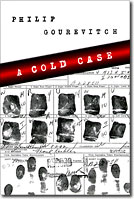
A Cold Case
by Philip Gourevitch
Farrar, Straus, & Giroux
200 pages, $22.00
n February 18, 1970, a former juvenile offender named Frankie Koehler got into an argument with two men in a New York City bar. The confrontation escalated when Koehler spit into one of the men's faces, and a fistfight ensued, leaving Koehler beaten up on the sidewalk. Afterward he made conciliatory overtures and was invited to one of the men's apartments to talk things over. There he shot both men dead at point-blank range and then vanished.
After several weeks of intensive searching, the police shifted their focus to
other investigations. And in 1992, having made no significant headway in the
intervening decades, they officially closed the case, registering Koehler as
presumed dead.
Five years later the Manhattan district attorney's chief of investigations—a man named Andy Rosenzweig who had been a boyhood friend of one of the slain men—passed by his friend's old restaurant and was suddenly reminded of the murder. He asked the police what had become of the investigation. When he was told that the case had been abandoned, he resolved to pursue it himself.
Within months, Rosenzweig and his deputies had managed to trace Koehler to a
small town near San Francisco, where he was living under an assumed name. Koehler got wind of the investigation and attempted to flee back to New York, but an FBI agent who had been helping Rosenzweig from California tipped the investigator off, and on July 30, 1997, one of Rosenzweig's men arrested Koehler at Penn Station as he disembarked from a train. In May, 1999, Koehler was sentenced by the New York Supreme Court to six and a half to thirteen years in prison, with eligibility for parole in 2003.
That same spring, the New Yorker writer Philip Gourevitch first became
acquainted with Rosenzweig and learned of the case. Intrigued both by
Rosenzweig himself and by his tale of the investigation, Gourevitch spent hours
with him, discussing his background and career, and his pursuit of
the fugitive. Seeking some understanding of the murderer's perspective,
Gourevitch then began meeting with Koehler as well, visiting him in prison to
discuss his life and crimes. Finally, Gourevitch talked also with Koehler's
defense lawyer, Murray Richman, a man known for consorting with and
successfully defending prominent gangsters.
The result of Gourevitch's own investigation into the story is A Cold
Case, published this month by Farrar, Straus, & Giroux. Gourevitch
details the Koehler saga, combining elements of suspense-thriller storytelling
(in his descriptions of Rosenzweig slowly but surely closing in on Koehler)
with more detached consideration of the drama and its actors. Rosenzweig,
Koehler, and Richman, we learn, are all native New Yorkers from working-class
backgrounds, now in their fifties or sixties. But there the similarities end.
Rosenzweig is a dedicated investigator with a serious demeanor who
cannot abide corruption or wrong-doing ("Right is right," he likes to say);
Koehler is a personable, intelligent man who happens to use deadly violence
when it suits him; and Richman is a brash, fast-talking lawyer who relishes
using the legal system to the advantage of his criminal clients because, he
believes, even murderers and rapists have their redeeming qualities—and
besides, the clients he works with pay unusually well.
From its inscription ("for the girl") to its gritty black-and-white photographs
and tough, streetwise characters, the book conjures a noir-ish
atmosphere straight out of a Dashiell Hammett novel or movie. But A Cold
Case is neither a simple action story nor a vehicle for the expounding of
theories on crime and punishment. Rather, in Gourevitch's telling, the case
serves as a kind of prism through which three powerful personalities and their
peculiar takes on morality and murder are thrown into relief.
Philip Gourevitch is a staff writer at The New Yorker. His first book,
We Wish to Inform You That Tomorrow We Will Be Killed With Our Families (1998) addressed the Rwandan genocide, in which more than 800,000 members
of that country's ethnic minority group were murdered by the majority. The book
won both the National Book Critics Circle Award and The Los Angeles Times Book Prize.
Gourevitch recently spoke with me on the telephone from New York City.
—Sage Stossel
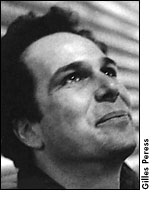
Philip Gourevitch
What led you to the story of Andy Rosenzweig and Frank Koehler?
I was in New York, looking for a good New York story, and a cousin of mine who
works at the D.A.'s office told me about the chief of investigations there,
Andy Rosenzweig, retiring to open a bookstore. He suggested that Rosenzweig
might be somebody I would enjoy talking to. So I went to see him with the
thought in mind that perhaps this could be a Talk of the Town piece—a short
little curiosity about a man who'd spent his life as a cop and investigator
retiring to open a bookstore (which, by the way, is called Book 'Em). I started
talking to Rosenzweig and was asking about different things he'd done and
favorite cases, and he started telling the story of the Koehler investigation.
I was fascinated, and several months later when he had in fact retired, I went
back to him and said, "I can't get that thing out of my mind—tell me some
more." And that's how it got going.
In describing skills that qualify Rosenzweig for his work as an
investigator—"his considerable powers as a noticer: looking for trouble,
tracking leads, questioning sources"—it seems that you might just as well be
describing skills required in your own work. Did you identify with Rosenzweig
to some extent?
There's a definite connection. I was repeatedly struck as I got to
know Rosenzweig and his world, because I realized that for all the vast
differences between working as a nonfiction writer and prowling around the
streets trying to catch criminals, there was a great deal in common in the sort
of obsessive, investigative, needling, relentless nature of the work that we do—including the fact that a lot of what I had done in Rwanda was, actually,
tracking down cases, looking for perpetrators, and putting together victim
testimonies.
Was your approach to the telling of this story influenced at all by Truman
Capote's In Cold Blood, or any other literary true-crime
precedents?
To tell you the truth, I've never read In Cold Blood. So if my book was
influenced by Capote's it was only by virtue of the fact that In Cold
Blood was written before this and is in the ether.
After I wrote A Cold Case I did look at the first chapter of In Cold
Blood, because somebody had asked me something like "What?! You've never
read it?" But I didn't think Capote's book had anything to do with what I was
doing. It's a very different style of writing; it's a different purpose, a
different angle on things—altogether a very different kind of book. I
haven't read much in the way of true crime, either. I suppose if anybody's
going to complain about this book's relationship to that genre it will likely
be because it doesn't fit the conventions of a who-done-it. It's more of a
where'd-he-go. And to the extent that it's a pursuit story, the pursuit is
resolved at the halfway point of the book.
What became fascinating to me was not—Oh, they caught him, end of story, but
instead, Look what they caught; the murderer, the fugitive, a person of
unexpected fascination who has a tremendous sense of his own drama and who's
full of contradictions and self-evasions and self-deceptions. In a sense, he
reminded me of many of the murderers I ran into in Rwanda—always full of
explanations and justifications for their conduct while insisting that they
actually still do know right from wrong.
In We Wish to Inform You That Tomorrow We Will Be Killed With Our
Families you offer a significant amount of introspective first-person
editorializing. But in A Cold Case you adopt the role of a much more
detached narrator, rarely divulging your own views and responses. What was the
thinking behind this shift in approach?
When I was in Rwanda investigating this very sprawling event, there were so
many disparate stories and so many disparate aspects to it that I had to take a
very active role in shaping the story. But with A Cold Case I was
dealing with a story that was incredibly cohesive. There were these essential
characters, there was a central act, there was an arc of thirty-years' time and
a distance of coast-to-coast, but it all knit together in a remarkably tidy
way. And the voices of the actors were very clear. I ended up feeling very much
that my job in this case was to stay out of the way—to serve the story. It
didn't require me to make the connections and associations and
interpretations in the explicit way Rwanda did.
How did you respond to Koehler personally in the course of interviewing him
for the book? (Judging by the letter he sent you from prison, he seems to have
felt some sort of connection with you.)
I went to see him knowing he was a murderer. That's why I went. But I found him
to be likeable. He's a man of considerable charm. He's a seducer in a sense. He
works his charms to try and persuade you to see things his way. He's clearly
intelligent. He's unschooled and yet extremely articulate. He enjoys a good
conversation. For him it was something of a treat to have the opportunity to
sit down and talk in a quiet one-on-one way with somebody who was very
interested in him—a subject which he seems to think is of universal interest—and also just to be able to show off his intelligence and his
thoughtfulness. He has a sense of humor, but he's very gruff. He's a bit
leathery. You do have the feeling that... Well, he is a dangerous guy. He is
willing and prepared to use violence. I was glad to be meeting him in prison.
If he hadn't been openly discussing the fact that he was a murderer, would
you have picked that up?
He has an assertively coarse, tough-guy manner. But, no, he doesn't make one
think, "murderer." And that's part of what's interesting about the whole West
Coast-fugitive chapter of his life. If you met Frankie Koehler on the train, on
the street, having a cup of coffee at the next table, having a beer, at the
seashore, you might just think he was a character. You wouldn't think he was
scary, much less murderous—because most of the time he's not.
When they caught him he didn't have a meltdown—he didn't have a Raskolnikov
moment—and he didn't put on a show of remorse. He said, "Yeah I killed 'em!
I'd kill 'em again if they walked in here now." And I think it's part of the
shocker because it reminds you that there are people like that wandering around
that you just don't have a clue about.
So he's a person who happens to have a capacity both for kindness and for
murder?
Kind? I don't know about that. I think he's a guy who, if he doesn't have a
problem with you or if he's your boyfriend or your neighbor, he's nice. I don't
think he's a sadist. But he is brutal. He's really honest about his own
murderousness—perhaps even proud of it. Certainly he's as at home with his
murderousness as most of us are with the idea that we aren't murderers.
He's very comforable with the idea that he is one! It's not that he has
no shame, but it's damn close.
What did you make of his assertions that with a different background and
upbringing he might have become a better man? Do you think that's true? Or do
you think it's kind of a cop-out for him to point to his environment to justify
his behavior?
I think it's a total cop-out to blame it on his environment. He has this
unbelievable line at one point where he says something like, "Where I come
from, if you don't like somebody and they're really a scumbag, and they really
bug you, you shoot 'em." Of course that's ridiculous. There are also gentle
people who come from where he comes from, people who become humanitarians,
people who become peace-loving citizens, people who are scared of violence,
even if they have violent souls. There are plenty of people who deal with
things without shooting people. I'm looking at where he comes from out the
window of my office right now. It's Hell's Kitchen and Chelsea in Midtown.
People down there aren't shooting each other all the time, and they never were.
There were some nasty people down there in the heyday of it as a tough
neighborhood, but even so, his statement is complete nonsense. Where he comes
from is a very, very specific kind of psychic geography rather than a real
place.
The Mark Twain quote you selected to preface the book's first half seems at
odds with the Melville quote that prefaces the second half. Twain's question,
"If the desire to kill and the opportunity to kill came always together, who
would escape hanging?" seems to suggest that, under the right circumstances,
any of us might become murderers. Melville's question—"Is the rattlesnake
accountable?"—seems to suggest that murderers are born, not made. Does one
of these quotes more closely reflect your own views?
It's a little bit of both. These aren't questions about which I'm trying to say,
"This is the view from which I'm writing." I'm saying, "These are beautiful
statements of the questions that this character raises." And I don't feel
obliged to answer them. I think it's much more interesting to explore how he
plays out these questions. What was interesting to me was not, Oh my gosh, tsk,
tsk, tsk. Why would a man be so nasty? Instead I wanted to know, how do
murderers account for themselves?
Because of Koehler's advanced age at the time of his trial and the fact that
so many years had passed since the crime, Koehler was given a relatively light
prison sentence. Was justice adequately served?
From the archives:
"A Grief Like No Other" (September 1997)
Americans are fascinated by murders and murderers but not by the families of the people who are killed—an amazingly numerous group, whose members can turn only to one another for sympathy and understanding. By Eric Schlosser
No. The punishment is strikingly inadequate. Koehler succeeded in getting away
with murder—two murders—for twenty-seven years, and then he got an
extremely light sentence. He was a successful fugitive. By outliving the
evidence and the witnesses he made it very hard to build a solid case against
him.
There is a certain kind of sentimentality in American life about criminality.
And a charming guy like Koehler plays toward that—Hey look! I reformed
myself! Isn't that good enough? The answer is no. Even if he stayed out of
trouble as a fugitive, he remained a killer: he was carrying a loaded gun when
he was arrested, and he later told Rosenzweig, "I intended to use it." There are
good reasons why there's no statute of limitation on murder.
In We Wish to Inform You..., you suggest that the genocide was
perpetrated by people who believed that "honesty and truth themselves were
merely forms of artifice," and therefore that right and wrong are not absolute
values, but can be determined by whoever holds power. And in A Cold Case,
Koehler's brazen, self-aggrandizing criminal-defense lawyer says that his
motto is, "The truth is that there is no truth"— from a story by Isaac
Bashevis Singer. You point out that in Singer's story it is in fact the devil
who speaks those words. In your view is moral relativism the most reprehensible
of offenses?
I would rather say that it sure is striking how people who commit reprehensible
offenses take comfort in moral relativism. I do think a deep streak of
self-deception—a deep capacity for it—is an essential ingredient of a
criminal personality. Most criminals have no problem living with the fact that
they've committed terrible crimes. They tell themselves that what they did was
not so bad, or that the guy deserved it, or that it was self-defense.
How did you respond on a personal level to Murray Richman, Koehler's
lawyer?
Murray Richman is a fascinating man, because he's the unabashed, slightly
comic, wisecracking kind of defense lawyer who makes remarks like "I love
murder—one less witness to worry about" that are inherently offensive and
clearly outrageous, and also more than just schtick. There's something
seemingly amoral about him, but I wasn't so interested in judging (I pretty
much trust the readers to supply the judgments) as to say, Behold this
extraordinary type! Obviously not every lawyer's cut out for what Richman does.
It takes a certain type to want to do it. It's not my cup of tea. But he
is a man of great intelligence and great charm. There's something fundamentally
perverse about what he's doing. But there's also something fundamental to the
workings of justice about what he's doing. And that's, I think, a very
interesting contradiction. He's somebody who says as many things that are outrageous and offensive as he does things that make
sense and are persuasive. And so when you listen to him you feel slightly as if you're at a tennis match with your head going one way and then the other.
You describe Rosenzweig as reminiscent, both physically and temperamentally,
of Humphrey Bogart, and Koehler as "a refugee of sorts from the white, hoodlum
milieu of another time." Would you say that to some extent it was the
old-school tough-guy characters that attracted you to the story?
Definitely. One of the things that was interesting and attractive to me about
the story from the beginning was the extent to which the people involved were
fully aware of themselves as characters. They are all strong personalities. I
like self-dramatizing characters. The extent to which they all think of
themselves as belonging to a world that's fading—the old school—there's
some truth to that. What one sees in them is how people are molded by the
culture of their time. I mean, anybody who wonders whether movies influence
people need only look at the way that Koehler was obsessed with Jimmy Cagney or
the way that Rosenzweig was obsessed with Gary Cooper in High Noon. (And
curiously, Murray Richman told me that his favorite movie is Casablanca
because, he said, "it's all about life's ambiguities.") So the fact that people
are formed by the fictions of their time is very vividly illustrated by these
men who came from different corners of the New York street to occupy different
places in a courtroom drama of the time.
In places it seems like the language you chose—like referring to somebody as "a rough customer"—mirrors that of the milieu you were dealing with. Was that deliberate?
I don't know, the language varies a great deal. I might just as easily
have called somebody a rough customer in a different book. I like to have many
different tones running through a piece. The language in the book was obviously
relatively lean. I was trying, as I say, to stay out of the way in order to
serve the story. When I write I look for language and rhythms that serve the
material. And if that means that in some way they share in some of the music
and even some of the idiom of the material, that makes sense. But I also seek
to go against the grain in some ways—in places that are particularly rough, to write in a way that's particularly clean. And to create contrasts in order to allow one to hear what's going on. I felt that this was a story where there was never a need to amplify or exaggerate for effect—and that made it a treat to write.
What do you think? Join the conversation in Post & Riposte.