You're one of the first people who's never lived in a world without the computer mouse.
In May 2014, Alexis C. Madrigal wrote about the resilience of the computer mouse.
Around the time you were born, the Palestinian National Council appointed Yasser Arafat chairman of the Palestine Liberation Organization.
Elizabeth Shelburne interviewed David Samuels in the September 2005 issue about Arafat's legacy.
You were born in January of 1969. This year, The Atlantic celebrates its 160th birthday, making it 3 times as old as you.
The year you were born, James Alan McPherson wrote about how a group of black Chicago street gangs evolved into the controversial "Ranger Nation," funded by the Poverty Program, investigated by the Senate, and hunted by the police.
John Springer Collection / Corbis via Getty
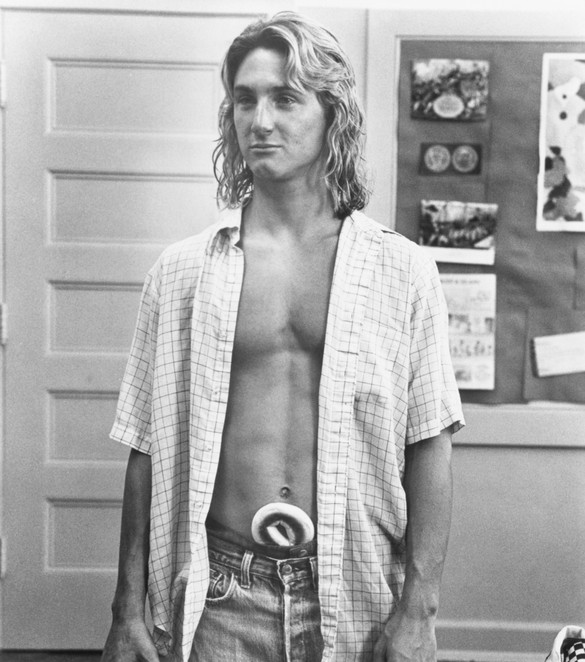
This is what Hollywood thought teenagers looked like the year you became one.
Fast Times at Ridgemont High was released in 1982.
Around your 18th birthday, the animated Simpsons family first appeared as a series of shorts on The Tracey Ullman Show.
In August 2014, David Sims wrote about the greatest line every Simpsons character ever said.

Patrick Hertzog / AFP / Getty Images
At 20 years old, you saw the collapse of the Berlin Wall.
“It was thought that all borders between men had similarly disintegrated, and we were all destined to be free and empowered individuals in a global meeting place,” wrote Robert Kaplan 20 years later.
Your life can be divided into two halves: before and after graphical web browsers.
In September 2010, Niraj Chokshi noted how little the browser interface had changed since 1993.

Mario Anzuoni / Reuters
In 1999, Jennifer Lopez, who was born the same year as you, released her first album, On the 6.
In August 2016, Adrienne LaFrance wrote about how Lopez helped shape internet searching.

Goran Tomasevic / Reuters
When you turned 41, you saw the rise of the Arab Spring.
People across the world rediscovered the power and peril of revolutions, as Laura Kasinof found in Yemen.
By the time you turn 52, scientists estimate it will no longer be possible to keep global temperatures from rising at least 1.5 degrees Celsius.
In December 2015, Robinson Meyer wrote about why scientists had accepted this fact.
History is happening all around you, every day.
The Atlantic is here to help you process it, in stories like these:
Tell your story.