You're one of the first people who's never lived in a world without The Cat in the Hat.
In November 2015, Julie Beck wrote about the science and research behind Dr. Seuss's silly words.
Around the time you were born, Jack Kilby demonstrated the use of his invention, the first working integrated circuit.
In February 2013, Alexis Madrigal wrote about the serendipity of success through anecdotes of technological advancement.
You were born in September of 1958. This year, The Atlantic celebrates its 160th birthday, making it 3 times as old as you.
The year you were born, William R. Polk wrote about what America could learn from Iraq about Middle Eastern relations and attitudes.

NASA
At 10 years old, you were alive to behold people walking on the moon.
Over the years, the moon landing has come to be lauded as the pinnacle of human achievement, although it was often derided at the time. In 1963, NASA astronauts took to The Atlantic to plead the case for landing on the moon.
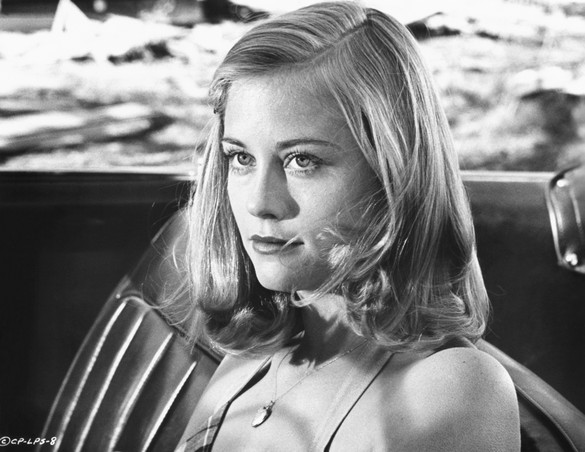
John Springer Collection / Corbis via Getty
This is what Hollywood thought teenagers looked like the year you became one.
The Last Picture Show was released in 1971.
Around your 18th birthday, President Gerald Ford was nominated for a second term in Kansas City.
In April 2016, Ronald Brownstein wrote about how presidential primary fights are reverting to their old form.

AP
In 1984, Madonna, who was born the same year as you, released the album Like a Virgin.
In March 2012, Cathy Alter wrote about what draws women to Madonna.
Your life can be divided into two halves: before and after The Simpsons.
In February 2012, Hampton Stevens wrote about what The Simpsons had left to say after airing its 500th episode.

NASA / JPL-Caltech / Space Science Institute
When you turned 48, you watched humankind reach the outer solar system.
With NASA's Cassini-Huygens mission in 2005, humans landed a probe in the outer reaches of the solar system for the first time, a moment Ross Andersen called the most glorious mission in the history of planetary science.
By the time you turn 62, scientists estimate it will no longer be possible to keep global temperatures from rising at least 1.5 degrees Celsius.
In December 2015, Robinson Meyer wrote about why scientists had accepted this fact.
History is happening all around you, every day.
The Atlantic is here to help you process it, in stories like these:
Tell your story.