You're one of the first people who's never lived in a world without FM radio.
In October 2010, Christina Dunbar-Hester wrote about the history and future of hyper-local radio in light of proposed legislation that would put thousands of new low-power FM radio stations on air.
Around the time you were born, an 8.0 magnitude earthquake hit India and Nepal, killing more than 10,000 people.
In April 2015, Matt Schiavenza and Noah Gordon wrote about the impact of the 2015 Nepal earthquake.
You were born in February of 1934. This year, The Atlantic celebrates its 160th birthday, making it 1.8 times as old as you.
The year you were born, Harold J. Laski wrote about the New Deal, less than a year after its first provisions passed through Congress.
Around your 18th birthday, King George VI of the United Kingdom died at the age of 56.
In February 2012, Heather Horn wrote about the 60th anniversary of Queen Elizabeth II's ascension to the throne.

NASA
At 35 years old, you were alive to behold people walking on the moon.
Over the years, the moon landing has come to be lauded as the pinnacle of human achievement, although it was often derided at the time. In 1963, NASA astronauts took to The Atlantic to plead the case for landing on the moon.
Your life can be divided into two halves: before and after Microsoft.
In February 2000, James Fallows wrote about the time he spent at the company the previous year, designing an updated release of Microsoft Word.
AP
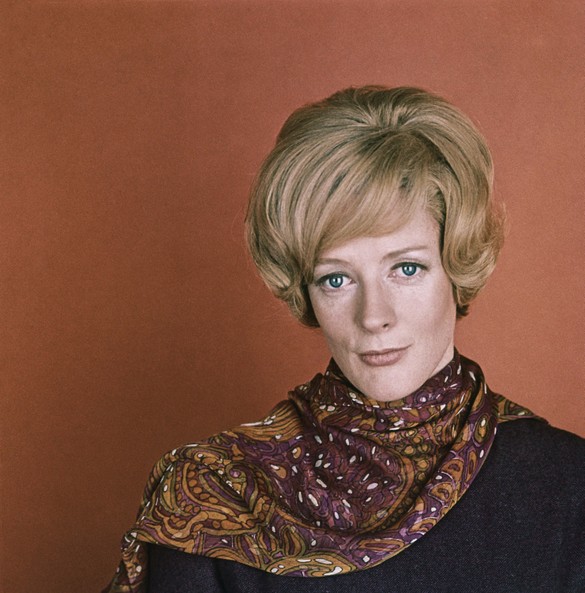
In 2003, Maggie Smith, who was born the same year as you, won the Emmy for Outstanding Lead Actress, making her one of the few who have won the so-called Triple Crown—an Oscar, a Tony, and an Emmy.
In March 2015, Katie Kilkenny wrote about the end of the immensely popular TV series Downtown Abbey, starring Maggie Smith.

NASA / JPL-Caltech / Space Science Institute
When you turned 73, you watched humankind reach the outer solar system.
With NASA's Cassini-Huygens mission in 2005, humans landed a probe in the outer reaches of the solar system for the first time, a moment Ross Andersen called the most glorious mission in the history of planetary science.
History is happening all around you, every day.
The Atlantic is here to help you process it, in stories like these:
Tell your story.