The Atlantic Politics Daily: Johnson, Clinton, and Now, Trump
The House of Representatives voted to impeach Donald Trump, an ignominious honor shared by Andrew Johnson (1868) and Bill Clinton (1998). What comes next?
It’s Wednesday, December 18. In today’s newsletter: President Donald Trump has been impeached by the House of Representatives in a vote largely along party lines.
Read on to make sense of a moment our writers have called both inevitable and indelible.
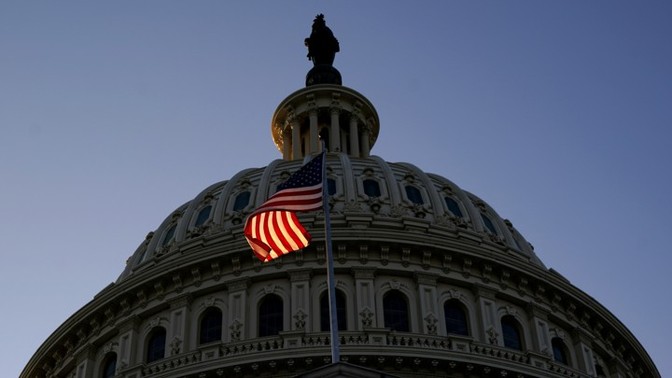
(WIN MCNAMEE / GETTY)
The entirely predictable finally happened.
Early on in Trump’s presidency, the so-called Resistance marshaled a string of record-breaking protests, flexing the grassroots muscle of Americans unhappy with the man in the White House. My colleague Elaine Godfrey went to an impeachment protest in Maryland last night. Three years in, things on that front seemed to be too little, too late.
Late Wednesday, the House of Representatives gave Donald Trump an ignominious honor, one shared by presidents Andrew Johnson (1868) and Bill Clinton (1998).
Impeachment came down to a party-line vote on both articles of impeachment (abuse of power and obstructing Congress), with just a smattering of Democratic defections. Not a single Republican voted yes.
Now comes the trial.
After the holidays, the Senate will convene a trial (the outcome there, most agree, is similarly predictable).
Its procedures are well-known: Two-thirds of the Senate must to vote to convict Trump, with the chief justice of the Supreme Court presiding. None of that is explicitly laid out in the Constitution, so where did the rules come from? At the first-ever impeachment trial, senators figured it out on the go.
And as with their House counterparts, GOP senators lined up forcefully behind President Trump, with one exception. Mitt Romney of Utah had told my colleague McKay Coppins that he’s open to the idea that Trump needs to be removed from office (as they say, watch this space).
Another question mark is how big of a role Chief Justice John Roberts might play. As Ronald Brownstein writes, “Roberts could ultimately be the last man standing in the GOP with the ability to say no to a president who barrels through law and custom.”

(Simon Montag)
At last, the lawyer George T. Conway III writes.
“As rare as impeachments may be, today’s impeachment of Donald Trump, president of the United States, for high crimes and misdemeanors was pretty much inevitable. ...
In essence, Trump thinks everything should be about him, for him, for his benefit and glorification—and he can’t comprehend, and doesn’t care about, anything that isn’t.”
Read his full argument from the night of impeachment.
More: The narcissism, above all else, makes Trump unfit for office, Conway had argued back in October in his first essay for The Atlantic.
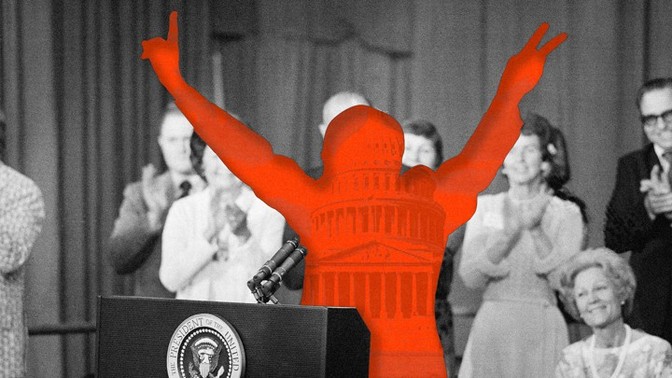
(Erin Schaff / The New York Times)
Unprecedented as they are, impeachments of presidents past can provide useful context for impeachment today.
A newly released diary shows House Republican leaders pledging to oust President Richard Nixon months before he resigned. Why did they back down?
A generation and a half later, there is as much about this story that seems strange as seems distressingly familiar. The televised debates in the Judiciary Committee make clear that in 2019, not even a handful of elected members in the House of the president’s party are interested in serving as nonpartisan jurors, wrestling with dismaying and politically inconvenient facts. In part, that’s because House Republican leaders in 2019 are at least as cowed by their base as Rhodes and Barber were in 1974, despite perhaps privately loathing this president as much as their predecessors hated Nixon.
Read Tim Naftali on what he discovered in Barber Conable’s diary.
Today’s newsletter was written by Saahil Desai, an associate editor on our Politics team, and edited by Shan Wang, who oversees newsletters. You can reply directly to this newsletter with questions or comments, or send a note to [email protected].
Your support makes our journalism possible. Subscribe here.