


Return to this issue's Table of Contents.
A U G U S T 1 9 9 9
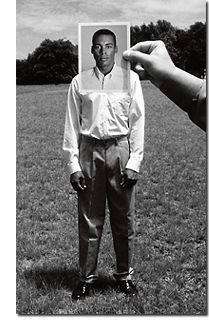
When capable black college students fail to perform as well as their white counterparts, the explanation often has less to do with preparation or ability than with the threat of stereotypes about their capacity to succeed. Educators at Stanford who tested this hypothesis report their findings and propose solutions
 HE buildings had hardly changed in the thirty years since I'd been there. "There" was a small liberal-arts school quite near the college that I attended. In my student days I had visited it many times to see friends. This time I was there to give a speech about how racial and gender stereotypes, floating and abstract though they might seem, can affect concrete things like grades, test scores, and academic identity. My talk was received warmly, and the next morning I met with a small group of African-American students. I have done this on many campuses. But this time, perhaps cued by the familiarity of the place, I had an experience of d�j� vu. The students expressed a litany of complaints that could have come straight from the mouths of the black friends I had visited there thirty years earlier: the curriculum was too white, they heard too little black music, they were ignored in class, and too often they felt slighted by faculty members and other students. Despite the school's recruitment efforts, they were a small minority. The core of their social life was their own group. To relieve the dysphoria, they went home a lot on weekends.
More on politics & society in The Atlantic Monthly and Atlantic Unbound.
See a collection of Atlantic articles on race and affirmative action.
From Atlantic Unbound:
Flashback: "African-American Education" (December, 1995)
A sampling of Atlantic articles from the 1890s to the 1990s that have discussed the education and empowerment of African-Americans. Includes articles by Booker T. Washington, W.E.B. DuBois, Nicholas Lemann, and Claude M. Steele.
Roundtable: "Race in America" (November, 1997)
If there is a race problem in America today, what is it? Atlantic Unbound has invited The Atlantic's Nicholas Lemann and a panel of distinguished commentators to take up this question -- one of the central, most divisive of our time.
From the archives:
"Technology Versus African-Americans," by Anthony Walton (January, 1999)
"What might be accomplished by an education system that truly tried to educate everyone to excellence, not just the children of elites and of the suburbs? Why not a technological Marshall Plan for the nation's schools?"
"Whatever Happened to Integration?", by Gerald Early (February, 1997)
"Blacks have been in this country as long as its earliest European settlers. Why haven't they, well, for lack of a better phrase, quite measured up?"
"My Race Problem -- and Ours," by Randall Kennedy (May, 1997)
A consideration of touchy matters�-- racial pride, racial solidarity, and racial loyalty�-- rarely discussed.
"Philadelphia: Black Nationalism on Campus," by Nicholas Lemann (January, 1993)
Nationalism among middle-class blacks mystifies other Americans. The author reports on his conversations with black college students.
"Race and the Schooling of Black Americans," by Claude M. Steele (April, 1992)
More than half of black college students fail to complete their degree work -- for reasons that have little to do with innate ability or environmental conditioning. The problem, a social psychologist argues, is that they are undervalued, in ways that are sometimes subtle and sometimes not.
"Reverse Racism,
or How the Pot Got to Call the Kettle Black ," by Stanley Fish (November, 1993)
"'Individualism,' 'fairness,' 'merit' -- these three words are continually misappropriated by bigots who have learned that they need not put on a white hood or bar access to the ballot box in order to secure their ends."
"The Issue Before the Court:
Who Gets Ahead in America?", by McGeorge Bundy (November, 1977)
The case revolves around one white man's claim that he was discriminated against in favor of blacks, but far more is at stake in the deliberations now getting under way before the Supreme Court of the United States. Is America ever really going to be the Land of Opportunity for all its citizens?
"Education for a Classless Society: The Jeffersonian Tradition," by James Bryant Conant (May, 1940)
"In short, a horde of heterogenous students has descended on our secondary schools; on our ability to handle all types intelligently depends in large measure the future of this country."
Over the past four decades African-American college students have been more in the spotlight than any other American students. This is because they aren't just college students; they are a cutting edge in America's effort to integrate itself in the thirty-five years since the passage of the Civil Rights Act. These students have borne much of the burden for our national experiment in racial integration. And to a significant degree the success of the experiment will be determined by their success.
Nonetheless, throughout the 1990s the national college-dropout rate for African-Americans has been 20 to 25 percent higher than that for whites. Among those who finish college, the grade-point average of black students is two thirds of a grade below that of whites.
A recent study by William Bowen and Derek Bok, reported in their book The Shape of the River, brings some happy news: despite this underachievement in college, black students who attend the most selective schools in the country go on to do just as well in postgraduate programs and professional attainment as other students from those schools. This is a telling fact in support of affirmative action, since only these schools use affirmative action in admissions. Still, the underperformance of black undergraduates is an unsettling problem, one that may alter or hamper career development, especially among blacks not attending the most selective schools.
Attempts to explain the problem can sound like a debate about whether America is a good society, at least by the standard of racial fairness, and maybe even about whether racial integration is possible. It is an uncomfortably finger-pointing debate. Does the problem stem from something about black students themselves, such as poor motivation, a distracting peer culture, lack of family values, or -- the unsettling suggestion of The Bell Curve -- genes? Or does it stem from the conditions of blacks' lives: social and economic deprivation, a society that views blacks through the lens of diminishing stereotypes and low expectations, too much coddling, or too much neglect?
In recent years this debate has acquired a finer focus: the fate of middle-class black students. Americans have come to view the disadvantages associated with being black as disadvantages primarily of social and economic resources and opportunity. This assumption is often taken to imply that if you are black and come from a socioeconomically middle-class home, you no longer suffer a significant disadvantage of race. "Why should the son of a black physician be given an advantage in college admission over the son of a white delivery-truck driver?" This is a standard question in the controversy over affirmative action. And the assumption behind it is that surely in today's society the disadvantages of race are overcome when lower socioeconomic status is overcome.
But virtually all aspects of underperformance -- lower standardized-test scores, lower college grades, lower graduation rates -- persist among students from the African-American middle class. This situation forces on us an uncomfortable recognition: that beyond class, something racial is depressing the academic performance of these students.
Some time ago I and two colleagues, Joshua Aronson and Steven Spencer, tried to see the world from the standpoint of these students, concerning ourselves less with features of theirs that might explain their troubles than with features of the world they see. A story I was told recently depicts some of these. The storyteller was worried about his friend, a normally energetic black student who had broken up with his longtime girlfriend and had since learned that she, a Hispanic, was now dating a white student. This hit him hard. Not long after hearing about his girlfriend, he sat through an hour's discussion of The Bell Curve in his psychology class, during which the possible genetic inferiority of his race was openly considered. Then he overheard students at lunch arguing that affirmative action allowed in too many underqualified blacks. By his own account, this young man had experienced very little of what he thought of as racial discrimination on campus. Still, these were features of his world. Could they have a bearing on his academic life?
My colleagues and I have called such features "stereotype threat" -- the threat of being viewed through the lens of a negative stereotype, or the fear of doing something that would inadvertently confirm that stereotype. Everyone experiences stereotype threat. We are all members of some group about which negative stereotypes exist, from white males and Methodists to women and the elderly. And in a situation where one of those stereotypes applies -- a man talking to women about pay equity, for example, or an aging faculty member trying to remember a number sequence in the middle of a lecture -- we know that we may be judged by it.
Like the young man in the story, we can feel mistrustful and apprehensive in such situations. For him, as for African-American students generally, negative stereotypes apply in many situations, even personal ones. Why was that old roommate unfriendly to him? Did that young white woman who has been so nice to him in class not return his phone call because she's afraid he'll ask her for a date? Is it because of his race or something else about him? He cannot know the answers, but neither can his rational self fully dismiss the questions. Together they raise a deeper question: Will his race be a boundary to his experience, to his emotions, to his relationships?
With time he may weary of the extra vigilance these situations require and of what the psychologists Jennifer Crocker and Brenda Major have called the "attributional ambiguity" of being on the receiving end of negative stereotypes. To reduce this stress he may learn to care less about the situations and activities that bring it about -- to realign his self-regard so that it no longer depends on how he does in the situation. We have called this psychic adjustment "disidentification." Pain is lessened by ceasing to identify with the part of life in which the pain occurs. This withdrawal of psychic investment may be supported by other members of the stereotype-threatened group -- even to the point of its becoming a group norm. But not caring can mean not being motivated. And this can have real costs. When stereotype threat affects school life, disidentification is a high price to pay for psychic comfort. Still, it is a price that groups contending with powerful negative stereotypes about their abilities -- women in advanced math, African-Americans in all academic areas -- may too often pay.
 AN stereotype threat be shown to affect academic performance? And if so, who would be most affected -- stronger or weaker students? Which has a greater influence on academic success among black college students -- the degree of threat or the level of preparation with which they enter college? Can the college experience be redesigned to lessen the threat? And if so, would that redesign help these students to succeed academically?
As we confronted these questions in the course of our research, we came in for some surprises. We began with what we took to be the hardest question: Could something as abstract as stereotype threat really affect something as irrepressible as intelligence? Ours is an individualistic culture; forward movement is seen to come from within. Against this cultural faith one needs evidence to argue that something as "sociological" as stereotype threat can repress something as "individualistic" as intelligence.
To acquire such evidence, Joshua Aronson and I (following a procedure developed with Steven Spencer) designed an experiment to test whether the stereotype threat that black students might experience when taking a difficult standardized test could depress their performance on the test to a statistically reliable degree. In this experiment we asked black and white Stanford students into our laboratory and gave them, one at a time, a thirty-minute verbal test made up of items from the advanced Graduate Record Examination in literature. Most of these students were sophomores, which meant that the test was particularly hard for them -- precisely the feature, we reasoned, that would make this simple testing situation different for our black participants than for our white participants.
 In matters of race we often assume that when a situation is objectively the same for different groups, it is experiencedin the same way by each group. This assumption might seem especially reasonable in the case of "standardized" cognitive tests. But for black students, difficulty with the test makes the negative stereotype relevant as an interpretation of their performance, and of them. They know that they are especially likely to be seen as having limited ability. Groups not stereotyped in this way don't experience this extra intimidation. And it is a serious intimidation, implying as it does that they may not belong in walks of life where the tested abilities are important -- walks of life in which they are heavily invested. Like many pressures, it may not be experienced in a fully conscious way, but it may impair their best thinking.
This is exactly what Aronson and I found. When the difficult verbal test was presented as a test of ability, black students performed dramatically less well than white students, even though we had statistically matched the two groups in ability level. Something other than ability was involved; we believed it was stereotype threat.
But maybe the black students performed less well than the white students because they were less motivated, or because their skills were somehow less applicable to the advanced material of this test. We needed some way to determine if it was indeed stereotype threat that depressed the black students' scores. We reasoned that if stereotype threat had impaired their performance on the test, then reducing this threat would allow their performance to improve. We presented the same test as a laboratory task that was used to study how certain problems are generally solved. We stressed that the task did not measure a person's level of intellectual ability. A simple instruction, yes, but it profoundly changed the meaning of the situation. In one stroke "spotlight anxiety," as the psychologist William Cross once called it, was turned off -- and the black students' performance on the test rose to match that of equally qualified whites.
Aronson and I decided that what we needed next was direct evidence of the subjective state we call stereotype threat. To seek this, we looked into whether simply sitting down to take a difficult test of ability was enough to make black students mindful of their race and stereotypes about it. This may seem unlikely. White students I have taught over the years have sometimes said that they have hardly any sense of even having a race. But blacks have many experiences with the majority "other group" that make their race salient to them.
We again brought black and white students in to take a difficult verbal test. But just before the test began, we gave them a long list of words, each of which had two letters missing. They were told to complete the words on this list as fast as they could. We knew from a preliminary survey that twelve of the eighty words we had selected could be completed in such a way as to relate to the stereotype about blacks' intellectual ability. The fragment " -- ce," for example, could become "race." If simply taking a difficult test of ability was enough to make black students mindful of stereotypes about their race, these students should complete more fragments with stereotype-related words. That is just what happened. When black students were told that the test would measure ability, they completed the fragments with significantly more stereotype-related words than when they were told that it was not a measure of ability. Whites made few stereotype-related completions in either case.
What kind of worry is signaled by this race consciousness? To find out, we used another probe. We asked participants on the brink of the difficult test to tell us their preferences in sports and music. Some of these, such as basketball, jazz, and hip-hop, are associated with African-American imagery, whereas others, such as tennis, swimming, and classical music, are not. Something striking emerged: when black students expected to take a test of ability, they spurned things African-American, reporting less interest in, for instance, basketball, jazz, and hip-hop than whites did. When the test was presented as unrelated to ability, black students strongly preferred things African-American. They eschewed these things only when preferring them would encourage a stereotypic view of themselves. It was the spotlight that they were trying to avoid.
The online version of this article appears in three parts. Click here to go
to parts two and three.
Claude M. Steele is the Lucie Stern Professor in the Social Sciences at Stanford University. His articles have appeared in The New York Times and The American Prospect.
Photographs by Fredrik Brod�n.
Copyright © 1999 by The Atlantic Monthly Company. All rights reserved.
The Atlantic Monthly; August 1999; Thin Ice: "Stereotype Threat" and Black College Students - 99.08;
Volume 284, No. 2; page 44-54.