Reporter's Notebook

Quoted
Show Newer Notes
Alex Baker / Oriontrail / Shutterstock / Kara Gordon / The Atlantic

Here are the best quotes we heard from our sources today. (Click through to read the full stories.)

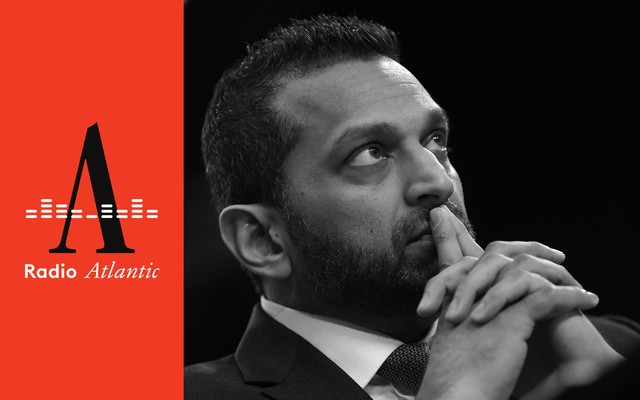
Nadia Bolz-Weber (pictured above), pastor and author of the new book Accidental Saints: “If you don’t have a drag queen in your congregation, you should get one.”

Craig Fugate, director of FEMA: “When you step back and look at most disasters, you talk about first responders—lights and sirens—that’s bullshit. The first responders are the neighbors. Bystanders. People that are willing to act.”

Adam Perkins, a lecturer in the neurobiology of personality, on neurotic people: “I thought, gosh, it seems like they have a built-in threat generator.”

Donald Trump, businessman and GOP presidential candidate: “Why do [evangelicals] love me? You’ll have to ask them. But they do. They do love me.”

(Previous quotes from our sources here.)

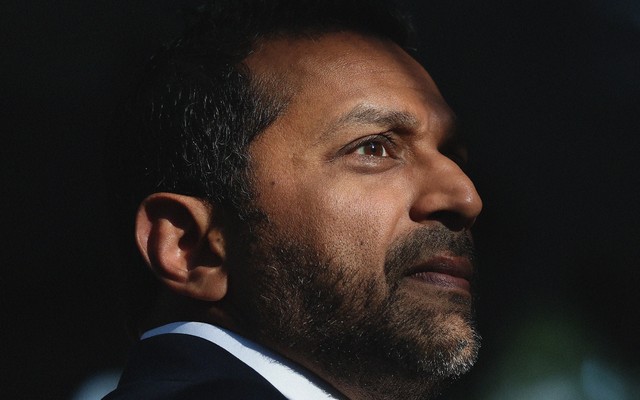
Manu Prakash, the Stanford University engineer who created the Foldscope (pictured above, by Aaron Pomerantz): “The biggest thing we’re trying to do is to make people curious. Our ambition is that every kid should be able to carry a microscope in their pocket.

Jason Scott, historian at the Internet Archive and founder of the Archive Corps: “I’ve gained a reputation as someone you let know when things are going away.”

Tyffani Delacruz, whose home was flooded by Hurricane Katrina when she was 13: “All of a sudden, we were homeless. I come from a nice, middle-class family. You never think at 13 that everything can be taken away from you, but that’s what happened.”

(Previous quotes from our sources here.)

Mindful Schools

Below are the best quotes we heard from our sources today. (Follow the links to read the full stories.)

Clinton Francis, a sensory ecologist at California Polytechnic State University: “Most studies, including mine, have focused on how chronic noise sources influence birds’ abilities to communicate. This one provides really compelling evidence that it influences other aspects of their lives. Ecologists often lose sight of how important these other senses, which we don’t use quite so heavily, are to other animals.”

A clinical social worker at Arturo A. Schomburg Satellite Academy: “At times all the roles blur—teachers, therapists, social workers. Especially in a school like this. If you don’t address the noise in a kid’s head that they bring in from the outside, I don’t care how good a teacher you are, you’re not going tohave much success.”

Joseph Luby, an attorney with the Death Penalty Litigation Clinic in Kansas City, Missouri: “As a Democrat in public office, you would lose a lot of votes by not being enthusiastically in support of the death penalty.”

(Previous quotes from our sources here.)
Below are the best quotes we heard from our sources today. (Follow the links to read the full stories.)

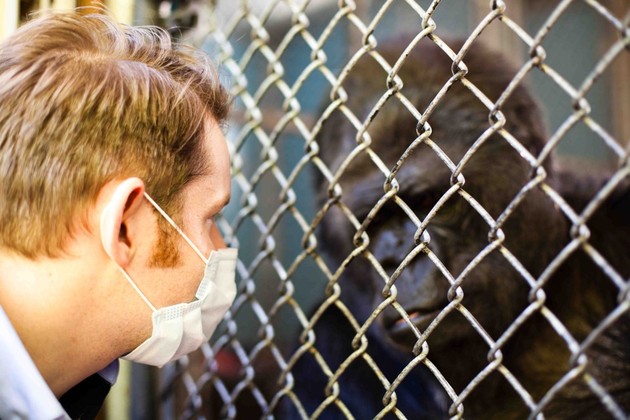
Francine Patterson, the researcher who taught Koko the gorilla (pictured above, by Alysia Alexander) to “talk” in sign language: “Uncontaminated by humans, [gorillas] are definitely closer to living in the now. Our problem is that we live in the past and we live in the future, but we very rarely dwell in the now. They are so much in harmony with nature, we surely could use them as a model.”

Greg Rosenbaum, chairman of the National Jewish Democratic Council, which supports the Iran deal: “I’ve never seen an issue this divided within the Jewish community in the United States and between the United States and Israel. … I look at it and say, the day after this deal goes into effect, I gotta figure out how I put Humpty-Dumpty together again.”

Kamala Harris, the attorney general of California: “This issue of truancy is a public safety issue, it is an economic issue, and I think we can solve it.”

(Previous quotes from our sources here.)
Below are the best quotes we heard from our sources today. (Follow the links to read the full stories.)

Stephen Garcia, a professor of psychology at the University of Michigan: “Any time you create a scale or a dimension that’s measurable, you also create a kind of competition.”

Seth Prins, a doctoral student in epidemiology at Columbia University’s Mailman School of Public Health: “Employees in the middle have dual roles that embody aspects of ownership and front-line labor, without the full benefits of being one or the other—they get flak from above and below.”

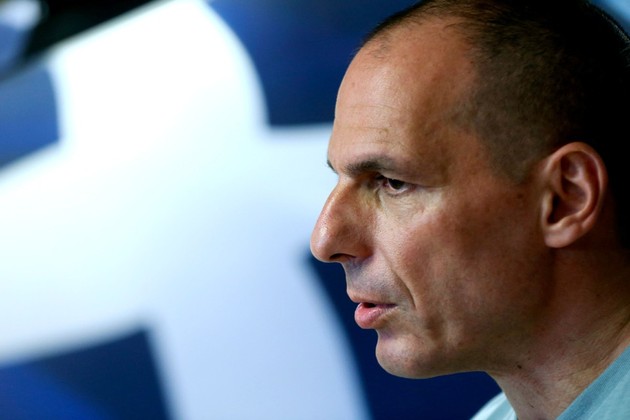
Yanis Varoufakis, the former finance minister of Greece (pictured above, by Alkis Konstantinidis/Reuters): “We need to grasp the difference between saying that Greece, and other countries, should not have entered the euro zone, and saying now that we should now exit. Put technically, we have a case of hysteresis: Once a nation has taken the path into the euro zone, that path disappeared after the euro’s creation, and any attempt to reverse along that now-nonexistent path could lead to a great fall off a tall cliff.”

More Notes From The Atlantic
  • Notes Home