What Do Southerners Hear in S-Town?
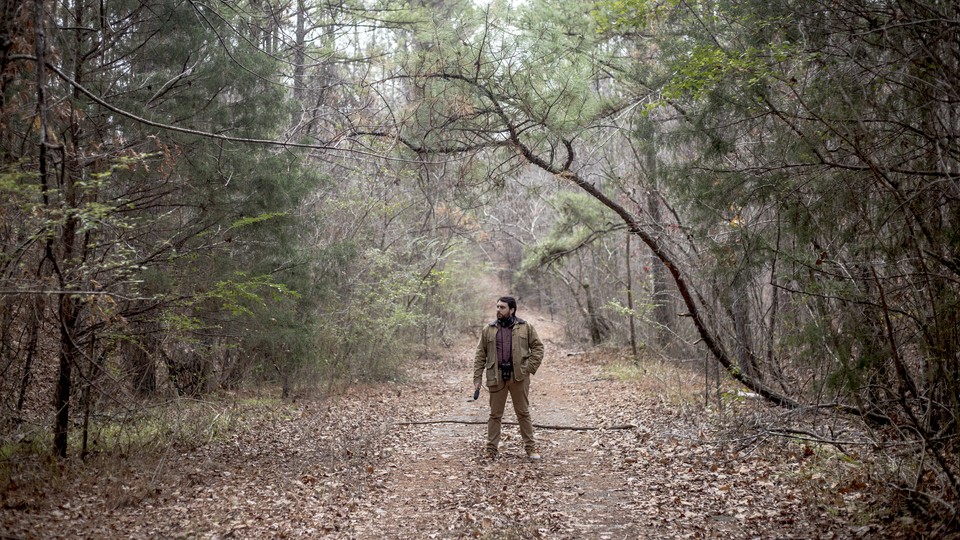
S-Town plays on some familiar themes of storytelling about the South. As Aja Romano has noted at Vox, the show fits firmly into the Southern gothic tradition immortalized in the works of authors like William Faulkner and Flannery O’Connor, even though it’s nonfiction. But in an interview with Deep South Magazine, the show’s producer Brian Reed said his instinct was to push beyond stereotypes:
Reed hadn’t spent much time in Alabama before traveling down from New York to meet John. His wife, who is African American, advised him to set his social media profiles to private. He thought she was just perpetuating a stereotype, but he does meet his share of racists among John’s friends. “In a way, the vision that John was feeding me of this Shittown or S-Town that he lived in, it had all the trappings of the stereotypes you think of when you think of rural Alabama,” Reed says. “My knee-jerk was to go against that. It can’t be exactly that. I know it’s more complicated than that.”
I grew up in central Florida. As Floridians know, the weird cultural geography of the state means that the farther north you go in Florida, the closer you get to “the South,” so central Florida is a somewhat ambicultural middle zone, not fully Southern, but bearing whiffs and echoes and markers of the South. So I’ve been interested to hear the reactions to S-Town from listeners who grew up in the region, and I’ve excerpted a few here.
Connor writes:
I'm about halfway through the podcast. I used to share some of John B's cynicism, not about the world, but certainly about the South. I grew up in Arkansas and spent a number of my more formative years in a small town of about 20,000, 30 minutes north of the Louisiana border. I hated it. I despised how disinterested people were about the world outside of our small town, how everyone seemed to lack ambition, and maybe that everyone wore too much camo. What's funny is that the town I lived in was relatively large for the area. I kind of lucked out in that way. Somebody like me stuck in a town of three or four thousand, I'd feel pretty hopeless, too. Because you're not stuck in a place; you're stuck in a mindset, and I'd argue that's even harder to escape.
Now I'm a Ph.D student in Philadelphia. I got out. I love Arkansas, but I certainly do not look fondly on my years in that small town. I got out. John B. did not.
Michael writes:
I am somewhat afraid the lives closest to those mentioned in S-Town are the least likely to seek it out, and the least likely to give it credence. S-Town is constantly grappling with … such Catch 22s. But they are real, at least in the show's initial presentation of themes and characters.
Time and again, S-Town sets up heroes to watch them fall. The most poignant moment for me was when a jovial character is described, then buried underneath their own nonsensical racist vitriol. It was a world that reminded me of the insanity I noticed growing up as a black man in the South, and which is still so rarely commented upon to this day. The twisting together of good and bad into something difficult to recognize, sometimes abhorrent, sometimes worthy of outright condemnation, but with complexities and subtleties that require more than just blanket condemnations and censorship, lest secret tattoo backrooms fester everywhere.
S-Town felt cripplingly necessary as I left the South. And as a queer Alabama native from his own shit town with its own shit people, and its own epitomization of the shit systems that make life unduly rueful, I couldn't help but be glad to learn about the philosopher king of Bibb County, with a heart so big it just doesn't seem to make sense with all the muck about it. And if anything, by the end even if you think it's crazy; that's nowhere near close to easy either.
Both of these perspectives come from listeners who left the South, and were happy with that decision. But I imagine for many of you, part of the richness of the show comes directly from the richness of its cultural setting. No phrase from the series rings in my memory more clearly or musically than this, from John’s mother Mary Grace in the show’s first episode: “Since time, I reckon.” The pixels here can’t do that utterance justice; such an evocative little twist of language could only have been crafted out of the melodies of Southern speech.
Any other reactions, readers and S-Town listeners from the South? Send them our way: [email protected].