Atlantic Trivia on Taylor Swift, Chimpanzees, Golfing, and More
And did you know about the bit of North Africa that no country claims?
Updated with new questions at 4:25 p.m. ET on October 3, 2025.
In the 1960s, the authors of one of the world’s first popular compendiums of fun and interesting facts entreated readers not to mistake the “flower of Trivia” for the “weed of minutiae.” Trivia stimulates the mind, Edwin Goodgold and Dan Carlinsky wrote in More Trivial Trivia; minutiae stymie it.
Happily, The Atlantic’s garden bursts with the former and is almost entirely lacking in the latter, and in this new project of daily quizzes, I get to share a bunch of that trivia with you, curious readers. So set down the Snapple cap and stop to smell the blooms—is that geranium?—with questions from recently published stories.
To get these questions in your inbox every day, sign up for The Atlantic Daily.
Friday, October 3, 2025
From today’s edition of The Atlantic Daily, by Will Gottsegen:
- Jane Goodall developed one of her first revolutionary scientific contributions in conjunction with David Greybeard, whose expertise in primatology owed to what characteristic?
— From Michelle Nijhuis’s “Jane Goodall’s Second-Greatest Talent” - The title track of Taylor Swift’s new album, The Life of a Showgirl, features guest vocals from what “Please Please Please” protégé of the superstar?
— From Spencer Kornhaber’s “Taylor Swift’s Fairy Tale Is Over ” - Physicists apply the concept of duality to light because it behaves, depending on the circumstances, as either of what two contradictory forms?
— From Douglas Hofstadter’s “My Life in Ambigrammia”
And by the way, did you know that there’s a chunk of North Africa about the size of Jacksonville, Florida, that Egypt says belongs to Sudan and Sudan says belongs to Egypt? It’s called Bir Tawil, a hostile desert that’s a rare example of modern terra nullius—“nobody’s land.”
Answers:
- Being a chimpanzee. Older male colleagues initially criticized Goodall for referring to her chimp subjects by invented names rather than numbers. Goodall, however, had a better sense than most any scientist for how to get fame and then wield it, Nijhuis writes—always to protect the animals she loved. Read more.
- Sabrina Carpenter. Spencer argues that Carpenter cuts “like a beam through fog” on a plodding album that feels mostly about burnout. The world’s biggest star has the right to be exhausted, and listeners have the right to not like the result. Read more.
- Particle and wave. This duplexity is excellent fodder for an ambigram, writes Hofstadter, creator of many of the visual tricks wherein a word transforms into another word (or remains legibly itself) when mirrored, flipped, or otherwise transformed. Ambigrammia, like light, is at once two things: discovery and creation. Read more.
How are you liking Atlantic Trivia? We’ll be back next week for more, but in the meantime, share your thoughts at [email protected].
Thursday, October 2, 2025
From today’s edition of The Atlantic Daily, by Will Gottsegen:
- What international organization was founded in 1960 to protect a particular shared interest of four countries in the Middle East and one in South America?
— From Scott W. Stern’s “There Is No Green Transition Without Consequences” - The artist Bad Bunny spent this past summer performing a monthslong residency titled “No me quiero ir de aquí” (“I don’t want to leave here”), with the word “here” referring to what place?
— From Xochitl Gonzalez’s “Bad Bunny’s Super Bowl” - An open letter from February whose signatories included prominent tech experts called for research to prevent “the mistreatment and suffering of conscious” what?
— From Webb Wright’s “The Alien [REDACTED] in Your Pocket”
And by the way, did you know that the only G-rated movie ever to win Best Picture at the Oscars was followed the very next year by the only X-rated winner? They are the musical Charles Dickens adaptation Oliver! and the seedy prostitution-focused drama Midnight Cowboy. I’ll let you guess which is which.
Answers:
- OPEC. That interest (you see it now!) is oil exporting, of course. The countries rather successfully wrested control of the industry from a U.S. and European near-global monopoly—an instinct we’re seeing now among countries rich in the mineral resources that are needed, ironically, for the batteries enabling the green transition, Stern writes. Read more.
- Puerto Rico. The Boricua superstar’s decision to stay in his homeland rather than tour the continental United States was a political statement, Xochitl writes, and we can expect his performance on the country’s biggest stage—the Super Bowl halftime show—to be one, too. Read more.
- Artificial intelligence. The thinking behind the letter is honestly not all that out-there anymore; Wright reports that the AI firm Anthropic is exploring model well-being, and that it’s top of mind for OpenAI, as well. So … are you sure that chatbot isn’t alive? Read more.
Wednesday, October 1, 2025
From the edition of The Atlantic Daily written by Charlie Warzel:
- A surprisingly central plank of Republican Jack Ciattarelli’s campaign for New Jersey governor has been his promise to bring back what convenience to the state’s grocery stores, banned since 2022 for environmental reasons?
— From Russell Berman’s “The Blue State That’s Now a Bellwether” - What television show that opens its 51st season this weekend once recruited its stars from institutions such as the Second City and the Groundlings—but is starting to pull from TikTok?
— From David Sims’s “The One Big Change [ANSWER] Is Making” - Dark taxa is the term biologists use for the majority of all life on Earth that has not been formally sorted into what foundational classification?
— From Marion Renault’s “The Machines Finding Life That Humans Can’t See”
And by the way, did you know that there is also far more dark matter in the universe than visible matter, by a factor of about 5 to 1, scientists reckon? In fact, much like the snacks we keep at our office desk, dark matter passes into our body all day long without our even noticing.
Scientists still have not directly observed dark-matter particles and—rather vindictively, it seems to me—have denominated a leading theoretical candidate “WIMPs”: weakly interacting massive particles.
Answers:
- Plastic bags. Russell reports that the bag pledge is one of Ciattarelli’s biggest applause lines—an example of how he’s carefully positioned himself at the “very edge” of the culture wars in a state that’s Democratic but trending toward the center. Read more.
- Saturday Night Live. The cast changeover ahead of the season opener had a few surprise departures, David writes, but the real “nudge toward the future” is the hiring of a whole bunch of extremely online young comics whose work is both of and all over the internet. Read more.
- Species. Only about 2.3 million species have been cataloged, which feels like way too many to merit only as a descriptor, until you realize that Earth is home to maybe 8 million species (and maybe even many millions more). Renault writes that the rate of identification and the rate of species disappearances are both speeding up in a high-tech, higher-stakes race. Read more.
Tuesday, September 30, 2025
From the edition of The Atlantic Daily written by Tom Nichols:
-
The global fan event Tudum gets its onomatopoeic name from the sound that plays at the start of original productions of what streaming service?
— From Shirley Li’s “It’s Not Just [ANSWER]—It’s Your Entire Life” -
In keeping with the tradition of albatross or ravens as an omen, what Tchaikovsky ballet would the Soviet government play on loop on TV during periods of political instability?
— From Anna Nemtsova’s “Moscow Can’t Stop the Music” -
What music festival of the late 1990s derived its name from the mythical first wife of Adam, who in Jewish folklore preceded Eve and left the Garden of Eden rather than be subservient to her husband?
— From Sophie Gilbert’s “The Hard-Won Lessons of [ANSWER]”
And by the way, did you know that the chess term check comes from the Persian word shah, as in “king”? And that checkmate comes from shah mat, or “the king is frozen”? (That latter bit happens to be close enough to Persian’s mata—“to die”—that for a good long while, Westerners who learned the game might have thought it more regicidal than strictly necessary.)
For Monopoly lovers, modern Persian’s angoshtane varshakaste shode is “thimble gone bankrupt.”
Answers:
- Netflix. As Shirley writes, the streaming behemoth is doing everything it can to turn fans of individual offerings into fans of the whole shebang, but it has a long way to go. Read more.
- Swan Lake. Nemtsova’s account of the dissident music scene in Russia mentions the outlawed song “Cooperative Swan Lake,” in which Noize MC raps, “Let the swans dance!”—meaning, let a new leader arrive. Read more.
- Lilith Fair. The name was fitting, Sophie writes, because the all-female festival was not about “secondary status,” but about strength. The world could use a revival of the festival now, when women often top the charts but consciousness of their power is arguably at an ebb. Read more.
Monday, September 29, 2025
From the edition of The Atlantic Daily written by Tom Nichols:
-
What international sporting event occurred last weekend in New York, after happening most recently two years ago in Italy … and before that in Wisconsin … and before that in France (after Minnesota, after Scotland, after Illinois, etc.)?
— From Sally Jenkins’s “Golf’s Very Loud Weekend” -
According to many commentators on the right, when progressives penalize wrongdoing, it’s “cancel culture”; when conservatives do it, it’s merely what other double-c phrase suggestive of an action’s inevitable repercussions?
— From Idrees Kahloon’s “Illiberal America, MAGA Edition” -
Dealing as much with loss and grief as with physical monstrosity, what Victorian epistolary novel was referred to by its young author as her “hideous progeny”?
— From Jon Michael Varese’s “ChatGPT Resurrected My Dead Father”
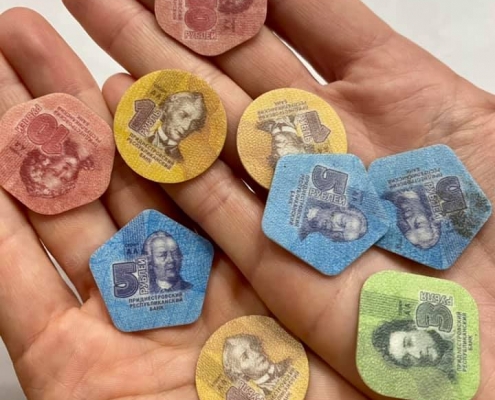
And by the way, did you know that Transnistria, the Russia-aligned breakaway region of Moldova, is the only place in the world that circulates plastic currency? A friend visited recently (don’t ask) and returned with some of these “coins,” which are neither exchangeable back into other currencies nor accepted anywhere else on Earth, except—and only sometimes—by a few cross-border-bus operators back in Moldova proper. They do, however, make excellent bingo chips.
Answers:
-
The Ryder Cup. Sally writes that the biennial contest between U.S. and European golfers is a noisy affair even at its civilest and was bound to be particularly raucous once you packed in hundreds of thousands of born hecklers from across New York’s boroughs and beyond. Read more.
-
“Consequence culture.” This is, for what it’s worth, also what a lot of progressives call it when they themselves are doing it. Idrees worries that the self-excusing and hypocrisy is kicking off a spiral from which America will struggle to extricate itself. Read more.
-
Frankenstein. The echoes of Mary Shelley’s novel bounce crystal-clear through all the instances Varese relates of grieving people trying to resurrect lost loved ones through AI—a group that includes the writer himself. Read more.