Going Undercover to Expose America’s Ugly Side
The forgotten postwar best sellers that sussed out prejudice
This is an edition of the revamped Books Briefing, our editors’ weekly guide to the best in books. Sign up for it here.
On Twitter and talk radio and cable TV, Americans today can easily express and hear echoes of their basest thoughts without too much difficulty—racism, anti-Semitism, homophobia, the whole cacophony of hate. But at one time, really knowing what your neighbors were thinking, or seeing who was hiding under the white hood, took some investigating. In the period after World War II, remembered as an era of placid conformity, contending with the prejudice and hate that raged just below that Technicolor surface meant first dragging it out into the open. Journalists and writers made a task of this, and to best-selling effect, as Samuel G. Freedman explained in an essay this week.
First, here are three new stories from The Atlantic’s Books section:
Freedman, the author of multiple books (and a treasured mentor of mine), has just published Into the Bright Sunshine, a history of Hubert Humphrey’s efforts to shift the Democratic Party toward the cause of civil rights. It culminates in a largely forgotten but pivotal moment at the 1948 Democratic National Convention—75 years ago this week—when Humphrey convinced the party to embrace a strong position on equality for Black citizens, decisively putting the Democrats on the side of the very nascent struggle and alienating for good its white racist contingent, the Dixiecrats.
What fascinates Freedman is this “proto” moment in the years before the popular and then legislative movement to combat racial prejudice officially took off. Humphrey’s push set the political stakes for so much of what would follow over the rest of the century, down to our current debates about issues such as policing and affirmative action. For The Atlantic, Freedman looked at a set of best-selling books from this same era, the immediate postwar years, that sussed out the bigotry that persisted at home, despite America’s recent victory against fascism and genocidal hatred abroad.
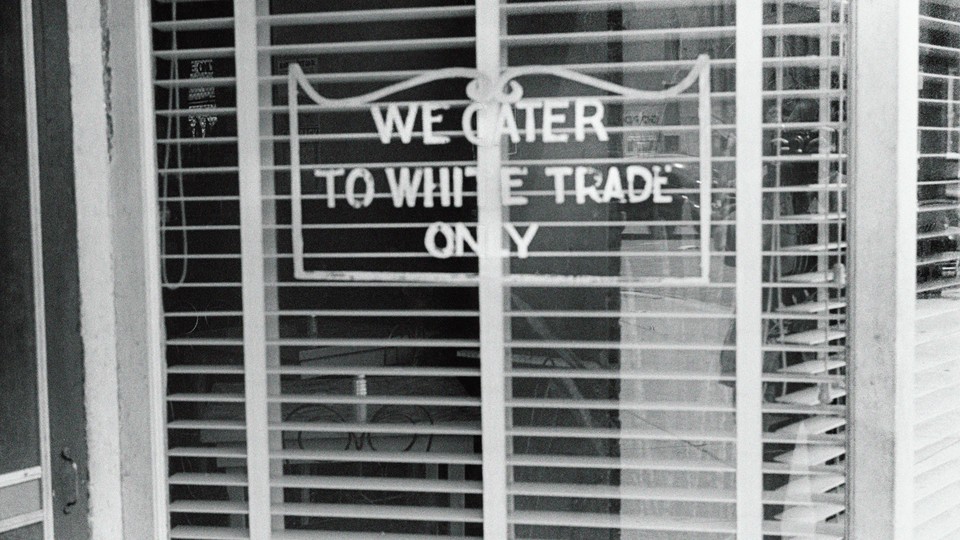
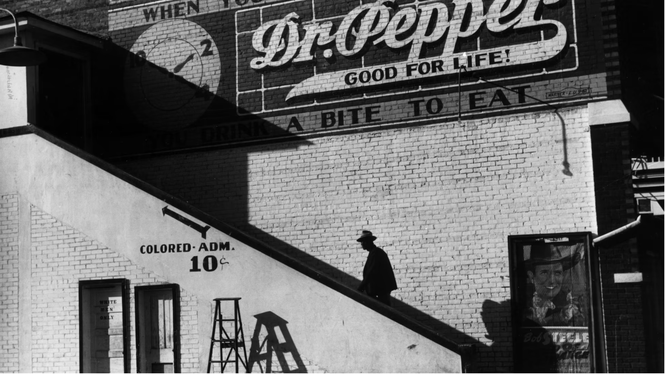
The books were page-turners in which writers used the conventions of detective novels and muckraking reportage to sneak behind closed doors and show exactly how some Americans were thinking and acting. John Roy Carlson went undercover as a white supremacist in places such as a pro-Nazi summer camp, then published a series of popular books that exposed this domestic extremism. Laura Z. Hobson created a character for her novel Gentleman’s Agreement (later an Oscar-winning movie with Gregory Peck) who engages in a similar kind of ruse: He pretends to be Jewish in order to show the persistence of anti-Semitism in genteel corners of America. And then there was Ray Sprigle of the Pittsburgh Post-Gazette, an older white reporter who tanned himself and shaved off his hair to present as a Black man below the Mason-Dixon line for a reported series that was headlined “I Was a Negro in the South for 30 Days.”
The methodology in these books would not fly today. In particular, Sprigle’s “gambit would assuredly be reviled as cultural appropriation at best and its own form of liberal racism at worst,” writes Freedman. And yet, there’s value in examining these books now, because many of the parts of our national character that they tried to reveal are still with us—still present and ugly.
The Writers Who Went Undercover to Show America Its Ugly Side
What to Read
The End of the Affair, by Graham Greene
Maurice Bendrix just wants to know—urgently, jealously—what his lover, Sarah, has been up to. It’s been nearly two years since the night in June 1944 when they slept together and the Nazis bombed London. Afterward, Sarah wordlessly cut off their four-year affair. The book’s delightfully twisty plot is engrossing—Bendrix even hires a private detective, on the suggestion of Sarah’s husband, Henry, to tail her during her frequent disappearances. But make no mistake: Greene’s subject is love at its most tormented. Bendrix’s lovesickness is observed with heart-clenching accuracy, the way he waits for Sarah’s phone calls “with hope for company,” the way nights become unbearable—“A curtain would rise and the play would begin: always the same play, Sarah making love, Sarah with X, doing the same things we had done together,” Greene writes. And the novel’s most exquisite sequence comes when we finally find out where Sarah’s been. The relationship’s misunderstandings become almost excruciatingly poignant when viewed from the other side, and love, with its ecstasy and anguish, takes on all the sweep of religious experience. — Chelsea Leu
From our list: The best books for a broken heart
Out Next Week
📚 Crook Manifesto, by Colson Whitehead
📚 Zero-Sum, by Joyce Carol Oates
📚 Encounterism: The Neglected Joys of Being in Person, by Andy Field
Your Weekend Read

I Grew Up Not Knowing My Birthday
When I finally met my mother, who came to the United States as a refugee years after the rest of us did, I was 19. She was living in Boston, and we walked around Chinatown talking about construction and the weather. I had to work up the nerve to ask what she could tell me about when and where I’d been born, and what that had been like for her. My dad and grandmother could only ever say that I was born in a hospital—forget about the recording of time, or weight, or length. But my mother didn’t remember anything either. I have asked her about it almost every time I’ve visited her in the years since, as if she’ll suddenly recall. But she always looks at me as if to say, What difference does it make?
When you buy a book using a link in this newsletter, we receive a commission. Thank you for supporting The Atlantic.