What Trump’s Primary Opponents Are Scared to Discuss
A check-in with David Frum on how the E. Jean Carroll verdict could affect voters
This is an edition of The Atlantic Daily, a newsletter that guides you through the biggest stories of the day, helps you discover new ideas, and recommends the best in culture. Sign up for it here.
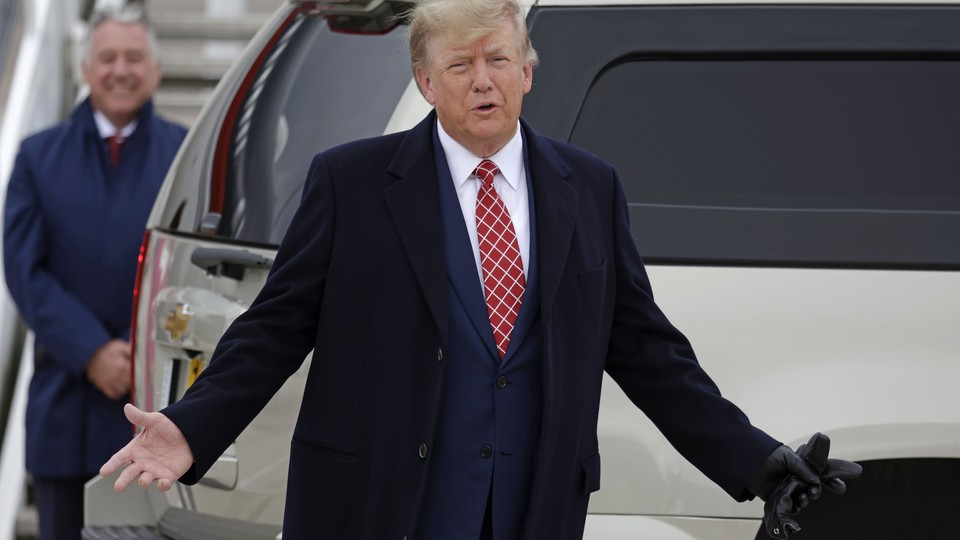
Could last week’s verdict in E. Jean Carroll’s sexual-violence case affect Donald Trump’s standing with primary voters? I checked in with the Atlantic staff writer David Frum, who has been thinking for the past few weeks about what he calls “the X factors of the 2024 presidential race.”
First, here are four new stories from The Atlantic:
The X Factor
Late last month, my colleague David Frum wrote an article titled “The Coming Biden Blowout,” in which he argued that the Republican Party is likely heading for electoral disaster once again. “Biden’s poll numbers are only so-so,” he acknowledged. “But a presidential election offers a stark and binary choice: This or that? Biden may fall short of some voters’ imagined ideal of a president, but in 2024, voters won’t be comparing the Democrat with that ideal. They will be comparing him with the Republican alternative.”
But Republicans, David argues, are doing everything wrong in this election cycle. A smarter plan, he posits, would have consisted of replacing Donald Trump with “somebody less obnoxious and impulsive” and offering plausible policy ideas on issues such as drugs, crime, and border enforcement. Instead, the party is doing the very opposite:
They are talking to their voters about Trump’s personal grievances and about boutique culture-war issues that their own base does not much care about, such as the state of Florida’s “war on Disney.” At the same time, Republican leaders are confronting Democratic voters with extremist threats on issues they care intensely about: bans on abortion medication by mail, restrictions on the freedom of young women to travel across state lines, attacks on student voting rights, proposed big cuts to Medicaid and food stamps in the GOP debt-ceiling ransom demand.
Last week, David followed up on that essay by thinking through some of the unexpected “X factors” that could derail the “conventional wisdom” of Joe Biden being reelected. He reminds us that the 2016 election cycle was punctuated by two last-minute surprises—Trump’s Access Hollywood tape and FBI Director James Comey’s announcement that he was reopening an investigation into Hillary Clinton’s email practices. “One proved damaging; one did not,” David writes.
What are 2024’s possible X factors? Biden’s health could certainly be one, David notes. Only about a third of Americans are confident that Biden is up to the physical and mental tasks of the presidency, according to recent polling. And Trump, should he maintain his current position as the GOP front-runner, has X factors of his own—primarily legal ones. David writes:
Trump’s indictments have, thus far, generated a rally effect among his co-partisans, widening his lead over Florida Governor Ron DeSantis to 30 points in the month after … But the emphasis here is on thus far. More indictments may be coming … As president, Trump could rely on some political cover because the sheer number of allegations of wrongdoing got jumbled together, confused people, and often canceled one another out. Whether accumulating indictments will now cancel out in the same way is not so clear—even less so if they turn into accumulating convictions, followed by sentences.
After David wrote that article, a jury found Trump liable for sexually abusing and defaming the writer E. Jean Carroll. It would be fair to wonder if this verdict could be its own potential X factor for Trump’s candidacy; as David noted in his story, an April 2023 poll showed that a quarter of Republicans want a nominee who isn’t distracted by his personal legal issues, and although that isn’t a majority, Trump doesn’t start this presidential contest with a large margin to spare. However, the New Hampshire audience for Trump’s CNN town hall following the Carroll verdict last week—which consisted of New Hampshire GOP and undecided voters—laughed and cheered at Trump’s performance, including his mockery of Carroll, suggesting that his base is still holding strong.
David is unconvinced that Trump’s primary-election supporters would necessarily be deterred by the Carroll verdict. “It’s a civil, not a criminal, action; Trump was found liable, not convicted,” David told me today. “But a jury finding of sexual abuse is now inscribed on the Trump record—and opponents can remind voters that another two dozen accusations never got their hearing in court. And still there’s more to come.”
Although David acknowledged that “we may never know” if the verdict will hurt Trump’s prospects in the primaries, he noted that this is largely because “Trump’s primary opponents are terrified to talk to voters about it.” As Trump’s legal battles continue to unfold, the general election may prove to be a different story.
“In 2016, we were talking about allegations against Trump,” David continued. “In 2020, he’d been impeached, but not removed. Now he’s indicted. He’s been found liable. Very possibly, by November 2024, he could be convicted and sentenced.” And with 18 months until Election Day, new X factors for any of the candidates could still surprise us.
Related:
Today’s News
- President Tayyip Erdoğan is leading the first round of voting in Turkey’s presidential election. He has been in power for 20 years.
- Britain pledged attack drones and more missiles for Ukraine amid President Volodymyr Zelensky’s European tour.
- Governor Ron DeSantis signed a ban into law preventing Florida colleges and universities from spending state or federal money on diversity, equity, and inclusion programs.
Dispatches
- Work in Progress: The Hollywood writers’ strike is a struggle to give workers a say over how new technologies such as artificial intelligence are adopted, writes Gavin Mueller.
Explore all of our newsletters here.
Evening Read

The Lesson I Wish I Never Had to Learn About Motherhood
By Bushra Seddique
Dear Mom,
It is 2 a.m. I am sitting up awake in the quiet hell of night, worrying about my sister and wishing you were here. I don’t know when this everlasting winter will end. It is hard to keep our ground-floor apartment warm with its high ceilings. I am writing to you from our dining table, where we have never feasted, thousands of miles away from you. It is one of those cursed nights when I can’t sleep. The traffic of my thoughts overwhelms me. You know how much I used to love sleeping, Mom, but now I don’t remember the last time I rested peacefully. Maybe a year ago? Maybe more. Maybe since my sister and I escaped from the Taliban and left Kabul behind. Maybe since I left you behind.
More From The Atlantic
Culture Break
Listen. A preview of The Atlantic’s newest podcast, How to Talk to People. It explores the barriers of community building—in hopes of revealing the rewards of showing up.
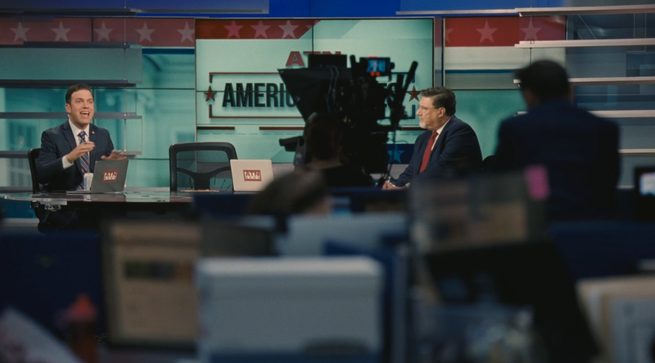
Watch. Episode 8 of the fourth and final season of Succession (streaming on HBO Max), which features a cameo from the lead writer of this newsletter, Tom Nichols.
P.S.
If you’re still trying to make sense of the CNN town hall with Trump last week, I recommend Tom Nichols’s newsletter edition on the subject. “Instead of an important one-on-one interview with a dangerous and malevolent demagogue, CNN presented another episode of Trump’s ongoing reality show,” Tom argued in a forceful and compelling essay.
— Isabel
Katherine Hu contributed to this newsletter.