Travel: Flying Down to Europe
Chile is surprisingly European—except that it’s warm in February
by Barbara Wallraff
ARTURO Cousiño, a largish, faintly imperious man in his thirties, is . the scion of a family that once had shipping interests and owned coal and silver mines in Chile.
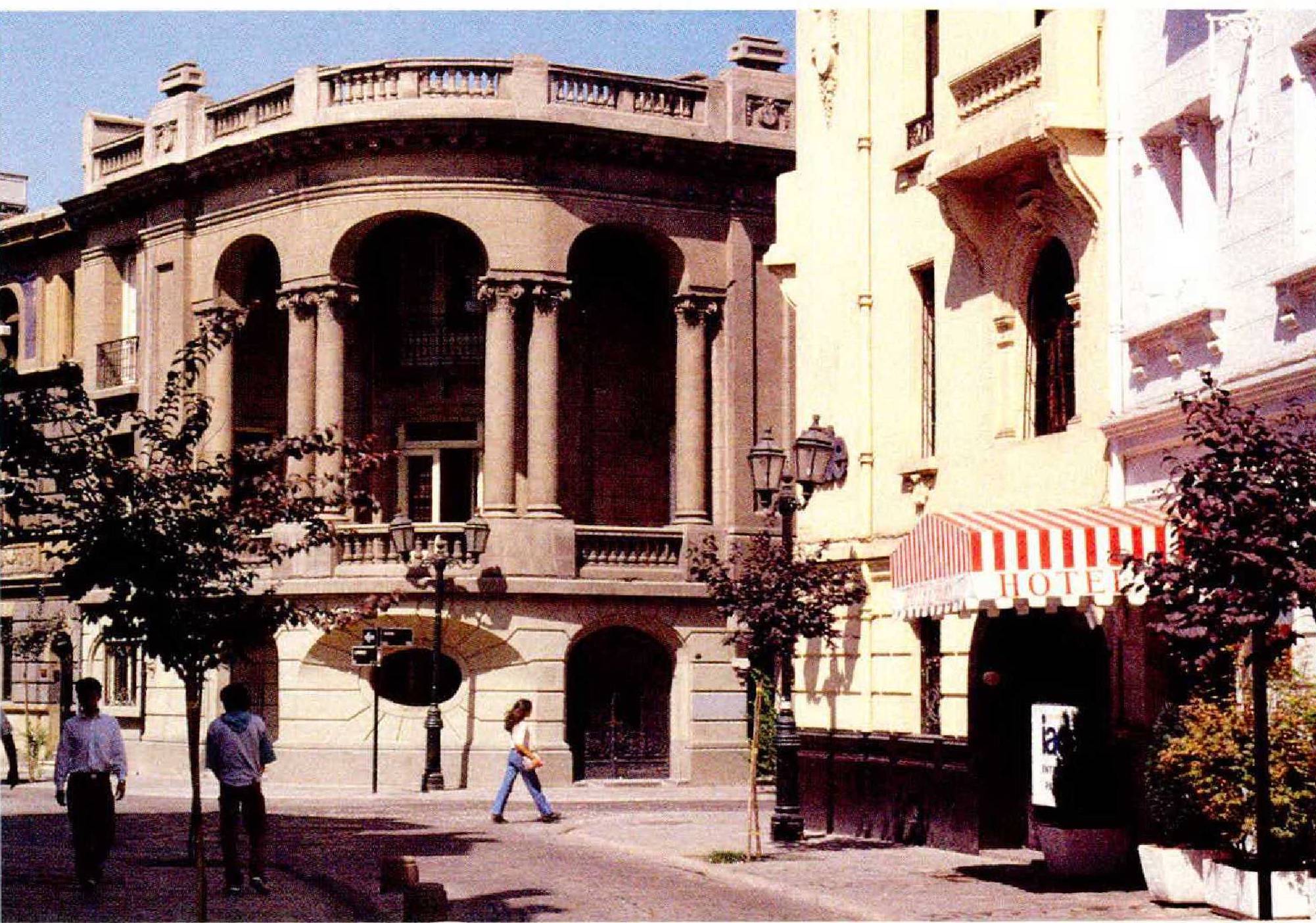
From the 1870s to the 1930s Arturo’s forebears lived in the Palacio Cousiño, a stupendous mansion in the heart of Santiago. the Chilean capital; in 1940 Arturo’s grandfather gave the mansion to the city government. With its marquetry and majolica, its silver inlays and gold thread, its early technological marvels (the first elevator in the nationl a steam-heated conservatoryl) and gallery of paintings of the French Revolution, the house would not be out of place in New York City—say, around the corner from the Frick mansion—or Newport. What I couldn’t get over about Arturo when I met him, on a hot, sunny day last February, is that although he has lived almost all his life in or near Santiago, he has never set foot in the Palacio Cousiño. Nonetheless, he boasted to me after I FH Wall rail toured the mansion. “Because of all the family stories, I probably know it better than you, who have just visited there.”Arturo was giving me a tour of what is today the family’s principal business: the Cousiño-Macul vineyard, which sweeps across a tranquil piece of land on the outskirts of Santiago. From where we stood, among the grapevines heavy with fruit, I could see the ENTEL tower—like Seattle’s Space Needle—in the distance. Above us, in the op posite direction, the Andes towered.
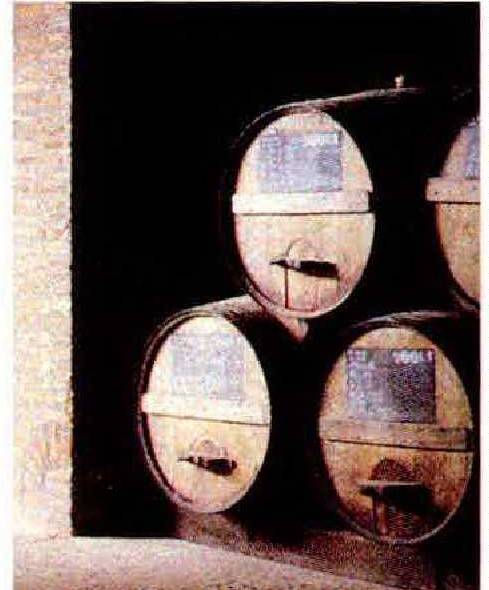
We moved on to the handsome nine teenth-century wine cellar. One half, Arturo pointed out, was built in the French style, with a single wide vaulted ceiling; the other half was built in the Spanish style, with two narrower vaults. Perhaps the reason for the difference, he said, was that shortly after the first section was completed, there was an earthquake, as there tends to be in the region every ten years or so. “Don’t ask me how long it has been since the last earthquake,” he said, in his perfect English, as we climbed the stone steps toward the afternoon sky. Without pausing he answered himself: “Ten years.”The margins of the steps were spattered with wax from the red candles, set in wrought-iron holders on the stone walls, that are lighted during daily public tours of the vineyard. We continued up the steps. Arturo chatting urbanely on. Suddenly I blanked. Where am I? Is this France? Italy? Spain?
IN Chile last winter my husband and I found ourselves seemingly in odd corners of Europe all the time. We were more or less guests of the Chilean government—a status that brought us into contact with experts who helped us refine our itinerary, suggesting the most picturesque towns and steering us, in some of them, to hotels so new they aren’t in guidebooks. The real Europe is, of course, more uninterruptedly European. But the Chilean Europe has some big advantages. For one thing, it is a lot cheaper: the prices for our meals and hotels seemed not just lower than they would have been in most European countries but lower, by at least a third, than they would have been in the United States. For another thing, Chile’s seasons are reversed, so in the dead of the U. S. winter you can take a trip like ones you have enjoyed in Europe in summertime.
Throughout our stay I tried out on people my theory of Chile as European. Chileans who knew Europe tended to agree vaguely: they were disagreeing, in their polite way.
Then they would venture that perhaps Argentina is somewhat more European— by which, it turned out, they meant that Buenos Aires has better shopping and restaurants than Santiago.
That’s true, though I didn’t happen to care about buying European goods, and I certainly ate well enough. In fact, I was thrilled to find several kinds of seafood new to me, including picorocos, barnacles that reminded me of lobster; delicate pink-andwhite razor clams; and toothsome locos, abalones the size of filets mignons, which were quite inexpensive until a decade or so ago. when the Japanese discovered them and began snapping up most of the harvest.
European tourists, who seemed to be about as prevalent as tourists from the United States—not prevalent at all—responded differently to my theory. They knew what I meant. Both the manners of the people and the look of the countryside struck them as familiar—except, they said, the Chilean landscape is “grander” and “wilder” than its equivalents back home. These equivalents, we agreed, are Swiss, Mediterranean, and Norwegian.
Switzerland was the European country I was reminded of most often. I began to get an inkling of Chile’s Swiss qualities in my first hours in the country, in the capital, when the hotel where we were staying —the calm, business-oriented Santiago Park Plaza (800-448229-8355)—collected my suitcase. whose handle had broken at the New York airport, and promised to have it repaired before we were to leave town, a few days hence. The bag was back that evening, fixed. No charge. The next day I watched a cabdriver chase down a man who had just gotten out of his cab, in order to return a pen the man had dropped.
I saw another, more precisely Swiss Chile over the weekend, at a simple resort called Termas de Cauquenes (01 1-567229-7226), a bit more than an hour’s drive due south from the city. This site has been known for its thermal baths since well before Charles Darwin visited it, in 1834. Today the hostelry at the baths is owned and operated by the Acklin family, who are Swiss immigrants. They have restored the old stained-glass windows and the marble tubs in the bathhouse (or, where necessary, replaced the tubs with clean new ceramic); women in white uniforms draw your bath for you.
Besides being hoteliers and keepers of history, the Acklins—a Brueghelianlooking family—are excellent chefs. Sabena Acklin has succeeded her father, René, in the resort’s kitchen. For lunch in the airy, old-fashioned dining room I ordered a meat terrine to start, ossobuco, and a big bowl of fresh raspberries for dessert, after which I followed the advice of friends who had told me to order herb tea instead of coffee—not because they disliked the coffee, as it happens. The herbs, in a wicker basket, were so freshly picked they weren’t even wilted. I chose what I liked, and the waiter poured hot water over the selection in my cup. It was minty, refreshing, delicious.
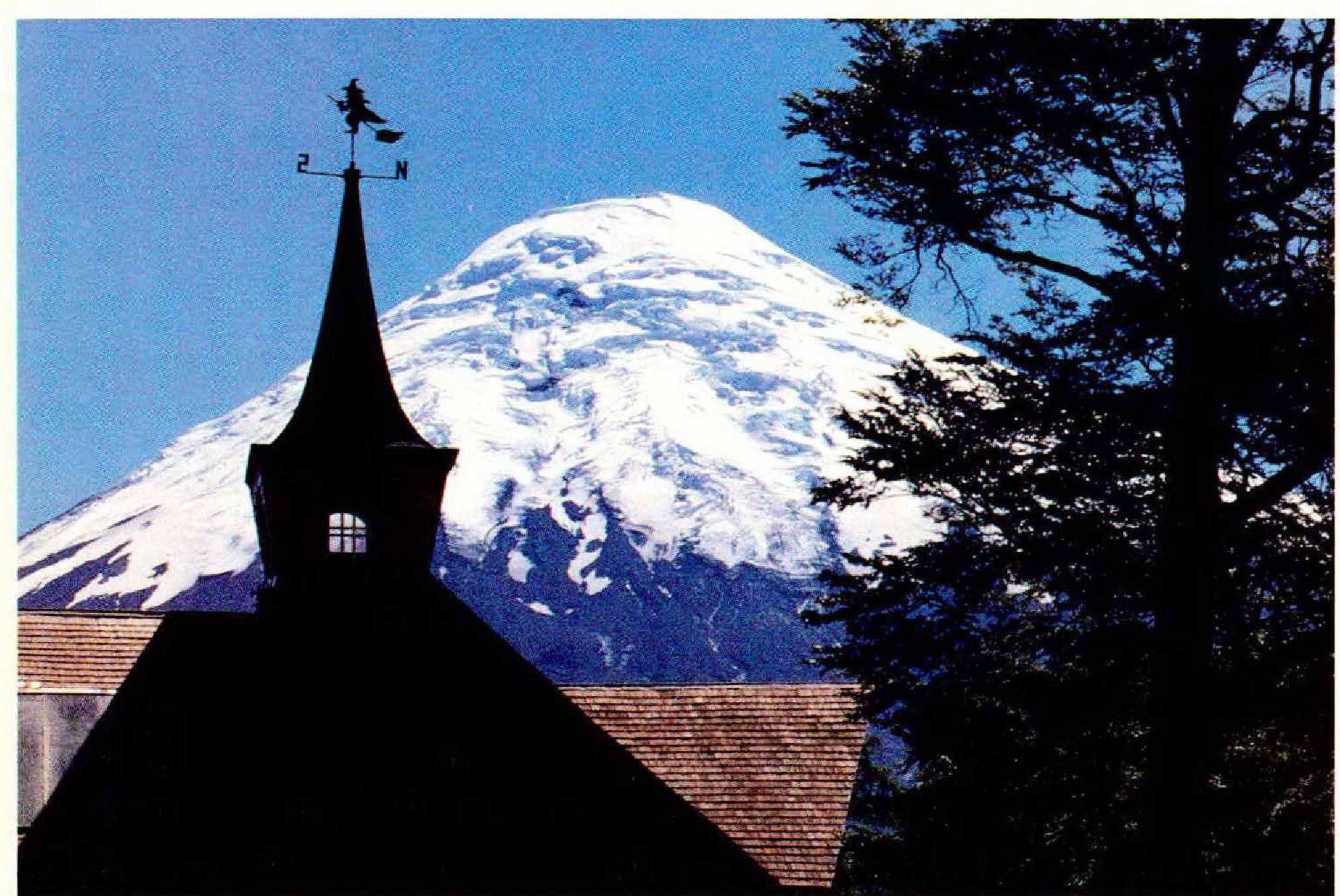
But the most blatantly Swiss part of Chile is the country’s Lake District, far to the south of Santiago and Termas de Cauquenes. Here black-and-white cows graze beneath alpine massifs, gingerbread villages dot the shores of sparkling lakes, and the culinary specialty is usually kuchen. The exotic place-names and the minority population of Mapuche Indians provide ample clues that this is Switzerland with a twist—but what make the point best are the area’s enormous, stunning, symmetrical active volcanoes, which loom into view like something out of Jurassic Park.
In the Lake District, I enjoyed our visit to Pucón, a lively small town that serves as a point of departure for hiking, fishing, and rafting trips, among other outdoor adventures. The Gran Hotel Pucon (011564-544-1001), where we stayed, sits on the shore of Lake Villarrica. Rooms on the shore side have views of the lake and its swimming beach, and thee others have views of the Villarrica volcano, seven miles away—though in the clear mountain air those seven miles look like nothing. The Chilean government built the Gran Hotel Pucón in the thirties, near a railroad depot, in part as a public-works project and in part to encourage Chileans to get out into their beautiful countryside. The place reminded me of the big old hotels in our western national parks.
The best plan is to fly from Santiago to the Lake District and rent a car there (you may want to rent another one in Santiago, at the beginning or end of your trip, for visits to Termas de Cauquenes and the Mediterranean-like coastal towns near the city). Chile’s trains are not as tidy and, well. Swiss as they once were, and in any case neither they nor the buses, which are now the public transportation of choice, will give you the freedom that a car will.
From Pucón we drove to Frutillar Bajo, a village two Bavarianlooking, flowerbedecked blocks deep along Lake Llanquihue. Here we stayed at the sleek little lakefront Hotel Ayacara (011-562-236-0897), and here the volcano, named Osorno, was behind the lake, poking up right next to the rising sun. Chileans tend to take their vacations strictly in season, which is to say in January and February. We arrived in Frutillar Bajo a day or two into March, and had the town almost to ourselves. In fact, the trick at dinner turned out to be finding restaurants where we wouldn’t be the only patrons.
Frutillar Bajo is a good base for excursions to the various scenic spots in the area, including the drop-dead-beautiful Lake Todos los Santos. This clear, serene lake, the centerpiece of Vicente Pérez Rosales National Park, is bordered with volcanic sand the color of cocoa. The jagged surrounding mountain peaks look like the mountains children draw when they’re working from their imaginations.
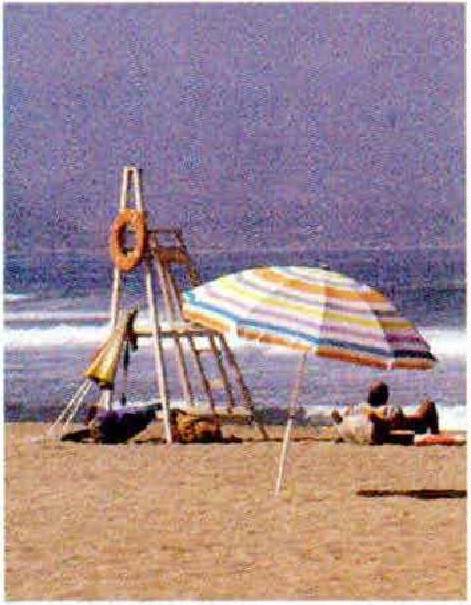
Sometimes the Mediterranean Chile intersects with the Swiss Chile. In rural places including the Lake District, the vistas often look Tuscan, and old characters with leathery faces and bright eyes drive oxcarts down poplar-lined lanes. Of course the beach resorts are still more Mediterranean than anything in Chile’s interior. Decades ago Viña del Mar, an hour northwest of Santiago, was a fashionable resort town, and a dignified old hotel or two and a casino are today mementos of that era. But a clutter of condos and snack bars has driven the taste-makers an hour or two farther north, to Cachagua, Zapallar, and Papudo.
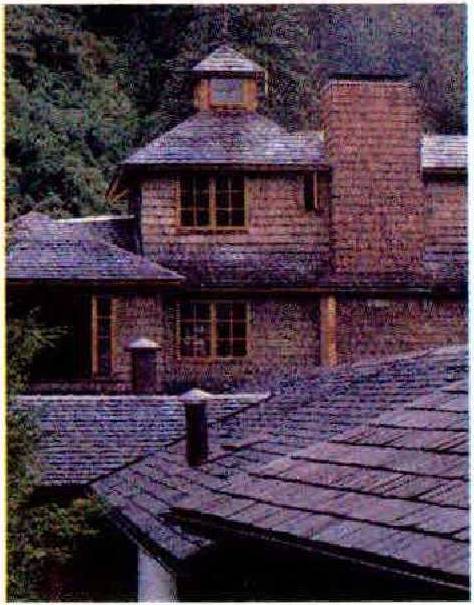
The penguin colony near Cachagua does nothing to strengthen the Mediterranean illusion, I admit. Zapallar, where we stayed, is more like it. The town amounts to a community of grand houses, some old (Zapallar has existed since the turn of the century) and some new, clustered around and above a perfect little halfmoon beach. What appears to be one of the new grand houses is in fact a hotel, the postmodern-style Hotel Islaa Seca (011-563-371-1508). This has a pleasant restaurant and a lovely view across the bay. From our base there I felt instantly part of the town, ogling the architecture and gardens along the path down to the beach the way a new neighbor, rather than a tourist, would.
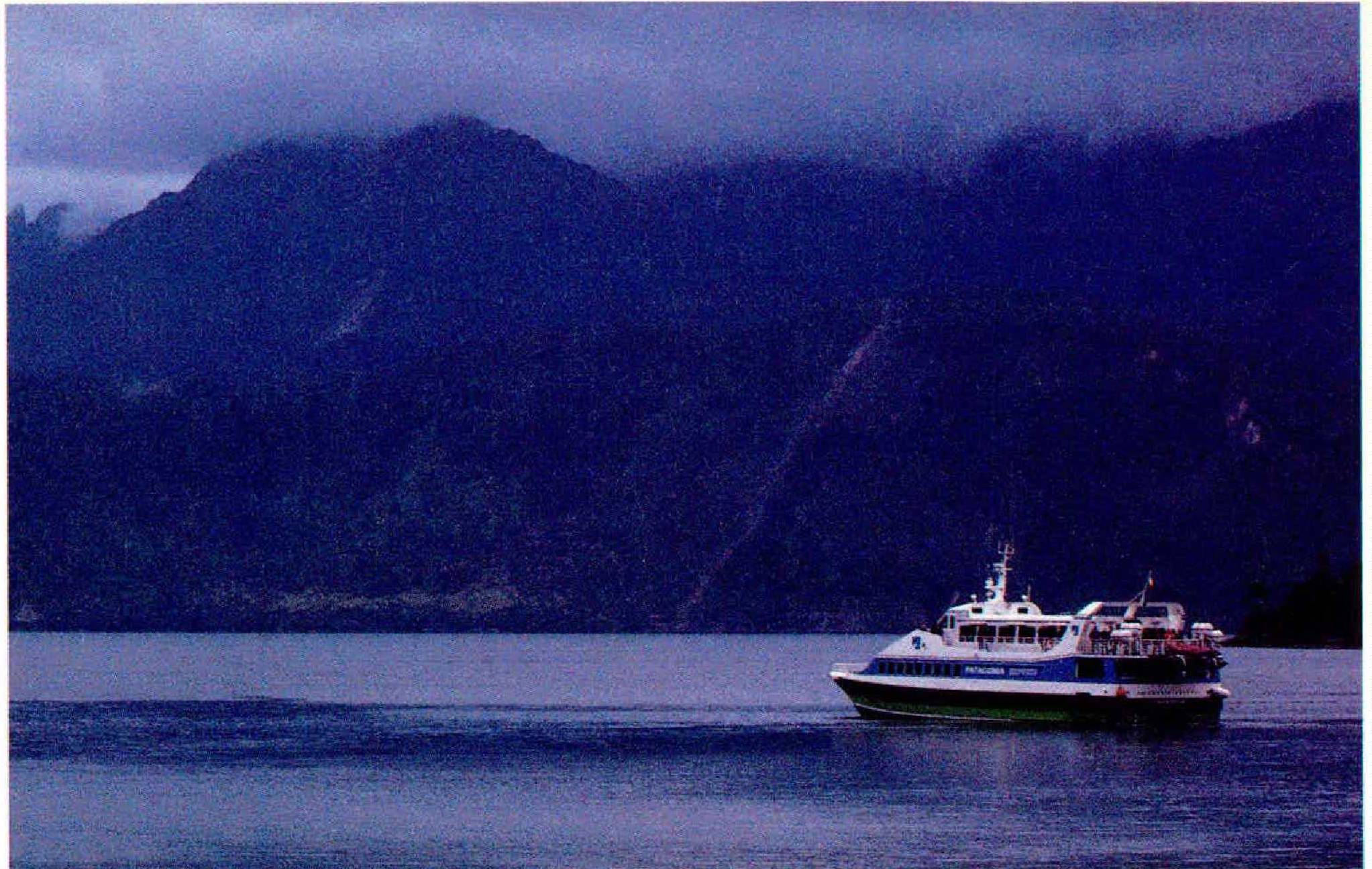
AND then there’s the Norwegian Chile, an immense fjordland running along the west coast of South America down through Patagonia to Tierra del Fuego, at the continent’s tip—just as Norway runs along the west coast of Scandinavia. Or is this region Alaskan? Really, it is like no end of the earth other than itself. Once you have toured the parts of Chile that readily suggest comparisons, you simply must see the south, which is incomparable.
I think I remember being taught in grade school that the Pan-American Highway runs the full length of the Americas. But near Puerto Montt, which is considered the southernmost town in the Lake District, the PanAmerican Highway veers out onto Chiloé island, straggles across it, and stops dead. Chile continues south for another 650 miles.
The Carretera Austral is the road that will one day finish the job the Pan-American Highway started, but today it is far from complete. For the time being, to see this remarkable part of Chile you must either undertake some very rugged travel or join a packaged excursion of one kind or another. We flew an hour down the coast from Puerto Montt to join a three-day Patagonia Connection excursion (011-562-225-6489) to the Termas de Puyuhuapi resort. From the moment the plane was airborne and we could look down on trackless stretches of the Andes, we were enchanted. The first day of the excursion was devoted to touring majestic fjords in a big catamaran outfitted with plush armchairs. Then we lazed around for a day at the resort and lolled in its hot springs. For the denouement we got back on the catamaran to visit the Laguna San Rafael National Park and its large turquoise glacier.
Once we arrived at the park, small groups of us were taken in an inflatable boat to view the glacier at close range. This particular glacier has long confounded scientists with its pattern of advances and retreats. Today it is retreating at a rate of more than 600 feet a year—or, rather, the forward parts are breaking off and falling into the sea—and the scientists wonder whether it will soon disappear altogether.
The catamaran crew found a little iceberg bobbing in the sea, hauled it aboard, and began cheerfully chopping up the turquoise ice to serve in Scotch to the passengers as we emerged from the chilly inflatable and clambered back on board. What a luxury! In the remote southern Chilean fjordlands, I reflected, Scotch itself is quite a luxury, coming from so far away. At that point in the trip, finally, I had no doubt at all where I was.