The Echoes of Northumbria: From Hadrian's Wall to Durham Cathedral
by Peter Davison
AS I grow older, and my brain spends more of its time parked in front of a computer screen, I yearn for a holiday that freshens mind and body and doesn’t force me to stare through the rigid glass of a car’s windshield all day, so as to Cover a Lot of Ground. The point of travel, for me, is to get to the bottom of a new reality, ideally one as remote as the Wonderland that Alice found at the bottom of a rabbit hole.
So my wife and I have worked out a strategy: We pick a distant location and then choose a single base of operations at which to stay for a couple of weeks. We turn our backs on ambitious auto travel. We try to concentrate on one small, choice region and explore it mostly on foot. We unpack only twice: when we arrive at our destination and when we return home.
If you’re going to follow this program, you’ve got to be prepared from the beginning to ignore the disapproval of your knowledgeable friends (“What! You didn’t visit Lindisfarne / Lourdes / Lerici when you were so close?”). Your motto must be “Less is more”—and this will justify your ransacking a coherently limited territory, for the sake of rewards far more memorable than checking off names on a list of scattered destinations.
The general rules my wife and I follow are: 1) Seek out in advance a place where walking is tolerated, or even encouraged. Great Britain. France, Germany, and Scandinavia rank high on our list. 2) Make sure that good small-scale maps of the region are available, either in this country or at your destination. 3) Look for a place whose food and drink will be an object of pleasure or, at the very least, of curiosity. We follow this rule whether we plan to eat all our meals at restaurants and picnics or to cook some of them ourselves. 4) Consider renting a furnished house or apartment, especially if you want to stay more than a week. Renting is often desirable, though not essential. 5) Once you’ve chosen your destination, plan your journey so as to get the long-distance travel out of the way in one or two big jumps. We find that this usually involves an airplane flight followed by a train or bus trip to take us to the station nearest Go. There we rent a car for the last miles, so as to have it handy during our stay, for short hops to our walks and for detours. Rarely do we chalk up more than 150 or 200 auto miles in a couple of weeks. At the end of the stay we return the car to the station and hop public transportation back to the international airport.
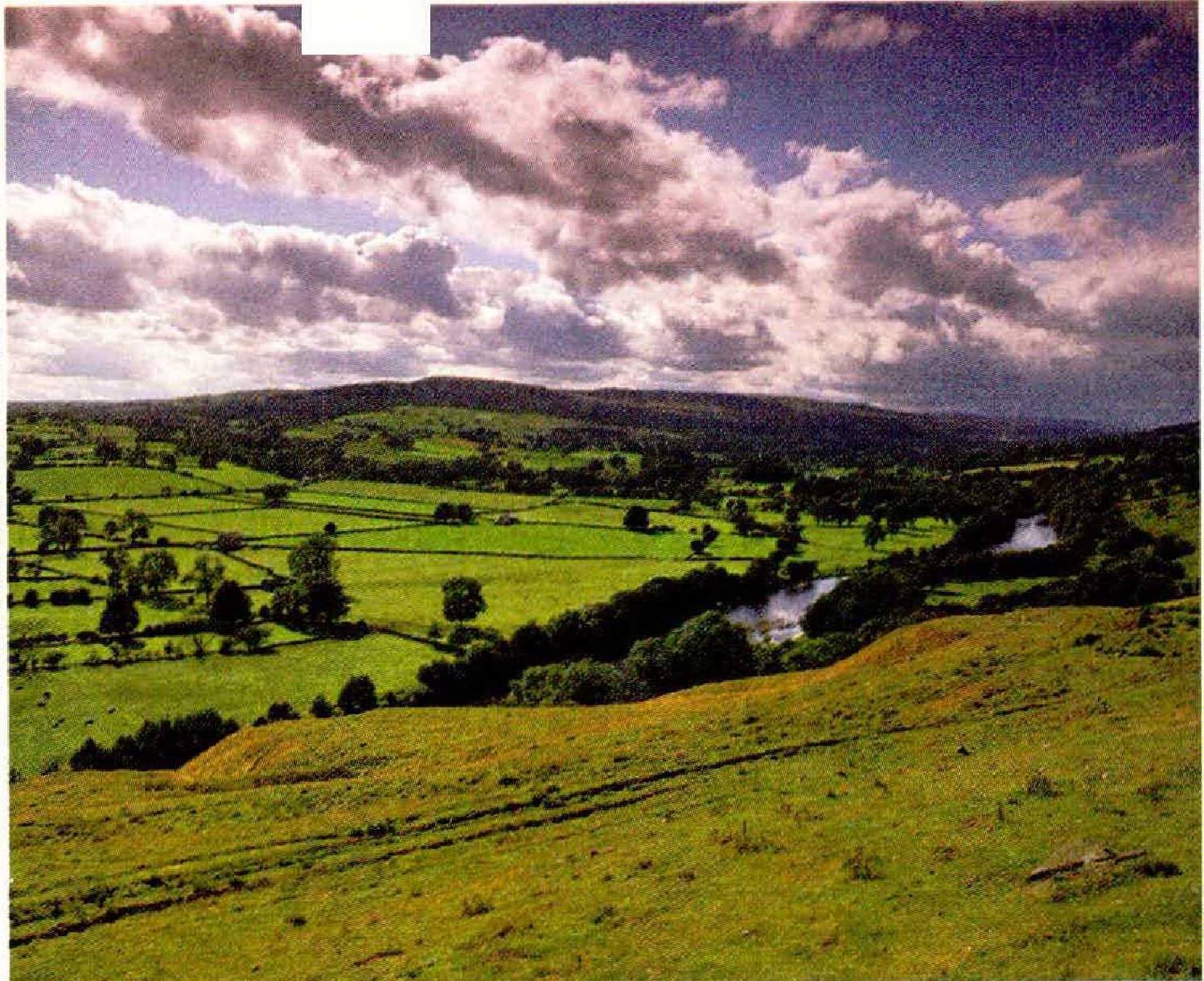
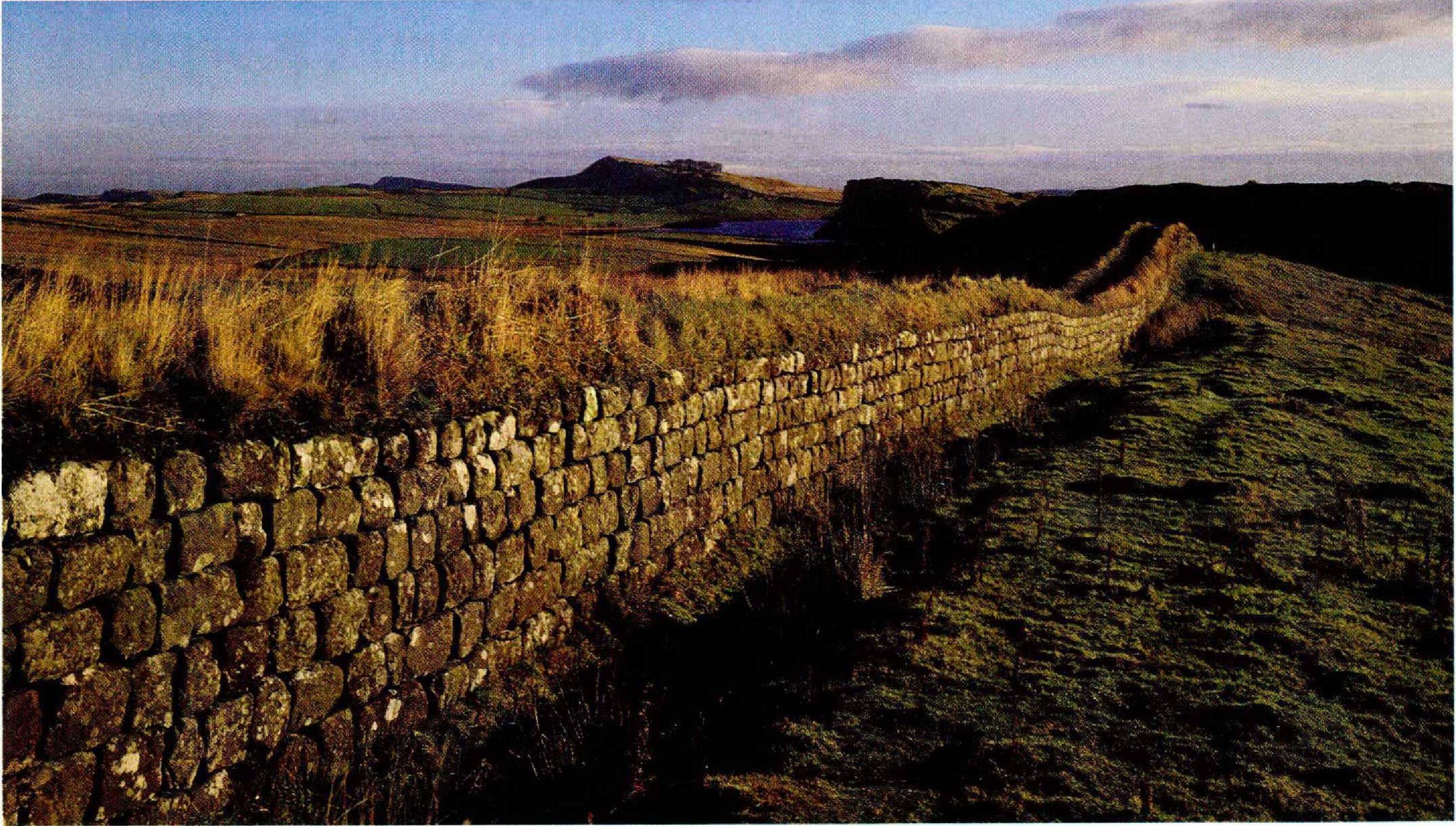
Toward the solstice last summer, to exploit the longest daylight of the year, we set forth for the lonely reaches of Northumbria. This is in the northeast of England, and includes the Roman wall that in the second century A.D. Hadrian constructed between the Atlantic Ocean and the North Sea to keep out the unspeakable Picts. It also happens to be the region where, 1,800 years later, my father spent his youth, but I was more interested in the present landscape than in genealogical research. This borderland between old England and old Scotland is today, we happily discovered, the most sparsely inhabited region of England.
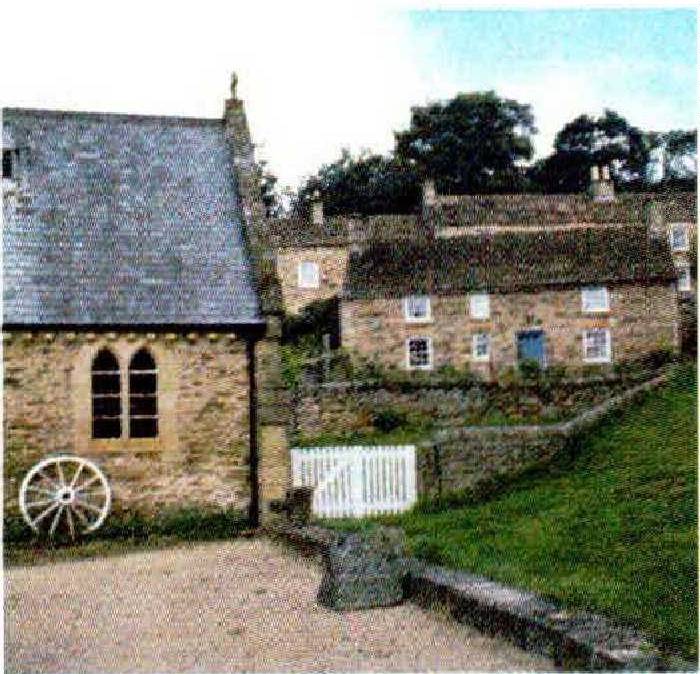
We took an overnight flight to Heathrow Airport and a bus to King’s Cross station, and, after an agreeably scenic and extremely comfortable threehour train journey from London, disembarked at Newcastle upon Tyne. Having reserved a rental car, we nervously but without incident negotiated twenty-four miles on what seemed to us to be the wrong side of the road along the border between the counties of Northumberland and Durham. In forty-five minutes we had arrived at the tiny, trim village of Blanchland, our designated command post, where a friend had recommended the Lord Crewe Arms Hotel. As a history of the village succinctly states, “Blanchland is in fact an eighteenth century model village, built on the plan and out of the remains of a mediaeval abbey.” The Lord Crewe Arms Hotel incorporates most of the abbey and some of the old village.
THE pleasures of settling for a week or two in an inn like the Lord Crewe Arms are not to be underrated. That inn’s rooms vary in size and splendor, but ours was spacious, and generously and attentively provided with light, heat, a view, and spanking cleanliness; our (private) bathroom was positively luxurious. The hotel contains both a pub—downstairs in an eerie, cryptlike space that was once the abbot’s private chapel— and a restaurant, upstairs, with a breathtaking view of the moors.
Many locals come to the pub for a daytime or an evening pint of ale, and well-cooked meals that are eaten in the cool crypt, in front of the deep orange flames of a coal grate in an adjoining parlor, or, on sunny days, in the garden. The restaurant, in a graciously proportioned eighteenth-century dining room, serves ample English breakfasts (ranging from excellent muesli to the best kippered herring I have ever tasted, to say nothing of bacon, eggs, sausage, tomatoes, fried bread, and all that) and robust dinners, both of which may be added to the room rate for a reasonable total of $80.00 a day per person (a sum that includes taxes but not extras like alcoholic beverages and personal laundry). This arrangement assures you that you will be not just predictably but sumptuously fed, and so you can give your days over to your favorite forms of exploration or rest.
Having unpacked, and with our maps at the ready, we turned our attention to the details of the terrain. We planned our explorations to reach out from Blanchland like spokes from the hub of a wheel. Every day we set out by car or on foot for a destination from which we would walk five or ten miles—by streams, through forests, along the Roman wall, over pastures or bleak, curlew-haunted moors, arranging our expeditions so that we would fetch up, after a walk of three or four hours, at a pub like the Smelter’s Arms, in Castleside; or the Twice Brewed Inn, at Once Brewed, at the walk or the Antiques Bar of the Allenheads Inn, at Allenheads; or the Half Moon Inn, at Durham; or the Lord Crewe Arms itself.
The food at pubs ranges from sandwiches to ham and salad to steak-and-kidney pie (with chips, of course—chips with everything) to such oddities as baked potatoes stuffed with chili. The ales available are immensely varied and wondrously satisfying. There were such internationally famous brews as Worthington’s and Burton’s Best Bitter, and less familiar ones such as Vaux Samson Real Ale and a particularly fetching variety known as Speckled Hen. After five thirsty miles the ale is more welcome than the provender, especially when you can be confident that awaiting you at the end of the day will be a repast including the likes of smoked salmon, turbot, wild boar, salad, and a cheese or black-currant delice.
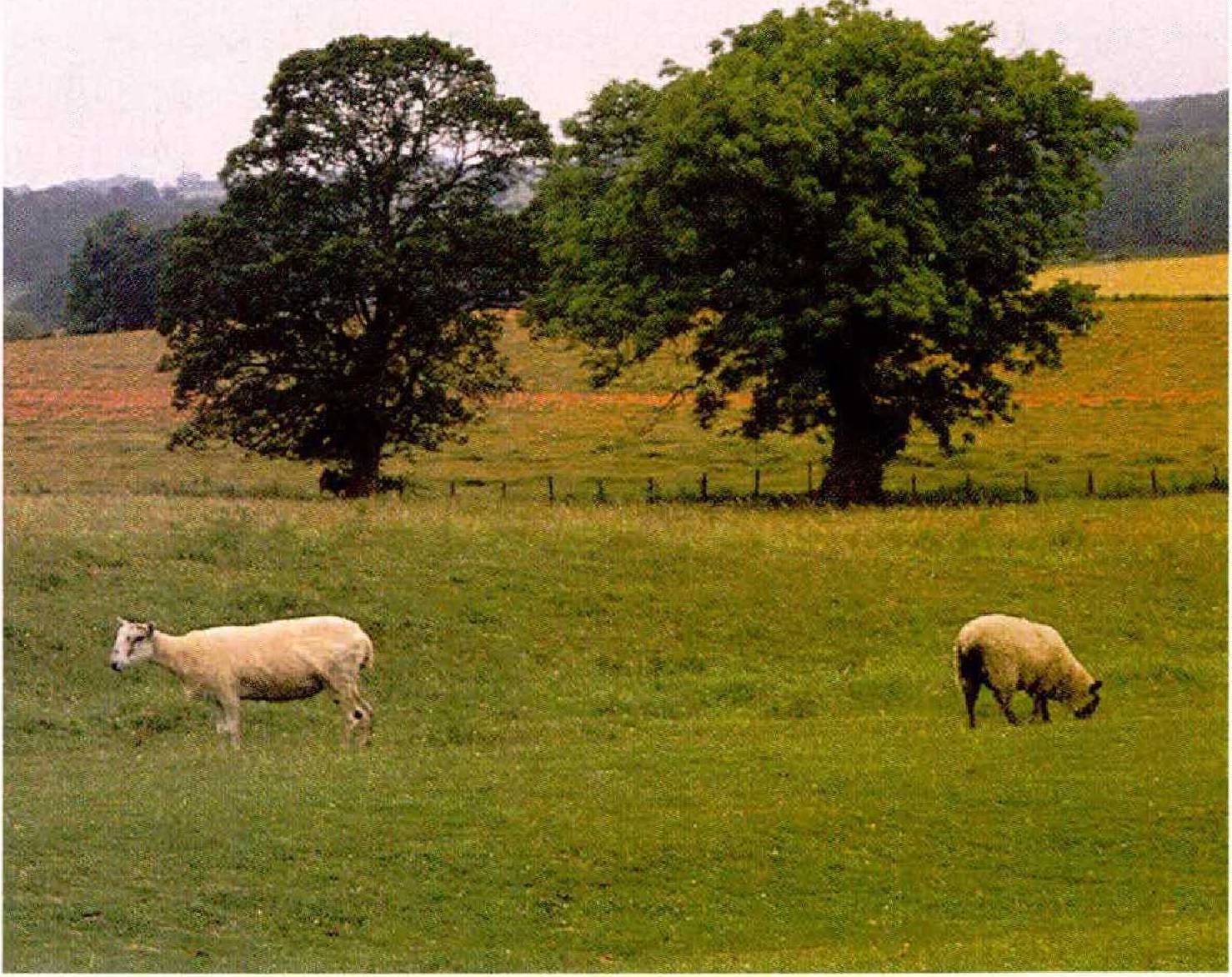
We had prudently prepared for all sorts of weather, but found ourselves in the grip of a particularly cold and rainy late spring, which did not bother us except for the day on the northwest spoke when we were virtually blown off Hadrian’s Wall. The walking gave us wonderful nourishment for eye and ear alike. In this part of England sheep outnumber the human population, and rabbits outnumber the sheep, especially on the high fells. You sometimes encounter other walkers, or even cyclists, on such clear footpaths as the southerly moorland trail along Waskerley Way. Following the bed of a disused railway line, Waskerley Way offers views across the domed, lofty fells that seem to stretch out forever; in the spring the brightgreen landscape is dotted with thousands of variegated wild flowers.
We encountered a shepherd at Red House who looked for all the world like John Brown, with a great shaggy beard, a herd of about 600 Swaledale and Scottish Blackface sheep, a quartet of excellent border collies, and a bright-red trail bike. “It’s bleak here,”he remarked cheerfully. “Bleak.”Then he delivered a solemn warning about magpies, which were plentiful. “Dreadful bad luck,” he exclaimed in a broad Northumbrian accent. “Only yesterday I saw one at breakfast time, and before the day was done, I had two dead sheep. I’ll tell you summat: if you see a magpie, whip off your hat and spit in it as soon as you can. They’re dreadful bad luck.”
Armed with this invaluable advice, we set off down the pathway, with gorse blooming in rich yellow among its darkgreen thornbushes and broom beginning to reveal its paler yellow at the tips of its branches. We passed ungrazed fields dotted with mignonettes, bluebells, buttercups, dandelions, and asters. Along the horizon the occasional cultivated field blazed out, a pale-yellow patch of distant flax-bloom. In the pastures ewes and lambs baaed to one another and lambs butted their mothers’ udders for milk. Now and then we would see a solitary horsewoman out riding with her dog. As many as a hundred crows gathered in a single field, and scores of rabbits scampered for cover into their warrens. We could hear the bristly spiraling ecstasy of skylarks, the startled mew of a lapwing, flashing black and white as she circled protectively over the half-dozen grounded puffballs that were her young chicks,
and the ghostly chortle of curlews, always seeming to come from an enormous distance. Nearby wrens and chaffinches gargled for joy—or purposes of territorial competition—and we could hear, from under the hedges, the guttural cluck of pheasants.
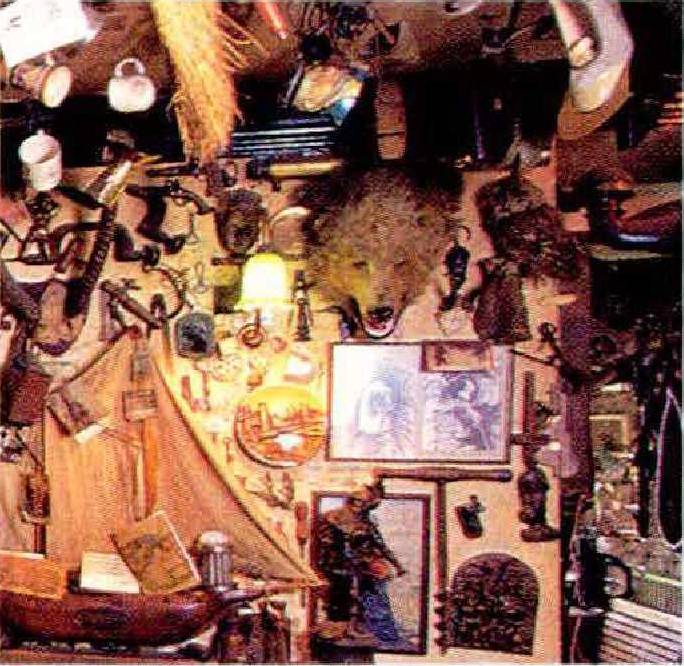
Other walks took us northwesterly through the cold wind along the Pennine Way and the astonishingly well preserved Roman wall, northerly by the side of such energetic streams as the Devil’s Water, which Constable might have painted, or to the southeast through deep woods only a mile or two from the great Norman cathedral at Durham, fresh from celebrating its 900th anniversary in 1993. To the southwest, above the old mining settlement of Allenheads, which claims to be England’s highest village, the whir of the wings of two red grouse startled us as we walked through the rain past a held full of uprooted stumps and the abandoned mine shafts of nineteenthcentury lead mines—a corrective for pastoral nostalgia. We escaped into the warmth of the most eccentric and entertaining pub of our rambles, the Antiques Bar of the eighteenth-century Allenheads Inn. Here the ceiling is festooned with horse collars and other harness, old shoes, trombones, tiger heads, stuffed weasels, maritime running lights, photos of RollsRoyces and weddings, pool cues, strings, nets, balls, antlers, and relics of the old mining days that W. H. Auden evoked in one of his earliest poems, “Allendale": “The smelting-mill stack is crumbling, no smoke is alive there. / Down in the valley the furnace no lead-ore of worth burns. . . .”
We settled in the dry, warm, curiosity-crammed bar with a bottle of Newcastle Brown Ale (rather strong) and a large helping of cottage pie, and chatted with other refugees from the weather and with the bartender and owner, Peter Stenson. His inn has an unusual dining room full of brazen objects (kettles, plates, plaques, dogs, and owls), another (where muddy shoes are not allowed) full of large photographs of members of the royal House of Windsor, and eight bedrooms of various sizes and degrees of luxury. The whole place has a cozy, cheerful air, and travelers might fare here for less than half the price they’d pay at the Lord Crewe Arms, though a bit more simply.
THIS system of travel—a dozen daily destinations radiating from a hub— requires you to keep a firm grip on the 1:50,000-scale Landranger maps, so as not to stray off course. The maps define each public footpath through farms and over stiles, footbridges, and fords. They matter-of-factly announce the clumpy, snarling northern-England place-names — Dirt Pot. Carts Bog. Haltwhistle, Muggleswick Common. Bearpark, Cowbyer’s Fell, Pennypie Farm, Click’em Inn, Crag Lough, Cauldron Snout—and their contour lines suggest which places merit admiration. Such guidebooks as Pub Walks in Northumbria, by Stephen Rickerby, and Northumbria Walks, in the Pathfinder guide series, are worth consulting, as is, juiciest of the group. Northumberland Circular Walks Compiled by Members of the Ramblers Association, which furnishes not only information but also entertaimnent: “The path now rises to a children’s playground and circles it to the left above the burn. Pass the heavily railed ‘under twelves’ playground and the pigeon lofts. Just before reaching the housing estate turn left. . .”With so solicitous and explicit a guide, who could possibly get lost on the way to Hole House, near Hexham?

Our mornings were spent in the company of bird, beast, landscape, and each other, having cordial disputes over map and guidebook. Around noontime we had a pub lunch, followed by a walk back to the car and a short drive home. Afternoons amounted to a nap followed by a maltwhiskey alert. Evenings concentrated on dinner, served by charming young waiters and waitresses from the village. The meal might consist of, say, seafood ravioli, pea soup, roast guinea fowl, mixed cooked vegetables, and sticky toffee pudding, along with half a bottle of decent claret. Meanwhile, we watched a local grande dame, at a neighboring table, make her imperious way through the pages of The Times, or eavesdropped on the chirping conversation of three young children with their parents. Later we often found ourselves talking over coffee with fellow travelers from other worlds—a financial journalist from Johannesburg, the owner of a fleet of taxis in Edinburgh, a hotelkeeper who had given up the raffish world of London casinos to pull beer at a pub in plainspoken Northumberland, a local woman whose husband was away at sea on a merchant ship. There is some advantage in being able to speak one of the dialects of English.
As we walked by day through field and over fell, and returned each night to the sweetly smoky chimneys of Blanchland, we found ourselves identifying not only with the beauty of the northern landscape but also with its history, and we began to hear the echoes, in the visionary distance beyond W. H. Auden, of the words of William Blake: