The Never-Married
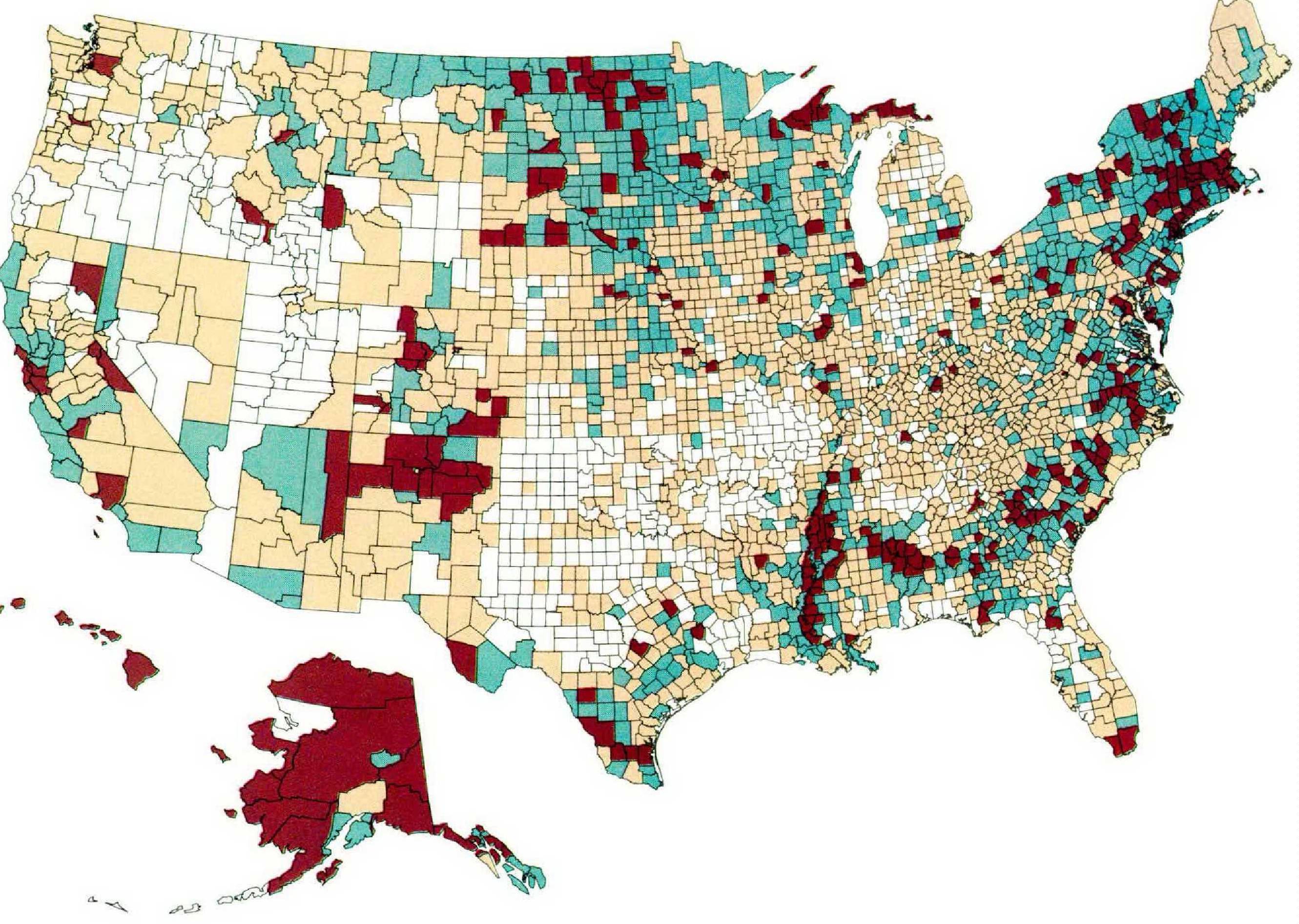
ABOUT NINE million Americans aged thirty-five or older have never married, and every year the number grows. To some extent the trend is a function of the increasing numbers of college-educated people, who traditionally marry later than other Americans and are more likely never to marry at all. The high proportion of never-marrieds in New York State, southern New England, and the larger West Coast cities in part reflects the high concentration of college graduates in those areas.
The places with the highest proportion of never-married people—22 percent or more of all people over thirtyfour—are Boston, New York City, the District of Columbia, and San Francisco. There the ranks of the never-married are augmented by large numbers of gays and lesbians and also of blacks. About 16 percent of blacks over thirtyfour have never married, as against seven percent of whites. The low marriage rate for blacks has much to do with the high rates of mortality and incarceration among black men—making for an unbalanced ratio of black men to black women. These factors also contribute to the high proportion of never-marrieds in the Mississippi Delta and the Southeast.
As for the clusters of nevermarrieds in the upper North Central states, marriage prospects for men there have been diminished by the flight of women to metropolitan areas —giving demographic resonance to Garrison Keillor’s gibes about the “Norwegian bachelor farmers” of Lake Wobegon, Minnesota. Marriage rates are similarly low in Alaska, as they have been since the influx of male oil-field workers in the 1960s. A similar pattern exists in the oil fields of southern Texas.
Northern Texas, however, contains counties with some of the lowest percentages of never-marrieds in the nation. That portion of the state is entrenched in a large region populated by conservative churchgoers who rarely defer marriage beyond their twenties. —Rodger Doyle
Percentage of people over 34 who have never married




Less than 4 percent
4 to 5.9 percent
6 to 7.9 percent
8 percent or more
Source: U.S. Bureau of the Census