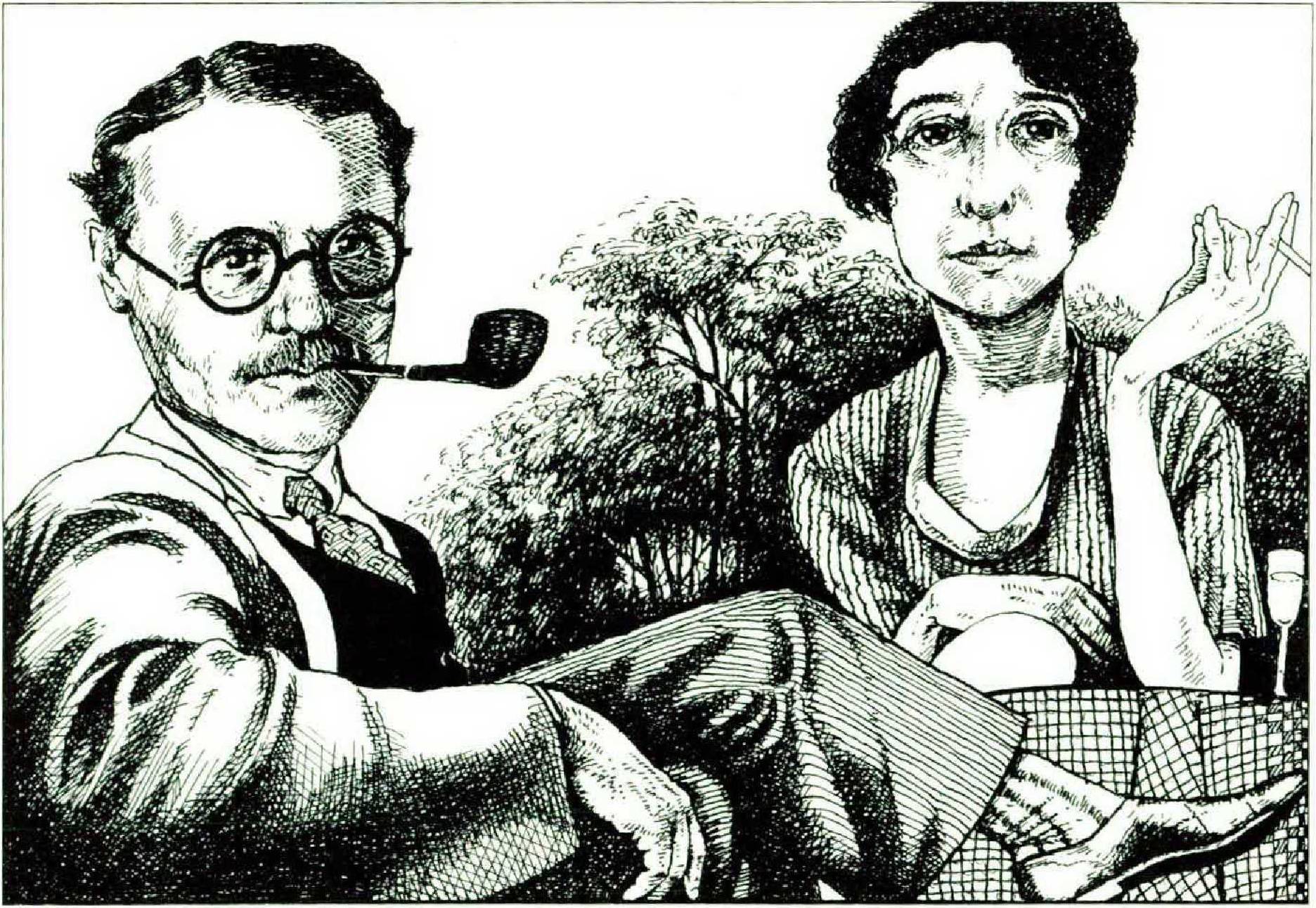
VITA AND HAROLD: The Letters of Vita Sackville-West and Harold Nicolson edited by Nigel Nicolson. Putnam’s, $29.95.
VITA (or Victoria) Sackville-West was a member of one of the ancient governing families of England, with its seat at Knole, in Kent. She was a writer of fiction and biography and, on the strength of her volume The Land, was considered something of a poet. This work was intended to be the English equivalent of Virgil’s Georgics, with its exhortation to an industrial nation to get back to its agricultural and horticultural roots. It seems to many readers now to be an embarrassingly old-fashioned effusion. Vita was, however, a great gardener, the writer of a regular gardening column in the London Observer, and the creator of one of the finest gardens in England, now in the hands of the National Trust, at Sissinghurst Castle (Vita and Harold’s residence from 1932). Profoundly conservative, even snobbish, she nevertheless became one of the matron saints of contemporary lesbianism. Her affair with Violet Trefusis was tempestuous, indiscreet, disastrous for one husband and very nearly so for the other. She made a dive for the wife of the South African poet Roy Campbell, with the result that Campbell attacked her and Harold in a poem and a volume of reminiscences. But her most lasting affair was conducted with Virginia Woolf, who wrote her a prolonged love letter in the form of the novel Orlando, in which Vita strides between one sex and the other and over several centuries of English history.
Harold Nicolson was the son of Lord Carnock, the scion of a newer aristocracy than Vita’s. Educated as a gentleman, he entered the diplomatic service, later became a member of Parliament, and earned fame and a knighthood as the biographer of King George V. He was, like Vita, soaked in literature and the visual arts; to both, however, music meant nothing: the tin ear of the English aristocracy is legendary. Harold was not quite a modernist, but he had a knowledge of the currents of contemporary literature that, as I remember, he transmitted over the BBC lucidly and humorously. He wrote one prophetic novel, Public Fares, which was rich in inner knowledge of the workings of government and, well before the Second World War, predicted the atomic bomb. He was a fine biographer and belle-lettrist, but his taste was limited by his class and the period of his upbringing. Vita wrote a novel called The Edwardians. Both she and Harold were Edwardians. Harold, like Vita, was a homosexual—but a highly discreet one. Public life enjoined care in the conduct of his liaisons. Vita had no such responsibility.
These two married and stayed married. They produced two sons, one of whom has edited this volume, but their relationship thereafter was not cemented by the pleasures and duties of the marital couch. They went their own sexual ways; what was left over from sex was a love that may be termed platonic. There is something to be said for such a marriage. Bernard Shaw, it will be remembered, had a marriage totally blanc, but it did not impair either his health or his longevity. A love without pawing and hot breathing, conceivably without kisses, satisfied the Nicolsons on a level incomprehensible to the Elizabeth Taylors of the world. The love letters collected here, a selection from more than ten thousand that have survived, use, sometimes excessively, the language of passion, but mostly the tone is one of quiet delight that both have a haven to steer to after excursions that have proved stormy, and not only on the sea of sex. The letters, especially Harold’s, cover a period of English history that contained two wars and a painful interim, to say nothing of an agonizing aftermath that is still going on. Harold was in the middle of things, from Versailles to Nuremberg; Vita was mostly at an unchanging center of digging and planting. His letters are, on the ground of their subject matter, the more interesting. He was, moreover, the better letter writer.
THE MILIEU they inhabited brought them into close contact with the leaders of society— British, French, American, even Iranian. From Harold we learn about Lord Curzon and Winston Churchill, De Gaulle, the elder Shah, the Windsors, Charles and Anne Lindbergh. From Vita we learn of the eccentricities of the Bloomsbury group. The literary figures who feature in their conjoined worlds are rarely on the highest level— Somerset Maugham, Cyril Connolly, Sinclair Lewis—but one letter from Harold concerns his meeting with James Joyce in the rue Gallilée in February of 1934. Here the Nicolson descriptive talent is disclosed at its best:
He told me that a man had taken Oolissays [Ulysses] to the Vatican and had hid it in the shape of a prayer book—and that it had been blessed in such disguise by the Pope. He was half-amused by this and half-impressed. He saw that I would think it funny, and at the same time he did not think it wholly funny himself. It was almost as if he had told me the story in the belief that it might help to lift the ban [on the novel] in England. And yet, being uncertain about it, he smiled deprecatingly as he told it, whereas his eyes behind his glasses were almost appealing.
I suppose that if I had been lunching with him at a restaurant. I should not have felt so strange. But the impression of the Rue Gallilée was the impression of a very nervous and refined animal—a gazelle in a drawing-room. His blindness increases that impression. His shy courtesy, his neatness, his twitching fingers with the rings. I suppose he is a real person somewhere—but I feel I have never spent half an hour with anyone and been left with an impression of such brittle and vulnerable strangeness.
Nicolson’s admiration for Joyce was a facet of an avant-gardism very rare in the diplomatic corps. It went along with a deep suspicion of anyone who could not recognize a Cézanne at a glance. In 1940 I, as a very young modernist, submitted for a literary prize a short story that went far in experimentalism. Nicolson, as judge, unhesitatingly gave it the award, and this initiated what I may term my literary career. The modernist sympathy did not endure. Harold and Vita joined in anathema of Nabokov’s Lolita on grounds of its capacity to corrupt. Strictly, with their sexual inversions, they had no right to be censorious. But arteries were hardening and ancestral conservatism was showing the bones of the family face.
The conservatism of Vita never really faltered, since she was never in the trimming situation of a man whose life lay in public affairs. Harold, naturally Tory, became involved in Oswald Mosley’s New Party, not foreseeing that it was to turn into the British Union of Fascists; later he joined the Socialists, believing that there was no future in laissez-faire. Vita was blimpish. When, during the Second World War, the Nazis dribbled bombs on Kent, she rained curses on all the Germans and wished to see every town in Germany leveled. Harold, even at the Nuremberg trials, had a certain tenderness for the high Nazis who were being humiliated on their way to the hangman. He was a tender man, while Vita was a fire. Neither of them had much direct knowledge of the lower orders. Their life was like a Hollywood film of the 1930s in which comic servants and cheery Cockneys stand for a real world hidden under a dream world of silver salvers and riding to hounds. Vita excoriated the welfare state, in which proletarian layabouts collected handouts and did no work. The war of 1939—1945, to both, was waged by the Germans against the English upper classes, with the common sort doing their immemorial duty of protecting the established order. They loathed substandard speech. A prospective secretary would be made to recite “How now brown cow” and accepted or rejected on the quality of her diphthongs. Were the established order to be bombed and the Nazis to invade, Harold and Vita had ready what they termed their “bare bodkin"—the equivalent of the SS cyanide capsule. Neither was as brave as the other thought he or she was.
If you want epistolary lyricism, here is Vita giving it on June 3, 1940:
Last night was one of the most beautiful nights I ever remember. I was out late by myself getting some of Beale’s sheep back into the field from which they had escaped. One lamb got égaré into another field and I pursued it through the long wet grass, led by its bleatings and the faint glimmer of its little body. The rim of the sky was still pink with sunset, Venus hung alone and enormous, and the silhouette of the sentry appeared above the parapet of the tower.
The region was being guarded from the lookout post at Sissinghurst. A letter from Harold in London the following day warned of a coming invasion of this pastoral Eden:
I force myself to see things at their worst. I do not really believe in my soul that the Germans will make a successful invasion of this country, but I do think they may bring off a smash and grab at several points. But I force myself to foresee what will happen if they land at Hastings and Faversham and make a pincer movement to cut off our forces in Kent. This will mean that there will be fighting at Ashford. It means that you will be in danger. Now that thought makes my heart stand still with a sick pause. But then it beats again. You are a brave person and you have a sense of responsibility. It would not be you to run away and leave your people behind. If you are told to do it, then you must go. But I see, and you see, that you must stick it out if you are allowed to. And finally there is the bare bodkin. That is a real comfort.
This letter betrays an attitude peculiar to the ruling class during that gorgeous but perilous summer. They honestly believed that the Nazis were coming to get them. We of the lower orders, who had to do the defending, never felt we were worth the Nazis’ attention. Nor did we ever believe they would come. Upper-class timorousness was the other side of the coin of upper-class privilege. Still, Nicolson took time off from his apprehension to award me that literary prize.
Having tried to disinfect himself “from the slime of Lolita,” Harold indulged in a Te Deum, or a Te Vita (after all, Vita means “life”), on September 8, 1959, saying,
You and I can at least feel that we have got the most out of such talents as God gave us. But I believe what I appreciate most about my gifts is the gift of seeing beauty. Why should I experience such a spurt of pleasure at seeing the tower of Staplehurst church catch the sun through the fog? And why should that pleasure be doubled if you are there to share it? Oh bless you my saint for giving me such a happy life.
That is touching. Qualifications are left to the secondary readers (ourselves), who have little to bless Vita for and much to reproach her with. For instance, she must have known the danger of engaging in lesbian love with Mrs. Woolf, who was never far from dementia and found her own hare bodkin in 1941 in a river. She is not, to us underlings, a fine democratic role model; that she should be a great gardener is attributable to a code of leisure that few may now take for granted. Harold, on the other hand, worked hard, wrote well, displayed love and loyalty, and, when Vita died, died of a kind of spiritual inanition. To American readers, this collection must have the quality of a museum. Ancient presumptions and prejudices are fossilized, and a way of privileged life shown in medallions. Love comes through, however, and as a testament of love superficially bizarre but fundamentally exemplary, this volume stands as a monument.