Word Histories: Etymologies Derived From the Files of the Dictionary of American Regional English
BY CRAIG M. CARVER
hood
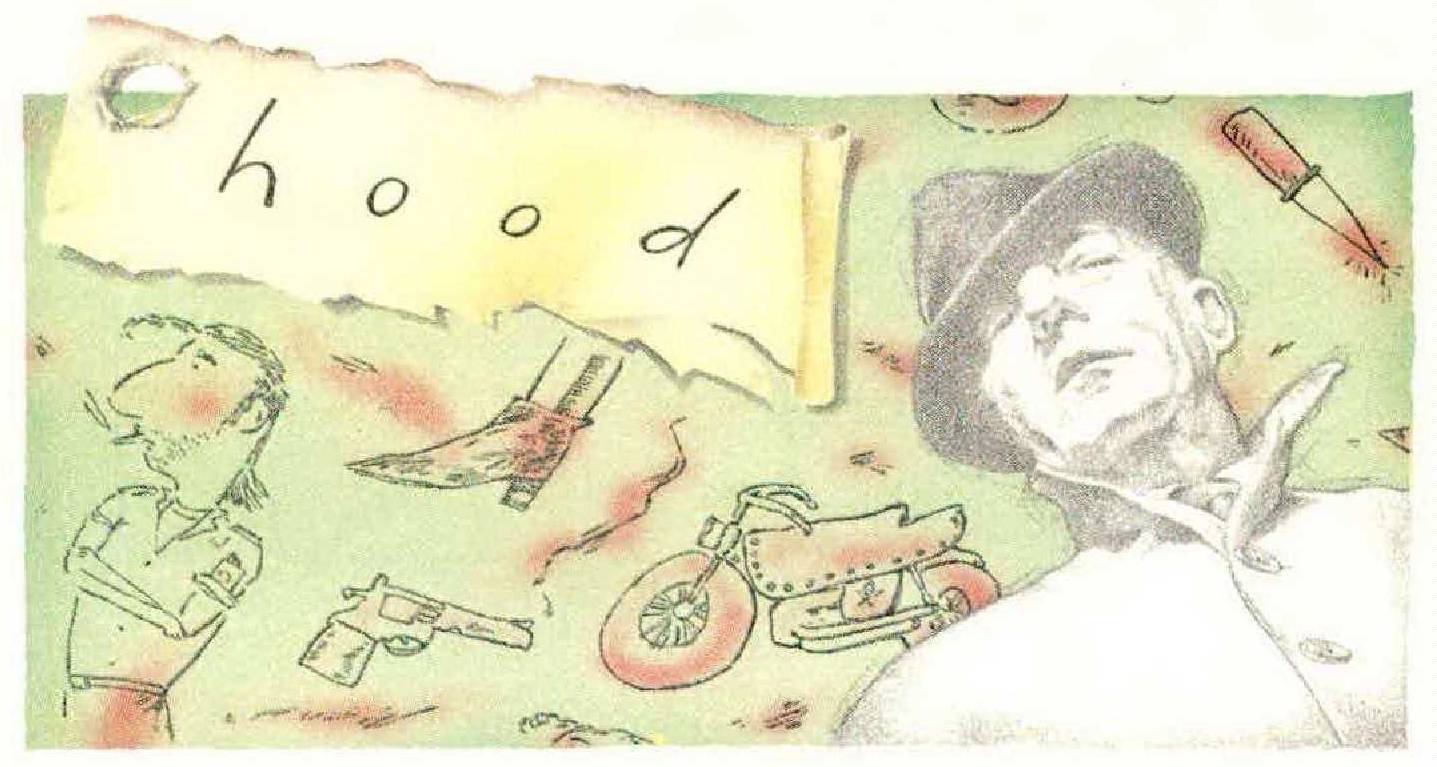
Last spring, following the publication of her unauthorized biography of Nancy Reagan, which alleged that Nancy Reagan and Frank Sinatra had been romantically involved, Kitty Kelley reported that she had received threatening telephone messages from “a minor hood.”Hood is short for hoodlum (thug, mobster), which first appeared in the San Francisco press around 1870. So rapidly did the term catch on (“Surely he is far enough away here in this hideous wild of swamp, to escape the bullying of the San Francisco 'hoodlums’”—Cincinnati Commercial, 1871) that even at the time its origin could not be traced. One version, from 1877, had a San Francisco journalist writing an unflattering article about the leader of a gang of street toughs, whose name was Muldoon. For fear of reprisal the journalist disguised the leader’s name by spelling it backward: noodlum. The typesetter mistook the handwritten n for an h, and the word was born. An equally imaginative version appeared that same year in the Los Angeles Express, which asserted that hoodlum derived from “Huddle ‘em, Huddle ‘em!”—the title of an earlier article in the San Francisco Times, which repeated the warning cry of its subject: “a gang of bad boys from 14 to 19 years of age" who “associated for the purpose of stealing.” Another, less plausible explanation links hoodlum to the Bavarian dialect hodalum, a variant of huddellump (a ragged beggar, a ragamuffin). Hoodlum had existed for a half century before the abbreviated form hood became a word in its own right (“None of those St. Louie hoods are going to cut in here, see?”—American Mercury, 1930).
flummery
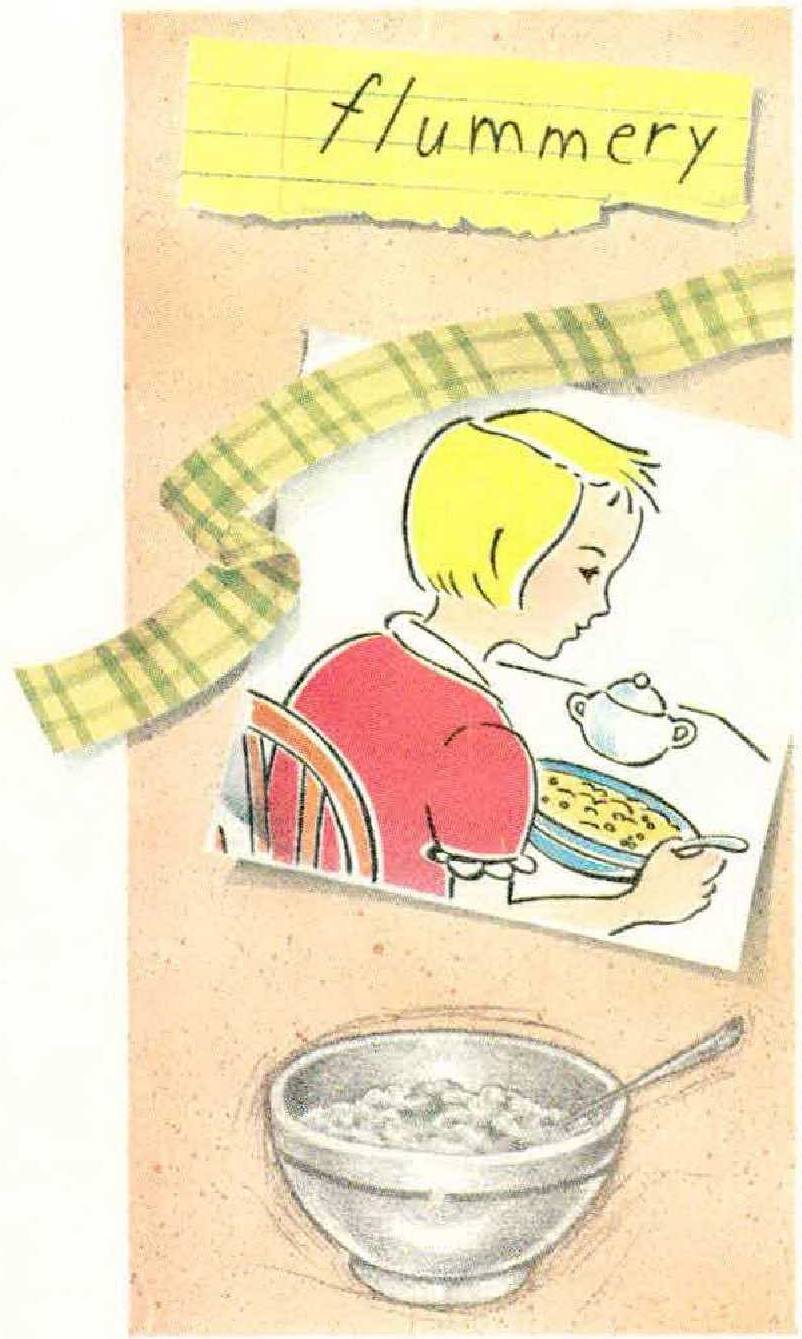
In a New York Times column last October about the Senate judiciary Committee’s hearings on the nomination of Clarence Thomas to the Supreme Court, Anthony Lewis called Senator Arlen Specter’s pronouncements during the proceedings “flummery. ” Flummery (foolish or deceptive talk, nonsense, humbug) is from the Welsh llymru, the name of a Gaelic dish that was made by soaking oatmeal in water for three or four days until the water became sour and starchy. It was then separated from the oats and boiled until a gelatinous mess formed. Its Welsh name derived from llym (sharp, severe), which gave llymrig (crude, raw, harsh), llymwus (of a sharp quality), and finally llymru. The English adopted the name in the early seventeenth century and anglicized the difficult Welsh pronunciation ll-, which has no exact equivalent in English, by spelling it flor sometimes thl(“The poore eat Rice sometimes, but most commonly Roots . . . and Fraize [a kind of pancake] like to our Thlummery”—Sir Thomas Herbert, A Relation of Some Yeares Travaile, 1634). By the next century flummery had been extended to refer to starchy sweet dishes and had developed its figurative meaning, “flattery, nonsense,” much the way pap (soft, pulpy food for infants or invalids), tripe (the stomach walls of a cow or ox used as food), and balderdash (an odd mixture of drinks, such as beer and milk) developed their figurative meanings.
gigolo
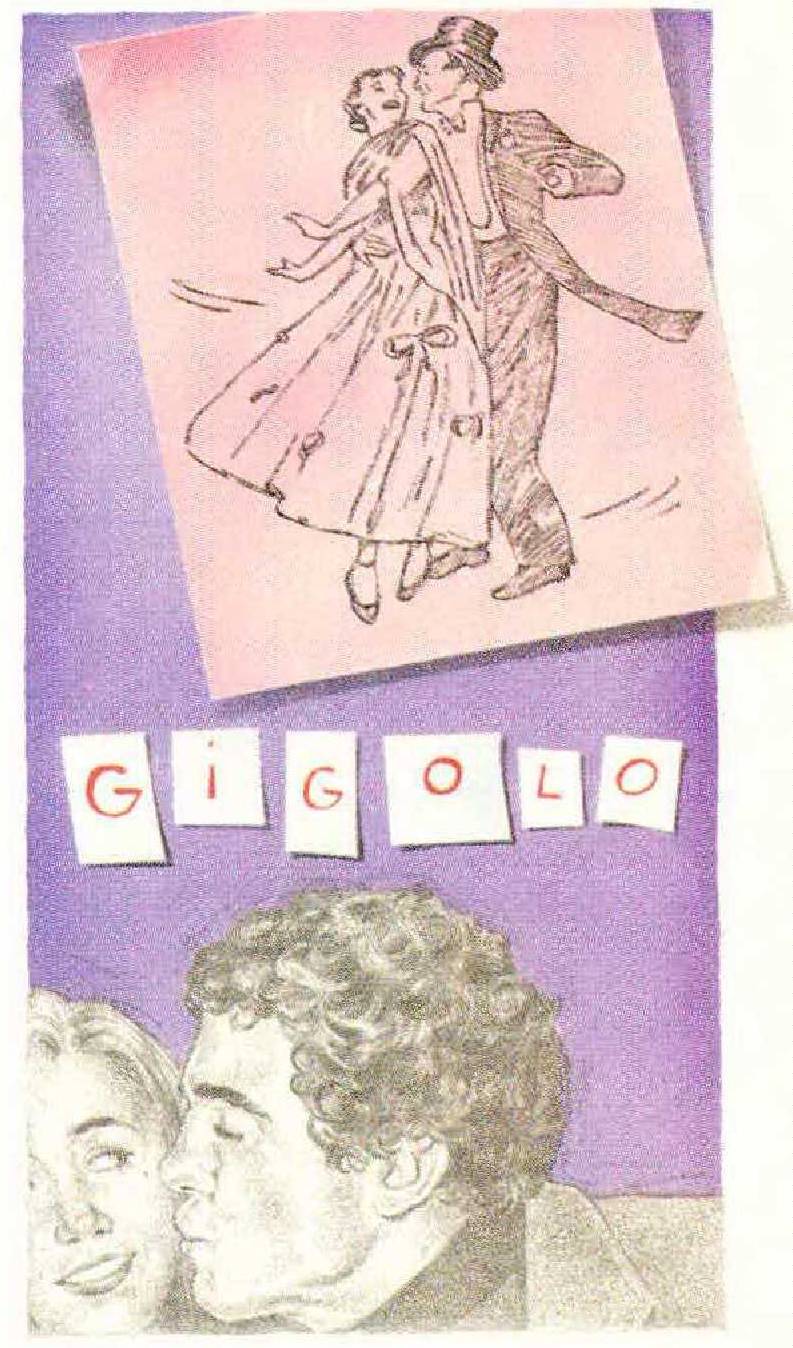
Did Jeffrey Masson, the former projects director of the Freud Archives, really call himself “an intellectual gigolo,”as Janet Malcolm claimed in a 1983 New Yorker profile? Did Malcolm fabricate that and other quotations? As of this writing Masson’s $10 million lawsuit against Malcolm and her publishers is still in the courts. But what of the word gigolo itself (a man paid by a woman to be her dancing partner, escort, or lover)? The earliest known printed appearance of the word in English is in the November, 1922, issue of Woman’s Home Companion. Though it entered English quite late, gigolo is derived from a prehistoric Germanic root. One authority suggests that it is a reduplication of the root *ga (to go), itself from the Indo-European *gwa (to come, go, proceed). This “coming/ going” probably referred to any rapid back-and-forth movement, and came to apply to the movement of a bow across the strings of a musical instrument, whence the Old High German giga (fiddle). The French then borrowed the Germanic word, altering it to gigue (fiddle). Because fiddle music naturally makes for dancing, the Middle French derivative giguer (to dance, gambol about, frolic) came into being, and was the origin of the English jig. From giguer came the word for a girl who dances, gigolette, which acquired the secondary meaning “prostitute,” as did the variant gigole. Gigolo is the masculine version of gigole.