Notes: Military Efficiency
Reflections on the one government institution that adheres to the notion of a common good


SOME PEOPLE study Latin to defend the faith. I studied to defend the country. That was the official story, at least. After the launch of Sputnik, in 1957, and the flurry of books with titles like Why Ivan Can Read Better Than Johnny, American schools were given the job of helping the nation catch up with the mighty USSR. Money poured in to school districts under the National Defense Education Act. When it reached my school district, some of the money went for German and Latin courses for students in junior high. If anyone had been able to anticipate future Dan Quayle jokes, we could have rationalized that we were working through amo, amas to be ready for action in Latin America. Semper paratus.
At the time national defense seemed to be a strange rationale for learning a dead language. In retrospect the reasoning seems inevitable. I am beginning to think that the only way the national government can do anything worthwhile is to invent a security threat and turn the job over to the military. This is not a conclusion I leap to with glee. But I wonder if any other conclusion makes sense.
The American military’s most celebrated social success is opening opportunities regardless of race. This achievement differs from, say, promoting language instruction, in that the military addressed the question of race head-on rather than disguising it as a security threat. Still, it is significant that the military has coped with America’s worst problem more thoroughly than any other large institution has. As a matter of democratic theory, it is bad for the Army, whose members may die to defend the whole nation, to have twice as high a proportion of blacks (or any other group) as the nation does— just as it is bad for the Senate, which makes laws for the whole nation, to include no blacks at all. But a modern army spends very little of its time dying. For most of its members service is less a sacrifice than an opportunity. The high rates of black enlistment, retention, and promotion reflect the fact that the military has become more open to ability regardless of background than have most businesses.
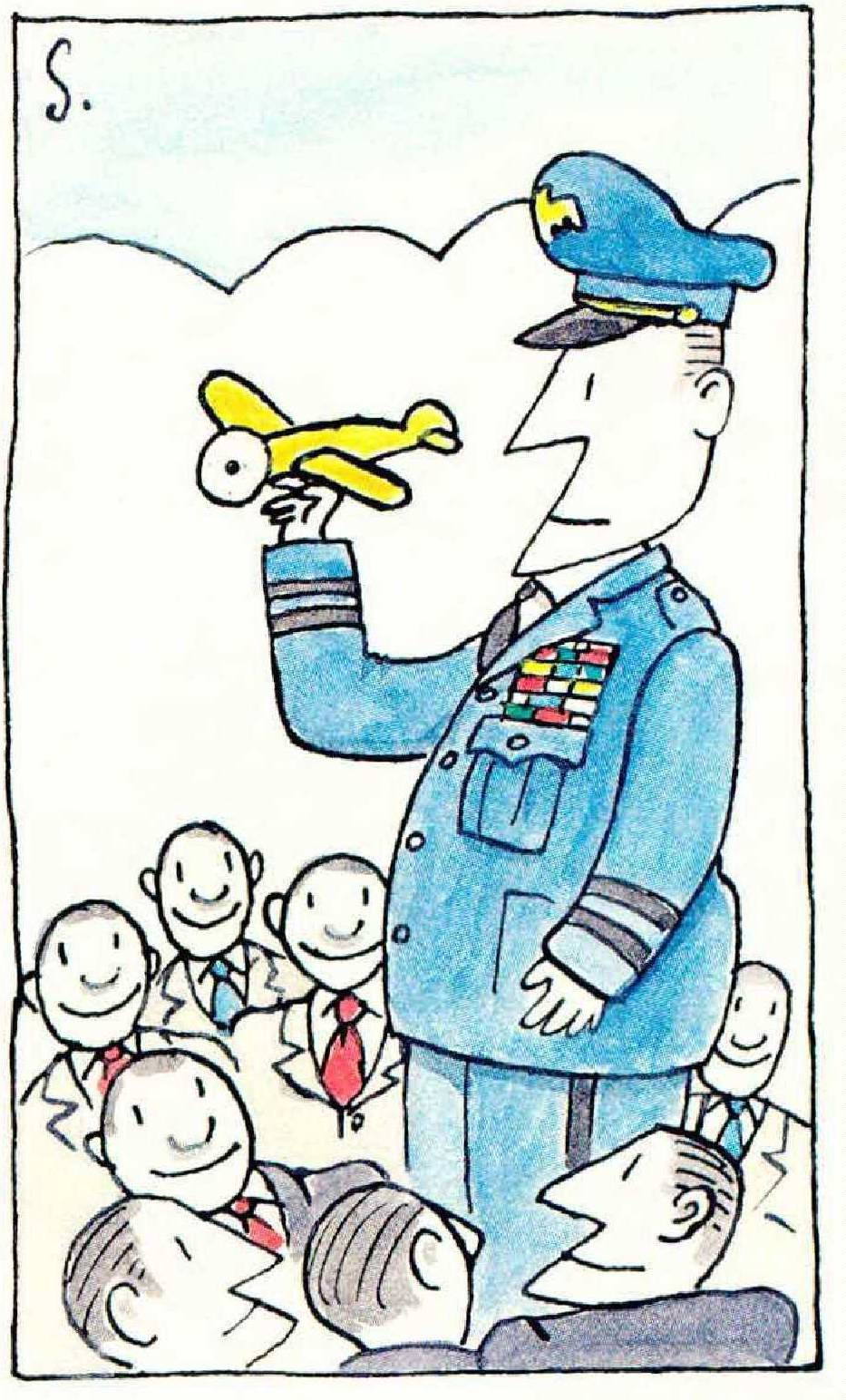
Another example, with more of a history, concerns industry. Long before it dreamed of integrating its ranks, the military was fostering infant American technologies. In the 1790s the newborn United States had no industrial base to speak of, and Eli Whitney, the inventor of the cotton gin, had watched his business fail. Ten years later, on the strength of an order from the Army for 10,000 muskets, Whitney had recovered—and had developed America’s first mass-production system, including some of the world’s first machine tools. As the historian Geoffrey Perrett has written, “Far from being left behind by the Industrial Revolution the United States, in a single decade and thanks largely to one man, had suddenly burst into the front rank.”
IN HIS BOOK A Country Made by War, Perrett presented a long list of events about which everyone now says, “That was good for the country,” but which came to pass only because it could be claimed at the time that “this will be good for the military.” Settlers moving west followed maps drawn by Army cartographers, along roads built by Army engineers and guarded by Army forts. The rocks, plant samples, landscape drawings, and weather readings that made the Smithsonian a leading scientific institution were sent back by the Corps of Topographical Engineers.
Some of the beneficial consequences have been unintended spinoffs, of the sort epitomized by Tang, the powdered breakfast drink that was developed for astronauts. The Navy’s search for ways to build bigger, stronger warships in the half century before the Second World War helped foster the world’s most advanced steel industry. But at other times politicians have deliberately chosen the military as a tool for jobs that could otherwise not, or not as easily, be done. Thomas Jefferson, as president, worried that the young republic was not training enough engineers. Although skeptical of the military, he expanded West Point, and made an engineer its superintendent. “’Phis was his best chance to reform higher education: an institution that would teach modern languages, not dead ones, offering instruction in technology, not theology,”Perrett wrote. “For more than half a century, West Point pioneered in the modernization of American education.”
Economists still argue about whether efforts to guide and foster industry could, in principle, ever succeed in the United States. In two hundred years of application the military’s guiding efforts have succeeded and failed in ways very similar to the guiding efforts of industrial policies elsewhere in the world. The failures are those that economic theory predicts: military-contract prices are high; when selecting future technologies, planners often pick “losers” (the B-l bomber) rather than “winners” (super-silent submarines); firms grow fat and unfit w’hcn sheltered from the bracing need to compete with the wide world. “You Americans really want us to get into the arms business?” a Japanese auto executive asked me several years ago in Nagoya, although I had suggested no such thing. “You have seen how our car industry works. How long do you think your industries would remain competitive selling missiles and tanks?" But the military’s industrial policy also succeeds, in the way that France’s or Japan’s does. The United States has strong aircraft and satellite industries partly because the military has for decades subsidized research, collaborated with industrial managers, applied buyAmerican policies, and not left big decisions to the invisible hand.
Even to suggest that the military should be a model for America is to realize all the reasons it shouldn’t be. Not many women have reason to be enthusiastic about the opportunity of military careers. Despite efforts to diminish it, there is still a sense of class division between officers and enlisted men that mirrors, rather than corrects, the division between the professional class and the working class in civilian life. Since the era of John Kennedy and his scholar-general, Maxwell Taylor, ambitious officers have known that they need extra schooling to get ahead. ‘Phis has mainly led to a meaningless credentials race, run by officers who compete with stints at business schools or in systems-analysis courses. And of course America’s overall strategy of putting military interests ahead of commercial ones has handicapped U.S. industries in a variety of ways, including the Cold War prohibition on sales of computers to countries in the Soviet bloc.
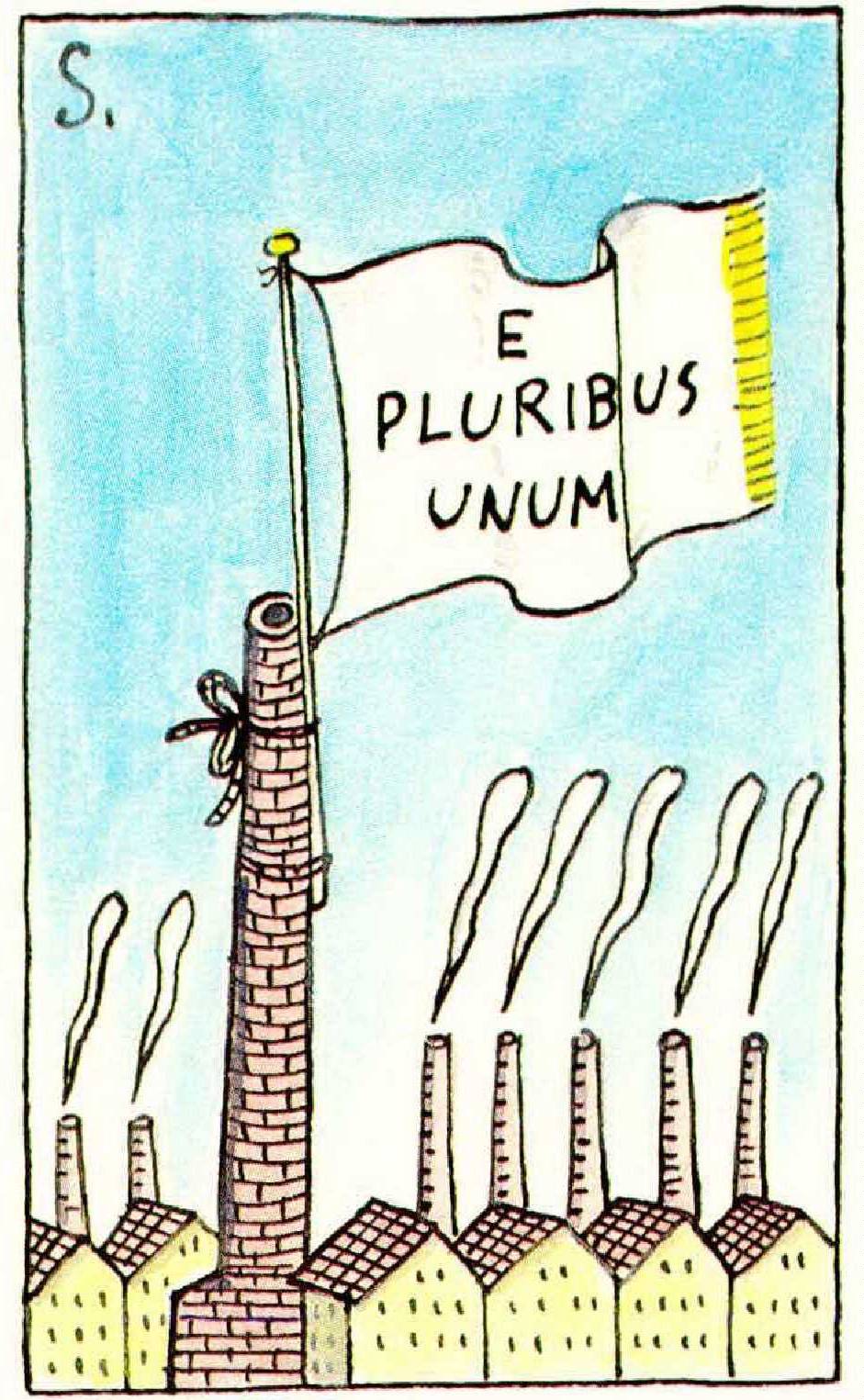
Still, what other part of the U.S. government can shamelessly say, as the Department of Defense routinely does in its reports, that America needs to have certain technical capacities within its borders, and meet certain educational and moral standards, in order to hold its place in the world? When the Department of Commerce says something similar, it quickly gets embroiled in technical economic arguments about the “comparative advantage” of various industries. When the Department of Education does, it’s ignored. According to our economic and political theories, most agencies of the government have no special standing to speak about the general national welfare. Each represents a certain constituency; the interest groups fight it out. The military, strangely, is the one government institution that has been assigned the legitimacy to act on its notion of the collective good. “National defense” can make us do things—train engineers, build highways—that the long-term good of the nation or common sense cannot.
We can respond to this fact in either of two ways. One is to say, “So be it,”and use the indirect, blunt instrument of the military to promote the common welfare. In the 1940s we created a National System of Interstate and Defense Highways; perhaps in the 1990s we’ll set up a National Defense Early Childhood Education Program. Phis approach would mean viewing DARPA— the Defense Advanced Research Projects Agency—as America’s natural and sufficient counterweight to MIT1 and the European technology bureaus. These ministries in other countries have several functions: they support basic research, coordinate work among their nation’s companies, and provide a sheltered market for important new technologies. Economists say that all these functions are dangerous, but DARPA does every one. Craig Fields, a former director of DARPA, says that there are very few commercially important technologies that DARPA is not now supporting for purposes of defense. Pietro Nivola, of the Brookings Institution, recently published a paper saying that it’s pointless even to argue about industrial policy, because the Pentagon is already doing most of what the U.S. government could ever do to help high-tech businesses. The Pentagon’s Office of Industrial Base Assessment released a report last year, comparing the areas of emerging technology that the Department of Commerce thinks important with the ones that matter most for national defense. Even though a very few areas have military-only applications—so far no commercial market has emerged for “hvpervelocity projectiles”—the most important areas overlap.
Socially, the so-be-it philosophy would mean making the military a showcase of multiracial, cross-class opportunity. It could be to the rest of America what America has long been to Europe—an arena where old snobberies matter less and where ambitious people can get ahead.
Or we could reach a different conclusion. We could say that beefing up the military’s role is too indirect a route, and that improving America’s economy requires less militarism in general. The trick then is to learn from the good things the military does and try to apply the lessons elsewhere. For instance, schools in Japan, Korea, Taiwan, and Singapore are effective because they make their worst students so good. The U.S. military has to do more or less the same thing. Although its admission standards have become more selective in the past ten years, the Army is not Harvard Medical School. It must make sure that high school graduates can keep Patriots ready and F-15s in the air. American industry faces the challenge of making average workers as competent as those in Japan—and although the military is spared many of the problems that affect American schools, it might help show us how to respond.
The military is also the largest institution in America that has a franchise to think about the success of people working in groups. An individual soldier’s welfare matters, of course, but chiefly because it allows his platoon or company or brigade to cohere. The Secretary’ of Education and the fifty superintendents of state school systems preside over district-by-district rivalries that make it impossible to send help to the neediest schools. General Schwarzkopf could tell the Marines not to go ashore at Kuwait City, could tel! the 101st Airborne that it had to fight alongside the French, and could make tens of thousands of people do what they did not want to do, in order to make the whole operation a success. At a common-sense level, we all recognize that individuals’ rights must sometimes be limited for the good of all. Drivers have to follow rules; parents have obligations, not “rights,” in regard to their children. But the U.S. military is about the only public institution that is comfortable saying openly that individual rights take second place to the welfare of the whole.
I he military model must be applied with caution to a civilian society based on the pursuit of happiness and “Don’t tread on me.” But reflecting on the military could give politicians something they now lack: a language with which to discuss the common good. R plurtbus unum, they might say.
—James Fallows