Word Histories: Etymologies Derived From the Files of the Dictionary of American Regional English
stymie
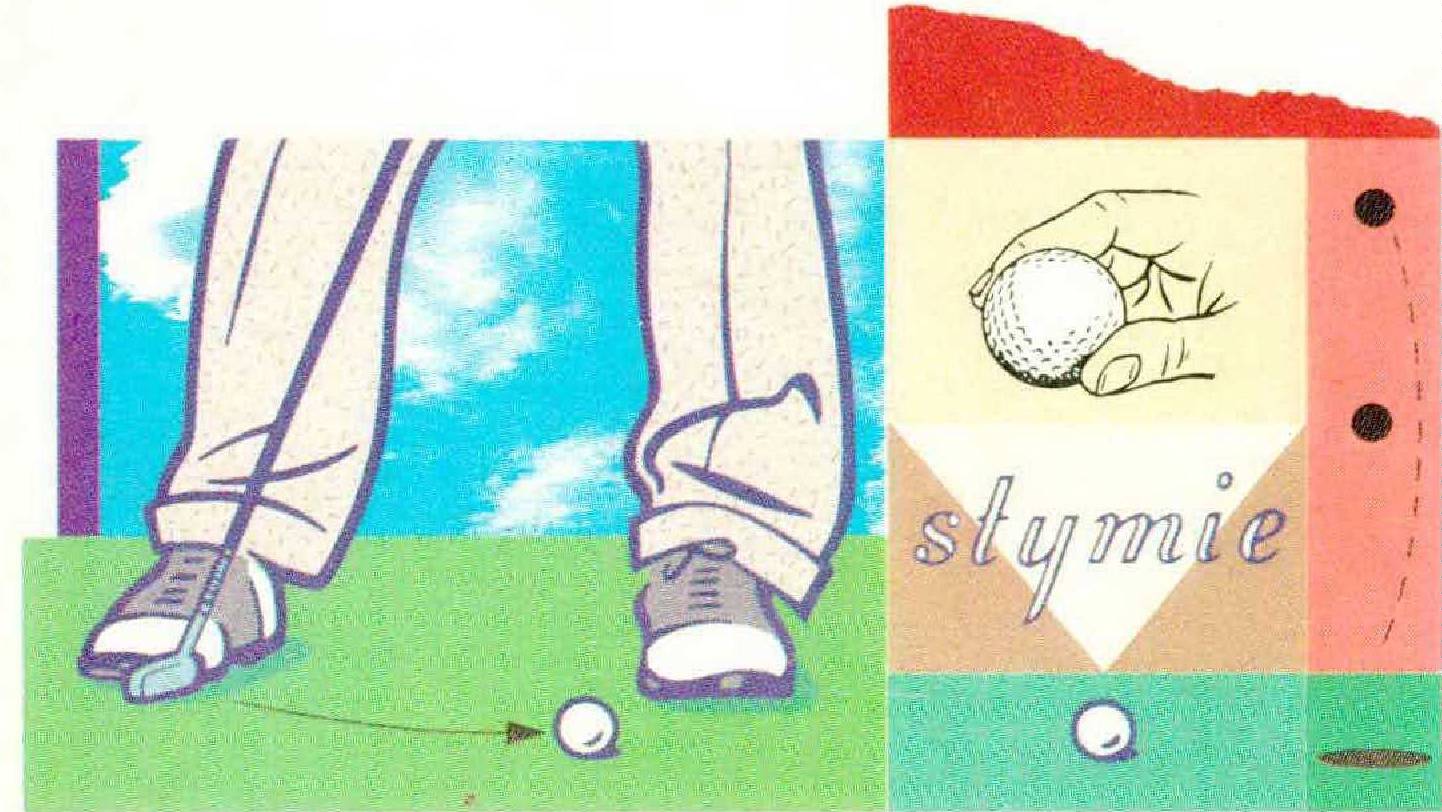
Referring last September to what he hoped would be a new era of Soviet-American cooperation, President Bush asserted, “No longer can a dictator count on East-West confrontation to stymie concerted U.N. action against aggression.” The dictator in question, of course, was Saddam Hussein. The earliest known root of stymie is stime or styme (“a very small quantity or particle”), originally an Old Scottish word. In subsequent combination with the suffix -ie (“one of a kind or quality,”as in toughie, smartie) the word came to refer to a person with poor vision. Stymie was then adopted as a golfing term for the situation in which another ball lands on the green directly between a player’s ball and the hole, so as to obstruct the player’s putt. The golfer could use an iron to make the ball jump over the obstructing ball, or could put spin on the ball, so that it would curve around the opponent’s. These difficult countermeasures became unnecessary in 1952, when players were first allowed to mark the position of balls on the green and stymies were abolished. The figurative meaning of stymie (to impede, obstruct, frustrate, thwart) was by then already well established.
mosaic
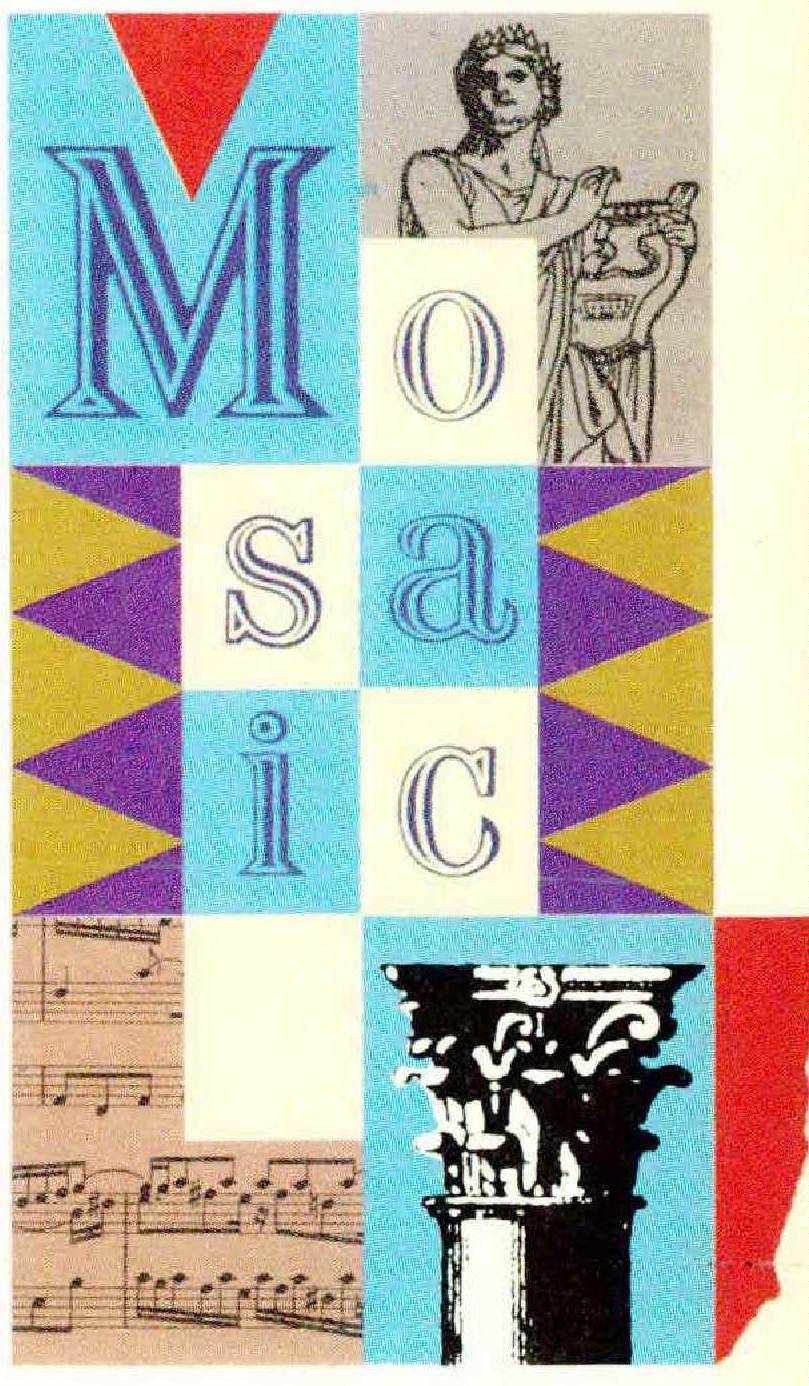
During the Senate confirmation hearings on Judge David Souter’s nomination to the Supreme Court, Senator Paul Simon, of Illinois, worried about the effects of Souter’s “rather insulated life.” Simon elaborated: “I want to sense a capacity to grow—how he thinks. It’s all a mosaic, with his legal opinions only a part of it.”Simon’s metaphor invokes not Moses or Mosaic law but the Muses. Mosaics (pictures or designs made by inlaying colored pieces in mortar) were known in Late Latin as opus musivum. literally “work of the Muses,” because, according to Pliny the Elder, the inlaid or tessellated floors were used in grottoes consecrated to the Muses. The Muses are also invoked in the words museum, which is from the Greek Mouseion (library, place of study), originally “a seat or shrine of the Muses,”and music, which comes from the Latin musica, shortened from the original Greek mousike techne (art of the Muses). According to Hesiod, Mnemosyne (the goddess of memory) was the mother of the nine Muses, which some lexicographers suggest is evidence that the Greek Mousa (Muse), from pre-Hellenic *montya, is ultimately from the Indo-European root *mon- (to think, remember).
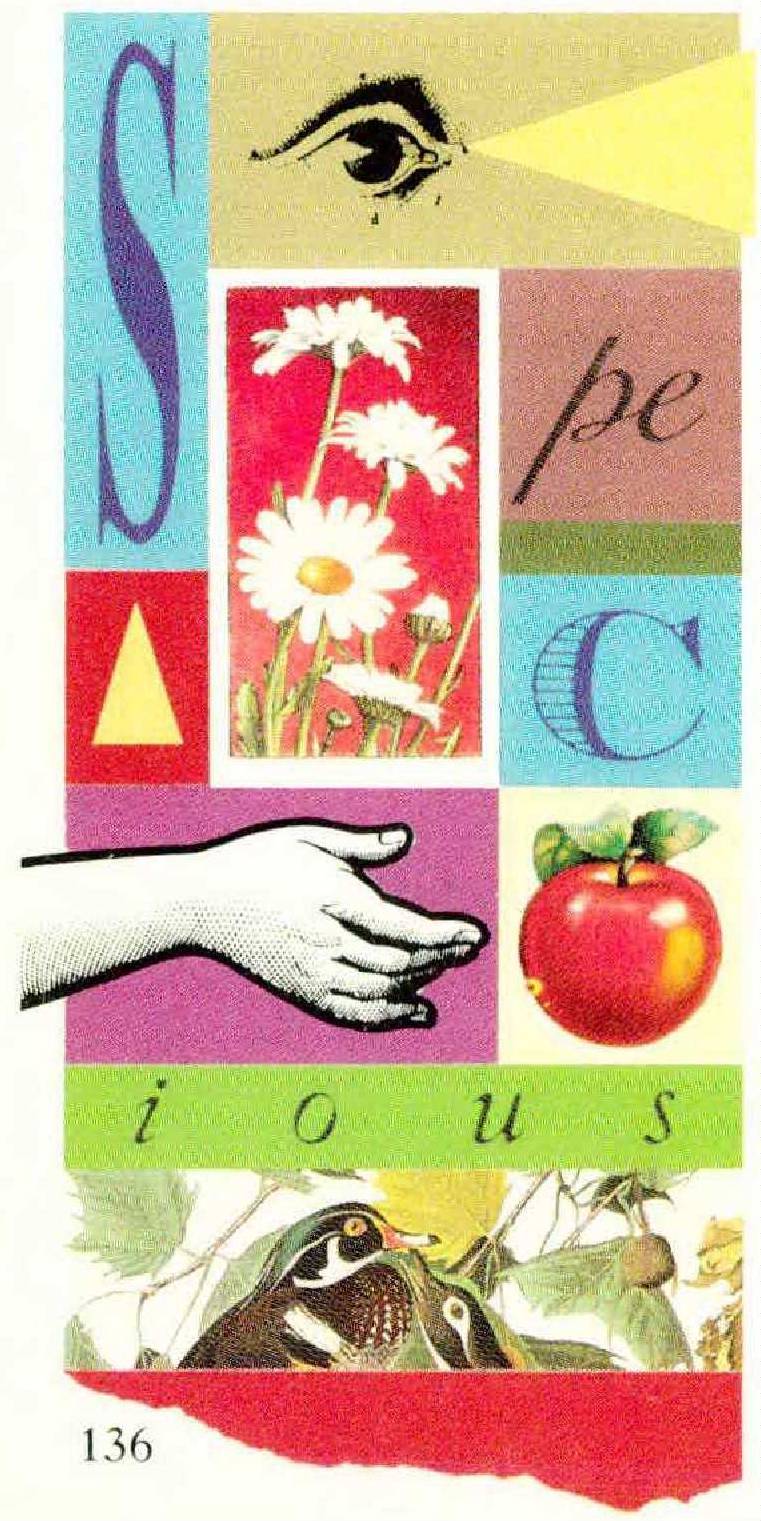
specious
Owing in part to the “Meat Stinks!" anti-meat campaign launched last summer by People for the Ethical Treatment of Animals, the awkward term speciesism (“Speciesism is the presumption that humans are superior to other sentient creatures and therefore entitled to eat them"—Peter Singer, Animal Liberation, 1975) is increasingly being seen and heard in the media. Lobbyists for the meat industry, and many chefs, are up in arms. “Should I stop swatting flies?" Julia Child asked. “Should I invite mice into my kitchen and serve them lunch? This speciesism is specious.” Both species and specious can be traced back to the Indo-European root spek- (to observe), which is also the source of many other English words, including, through Proto-Germanic, spy and espionage; through Greek, scope, telescope. horoscope, bishop, and episcopal; and through Latin, specimen, spectacle, spectrum, speculate, aspect, auspice, circumspect, conspicuous, despise, expect, inspect, respect, respite, and suspect. Spek- became in Latin specere(to look, behold), whose meaning was extended in the Latin word species to cover “appearance, form, kind or type of form.”Species (kind or type) was then adopted directly into English to denote a class of individuals with common traits. In Latin itself, species (appearance) yielded specious (fair appearance, pleasing to the eye, beautiful), which English adopted with the same meaning (“Yet the wise men of
Greece were not ashamed to pursue specious boves"—John Gaule, The Magastromancer. 1652). When used to describe flowers or birds it meant “having gaudy or showy coloring" (“The novice in botany, who is attracted, perhaps, only by what is specious in the plant or flower”—Patrick Keith, A Botanical Lexicon, 1837). Calling plants’ flowers or birds’ feathers specious implied mere outward or superficial show, giving specious the sense “deceptively attractive” ("Let not the specious goodness of the end encourage me to the unlawfulness of the means" — Francis Quarles, Judgement and Mercy, 1644). This meaning was then applied to reasoning and arguments that were apparently plausible or sound but in reality fallacious.