Growing Pains
The ostensible troubles of Monterey Park ,a mostly Asian suburb of Los Angeles ,have been racial tensions—but the real ones are development and growth
BY NICHOLAS LEMANN
THE PROBLEMS OF SUBURBAN CALIFORNIA ARE LIKE the deficiencies in the performance of a great maestro: to be horrified by them, you have to have been expecting something close to perfection. I learned this lesson on a trip I made recently to the town of Monterey Park, in the San Gabriel Valley and just a few minutes to the east of downtown Los Angeles, to watch the culmination of a campaign to remove two members of the city council from office.
The two council members had introduced, so late in a very long council meeting that only a few constituents were present, a resolution declaring that Monterey Park does not consider itself a sanctuary for illegal aliens and that English should be the official language of the United States. Naturally, when word of the resolution got out, there was a storm of protest—Monterey Park is threefourths Asian and Hispanic. Four thousand people (in a town of 60,000) signed petitions demanding that the city council rescind the resolution, which it eventually did. Then another petition drive began, this one to hold a special election to recall the two council members; it got thousands of signatures too. In the days before the election the recall forces were full of stirring rhetoric about taking a stand against racism. Their descriptions of the mood in Monterey Park made frequent use of words like “hate” and “fear.” I went there prepared for a replay of Freedom Summer.
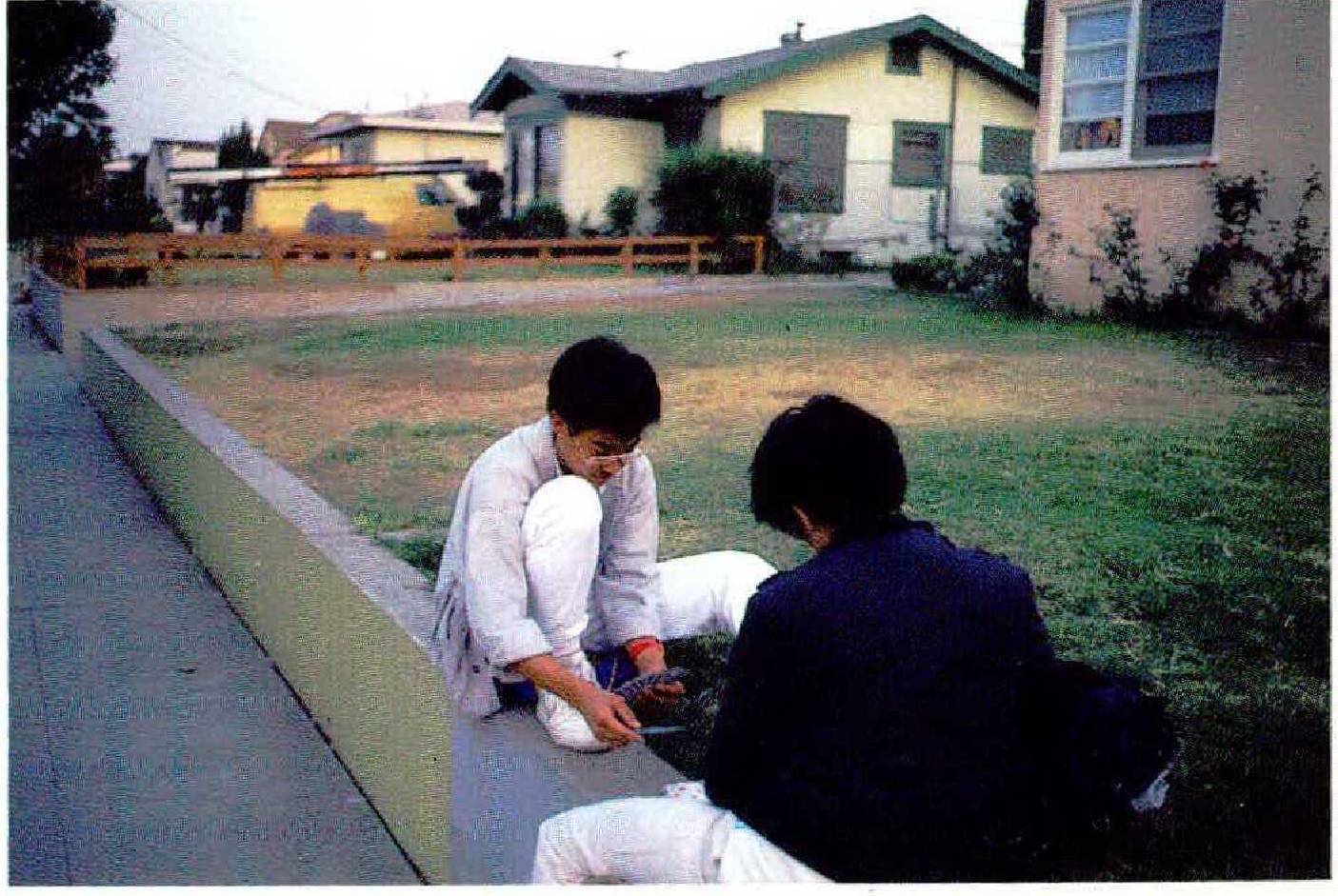
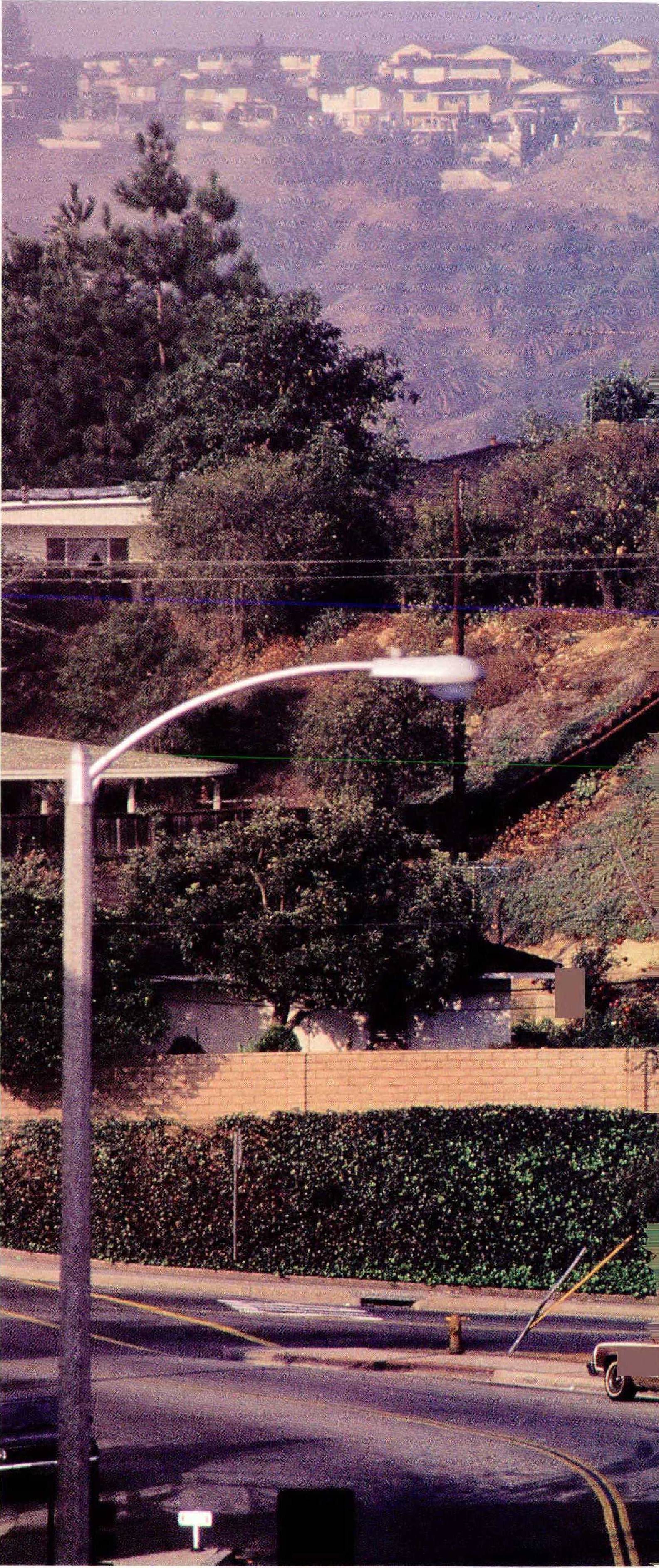
The San Gabriel Valley is the butt of jokes by people who live to the west of downtown Los Angeles, because it’s unfashionable and also because of its lesser weather— the valley is hotter and smoggier and too far from the ocean to get Pacific breezes. Still, compared with anyplace else, it is gorgeous, with a pale desert sky and mountains on two sides. Other than a lot of yard signs saying YES and NO, I saw no evidence that Monterey Park was anything but a calm, attractive, well-tended middle-class suburb.
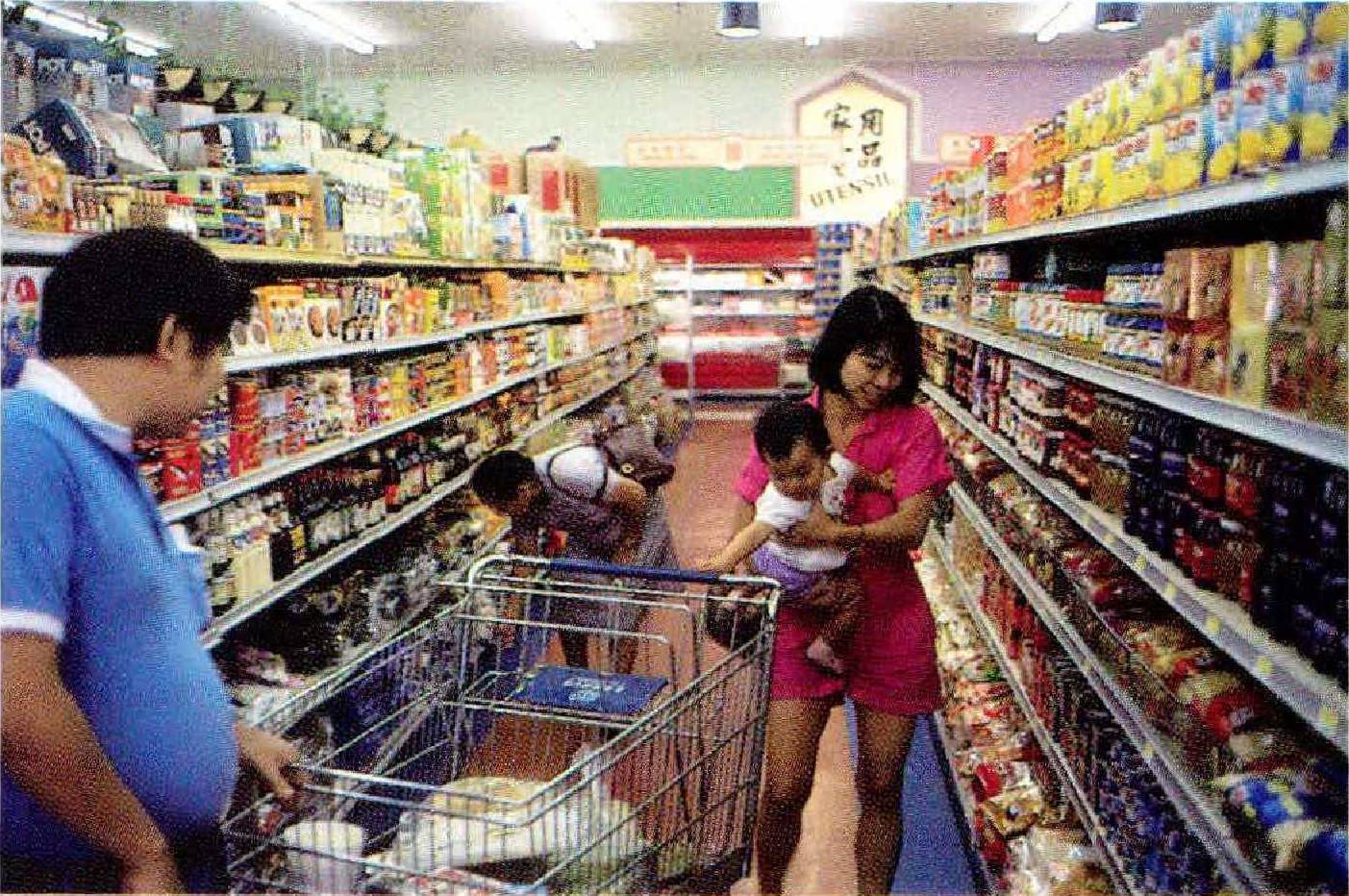
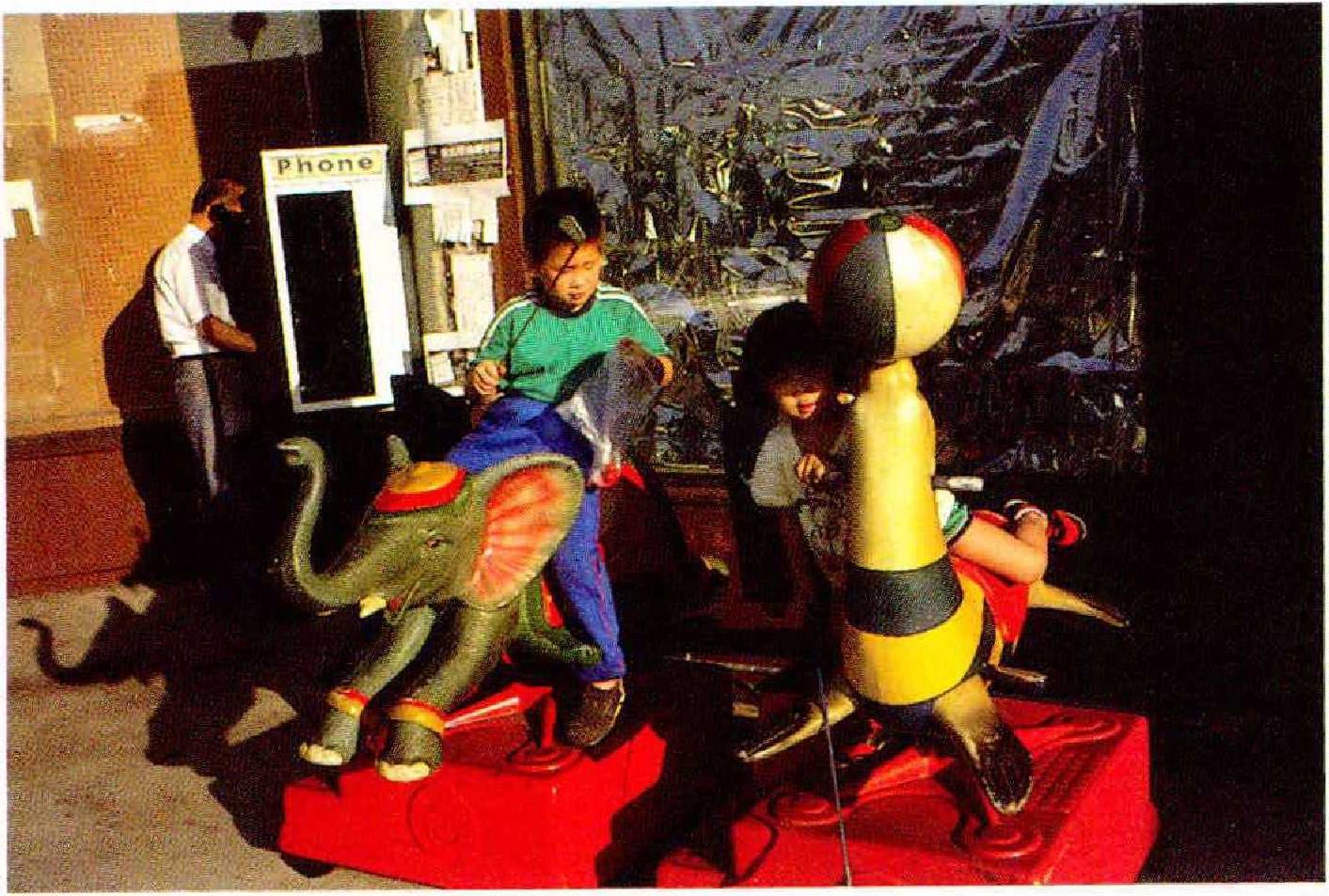
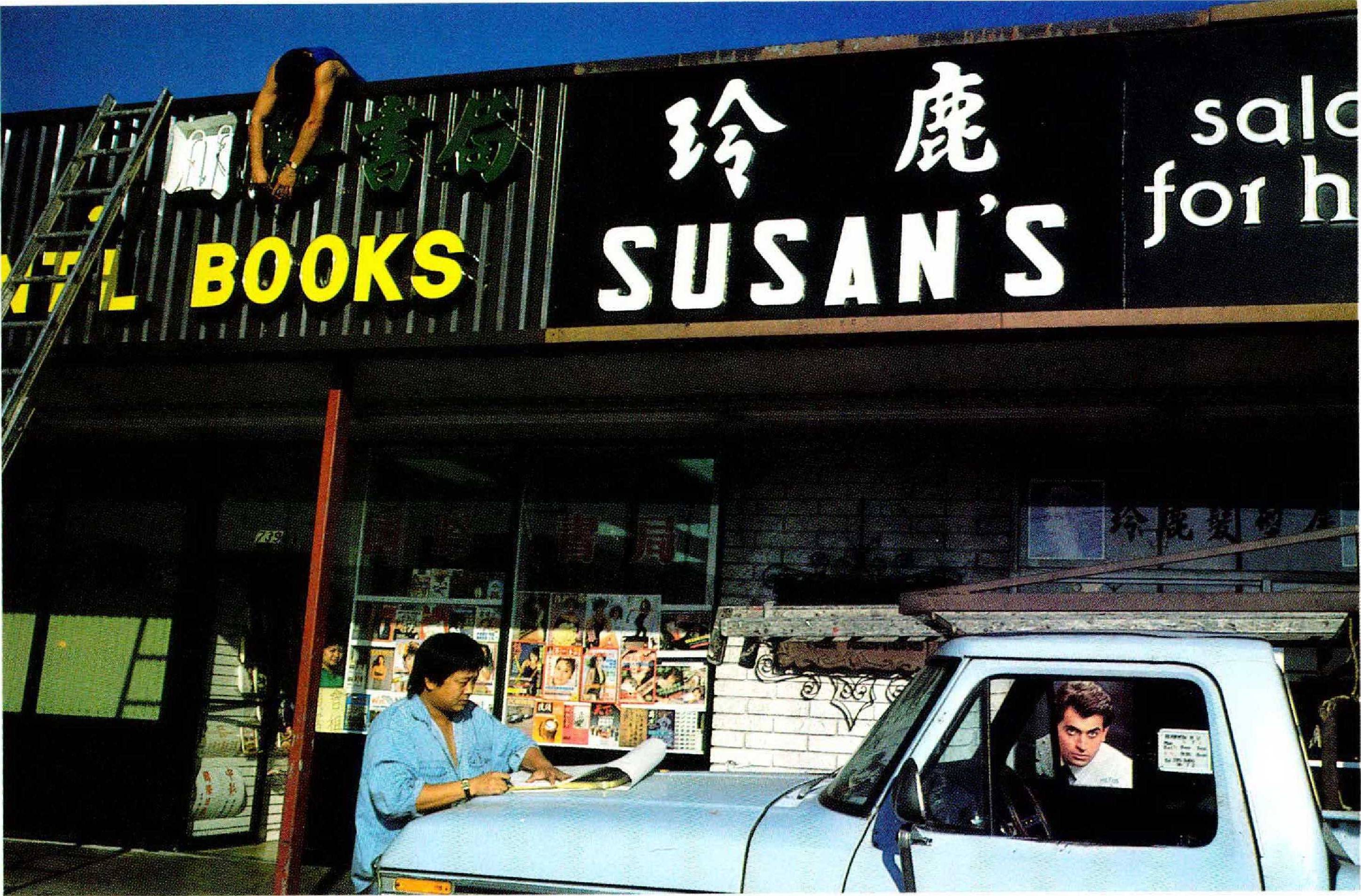
This is not to say that it is a typical suburb. The Los Angeles Times aptly calls Monterey Park the first suburban Chinatown. In the middle seventies a Taiwanese developer named Frederic Hseih decided to promote Monterey Park, which already had a small, well-established Japanese-American enclave, as a destination for Chinese immigrants. He bought up a lot of land and put out the word in Taiwan and Hong Kong that Monterey Park was the Chinese Beverly Hills. This, combined with economic currents in Taiwan and Hong Kong, brought a flood of Asians and Asian money into Monterey Park and the surrounding towns. The Times found that Monterey Park is the second most common place of settlement for Asian immigrants in the United States, after New York’s Chinatown; more immigrants go there than to the Chinatowns in Los Angeles and San Francisco. About 50 percent of the population of Monterey Park is Asian. Asians own 60 percent of the land and 60 percent of the businesses in town, and they make up more than half the elementary school population. Three Chinese-language daily newspapers are published in Monterey Park. There is a Chinese-language movie theater. The commercial strips are lined with Asian businesses—Chinese, Vietnamese, and Japanese restaurants by the dozen, ginseng shops, Chinese bakeries, Chinese video stores, and Chinese supermarkets that have taken over the buildings where Safeway and Alpha Beta used to be. To see a non-English-speaking, first-generation immigrant community in a prosperous suburb instead of a poor city neighborhood is a new, and initially jarring, experience.
After the polls closed on the day of the recall vote, both sides gathered at city hall, a new, perfectly maintained building, to watch the votes being counted. It was a cool, clear evening. Everyone was very polite. The pro-recall people were mostly young Chinese businessmen in impeccable suits, and the anti-recall people were mostly white senior citizens dressed in informal retirees’ clothes. Both sides whiled away the time by telling incredibly tame election-abuse horror stories. A young Chinese man had had his voter-identification card scrutinized unusually carefully by a white poll watcher! Another poll watcher had asked a Chinese voter to write down his address! (When he couldn’t, he was still allowed to vote.) The pro-recall forces had hired a political consultant who didn’t live in Monterey Park! “This is Chicago-style politics,” a resident who must not have been to Chicago lately said, according to a local paper the next day.
During the waiting at city hall I was strongly tempted to dismiss the crisis in Monterey Park as trivial. Then the ballot boxes started to come in, and it began to be clear that the recall forces would suffer a landslide defeat—the final margin was 62-38. As strongly as the recall forces, with their petition drives, had felt, the anti-recall forces must have felt even more strongly. They had out-organized the other side, and had done so with much less money. Most of the rest of the country would probably feel fortunate to have only these problems, but in Monterey Park, obviously, they look grave to everyone. Monterey Park may have no real claim on the conscience of the nation, but still it sees itself as a town in crisis.
Immigration, Development, and Politics
LOS ANGELES AS A WHOLE IS PREOCCUPIED WITH TWO related issues right now: immigration and development. In any objective comparison with other cities of its size, Los Angeles is blessed in both respects. Its immigrants fall generally into two groups: illegal aliens from Mexico, who are very poor but aren’t in a position to ask for much help from the government, and Asians, who are famous for being overachievers. It is very hard to make a case that immigrants are a drain on the city. But to understand politics in Los Angeles and what is likely to dominate the city’s politics for the rest of the century, it is crucial not to underestimate how seriously these issues are taken. Ten years ago the movement for Proposition 13, which strictly limits property taxation, was often portrayed by the out-of-state press as another wacky California fad; now it looks like the truest harbinger of the national politics of the eighties. The interlocking issues of immigration and development, tempting as it may be to dismiss them, may well seem the same way ten years from now.
Because Monterey Park is probably the place where immigration and development are being fought over most bitterly, it provides a good opportunity to try to parse the political consequences of both issues. The wars began there in the late seventies, when the Asian community began to be substantial, and the residents oi a neighborhood called Sequoia Park started an association and waged a successful campaign for limits on new construction in the neighborhood.
Shortly afterward a citywide version of the Sequoia Park Association, called RAMP (for Residents’ Association of Monterey Park), got under way. If you constructed a composite character from the RAMP leadership, that person would be over fifty-five, would have moved to Monterey Park in the 1950s from a more crowded part of Los Angeles, would have been born in the East or, more likely, the Midwest, and would have become politically active when an ugly building went up next door to his or her house, for example, Joe Rubin, the current head of RAMP, had an apartment house go up in back of his house in 1981, which took away perhaps ten degrees of a 160-degree view. Rubin, a former manager in the aerospace industry, grew up in Brooklyn, and he says that if he had wanted to see apartment buildings he could have just stayed home. RAMP is politically diverse—Rubin is a liberal Democrat, and RAMP’s treasurer, Evelyn Diederich, was a Reagan alternate at the 1976 Republican Convention—but its leaders are united in the feeling that California is losing the quality that made them want to move there from far away a generation ago: an innocent, small-town pleasantness combined with a degree of opportunity that you can’t find in an actual innocent small town.
In 1982 RAMP endorsed a slate of three candidates for the city council, which has five members in all. The police union, which was up for a new contract, endorsed the antiRAMP slate and canvassed for it door to door. The antiRAMP forces cultivated a crime-stopping image. A billboard went up that said WELCOME TO MONTEREY PARK, THE CITY WHERE CRIME PAYS, On the weekend before the election Monterey Park was blanketed with copies of a one-shot newspaper called The Monterey Park Chronicle, which accused the slate RAMP had endorsed of wanting to bring legalized gambling to Monterey Park. RAMP’s slate lost.
The three winners were a Chinese-American woman, Lily Chen, and two Mexican-American men, David Almada and Rudy Peralta. This meant that the Monterey Park council had a minority majority, and to the outside world it looked like a model of multiracial harmony. Chen, Almada, and Peralta had run as moderate anti-growthers, so it appeared that development wasn’t an issue either. In 1985 USA Today, after a strenuous campaign led by Chen, named Monterey Park an All-American City.
In addition to endorsing candidates for office in 1982, RAMP’s leaders had been meeting with the leadership of similar groups, especially one in Orange County and one in the San Fernando Valley, that had placed anti-growth propositions on the ballot in their towns. Out of these meetings came a petition drive that led to a special election in June of 1982 on two anti-growth propositions, one of which required that major zoning changes be put to a vote. “We don’t need to be a mini-New York!” the RAMP campaign literature said. Both propositions passed overwhelmingly.
Almost from the moment they took office, Chen, Almada, and Peralta lost whatever anti-growth image they had had in Monterey Park. All three publicly opposed RAMP’s anti-growth propositions; the city council they dominated immediately began to grant enough zoning variances to persuade RAMP, at least, that it was committed to inflicting a spree of indiscriminate development on the city. The two kinds of new buildings that most aroused RAMP’s ire were condominiums and “mini-malls,” or small shopping centers arrayed behind parking lots. Both of these are controversial throughout greater Los Angeles. The city of Los Angeles recently passed a ban on new mini-mall construction. Mini-malls are unpopular because they increase traffic and have high turnover and vacancy rates. Also, in the wake of Proposition 13, California towns are heavily dependent on sales taxes. Condos, banks, and office buildings don’t generate sales tax. The stores in mini-malls have not produced substantial tax revenues either. So Monterey Park’s real income from sales tax has been flat during the past decade of booming growth, though the demand for city services has increased greatly. A part of the case against development is that unless it comes in the form of large-scale retail establishments, it will cause the city to reduce services.
Most of the condos and mini-malls in Monterey Park have been built for the use of Chinese immigrants. The condos are not only crowded, they’re crowded with nonEnglish-speaking Chinese people. The stores in the minimalls sell products specifically for Asians, and very few whites go to them. Describing the city-council meetings of the Chen era, Joe Rubin says, “They’d show slides of a condo. We’d all say, ‘Horrible!’ The Chinese would all say, ‘Great!’ They’d say, ‘You have hills with nothing on them—there was nothing in Monterey Park before we got here.’”
Whose Town?
OVER THE NEXT FEW YEARS, AS ASIAN IMMIGRANTS kept coming to Monterey Park and Asian businesses kept opening, it became easier to detect a strain of pure anti-Asian feeling among the whites which was not really related to development. Whites’ main practical complaint is that they can no longer shop in Monterey Park. Most of the American-style grocery stores have closed, and restaurants and clothing stores catering to whites are disappearing too. J. C. Penney and Superior Pontiac (which was the biggest taxpayer in town) have recently decamped. Sentiment against “unreadable signs” —that is, signs in Chinese or Vietnamese with no English translation—has also grown. Beyond that is a feeling not of hatred but of resentment: what I heard over and over from whites was, “It isn’t our town anymore” and “It isn’t an American city anymore.” The whites say that the Asians, who are used to living in crowded cities, have a conception of suburban life that is different from what life in Monterey Park used to be like. It involves bigger buildings, higher residential density, longer lines in stores, later hours, and more restaurants and nightclubs. The obvious affluence of many of the Asians—the custom-made suits and Mercedes sedans—attracts resentment too, especially from Monterey Park’s Mexican-Americans, who are there after an arduous two-generation climb from manual labor to modest white-collar work in government or the lower ranks of big corporations.
Officially, the whites’ biggest worry about the Chinese in Monterey Park is similar to the often-heard argument against bilingual education: they don’t seem to be making any effort to assimilate, and if foreign-language immigrants don’t assimilate, we’ll end up in America with the kind of deep-seated linguistic, racial, and cultural differences that have brought other great nations to their knees. Unofficially, the worry is that the government of Taiwan is trying to orchestrate an Asian takeover of Monterey Park, possibly for some nefarious reason related to crime. The evidence for this, to the extent there is any, consists purely of unrelated straws in the wind. One council member and a former police chief have both made trips to Taiwan recently, although neither is in the habit of world travel. The same council member was present in a Chinese restaurant in Monterey Park very late one night when an exchange of gunfire caused a fish tank to shatter. Not long ago a major heroin bust took place at the port of Long Beach, twentytwo miles away, and for some reason members of the Monterey Park police force were present to assist in the arrest. All these things are whispered, not stated, but they’re part of the thinking of whites who are worried about the deAmericanization of Monterey Park.
Within RAMP there has been an effort to keep the antidevelopment quotient high and the anti-immigration quotient low. But in the city-council elections of 1986 RAMP had trouble finding candidates, because city politics has come to seem like an onerous, time-consuming job. One of the three candidates it endorsed, Barry Hatch, was not a member of RAMP and was more openly concerned about the Asian issue than RAMP is. A former California highway patrolman who now teaches American history in a mostly Hispanic junior high school, Hatch is a John Wayne-style barrel-chested conservative who has been troubled at home and at work by what he sees as the failure of immigrants in Southern California to adapt to American life.
The literature for the 1986 campaign was almost wholly about development, though there was a mention or two of the need for “readable signs” in Monterey Park. This time the RAMP candidates swept in, and immediately the city council passed a one-year moratorium on new construction in Monterey Park. A few weeks later Hatch, who was upset about the bilingual-education program at the school where he teaches, as well as about the signs in Monterey Park, proposed the resolution that led to the effort to recall him and his fellow council member Patricia Reichenberger. Both questions addressed by the resolution— whether Monterey Park would be a sanctuary for illegal aliens, and whether English should be the country’s official language—were purely symbolic, but it was a shot across the bow of the Asians and an embarrassment to RAMP. A multiracial group called CHAMP (Coalition for Harmony in Monterey Park) was quickly formed, and it led the successful fight to have the city council rescind the resolution. When Hatch and Reichenberger stuck by the resolution, the effort to recall them got under way.
CHAMP did not get involved in the recall campaign; another group, called the Association for Better Cityhood, sprang up to lead the charge. Though its public posture was that of a crusader against racism, ABC was pretty clearly a creature of the developers, who were extremely upset about the moratorium on construction. Its leaders were an Asian insurance man and a young white man whose parents run a big real-estate investment company in Monterey Park, and most of its contributions came from ChineseAmerican businessmen, many of whom don’t live in Monterey Park. The financial-disclosure statements of ABC are full of contributors who list their occupation as “trading” or “investments.” RAMP’s are full of “retired.” The campaign was rough on both sides, but ABC’s was rougher. For example, the city council refused a day-care center’s request to increase the height of a brick wall surrounding its playground from three feet to six, and, inspired by this, ABC produced brochures showing a dastardly kidnapper leaning over a three-foot wall to lure innocent kids with a handful of candy.
The recall forces now say that it was foolhardy to try to remove from office two people who hadn’t been accused of any wrongdoing. Maybe—but what doomed them was that there really is a great deal of anti-development sentiment in Monterey Park. Mexican-Americans, who make up about a quarter of the city’s population, voted heavily against recall, and quite a few Asians did too. The recall campaign erred spectacularly by sending paid Hispanic campaign workers around to the houses of Monterey Park’s assimilated, English-speaking Mexican-Americans to tell them that the city council was going to deport them , sending them back to Mexico. They knew as legal residents that there was no chance of this happening, and finding themselves challenged implicitly to choose sides between immigrants and native-born Americans, they picked the native-born side, because that’s what they are.
Now the city council is in the process of implementing a plan for the future development of Monterey Park. The plan could be seen as a plot against developers who cater to the Asian market, since it restricts mini-malls and condos severely while encouraging the building of big American-style malls and automobile dealerships at the edges of town. But the developers, cowed by their loss in the recall election, didn’t mount any opposition to the plan, and it passed overwhelmingly in October. Today the situation in Monterey Park is a curious one. Politically, the whites are on a roll. The local Chamber of Commerce recently rejected six of seven Asians who ran for its board of directors. For several months the city council threatened to pull the permit of the biggest construction project in town—a retail and commercial building at the intersection of the two busiest streets in Monterey Park—because its stores would be almost exclusively Asian. “We want viable American name-brand stores in there,” Barry Hatch told me. In 1986 the city served hot dogs, egg rolls, and tacos at its Fourth of July picnic; in 1987 the city served only hot dogs.
Of the five members of the city council, the three who were endorsed by RAMP in 1986 won’t be up for re-election until 1990, and the other two, who are up for re-election this spring, can expect to be opposed by RAMP candidates. Meanwhile, the Chinese businessmen seem flummoxed. On the one hand, the two council members RAMP hopes to replace have been loyal to them, so it would seem ungrateful for the Chinese businessmen to throw these men over in favor of more attractive candidates; on the other hand, the two look like probable losers. With the opposition lacking strong candidates, it seems likely that RAMP will have its people in all five places on the council soon.
ECONOMICALLY AND DEMOGRAPHICALLY, THOUGH, Monterey Park is well on the way to being an Asian city, and it’s hard to imagine that it won’t change politically in the long run. Young whites don’t settle there anymore. The children of the midwesterners who moved to Monterey Park after the Second World War mostly moved away when they grew up, often to the more exciting Los Angeles Westside. Mexican-Americans are still moving in, but there are lower-middle-class MexicanAmerican beachheads all over Los Angeles, whereas Monterey Park is known even across the Pacific as the place for Asians. There are now very few whites in the public school system, and more Asians than Hispanics. At Ynez Elementary School, in the center of Monterey Park, twenty-four of the thirty-two classes are bilingual, and only three of those use Spanish as their second language.
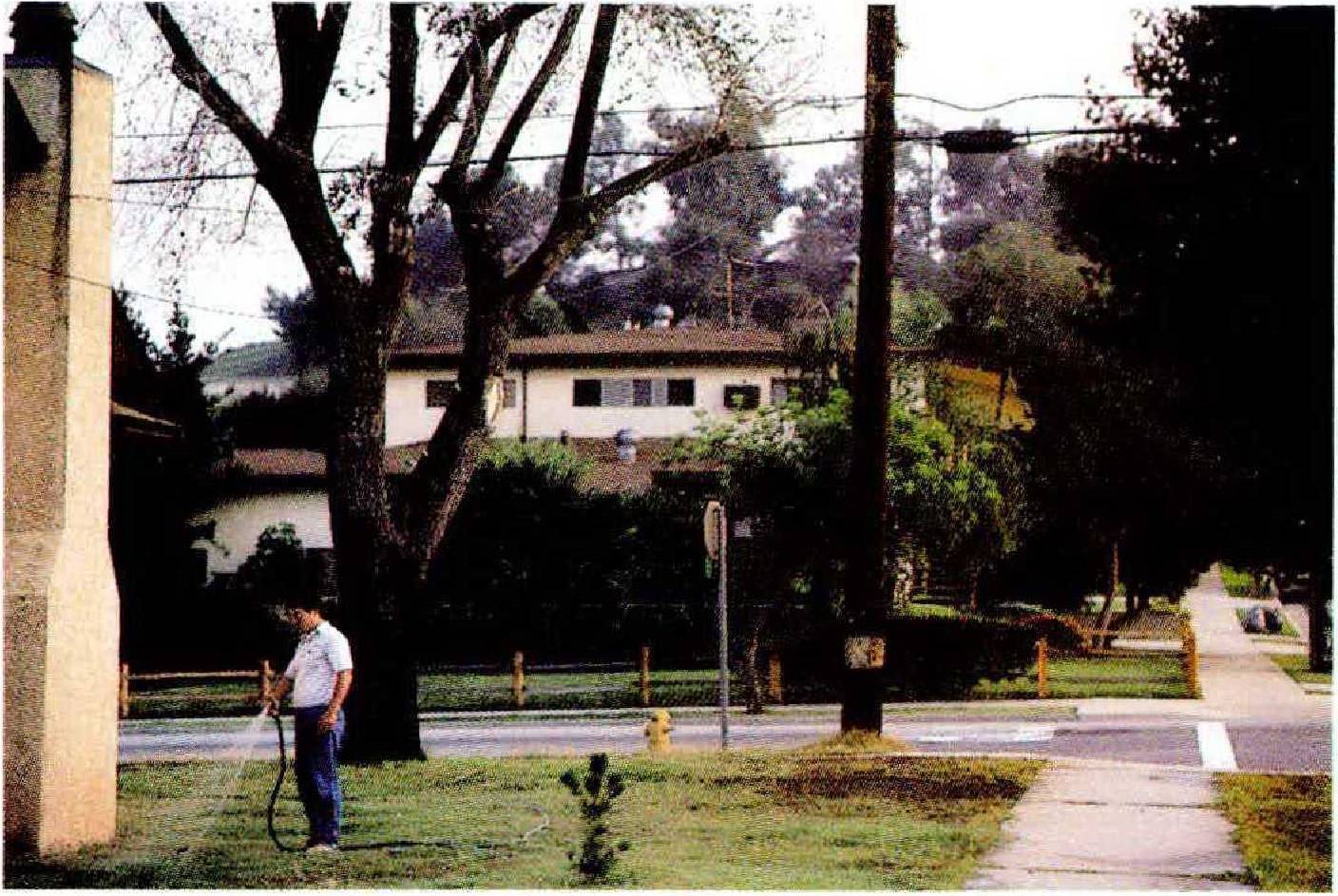
It would be asking a lot of Monterey Park’s longtime residents to expect them to accept with equanimity the complete remaking of their town that has occurred over the past decade. But it is pretty clear to anyone new in town that the Asians there are not pursuing the goal of establishing a permanently separate culture. There is no strict residential segregation in Monterey Park—all the leaders of RAMP have Chinese next-door neighbors with whom they coexist peacefully. The Asian head of the recall campaign, Stephen Tan, born in Malaysia of Chinese parents, wears a Rotary Club tie clip, runs American General Life’s highest-volume agency, and accuses his political opponents of being un-American. Aside from one stabbing at a high school in a neighboring town, the schools are, compared with other suddenly integrated American public schools, remarkably peaceful. Chinese parents enroll their kids in private late-afternoon programs to teach them Chinese culture, because they’re not learning it in the course of daily life.
The only dramatic difference between the Asians of Monterey Park and the members of almost every preceding immigrant group is that so many of them have money. Even the Cubans of Miami were not instantly affluent. One of two reasons for the difference is that Taiwan is the rare country whose prosperous classes encourage their children to emigrate even though they aren’t directlv threatened with expropriation. Taiwan is a little larger than Maryland and has a population of 19.5 million; making it big depends completely on getting into the National Taiwan University, which accepts only 3,000 students a year. There are Taiwanese in Monterey Park who have the kind of gilt-edged background—parents who were big shots in China before the revolution and are big shots in Taiwan now—that in America would almost ensure success, but they felt they had to come here to do really well. Money has bought the Asians a place in the suburbs, where they really stick out.
The Asians aren’t the only source of ethnic tension in Los Angeles. At UCLA a box for the Jewish student newspaper was set on fire last year, and the Jewish cartoonist for the school’s mainstream Daily Bruin got a threatening call at home from a Hispanic student when he made fun of affirmative action. The violent teenage gangs in the poor parts of town have become well known. The emergence of a black and Mexican-American lower middle class has brought the drama of ethnic change to blue-collar neighborhoods up and down Southern California. A long drive around Los Angeles reveals substantial communities of Koreans, Japanese, Salvadorans, Vietnamese, and Russians, among other groups. There is, also, a substantial immigrant group that isn’t gradually assimilating—namely, the illegal aliens who live in dire poverty and hoard money to take back to Mexico. Still, Los Angeles is a million miles away from the kind of exuberant ethnic-group politics that characterized New York City in the fifties and that have been chronicled by, for instance, Nathan Glazer and Daniel Patrick Moynihan. (So, for that matter, is New York City in the eighties.)
The issue in Monterey Park that looks like the shortterm future of Southern California, though, is not racial tension, which I went there to find, but development. Of course, anti-development politicians will pick up on racial sentiment, but this doesn’t mean that talking about development is some kind of ruse. The anti-development passion is heartfelt. The population of Los Angeles and Orange counties grew by 50 percent in the forties and by 54 percent in the fifties. Obviously, this brought transforming development on a scale far larger than the scale of what is happening in the area now. But the post-Second World War migrants to Los Angeles from the American heartland are getting old. Their tolerance for change isn’t what it once was, they have plenty of time to express their dissatisfactions, and the city has changed. It feels like a city now, and that is exactly what the postwar migrants weren’t looking for when they came to Los Angeles.
In the San Gabriel Valley, RAMP and several similar groups in other towns have formed an umbrella organization called the Citizens Alert Network, which might conceivably endorse candidates for state and national office. There are strong local residents’ organizations in Los Angeles, Orange County, and the San Fernando Valley, too. Residents’ groups in the canyons just north of Hollywood, Beverly Hills, and Brentwood have started an active association. These groups are unclassifiable politically, but they all favor an agenda of less traffic and less building, with perhaps an undercurrent of nativism. It is conceivable that a very large and powerful confederation of residents’ organizations all over Southern California could emerge, or that a politician could use the organizations as the political base for a successful campaign for statewide or national office. If it seems strange that suburban development could have such vast consequences, remember that Ronald Reagan got his start in politics by appealing to Southern Californians whose complaints appeared to outsiders to be entirely cranky. ◻