In Quarantine
A story by Tracy Kidder
A few days after I took command, Pancho traded our housegirl for a cement mixer. This item was not authorized, and I laid down the law. “You will get rid of this cement mixer, Specialist,” I said to Pancho.
He sauntered off and came back with a tape. He measured me as if he were a tailor. “How long is this new lieutenant?” he muttered. Then he made a show of measuring the inside of the cement mixer’s rotary barrel. “You can put a lot in these shaky cement mixers, Lieutenant,” Pancho said to me.
I went right back to my quarters, to evaluate the situation. But word traveled fast. Passing by the door of the enlisted men’s quarters that evening, I heard my troops discussing the incident. “This lieutenant’s easy,” they said.
I looked around for something to order them to do, found the jeep was low on fuel, and told them, “Fill it up.” I directed them to the diesel fuel depot and stood firm when Pancho said, “You sure you want us to do this, Lieutenant?” We barely made it back to the detachment, the gasoline-powered jeep choking on the diesel fuel, and that night I heard laughter drifting out of the EM hootch. “His mother never taught him nothin’!” I heard one of my men cry.
A few days later, their boots began to look unpolished. Jonesy’s cheeks were bristling. I felt that they were suffering from idleness, so I bought table games for them at the PX. I organized a reading program with discussion groups. They cheated at the games. All they wanted to discuss was food and the things that they would do to their girlfriends and local Army recruiters when they got home from the war. “First thing I’m gonna do, I’m gonna eat a big motha steak,” Jonesy said. Macomb guffawed: “The Lieutenant’s gonna go to the liberry.”
They didn’t need diversions. I tried to give them work. Headquarters had announced a base-camp beautification program. I clattered into their hootch with some brooms and shovels and asked for volunteers, and my own buck sergeant said, “We gotta wait till we finish this beer, Lieutenant. We gotta drink this shit before it gets too warm.”
To lead them by example, I filled and stacked sandbags by myself. I painted their hootch, alone, bareshouldered in that sun. Now and then Pancho passed nearby, while out stalking little animals with his machete.
“Someone has to do this work,” I told him.
“You’re gonna get sunstroke, Lieutenant,” he said. “Nah, it’s too late. You’re shaky.”
One night while they slept drunkenly, I crept into the EM hootch and polished the worst of their boots. But Pancho had traded the housegirl, and I couldn’t keep up with them by myself. Beer cans rolled out their door. Pancho traded the cement mixer in Nuc Phuoc for a Montagnard crossbow, whereupon arrow holes appeared in all my new sandbags. A trash heap rose outside their door; to me it looked as if the EM hootch had vomited. Then Pancho dealt the crossbow to a long-range reconnaissance patrolman in exchange for a foreign, green submachine gun, which was shaped like a praying mantis, and after that I rarely went outside. Tall, with the gold bar on my collar, I gazed out through the rusty screened walls of my hootch and now and then a man walked by in whitened boots and underpants. Sometimes chubby little Pancho ambled past, cradling the green gun, looking, I believe, for things to test it on. At night, I lay awake and listened to their beer cans hiss.
Headquarters got wind of us, of course. I knew it was all over when Major Great arrived, and for a moment I was glad. I thought he would relieve me of command. But the Major vaulted from his jeep and went striding toward the EM hootch, instead of mine. I strapped on my .45. I swear I meant to go outside and warn him, but he ran into Pancho first. I stayed behind my wall of screen. There was nothing I could do.
They met beside the trash heap. The Major was shouting. He called Pancho a “dickhead” and a “clown.” He told him he needed a haircut, and pointing at the unauthorized green gun, he demanded that Pancho surrender it. “I’ll take that weapon, soldier.”
“Hey there, Major Great,” said Pancho. “I know your home address.” (I winced. Pancho had memorized the home addresses of most of the first sergeants and officers at Headquarters.) “Yeah, Major Great,” said Pancho. “Maybe I’ll come and see you when we get home. Got any kids?”
I wish the Major had backed down. He tried to grab the gun instead. “Gimme that weapon, troop.”
I looked away. I heard a gun go off. Just a little rattle; then I covered up my ears and climbed into my cot and pulled the mosquito net over me.
But a lieutenant is responsible for everything that his men do or fail to do. Pancho knew those rules. Around dusk, his dark glasses pressed against my wall of screen.
“I didn’t see anything,” I said.
“We’re beatin’ feet, Lieutenant.”
We stole out the base camp’s gate. Casting many backward glances, I followed Pancho deep into Asia. He had me carry the knapsack.
Several monsoons passed. Fevers thinned my hair. Tropic ulcers scarred my legs. I suffered from dysentery, scabies, lice. Pancho would stare at me and shake his head. In his way, he sympathized. “I’m glad I ain’t an officer,” he’d say.
He didn’t trust the village chiefs. “They want my shaky gun,” he claimed. Wary of booby traps, he’d make those old men carry him piggyback down the dusty trails and safely through their small rice towns. We weren’t welcomed anywhere.
“I want to go home someday, Pancho,” I would tell him, as I wandered along at his heels. “Make a clean breast of it.”
“Ahhh, number ten, Lieutenant. You know what they do to lifers like you in the stockade? They pull out your fingernails.” He would then laugh in a low tone.
“Remember ice water, Pancho?” I asked. “Where’s home for you, Pancho?”
He said they’d court-martial me for the murder of Major Great. They’d put my feet in Oregon prison boots and make me eat from a trough.
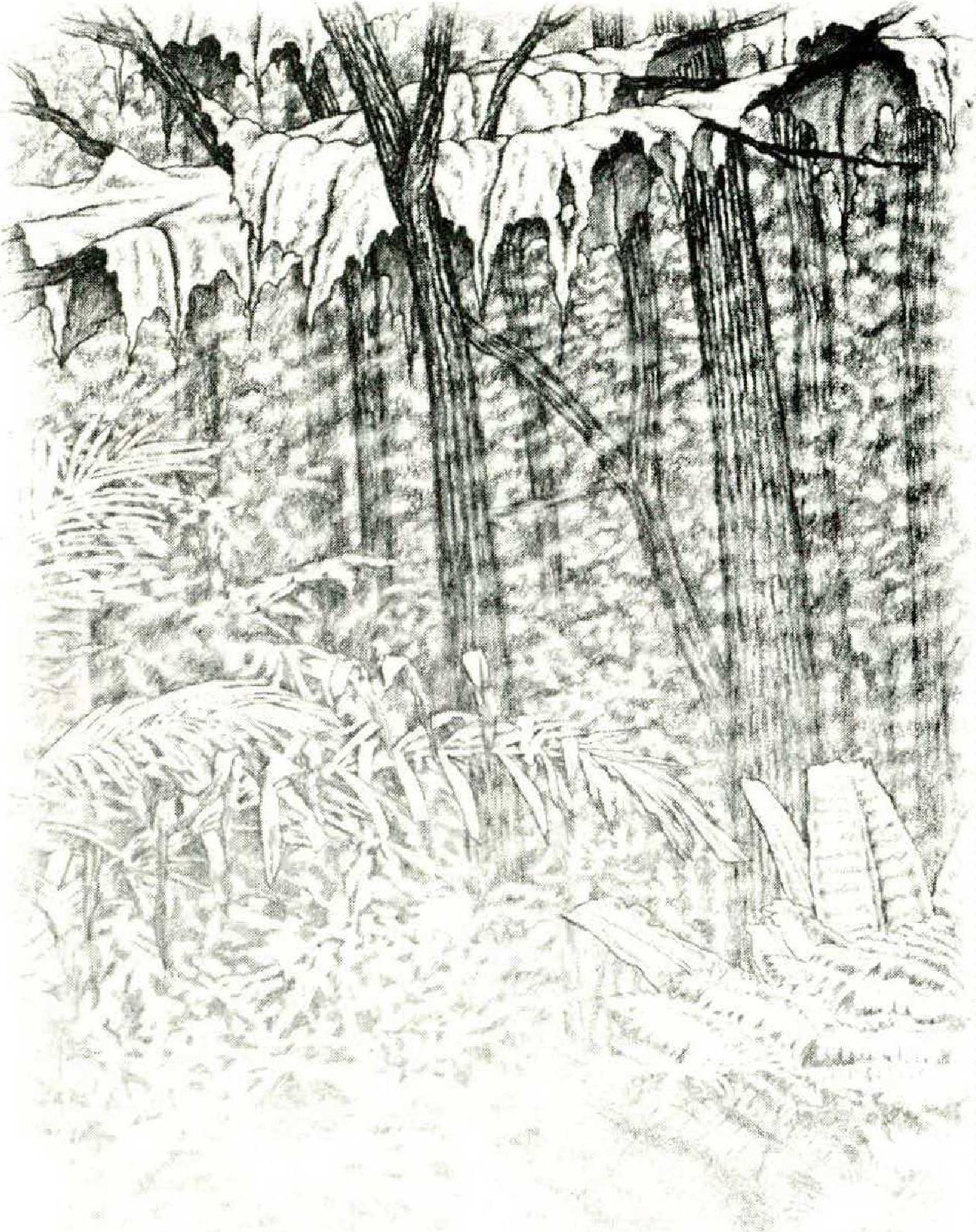
I told Pancho that we could easily fabricate some story, and then when we got home, my father would get him a good job. He laughed at me. One evening, though, I caught him gazing back at the hills and forests we had crossed. It was a week or maybe a month later, in a forest, in the gloom of giant trees, when sharp-eyed Pancho found disguises. High up in the vines, spots of bright orange, ragged parachutes. Pancho could climb like a monkey. The bodies came down. They were what was left of two of our country’s fallen aviators, one a major, the other a young lieutenant just about my size. Pancho gazed at them. “Lifers,” he said softly. “I bet you lifers puked on a lot of EM scum.” He gave his mirthless laugh, but at least he let me wrap them in their parachutes and put them underground. 1 washed the stolen uniforms in a river beside an old stone bridge, left there by the French, I think.
“How do I look, Lieutenant?”
Pancho stood before me dressed as a major, in baggy pants and too-long sleeves. My flight suit fit better, though I was just a lieutenant again.
Pancho had me salute him—for practice, he claimed. Then he said, “Let’s go back to the world, Lieutenant.”
It was a long trek back to the seacoast. My sores opened and ran. I began to limp. Then I had reason to be glad that we’d found uniforms of officers and not enlisted men. Pancho draped my arm around his neck. As we shuffled on, he asked, “Hey, Lieutenant, listen. What do lifers say to each other?” I knew that he still needed his lieutenant, to bear responsibility; but to stay on his safe side, I made my answers vague. I told him, “Just let me do the talking when we get back.” “Yeah, okay,” he said. “But how’s a major supposed to talk?” A few days later, he procured a water buffalo and those queries ceased. We rode the rest of the way.
But we came back too late. Our old base camp was deserted. As we swayed from side to side on the buffalo’s hairy back, down the camp’s empty dirt streets, past the ruined hootches, their metal roofs scalped off, I knew the war was over and the other soldiers had gone home.
I rode in back. Little Pancho steered the beast, out the front gate, across Highway 1, then through the sand. We passed the ruins of a watchtower and then a faded sign, bent back on its stand like a tree in the wind. Weary soldiers had once bathed here. The sign had stood to remind them who they were:
TO THE LAND OF THE BIG PX AND THE ALL-NITE GENERATOR 12,500 MILES
“We’re stranded, Pancho.” It was as much my fault as his. I had squandered my authority on a cement mixer.
Pancho gazed out across the rollers. The sea curved into the sky. “Shaky.”
“We get boat, you get number one water buffalo, papa san. You bocoo number one farmer now,” Pancho said to the fisherman, waving the green gun from one object to the other. The fisherman looked too old to change professions, but I admit I didn’t argue.
“You drive this thing, Lieutenant,” Pancho said to me, as we launched the small pirogue. “You belong to the yacht club.”
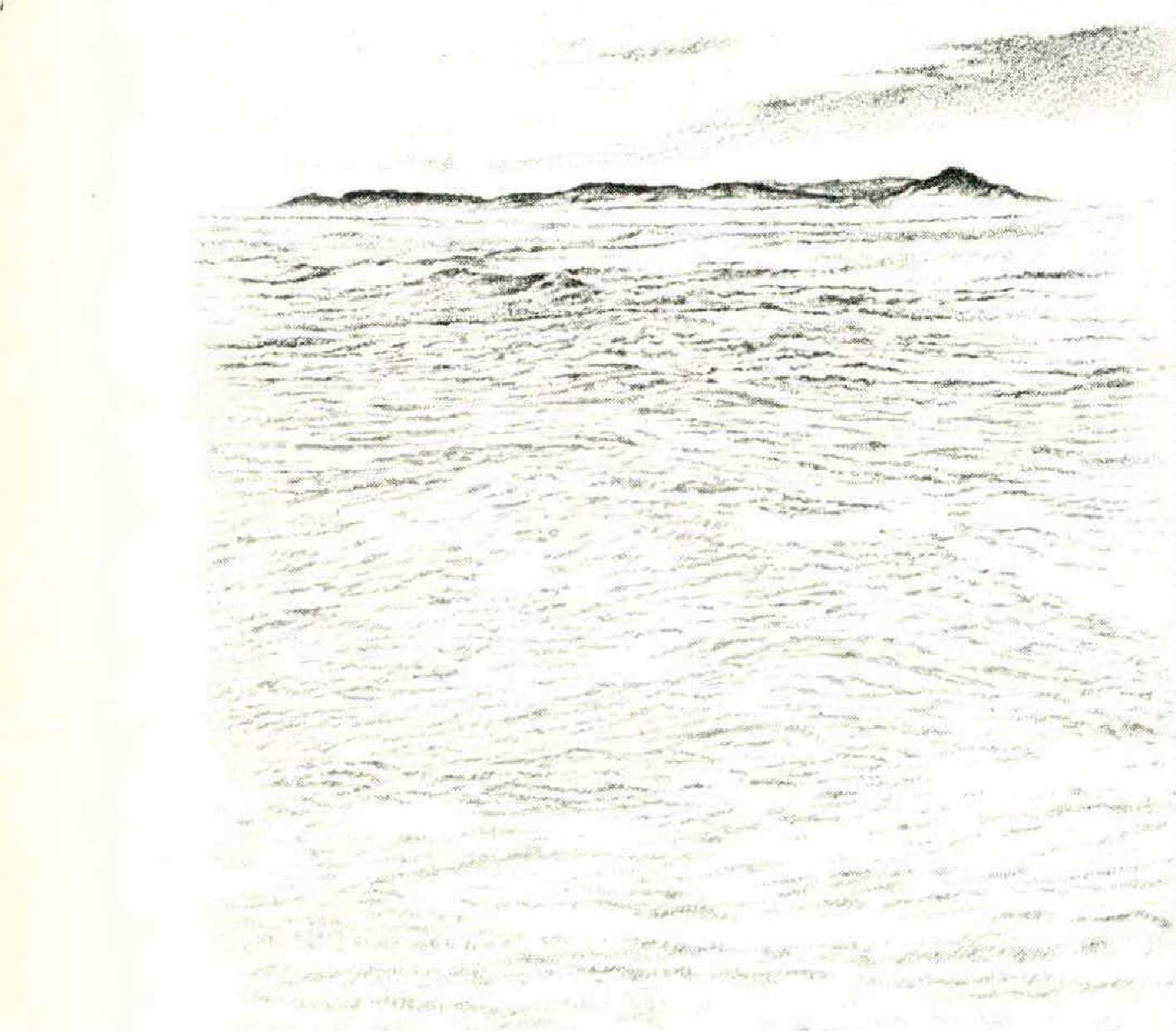
We set sail for California. At the time, I didn’t think I cared how far we got. We were pointed in the right direction, east by Pancho’s pocket compass. Fair, quartering winds carried us in that narrow open boat—its spars were of bamboo—three days and nights out on the China Sea. Dozing at the steering oar, beneath the Southern Cross, I dreamed of my homecoming. But we didn’t get that far. On the third night, my nose detected fragrance, and the next dawn I saw land. All morning the island’s brown headlands rose slowly out of the sea.
We landed in a sheltered cove and sat down beneath an almond tree. Pancho shook his head. “This ain’t California, Lieutenant.”
“Seems to be a desert island,” I said. “No sweat. We’ll rest a while here. California in a month or so.”
The sea rolled on inside me, and soon I fell asleep. I was snoozing in the cradle of the waves with my back against a tree, when a crackling voice woke me up. It was singing cadence, a mournful song I hadn’t heard since the Infantry Officers’ Basic Course.
“You had a good home but you left!”
“You’re right,” answered a chorus of voices.
“Jody was there when you left!”
“You’re right. ”
Pancho crept into the woods. I followed on all fours. Not far from the beach, to my surprise, there lay an asphalt road. Down it, past our hiding place, shuffled a column of unarmed men in green fatigues, no belts, no laces in their boots. They marched with eyes cast down. A sergeant in a wide-brimmed trooper’s hat strode beside them, calling cadence through a bullhorn.
When they were gone, I argued. We would never get home if we stopped to investigate everything we saw along the way, I said, while I shaved my beard with beardless Pancho’s knife.
“We gotta check this out. Lieutenant.” He put on his dark glasses. “This is shaky.”
About a mile down the asphalt road, we came to the crest of a hill, and from there we saw the camp. Two rows of low-roofed, mustard-colored buildings, with glinting whitewashed rocks bordering the footpaths.
“Somebody’s been painting rocks down there,” said Paneho. “That means lifing, begging officers, Lieutenant. I’m gonna pheebe around.”
We skirted the camp, sneaked in the back of a building, through a door labeled “Orderly Room,” and crept across the room to the screen door on the other side. Out on the blacktop the soldiers we’d seen marching stood at ease in ranks. A tall, thiek-waisted man with captain’s bars on his collar was speaking to them: “Yup, I just got the good word from Research and Control in Hawaii. Looks like they might have isolated that virus.”
The sergeant in the trooper’s hat prowled around the formation. “Come on, you dickheads, let’s hear it.”
Murmurs came from the ranks, but the captain raised a hand as if to silence cheers. “Don’t thank me. Thank your uncle, men. ‘Cause pretty soon I’m gonna make up a list of five of you profiles and I’m gonna send those guys to Hawaii for inoculations first.”
The men continued to study their boots.
“Hey,” said the captain. “Come on. I wouldn’t be surprised if some of you get to go home this year.”
“I would, you sonofabitch!” That voice sprang from the ranks.
The sergeant waded into the formation. He came out dragging a thin, pale, grinning soldier by the collar.
“Shame on ya!” cried the captain to the soldier.
As the sergeant led him away, the soldier twisted back and yelled at the captain, “You been handing us that same bullshit for two years!”
“I wouldn’t be surprised,” the captain said to the troops. “I wouldn’t be surprised at all if a buncha you go home this year, but it could take a lot longer for some profiles, like that trooper there. You hear?” Then he dismissed them.
The captain, a big, sleepy-looking young man, ambled up to the door of the orderly room, talking to himself. “Someday this’ll all be over,” I heard him say.
I moved aside, behind the opening door. He walked past me and stopped abruptly.
Paneho sat at one of the desks, in his voluminous major’s suit and dark glasses. The green gun lay on the desk before him.
“Let me feast my eyes on you!" the captain said to Paneho.
“Longitudinal herpes is characterized by baldness in women, Major, and by a what-ya-call-it, a miniaturization and battening of the reproductive organ in the male,” the captain explained, as we crossed the company street, heading for a barracks. “But I guess you know all that.”
“Yeah, right,” said Paneho.
“What else? It’s contagious, but only if, you know, and there ain’t no cure yet. That right, sir? No cure yet?”
“No way,” said Paneho.
Inside the barracks, the soldiers lay sprawled in underclothes, on two long rows of bunks. On their footlockers and windowsills, I saw, lay generous quantities of tools for gambling—cards and dice and poker chips and plastic roulette wheels.
“This is Profile Harb,” said the captain. We stood at the foot of a bunk.
I knew the term “profile.” It signified a soldier with an enduring ailment. The boy who jumped up from the bunk and stood before us at attention was a skinny youth with yellow teeth and pimples on his whiter parts. He seemed healthy enough, for a soldier, until the captain said, “Could you drop your shorts there, Harb?”
Staring at the boy, Pancho whistled softly. I turned my eyes away.
“Shaky,” Pancho murmured. “A little tiny flatdick.”
“That’s an affirmative,” said the captain softly, looking around the barracks. There were several other profiles sitting up in bed.
The captain patted Harb on the shoulder. “Thanks, sport model.”
“I wouldn’t want to be in your pants,” Pancho said softly to Harb.
A crowd of profiles was gathering around us, and the captain said we’d better move along.
The boy called after us. “I was wondering, Major? If maybe I could be one of the first guys that goes to Hawaii? I’d sure appreciate it, sir.”
They clutched at us. We waded through them.
“You gotta take me. I got two Purple Hearts.”
“I got a Silver Star, Major.”
“I been to college, sir. I can type.”
“All right, you studs, as you were,” the captain thundered, and they drew back a little.
“Formation in twenty minutes, men,” the captain called, as we stepped out into the sun.
“Sometimes they get a little radical on you,” said the captain, when we were back in the orderly room. Some time ago, he told us, profiles had built a raft, but the commandos from Research and Control had stormed the island, burned the raft, and taken away all tools. A few months after that, some profiles had tried to board the supply plane. No planes had landed since. Now cartridge razors and C-rations were dropped at night on parachutes. “And that’s all these poor suckers’ve got to look forward to. That and gambling. They sure love to gamble.”
“You mean, they can’t ever go home?” I said.
“It’s a hell of a note,” said the captain. “It’s a hell of a note.”
But he brightened quickly. “I tried to keep ‘em from hurting themselves,” he told Pancho. “Look here.” He opened all the drawers of a filing cabinet; they were filled with belts and shoelaces. “Maybe I should have took their sheets, too, Major.”
“Yeah, take their sheets,” said Pancho. I didn’t like the sound in his voice.
“Yup,” the captain continued. “There’s been a lot of attrition. We only got enough profiles to fill one barracks now. Used to be a lot more. We had one woman, a donut dolly, you know? Hey, she was real pretty, you never would have thought to look at her. But anyhow, here’s the records, sir.”
He handed Pancho a thick file folder. “RECUPERA-TION ISLAND, PERSONNEL, LONGITUDINAL HERPES,” said the cover. I read over Pancho’s shoulder.
“There’s some good stories in there,” said the captain.
After six months in the war zone, Specialist Harb had come down with ordinary venereal disease three times. He had gotten each “dose”—as he called it—at the same bordello in Quang Ngai. After his third cure, he went there again, this time to a woman most other men shunned. Harb had heard she wore wigs.
Medical Examiner: Why did you keep going back to that place?
Spec. 4 Harb: See, my grandmother died after I was here a month, and I went home for a week on special leave? And my wife give me the clap. So when I come back to the war, that’s when I started going to the house, you know?
Medical Examiner: I understand that. But why did you keep going back there? And why did you pick a woman who you knew was diseased?
Spec. 4 Harb: I don’t know. I was mad at my wife, I guess. This whore, she was scuzzy, it made me feel better. But I won’t do it again.
Medical Examiner: No, indeed.
There was a letter attached to this file and a stamped addressed envelope attached to the letter:
Dear Mom,
Well I’m still in the hospital. I got shot up pretty good and I got a medal. I’m OK now but they say I cant go home yet which is not true. Write our congressman.
Love,
Jimmy
P.S. You tell Cheryl I got wounded bad and she can buzz off.
“That’s from my letters home program,” said the captain, looking over Pancho’s other shoulder. “Kind of a problem. Headquarters wouldn’t let ‘em send letters out of here even when the plane did land.”
“So you sneak the letters out somehow?” I offered. “No, actually, what I do, I take their letters, see, I put ‘em in the files, wait a coupla weeks, and then I type up the answers myself. Then when they drop us our supplies, I go out and stick the letters I wrote right in there with the C-rations. So in the morning, the profiles find them and this way you never get some poor dud who doesn’t ever get a letter at mail call.” The captain laughed a little, shaking his head and rubbing his crewcut with his knuckles. “I been mothers and widows and girlfriends, you name it. I wrote up some good ones. I write up some juicy stuff there, Major.”
Pancho and I leafed through the thick file, through the histories of dozens of soldiers who had contracted longitudinal herpes in wartime. They were neophytes and aging sergeants and infantrymen turned rapists who had been victimized by their victims. A few were officers who claimed they got it from using the same latrines as their men, and many were innocent youths who had turned to the whorehouses for solace, after receiving letters of farewell from their girlfriends back home. (These letters, the medical examiner wrote in his summary, often come in blue envelopes and frequently are written in round, back-sloping script.)
Why such reckless fornication? I wondered out loud. I believe it must be war; a soldier at war needs to feel that there are more where he came from, I said.
“Hey, that’s real profound,” the captain said.
“The Lieutenant’s a genius,” muttered Pancho.
“He’s got imagination, I’ll say that,” said the captain. “He’s gonna need it here.”
I think my mouth fell open. At last, I understood. The captain thought that Pancho and I were going to stay here on the island a long time, in his place.
I would set the captain straight, before this went too far. Just then, however, he was ushering Pancho out the door. “Something I want ya to see, Major. Something I gotta do.”
We strode down the company street. As we passed the dayroom, I overheard some profiles talking inside. “Without gambling life would be meaningless,” one of them said.
We walked by the dispensary. A man in white medic’s clothes came to the door, He held aloft a plastic skeleton. He was rattling it, making it dance. “You’re next, GI. You’re next, GI,” he kept saying.
“That’s Doc,” said the captain to Pancho. “Don’t pay any attention to him.”
I hurried by and didn’t look back. It was time we were leaving this place.
But I couldn’t attract Pancho’s attention. He was striding along down the black road, half a step behind the long-legged captain, and he was producing a sound such as children make with toy guns. ”Burrrt, burrrt,” said short, round-bellied Pancho, swinging the green gun’s barrel toward the unsuspecting captain’s hip.
“The sergeant gives them dismounted drill twice a day,” said the captain. “For morale and all.”
“Burrrt, Burrt,” murmured Pancho.
Pancho strode beside the captain. I hurried along after Pancho. It was time to set sail. We passed a parade field. We climbed a long hill, and at last the camp lay below us and on either hand you could see the ocean. A sait wind ruffled our sleeves. The captain stood shaking air into his blouse beside a yellow field, spiked with rows of wooden crosses. “I just came to say goodbye,” he told us.
He walked over to a large wooden marker and took up a meditative pose, gazing down at the inscription:
TO THE GHOSTS OF SERVICEMEN UNLUCKY IN LOVE IN MEMORIAM
“It’s interdenominational, see. Yeah, I made it interdenominational,” he said.
“I wish I was smart, you know that?” he went on, turning to me. “You’re smart, Lieutenant. Maybe you can figure out a cure for this thing.” He clapped me on the shoulder, and then he turned to Pancho. “Well, sir, I guess this is it. What you all come in? An amphibian or something? Yup, yup. So what’s the SOP now? Just wonderin’ if I have to take a physical before I get on the old amphib.”
Pancho smiled. “Oh hell no.”
The captain was beaming. “Well, sir, goddammit. I guess I can turn over Recupe Island to you.”
The captain snapped up a salute. “All right,” said Pancho, and he flipped one back.
“Wait a minute,” I said. I put my hand on the captain’s shoulder. He put his arm around mine and bowed his head. Then I explained that there was no airplane. We were escaped prisoners of war who had come here by fishing boat. The major wasn’t always himself, I explained. I began to describe how we had been tormented, first by the enemy, then by the jungle and sea.
The captain pulled away from me. “No airplane? No freedom bird?”
“Shut up. Lieutenant,” hissed Pancho at my ear.
The captain collapsed. He sat down in the yellow grass beside the big grave marker and rocked back and forth with his forearm in his teeth. Looking down, I saw him as he must have been this past year, standing outside at night, shivering with the stars as he craned his neck to see the blinking lights of the supply plane that no longer landed. Crates of C-rations would thud on the ground around him; he would not care if he got hit.
He too had known the hardships of command. I moved to help him up. But he pushed away the hand I offered and rose by himself. Climbing the black road toward us came the troops, out for afternoon drill.
“Ain’t no use in lookin’ back!” the sergeant called through his crackling bullhorn. That song! It was time to go, set our keel to the breakers.
“Ain’t no use in lookin’ back, “the profiles answered without much enthusiasm.
“Jody’s got your Cadillac!”
They passed in sweat-soaked shirts. The sergeant saluted, but the captain didn’t return the courtesy. “You’ll be going home soon,” he said to us.
“Ain’t no use in feelin’ blue!”
“Ain’t no use in feelin’ blue.”
“Jody’s got your girlfriend, too!”
The captain said he imagined brass and banquets awaited our return. “They’ll do everything they can for the men with noble wounds.” He raised his voice. “And rightly so!” He waved angrily at the ocean to the east. “There’s ships out there! I see ‘em every day! You gonna catch one of them ships!”
“Keep it in your pants, flatdick,” said Pancho to the captain.
The captain wheeled. He stared at Pancho and Pancho stared back, his head cocked to one side, for what seemed a long time.
The sergeant’s song rose from the valley below: “Ain’t no use in lookin’ down!”
Finally, the captain turned his face away, and looking toward the ocean, said, “I have some beer, if you want to spend the night.”
“Ain’t no use in lookin’ down.”
Ain’t no discharge on the groun’!”
“Yeah, a beer would go good right now,” said Pancho.
I watched the captain as we walked slowly back to camp. He seemed calm. But when he thought no one was looking, he would glance at Pancho. He would eye Pancho’s baggy, clownish uniform.
“He knows,” I told Pancho that evening, in the empty barracks that the captain had opened up for us. “He knows you’re not an officer. Officers don’t call each other flatdicks, Pancho.”
But he wasn’t paying attention. He paced, drinking beer with one hand and waving the green gun with the other, telling me that he would liberate the “flatdicks” from the “big lifer’s” tyranny, then lead his band of profiles back to “the world,” where the ones who still could would start epidemics, beginning at the homes of the first sergeants and officers whose addresses he had memorized.
“And that’s no shit, Lieutenant,” said Pancho. He climbed into bed fully dressed, with his gun.
What a night for Pancho to get drunk! I dozed and was awakened by a voice nearby saying, “Take me with you, sir. I’ll cut it off, sir. Let me go back to the world and I swear I’ll cut it off.” I jumped up. There were faces in the windows, outside the screens. They disappeared. I must have dozed again, and this time when I woke, to gray light, there were a dozen figures in the doorway, a crowd of profiles standing there.
“What do you want?” I yelled at them.
One stepped forward. “We have something to give you.”
“Go away!” I shouted. I shook Pancho. I yelled in his ear. Finally, I tried to take his gun. He was up and out of bed in a moment.
We ran out the back door. Someone called, “Don’t leave.” We heard shouts behind us, and soon afterward, boots on the pavement, the sergeant calling cadence in double time. We were fortunate that they did not wear laces.
The sun was perched on the rim of the sea by the time we got to the cove. It was calm. Our sail hung limp. I was paddling away with the clumsy steering oar, when they streamed onto the beach. I saw the captain come through to the head of the crowd. His sergeant was beside him, holding a carbine.
“Come back for a minute,” the captain called to us across the water. “I want you to take this letter to my wife.” He waved a small white object. Other voices cried to us. The profiles stood at the edge of the turquoise water, waving envelopes, calling out messages.
“Well, if that’s all they want, Pancho ...” I began.
“Keep paddling,” he hissed.
“Halt!” yelled the captain. “You’re under arrest, for impersonating an officer.” The sergeant had hoisted the carbine and was aiming it at us.
“Idiot lifer.” Pancho stood up in the stern. He cupped his hands and shouted through them. “The captain is a flatdick too! The big lifer is a flatdick too!”
I saw the sergeant lower the rifle. The captain looked around him, at the profiles. Then, suddenly, shoving men aside, the captain ran inland up the beach, and the sergeant followed him, backing up, holding the carbine on the profiles.
The profiles turned, some still waving their envelopes. In a mass, they seemed torn between us and their leader.
“EM scum like me,” Pancho said to himself. “Ahhh, all right.”
Once again, he yelled to the profiles: “Hey, scum! Catch this!” He held the green gun high in the air, and then he heaved it toward the beach. He shook out the contents of the knapsack in the bilge and threw toward the beach bayonet, machete, knife, some punji stakes, and several clips of ammunition.
There was a hubbub on the shore. Cheers and cries I did not like to hear for the captain’s sake. In a moment, we caught the wind and our little boat sprang for the open.
Although I didn’t look it, as Pancho liked to tell me, I was still a young man. All I wanted now was to live according to the customs of my parents and the obligations of affection, among people who had known me as a boy. I required only a few things: the kind of food that I was raised on, a familiar bed, perhaps a dog that could be taught to respect and obey me.
Most of my journey back was over now. We had finally hit a lucky streak—an American merchant vessel bound from Bangkok to Seattle. However, there was Pancho. The day after we had been taken aboard the freighter, a mate had remarked that Pancho didn’t seem to fit his uniform. The mate said this goodnaturedly. Obviously he expected some reasonable explanation that would lead to further conversation.
But Pancho told him, “Yeah, I shrank.”
I thought about that, while iying in the upper berth in our stateroom. I was nibbling my nails.
“Don’t get all sweaty, Lieutenant,” Pancho said from the berth below. “Nobody’ll recognize you now.” He laughed.
“I’m not worried,” I said. “I was just thinking. I guess they won’t care how your uniform fits. Think they will?”
“I’ll tell them it stretched.”
“I’ve seen a lot of officers who didn’t look any more like officers than you,” I assured him. “The way they talked and all. Ever know any of those guys, Pancho? What do you call them, mavericks?”
“I call them fifin’, beggin’ pukes,” he said. “What’s bugging you, Lieutenant? Stop jiggling the bed.”
“I’m just short.” That’s what the troops used to say when their homecomings were near. I gazed out the porthole. Softly, down below, Pancho started laughing.
“Hey, Lieutenant,” he said. “Remember when you tried to stuff that puke, Major Great, in the garbage pail?” He tried to mimic my voice. “ ‘We gotta hide the evidence, we gotta hide the evidence.’ ”
I never did that. He was making it up.
“You know when I knew you were shaky?” Pancho went on. “When you tried to act like a lifer. So you made us fill up the jeep with diesel fuel.”
He said, “How’d you get so shaky?”
“I don’t remember any of that.”
“Come on, Lieutenant, gimme some slack.”
“We have to make plans,” I said.
“We got plans, Lieutenant. We’re escaped POW’s and we don’t have to take no shit off anybody. Or we might make our break when we hit Seattle. Depends on the situation. Lieutenant.”
“Or maybe, I was just thinking, you know, if we have to talk to the authorities, Pancho, maybe we should say we don’t know each other and each one make up his own story. Or something.” There was no answer. “Huh, Pancho?”
I waited a while. When I finally looked down over the edge of my berth, he appeared to be sleeping, in the huge flight suit with the major’s oak leaf on the collar.
The next morning, I found a printed note on Pancho’s pillow:
Lt,
I am tired of wareing a green suit. Take care of yourself.
Don’t talk.
So he was gone. I couldn’t imagine him at a banquet, talking to some ambassador’s wife. He would have given us away. And for a while I was relieved. But when I woke up from my afternoon nap, and looked down at the empty lower berth, I realized that from now on I’d be lacking versatility.
I searched for him in the hold that night, my flashlight beaming down corridors between huge packing crates. “Pancho? Hey, Pancho?” I called. “Where are you headed, Pancho? In case I need to get ahold of you. When my father gets you that job. Where’s home, Pancho?” But there was no answer, and I went back to my bunk. There, on the perimeter of sleep, I tried to raise memories of my childhood home, to get them out of storage. But no feelings came.
My plans went foul. Convinced that Pancho had stayed too long at war and had thrown himself overboard, and afraid that I might do the same, the ship’s captain placed me under guard and personally turned me over to the military authorities in Seattle. I couldn’t get away from them; I resolved in a fit of panic to take the advice that Pancho had left in his note: I would not speak at all, I would pretend to be mute.
The men in charge were kind. I believe that my appearance moved them: my back, which Pancho’s knapsack had made a little humble, my wild hair and regrown beard, which I would not let them cut. They looked at my uniform and dog tags. They told me not to worry. They’d see that I got home in style.
But where did they take me? Not to my parents’ home, but to the home of the young aviator whose corpse I had stripped. I wore that poor boy’s uniform and dog tags. Now I would have to live in his house.
On the airplane, flanked by officers in starchy clothes, I mistook the back of someone else’s head for Pancho’s. For a moment, I thought I saw his face in the window of a passing car, while riding on the highway from the airport in the congressman’s limousine. Standing on the porch, with the parents of the dead lieutenant whom I impersonated, I studied faces in the crowd. I was sure that Pancho would be there.
Most of the town had gathered on the street. The high school band had arranged itself in a formation that spelled “RICK,” which appeared to have been the young aviator’s nickname. But Pancho wasn’t there. Finally, waving and smiling with my brown teeth, I went inside the dead lieutenant’s house.
Most people feel that their parents don’t truly know them, but that is often vanity. The young aviator’s father, for instance, was merely pretending that there was no difference between me and his son.
“Rick?”
The father poked his head around the bedroom door. He walked in with an armload of socks, beautiful socks of many colors. He put them on the bed. “I thought you might use these,” he said. “I had to switch to elasticized knee-lengths.” I smiled and nodded, smiled and nodded. He took a few backward steps, glancing at the photographs on the wall. They were pictures of the lieutenant I had buried in the jungle. He was leaning on a hockey stick in one; in another he stood in his uniform the day he was christened an officer.
“Uh, Rick?” said the father to me. “I think I could get my barber to make a house call, if you don’t want to go out yet.”
Poor man. All he wanted was to dress me like his son. To comply seemed the least I could do. But I was hiding in my hair and beard, and I had to shake my head.
He nodded at the room in general and withdrew.
When the mother came, she did it silently. I looked up and found her sitting on the bed, with her hands in her lap.
“You can talk to me,” she whispered.
I shook my head.
“Come on,” she said, “I’ve heard you talking to yourself in here. I have to know.”
I shook my head vigorously. I pointed at the radio.
Between her teeth, she said, “What did you do to my son? Where did you put him, you creep?”
Neither of them visited me in my bedroom again. I saw them only in the evenings, in their dining room, at their table. It was mahogany, it looked like the one I had known, but I kept bumping my shins on its legs.
“Honey,” he said one night, when we were picking up our forks. “I don’t think Rick needs these special dinners anymore.” He gave me a hearty wink. “I think our boy’s gettin’ well enough to eat what we do.”
She burst into sobs. “He likes the special things I make.”
He went to her at once, saying, “Of course he does, don’t you, son.” She continued to sob, but her face, staring at me from over his shoulder, was without tears. It wore a look of warning.
And so I nodded vigorously over my plate of powdered eggs and beets.
She was experimenting with my food. She watched me, and what I nibbled politely or hid under my napkin kept reappearing.
I observed spring’s arrival in the trees outside the young lieutenant’s upstairs bedroom windows. Some nights I heard her walking through the house. Now and then she wailed. Through the walls, I could also hear them talking to each other in their bed. They had begun a discussion that I did not fully understand, until one night, I heard him say, “That little shrew? She’d make Rick’s life miserable. Listen, honey, this is the twentieth century. Don’t ya think Rick has a right to choose for himself?”
“I just want them to meet,” the mother said. “She’s very handsome.”
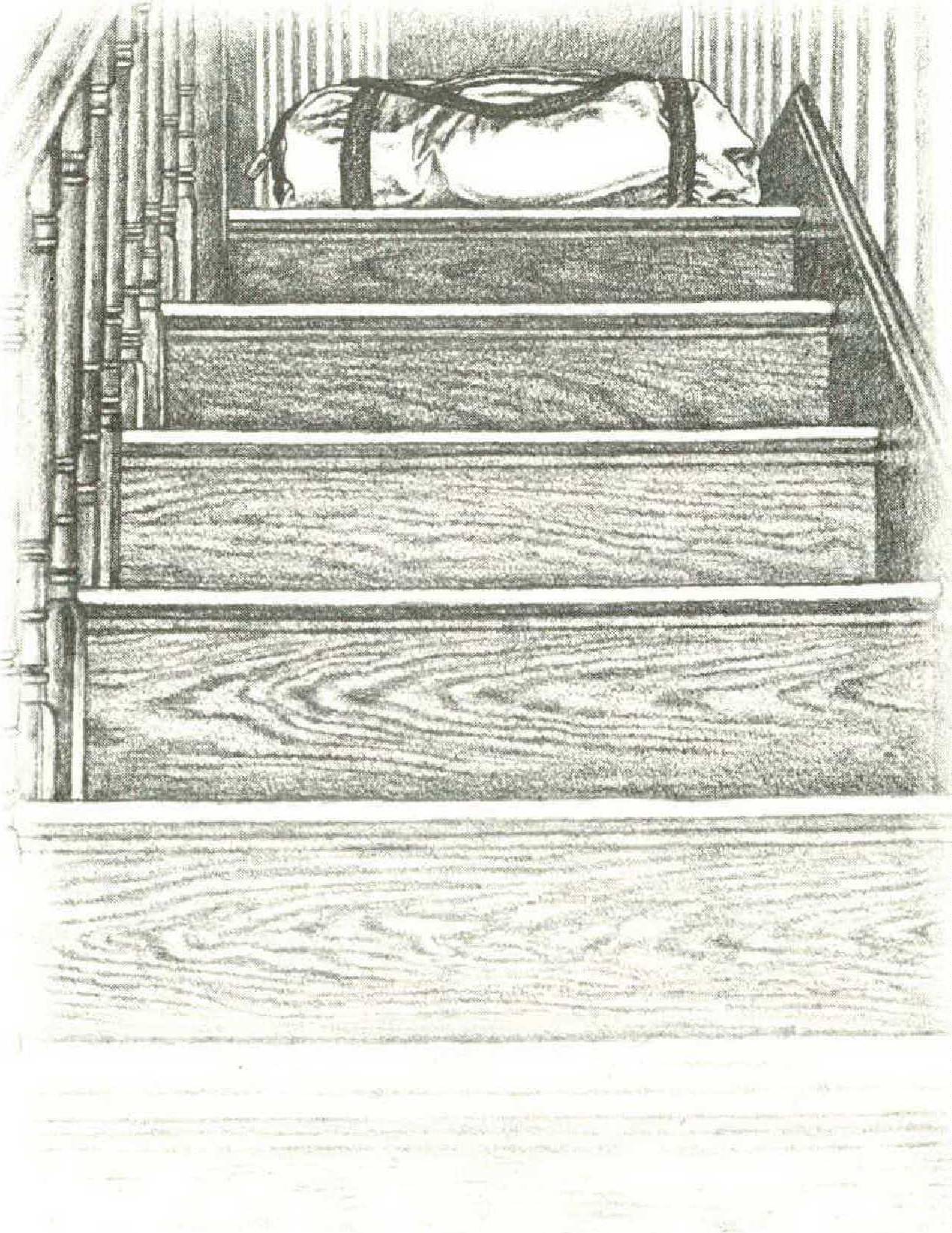
I felt there was no question who would win that argument. I waited until the house grew silent and then I packed my duffel. Coming downstairs, carrying my boots and bag, I smelled the house, mothballs in the closets, furniture polish, and a perfume like vanilla. It was the wrong house. With long slow steps, I made my way across the carpet toward the front door. But the smell of perfume stiffened, a floorboard creaked behind me.
“Oh, no, you don’t,” she whispered.
She followed me back. “Rickie’s gonna do what Mommy says. Shall we call the congressman if Rickie won’t do what Mommy says?” The mother’s hoarse whispers trailed after me. My duffel bag bumped up the stairs.