New Light on the Dark Satanic Mills
Suddenly there’s a boom on in labor history. Trade and university presses are pushing studies of long-forgotten strikes (Michael Novak’s The Guns of Lattimer), reissues of classic accounts of factory life (Rebecca Harding Davis’s Life in the Iron Mills), and profiles of communities entering the Industrial Revolution (Anthony Wallace’s Rockdale). From the graduate schools comes word that the only new history Ph.D.’s who now find teaching jobs without scrambling are people with labor specialties. Camera and video artists seem to be rediscovering workplaces, past and present, as lively subject matter (see, for example, the remarkable photographs of contemporary factory workers and others in Bill Owens’s Working: I Do It for the Money). And government is getting into the act: a month or so ago the National Park Service announced a $50 million project to re-create an abandoned industrial plant of Lowell, Massachusetts, as a “National Urban Cultural Center.”
The academic figures whose influence is discernible in all this are, in America, Herbert Gutman, who teaches at the Graduate Center of the City University of New York, and, in England, E. P. Thompson of Cambridge. I’ve read fascinating books by both men. Gutman, who first became famous as an expert on black families, has to his credit an often delicious exposé of the gap between the muchtouted, bright-eyed and bushy-tailed American “work ethic” and the relative relaxation, under worker control, of nineteenth-century factory life (Work, Culture & Society in Industrializing America). Thompson, author of the trailblazing The Making of the English Working Class, recently produced a long essay on labor-management deadlock and the uses of utopian thought— it was appended as a postscript to his biography of William Morris, reissued in 1976—that is among the best-judged treatments of the subject. I’ve seen.
Trailblazers, though, are different from followers, and I admit to approaching with wariness the latest contribution to the labor-history boom, AMOSKEAG: LIFE AND WORK IN AN AMERICAN FACTORY-CITY {Pantheon, $15.00), by Tamara Hareven and Randolph Langenbach. The Amoskeag Manufacturing Company, founded in 1837 in Manchester, New Hampshire, and permanently shut, down more than four decades ago, was once the world’s largest textile plant, employing 17,000 workers, encompassing thirty major mills covering eight million square feet of floor space (about the same area as the World Trade Center in New York). Each of the 17,000 workers, whether located in the cloth-making or mechanical and electrical departments, the dyehouses or steam power plants, or the hydroelectric station, worked at a job that could he described in detail. But how readable are job descriptions? How can conventional historians, minus missionary excitement, relying on primary sources and eschewing melodrama, make factory life live?
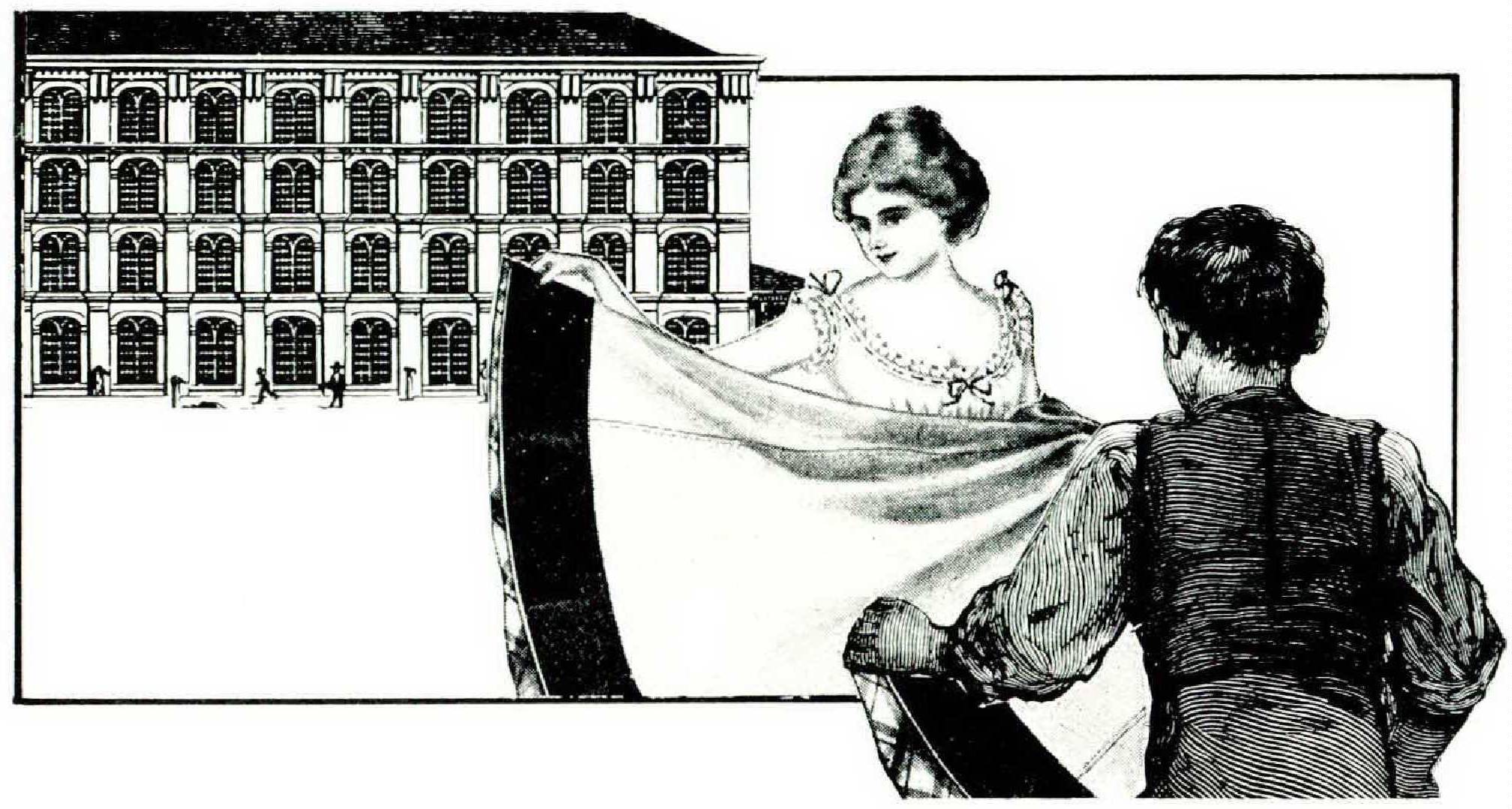
One answer is by finding the people who were there and encouraging them to talk about it, and this strategy is adopted in Hareven and Langenbach’s Amoskeag. (Tamara Hareven is a history professor at Clark University anti a former fellow of the Harvard Center for Population Studies. Randolph Langenbach is a celebrated English photographer of industrial sites.) The book opens with a discussion of the historical setting of the Amoskeag plant, and later on Professor Hareven provides chapters on the Dumaines (the plant owners), on patterns of familial relationship over two generations of workers, and on the company’s decline, which was well begun by 1922, the time of the first Amoskeag strike. But most, of the tale is told not by the academic, historian but by workers, supervisors, and owners.
The curve of the narrative—founding, expansion, domination of the market, competition from the South, wage cuts, union breaking, collapse—is without surprises. The interviewees don’t pretend to be accomplished raconteurs. And there are, in truth (in “The World of Work,” the longest section of the book), many unenthralling job descriptions: “Weavers were dependent on battery hands to feed the full bobbins into their looms and on loom fixers to repair their looms; spinners were dependent on doffers to pick up and deliver bobbins; and burlers were dependent on cloth inspectors to supply them with rolls of cloth to be mended.” In a word, this is no-frills history, solid and grainy; film rights won’t be sold.
Yet the lives here recorded really do breathe—attain, indeed, considerable cumulative impact before the end. One reason for this is that many of the interviewees are characters, strong-willed folk whose talk suggests above-average intensities of conviction. A few of the intensities are, to be sure, perverse. A twelve-dollar-a-week payroll clerk, who identifies with management, literally rejoices at the recollection that the company had paid spies in attendance at the first meetings held to protest pay cuts and work speedups. Equally perverse is the operatic selfrighteousness of the owners, secure in their faith that property relations and law stand infinitely higher in their God’s eye than human relations and morality. Listen to Buck Dumaine, inheritor of the Amoskeag fortune and present owner of Fieldcrest Mills in North Carolina, speaking in the 1970s as an authority on discipline:
The first thing you learn is never hit a woman or a man on the head or any bone or joint. If you lay a two-handed billy across the thigh or back, you bruise him, and you make a martyr out of him. You have to hit him right across the butt. This way, every time a fellow moved at night, he’d wake up and be reminded of being in the wrong place. . . . The leaders of this country still haven’t learned that lesson. . . . After fifty-six years it makes you kind of sick to realize our leaders today still don’t knowhow to police school and civil strikes in South Boston or anywhere else. They haven’t learned how to handle the people under strike conditions.
But perversity isn’t the rule among the strong voices in this book. More often than not they speak with sensible awe, remembering the sacrifices of their elders, ferocious defenders of familial self-respect. (“My parents were such self-sufficient, industrious people! It amazes me how they ever did it, with twelve children.”) Or they bring back memories of early longing for education—a means of combating superstition and escaping pointless shame—or of the onset of their own resolution and independence. (One monologue in these pages contains a shattering portrait of a mother ignorantly interpreting, for her daughter, the coming of puberty as a mode of punishment; the daughter’s silent rejection of that version of physicality is touching: “I said to myself, ‘When I have children, they’re not going to be this dumb. I’m going to try to help them a little bit.’ ”) Or we hear people imagining themselves tending the assigned machines, feeling once more the head-battering cacophony of two thousand looms slamming wildly in one Immense room (“the whole place shakes back and forth in rhythm . . . you can’t even converse. . . .”).
There’s more to the force of the human presence in this work, however, than noticeable characters or individualistic intensity of response. There’s a startlingly animated relish of the past. I met this, I trust, as skeptically as most readers would, telling myself that the speakers were doubtless nostalgic, or delighted at being singled out for interrogation. But in fact these explanations don’t work. The speakers seldom fall into recognizable postures as praisers of past times. On the contrary, they emphasize, unsentimentally, the slimness of the paycheck, the length of the workday, the physical hardship, the psychic cost of the struggle to survive—and only then go on to speak as though adding these elements together will never yield the whole. Here are some voices chosen almost at random:
Once I had my chin frozen going to work. But I had a beautiful time.
I like weaving. I always liked it. And after I was married, I often went in [to work] when I had the time.
My mother worked in the mills . . . the one with the big clock, and I used to bring her her lunch in a big pail at noon. I think about that some days, and I can’t believe it.
We’d have a lot of fun. You knew everybody’s name, and everybody talked to you. Everybody was friendly. ... It will never be like the Amoskeag again. The good old days weren’t so good because they were harder. But in a way, I think it was better then.. . . They wanted the work to be good. Today, it’s nothing but shit.
Or this, from a woman in her seventies who entered the work force at fourteen:
In the mill, people stayed among themselves to talk about whatever they had to talk about. Married people would be friendly, friendly enough to come and sit with us sometimes during the noon hour. Other times they’d stay in their corner and talk about their families and stuff like that. But we kids didn’t have any troubles. We’d sit in our little corner and we’d have our dinner together. Then we’d play games and we’d dance. One of us played the harmonica. She’d play and we’d dance, we’d sing. We used to raise hell. . . . The boss treated us the same way he treated his son. You’d think we were all his kids. If we did anything that he didn’t like, he’d come over and let us know, as if he was our father— and we were afraid of him just as if he was our father. But he was not mean to us, ever. . . . When my work was going well, you could hear me singing all the way down to the other end of the room, even with all that noise.
As I say, I pulled back from all this in responsible liberal disbelief for a time: seventy-hour workweeks at ten cents an hour and, simultaneously, idyllic human relationships? Well before the book’s close, however, skepticism seemed inappropriate. The plain (if difficult to credit) case is that for many, working in the mills was a genuine experience of human solidarity, not merely a trial or a period of fearful exploitation—a time when the sense of community may have been as vital a fact of feeling as weariness or want. The reasons for this, as they appear in the talk Professor Hareven has gathered, are extremely various. Individual departments in the mill were often not only ethnic but familial enclaves; hence workers felt connected to each other byblood ties. “By its very nature,” the historian notes, “textile work fostered interdependence and sociability.” People knew what their brothers, sisters, and elders were doing, had a grasp of relationships among the processes of manufacture, performed fairly diversified tasks, and were in some departments able to put a personal stamp on the products of their labor.
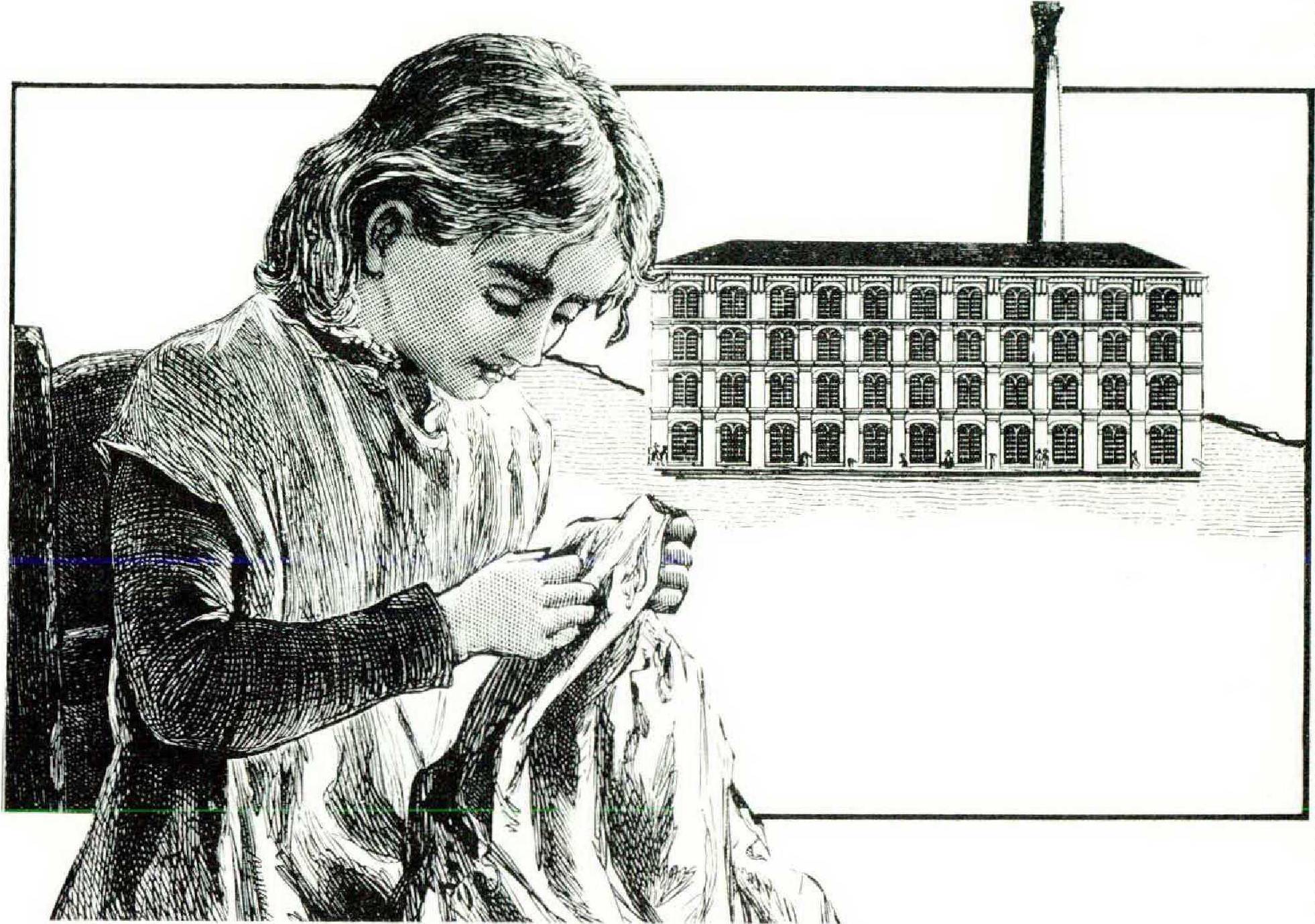
Furthermore, the Amoskeag company was, almost to the Depression, proudly paternalistic. Wages were low, company power to blackball was absolute; but standards of housing, medical care, even of playground facilities and sports equipment (Amoskeag fielded a ball club) were high. The goods produced, from gingham to flannel, were the best available in this country, and workers understood themselves to be connected with a venture that aspired to distinction and would not peddle seconds as firsts. And, easily as important as any of the foregoing, people knew they were in it together: in the place, the job, the general human circumstance. For the huge majority, low wages and long workweeks meant small opportunity for self-expression, but that was a shared condition—the common lot. And, by the same token, when something pleasurable occurred — a family outing—it too was an act of sharing:
In the summer, we went picking blueberries. . . . We would walk from Middle Street down Canal Street, across Bridge Street Bridge, all the way across Kelly Falls Bridge to Shirley Hill, and we would pick blueberries all day. One of us would take the tramway home with the pails, two or three twenty-pound pails filled with blueberries. The tramway cost 10 cents, so the others would walk back home. We must have walked twenty-five miles during the day. This was my father’s recreation. He had no other recreation. His recreation was with us.
It bears repeating that few interviewees attempt to hide the harshness of their work world from themselves. The dirt, heat, and racket remain thoroughly vivid in memory. But the speakers cannot, seemingly, concentrate their memory solely upon the pain. The book’s illustrations, moreover, hint that people may not have been able to concentrate on pain at the time. In addition to Langenbach’s stunning pictures of the mills, the mill yard, and the company-owned tenements, Amoskeag includes shots of “department staffs” retrieved from company files, and several splendid pictures of youngsters taken by Lewis Hine in the period when he was gathering evidence about child labor. Images of interconnectedness dominate, and beaten faces are rare.
Neither can the speakers take in the mill’s collapse as the mere death of jobs. When the voices begin dwelling on the company’s decline, powerful feelings of loss are engaged; the language becomes exceptionally reverberant, as though cutting the current to the weave room actually did mean an end to a whole way of life:
You go up and down the aisle, and you say, “I used to have all these looms to fill.” Now you don’t have anything. Now it’s so empty, you can almost hear the stillness come across the room. You go through a section where a lot of them are running, and then you come to where it’s awful quiet. Only a few are running. And it’s a lot colder, too.
Is the new labor history for or against the workers’ cause? Marxists and radicals often criticize it as “neo-antiquarianism” that weakens the campaign for social justice, ignores class struggles. (The position was well argued two years ago in the pages of the Journal of Social History by Professors Eugene Genovese and Elizabeth FoxGenovese.) And certainly it’s true that studies such as Amoskeag of the subjective realities of factory life do tend to demolish the myth that until the advent of unions, workers were powerless in the face of their masters. Scholars such as Gutman and Thompson have established, as I said, that workers exercised greater authority over machine production —over working conditions and over the terms of their relationship with management—in the last century than at present. Others, such as Harry Braverman, author of Labor and Monopoly Capital, have shown precisely how successful the school of scientific management has been, in the age of Big Labor, in impoverishing workers’ skills, destroying the last traces both of traditional craftsmanship and of mutualistic ethics on the job. Amoskeag implicitly supports this account of things.
And so, too, it should be said, do most of the other recent works in this genre that I’ve looked into. Some insist even more strongly than Amoskeag on the “goodness” of the good old working days. Steve Dunwell’s THE RUN OF THE MILL (Godine, $30.00), a “pictorial narrative of the expansion, dominion, decline and enduring impact of the New England textile industry,” contains rawer, harsher views of life both on the factory floor and in company housing than appear in Amoskeag. (As a landlord, Harmony Mills in Cohoes, New York, is plainly not paternalistic on the model of the Amoskeag company.) The same holds for the accounts of physical sensations on the job—the ceaseless drying-out of the mouth and throat called “cotton death.” Yet here again the theme recurs among oldtimers: “In my time, when I started, most of the people formed a certain pride in their work.” “I enjoyed every minute of it.”
But that the revelations of the new labor history deflate some unionist claims hardly means that this kind of writing is anti-labor. It simply means that new questions about work are being posed. And it suggests that contemporary effort at counteracting industrial worker dissatisfaction may be too narrowly conceived. The search for “solutions” —worker control of production quotas, for example, as in Sweden’s Volvo plants—oversimplifies the problem, setting to one side, as irrelevant, complex structures of human values and concern that permeated earlier contexts of work, and that obviously weren’t irrelevant to the work satisfaction known in those periods.
Tricky issues, clearly, but increasingly urgent as people ponder the shortcomings of economic growth as an ultimate human goal. Profiles of vanished industrial subcultures —times of shared skills, hardships, children, meals, and recreation —can’t tell us what we should want. But they do show us authoritatively what once was intensely valued by men, women, and children for whom the possibility of a trip to Vegas, a Princess extension in the bath, or a Chrysler Cordoba didn’t exist. Their essential subject is the capacity of our kind to relish connectedness, and their real usefulness conceivably will turn out to be as tools for the reeducation of desire. May the boom last.