The Distinction of the Life
by William Abrahams
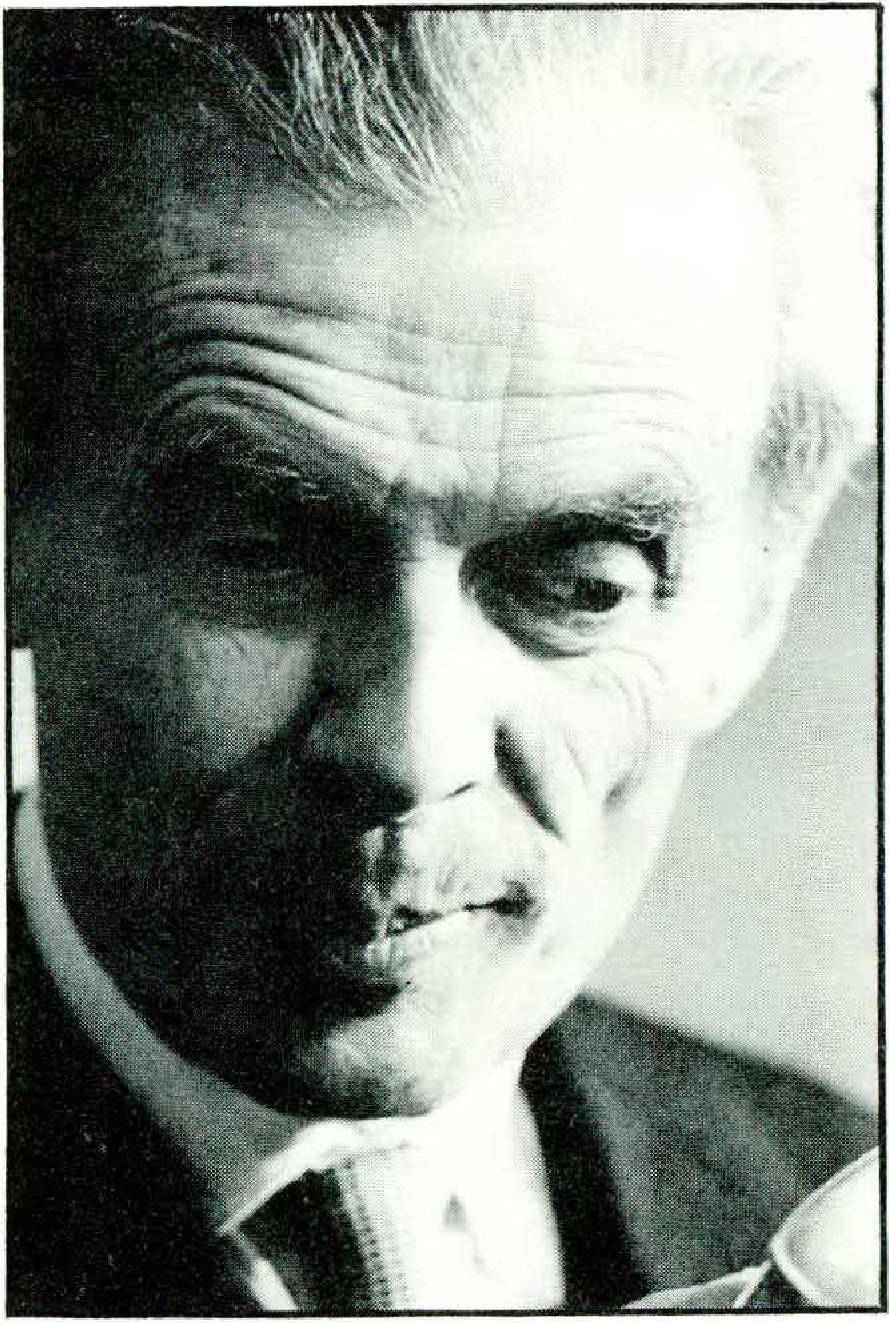
ALDOUS HUXLEY
by Sybille Bedford
Knopf, $15.00
by Sybille Bedford
Knopf, $15.00
More than with most writers, one’s conception of Aldous Huxley depends on one’s generation. In each he seems to have acquired a new “identity.” If you are old enough (or almost) to have known the 1920s, when he came so dazzlingly into view and so perfectly epitomized them, you have an instantaneous legendary image: the novelist, steeped in European culture and postwar despair, witty, worldly yet weary of the world. A generation on, and your image is of the pacifist and mystic who removes himself from Europe and settles, alongside Thomas Mann and Igor Stravinsky and Arnold Schönberg and Gerald Heard and Christopher Isherwood, in Southern California. And for the youngest generation, the name evokes—especially for those who don’t read—the apostle of the hallucinogenic and the utopian commune experience. An extraordinary set of “identities” or “representations,” is it not?—at once logical and bewildering, and summarized in the long list of titles (forty-seven in all) that extends from Crome Yellow and Antic Hay to Ends and Means and The Perennial Philosophy to The Doors of Perception and Island.
Such conceptions, when stated as baldly and reductively as this, turn out to be closer to misconceptions than to the ever so complex reality they attempt to pin down, though they are not without their grain of truth. Looked at carefully, through the lenses of art and scholarship, they take on their proper proportion. It is the particular merit of Sybille Bedford, in this immense and fascinating biography, that she is able to bring into focus Aldous Huxley in all (or nearly all) his metamorphoses and manifestations. Doing so, she triumphantly fulfills Virginia Woolf’s dictum: “Biography is to give a man some kind of shape after his death”—a definition which serves as the epigraph to this book.
Mrs. Bedford also quotes, as a guiding principle in her composition of the work, a remark of Mrs. Woolf’s good friend Desmond MacCarthy: “A biographer is an artist upon oath.” This is cleverly said, and it happens to be true, at least in some cases. But it is also true that in an even larger number of cases, a biographer may be a model of exactitude, assemble masses of facts, mini-facts and nonfacts— turning his magnifying glass, as Paul Valery wrote somewhere of the Stendhalians, on the least events of his subject’s life, his scribbled notes, his tradesmen’s bills—and yet, not being an artist, find it impossible to give his subject “some kind of shape,” even if he is aware, which too often he is not, that “some kind of shape” is necessary. Mrs. Bedford, of course, is an artist, as anyone familiar with her novel A Legacy will know already. She has performed prodigies of research and mastered a staggering amount of material; her Aldous has indeed “some kind of shape”; her biography is unquestionably a work of art; I admire it immensely. And yet, how odd it is, in its style (of course), but more important, in its arrangements and emphases, in its highlights and shadows. If this is Huxley to the life—as I am prepared to believe it is—it is Sybille Bedford’s Huxley: An artist has been at work here. She begins:
The object of this book is to give a truthful account of the life of Aldous Huxley and of Aldous Huxley as a man. Although it is in no way intended as a work of literary criticism or an evaluation of his thought, such a book mustquite inevitably—contain a good deal of his writing and his thought. Naturally I feel presumptuous in attempting the biography of a man of his moral and intellectual quality.
Mrs. Bedford always writes carefully, and if one reads her with the care she deserves, the more remarkable this passage appears. Surely, one thinks, something is missing: that key word, writer, which conventionally ought to be there somehow. Say: “of Aldous Huxley as a man and writer.” Or: “a man of his moral and intellectual quality, and of his quality as a writer.” But no; the omission is deliberate—in itself, I would suggest, a form of literary criticism. It is not that Mrs. Bedford is hostile to Huxley as a writer, though she tends, in that regard, to underestimate him a little—no more, however, than Huxley did himself. In the end we have, unforgettably, unarguably, in Sir Isaiah Berlin’s phrase, “a wholly civilized, good, and scrupulous man, and one of the greatest imaginable distinction.”
It is difficult to think of another writer of our time—or of any time— to whom such a tribute might be paid. Joyce? Proust? Lawrence? Hardly. There is an element of the monstrous in most great writers, a monstrousness that is part and parcel of their genius, that seems to have been wholly lacking in Huxley. (I say this as a statement of fact, being convinced of it by Mrs. Bedford’s biography, not as a statement of literary criticism, a syllogism to suggest why his novels should fall short of the very highest level of achievement.) At one point, we are told: “Aldous’s flock [of readers] did increase after 1936, but some of it was a new and different flock. Then there were the critics . . . But that is literary history, not Aldous’s.”Still, it might have been interesting, and not unexpected in the biography of an author, to learn of how his books were received, though Mrs. Bedford has her justification for keeping us uninformed on the matter. Incredible as it must seem to anyone familiar with the anguish and self-absorption and concern of most writers with the fate of their works, hence themselves, “He had long given up reading anything about himself if he could help it.”
So, odd though it may first appear, Mrs. Bedford is justified in proceeding as she does, determined strictly to tell “the life of Aldous Huxley and of Aldous Huxley as a man.”Certainly we are made aware that the man was writing, always writing. He had, as she says, his “métier d’écrivain. ”
And that is perhaps the most extraordinary thing in a life that, as it is set before us here, is marked bv the extraordinary. There is the wonder of his having become a writer at all, for in the most direct, physiological, and limiting way, the odds were dramatically against it. At Eton, when he was sixteen, he suffered “a violent attack of keratitis punctata.” The result was eighteen months of virtual blindness, during which, with a vigor, courage, and determination—all those virtues we associate with that Victorian intellectual elite whose descendant he symbolically and literally was (his grandfather was T. H. Huxley, the biologist and theorist of Evolution; his great-grandfather was Dr. Arnold of Rugby; his great-uncle was Matthew Arnold)—Aldous “taught himself Braille and to type on a small portable. He taught himself to play the piano—first with one hand on the Braille page and the other hand on the piano keys. . . .” He managed to read “a great amount . . . with his fingertips slowly, maddeningly slowly, off the thiek Braille page.” Most remarkable of all, it was during this period, when he could “just distinguish light from darkness,” that he wrote an 80,000word novel—which subsequently disappeared—on his typewriter. Gradually his sight began to recover, and thereafter for him it was an unending struggle to return, not merely to the company of those who see, but of those who see to read—and he read omnivorously-and of those who see to write—which he did almost every day of his adult life.
The return of his sight, and the amazing use to which he put it, was the first miracle of Aldous Huxley’s life. The second was his marriage to Maria Nys, whom he met at Lady Ottoline Morrell’s house, Garsington, during the First World War. I will admit, shamelessly, that I have fallen under the spell of Maria Huxley; so, I suspect, did Mrs. Bedford; so, I am confident, will anyone who reads this biography; so, unquestionably, did Aldous. For Maria had a directness, a naturalness, a capacity for love, an instinctive sympathy with others, that made her, in her fashion, as extraordinary as her husband. Indeed, it was precisely those qualities in her which he himself lacked that he recognized and valued: Their absence in himself was a flaw of which he was not unconscious, and which was not unrelated to the loss of his adored mother, who died of cancer (as Maria was to die) when he was fourteen. The impact upon him was profound; and Mrs. Bedford, who is not given to psychologizing, very shrewdly closes the chapter she calls “First Damage” with an eloquent passage from Huxley’s Grey Eminence. Of a ten-year-old boy who has lost his father, he wrote, “There remained with him, latent at ordinary times, but always ready to come to the surface, a haunting sense of the vanity, the transience, the hopeless precariousness of all merely human happiness.”
Maria and his “métier d’écrivain”— these were the two essentials in a lifetime of development, a progression from the elegant nihilism of the novelist of the twenties to the “belief in a spiritual reality underlying the phenomenal world, imparting to it whatever value or significance it possesses.”
Words, putting words to paper, were a necessity to Huxley. It was as though all his experience became “real” to him only as it was translated to the page. Everything, accordingly, was grist to his extraordinary literary mill: his travels, the pictures he looked at, the books he read, the music he listened to, the people he met—no wonder the early novels can be read as an easily penetrated guide to much of literary London in the 1920s, and Lady Ottoline, Katherine Mansfield, John Middleton Murry, Nancy Cunard, and D. H. Lawrence are recognizably present, affectionately or cruelly caricatured. Even in the later phase of his life, when the glittering novels were long behind him, the inexpressible, unattainable vision glimpsed under the influence of psychedelic drugs couldn’t be left inexpressible: It had to be written down.
Significantly, I think, there is no portrait of Maria in his work: Her place, her reality, was secure enough not to need that authentication. She was the other necessity of his life, who made possible a world in which one was allowed to pursue, as happily as one could, one’s métier, and who gave (as a mother might) the reassurance of a love that was unquestioning. After her death, February 12, 1955, which is described by Mrs. Bedford in some of her simplest and most affecting pages, the habit of the métier was so strongly established in him, the sense of “love” so firmly ingrained— not merely as a temporal thing, but as a quality transcending time—that he could continue to live his life of “the greatest imaginable distinction,” writing, writing, writing, virtually until the day of his own death, November 22, 1963.
His last work, completed two days before he died, was the essay “Shakespeare and Religion,”which he dictated from his hospital bed. “How many kinds of religion!” he concluded. “How many kinds of Shakespeare!” How many kinds of Huxley, and they are here, to be discovered, in this superb biography.