The White House Hard Hats
THE Atlantic
FOUNDED IN 1857
by Elizabeth B. Drew
The President wants to know if you’re his kind of Republican.
In its political structure, as in everything else, the Nixon Administration is a moving picture with, it sometimes seems, a cast of thousands. Early one morning I asked someone at the Republican National Committee to explain the Nixon White House political organization. “You mean,”this person asked, blinking, “as of six o’clock last night?” It is somewhat arbitrary to draw a line between those who deal with policy and with politics on any presidential staff, and in this Administration, more than in any other within memory, policy and politics intermix. Members of Congress say that a briefing by Mr. Nixon on some subject is invariably followed by a presidential expatiation which begins: “Now let me talk about the politics of this thing; how it will turn out in October and November; how it will translate into votes.” H. R. (Bob) Haldeman, the man who guards the access of papers and people to the President, and his friend and colleague John Ehrlichman, the President’s top assistant for domestic policies, are consistently concerned with the political implications of White House acts. There is probably no major political decision in which Attorney General John Mitchell does not participate. Peter Flanigan, the former investment banker whose territory is supposed to be economic policy and the regulatory agencies, still keeps a hand in patronage, and maintains ties to the Goklwater wing of the party. Bryce Harlow, whose formal responsibility is White House relations with the Congress, has been an influential, and conservative, political adviser. Recently Robert Finch and Donald Rumsfeld, who is supposed to be running the poverty program but is said to be bored with that, were given substantial roles in the congressional elections. For the most part, however, the day-in, day-out gut political work has been done by Harry Dent and Murray Chotiner.
Harry Dent, formerly of Strom Thurmond’s staff, was assigned the duties of liaison to party officials in Washington and throughout the country, and with the Cabinet Departments. This got him into matters of patronage, personnel, and, eventually, policy. His excursions into policy and into feuds over Republican Senate candidates in some Southern states got him into trouble. The trouble with Harry was that his philosophy was showing, and that does not do in a “pragmatic” Administration—except when it is useful. When the Administration zagged right-tocenter last summer, Dent’s overt Southern conservatism was not useful.
Dent’s major contribution to American politics over the last year and a half was G. Harrold Carswell. It was Dent, according to reliable witnesses, who first suggested that the President nominate Carswell for the Supreme Court. After the Senate rejected the nomination, it was Dent who promoted Carswell as a candidate for senator from Florida. The hitch came when Representative William C. Cramer, the already announced, presidentially anointed candidate for the Senate seat, declined to bow out, resulting in a bruising intraparty fight. Dent’s thinking was that Southern politics still revolves around regional heroes, and what the Republican Parts needed was a Southern hero of its own, to offset George Wallace. Carswell, he believed, was the man. What’s more, Carswell’s election to the Senate would vindicate the President’s nomination of him to the Supreme Court. That there might not be such a strong connection between the two processes in the minds of the voters of Florida or of those in the rest of the country does not seem to have been considered.
Dent was apparently soloing in the Florida episode, just as he was when he turned up at the Virginia Republican convention to argue that Harry Byrd, Jr., should be the Republican choice for the Senate. Byrd had already left the Democratic Party to become an Independent, and Harlow and Dent had been discussing with him the allure of voting Republican when the Senate organizes next year. Byrd had given no assurances, but Dent was enthusiastic about the boon to the party of a converted Byrd. The model was Thurmond, whose conversion had, as Dent saw it. turned out so well.
Nevertheless, the convention nominated a moderate Republican, the choice of Linwood Holton, the recently elected Republican governor, and of some of Nixon’s other political aides. The Virginia and Florida episodes are illuminating about what was supposed to have been the smoothly running White House political operation. The Virginia case also illustrates the issue of what sort of strategy in the South the Administration should pursue, which is really what is debated. One view, apparent in the Dent stratagems, is that the Southern Republican Party should be the sanctuary for whites disaffected by the liberalism of the national Democratic Party. The other view, and it is held by a number of people within the Administration, is that the Southern Republican Party should be constructed from young professionals, the middle class, and blacks alienated by traditional, bollweevil, racist Southern politics. Their models are Holton and Winthrop Rockefeller, the Republican governor of Arkansas, and Senator Howard Baker of Tennessee. This makes for an interesting theological debate, but like most such political debates, it is not one that is likely to be settled.
Dent’s star began to descend when he became too outspoken in his sponsorship of his region’s interests in Administration policy. He continued to back a sympathetic attitude toward resistance to desegregation after it had been decided that court orders had to be enforced. Chotiner has not made this sort of mistake. “Murray,”says an associate, “is not cursed with philosophical hangups.”
Murray Chotiner. Like his patron, the President, Chotiner is one of the fixtures of liberal demonology, and one, as it ltappens, who can never be counted out. The member of the political family who was kept out of sight for over a decade, Chotiner now inhabits the aerie of political power. The white silk wallpaper and drapes of his White House office mirror his whiteon-white shirts. On bis cluttered desk are thick volumes of computer print-outs of election information, a book on available federal grants, a cardboard cartoon of a man holding two smoking pistols and saying, “I take great pride in my ability to get along with everybody,”and a coffee mug with CYANIDE printed on it. It had been reported in the women’s pages of a Washington newspaper that he also had once had on his desk a specially prepared digest of the Chappaquiddick inquest. I asked him if that was true. “I never dispute a lady,” he replied.
Stumpy, heavy-jowled, thrice-married, affable, silk-suited, Chotiner is the only one around the Nixon organization who cuts anything suggesting a racy figure. He is an improbable element there, a throwback to an earlier time when a hungry young California politician named Dick Nixon wanted to get to Congress, and Murray Chotiner was the lawyer, public-relations-man, political-manager who helped him do it.
Loyalties are elusive in the life of a politician, an existence based on arrangements of mutual convenience. As a politician succeeds, more people attach themselves. The trust, perforce, is extended to those least seeming to want something, the ones who were there when be was nobody. The men Nixon trusts, one is constantly reminded, are those who gathered when he was down and out—Mitchell. Haldeman, Ehrlichman; and the businessmen Elmer Bobst and Robert Abplanalp and Bebe Rebozo. And the one who got him started—Chotiner. Moreover, Nixon still places great faith, his associates say, in Chotiner’s political judgment.
Chotiner was there for all of the famous and controversial moments of the early Nixon campaigns: the first congressional campaign, which challenged the patriotism of Representative Jerry Voorhis; the first senatorial campaign, against Representative Helen Gahagan Douglas, in which the number of times Mrs. Douglas had voted with leftist New York congressman Vito Marcantonio was documented, on pink paper. Chotiner urged Nixon to try for the vice-presidential nomination in 1952.
He was by Nixon’s side during the dark moments surrounding the controversy over the Nixon fund and the Checkers speech, as Nixon himself tells it in that most painful of political autobiographies, Six Crises. At one point in this political crisis, Nixon dictated a telegram withdrawing from the Eisenhower ticket. Murray Chotiner tore it up.
The early campaigns illustrate two Chotiner political rules: go on the offensive, and, conversely, do not answer charges unless it is absolutely necessary. He now says of the “pink sheet” that “no one has ever disputed what was in the paper, so the dispute over the color was just a diversionary tactic on the part of the people who didn’t like the contents. You know, we didn’t call it the ‘pink sheet’; the opposition did, and they called more attention to it than we ever could have. They made the fatal mistake of rushing to answer something they didn’t have to.”The principle of aggression, he explains, applies “where you are running against an incumbent. You have to go on the offensive for purposes of showing that a replacement is needed.” On the other hand, a candidate should “never” answer charges. “Then you’re on the defensive. The greatest trouble you have is from your own people. They hear about something and get all excited and say we have to answer. Often, it’s the first time people have heard about it. Unless it’s so big you have to. I hen answer once, and that’s all, unless it’s a real issue.” How, I asked, do you define an “issue”? “An issue,” Chotiner replied, smiling, “is anything that benefits you.”
How Chotiner’s principles of politics would apply to current situations was suggested in a talk he gave to a Republican seminar in Washington last spring. As reported by Robert Walters in the Washington Star, Chotiner suggested that Edward Kennedy’s Senate opponent should refer repeatedly to Chappaquiddick, insisting all the while that it wasn’t an issue. “This is a classic case,” he was reported as saying, “where the Republican candidate should say over and over again that he will not make Chappaquiddick an issue in the campaign. If he says it enough times, I think the voters will understand all about Chappaquiddick.” I asked him if he had a copy of his remarks. “I don’t talk from a manuscript,” he said. “That way, I can always say I was misquoted.” He stopped, paused, and then added—reminiscent of his pupil-patron— Incidentally, Eve never said I was misquoted by a newspaper person. I’ll say maybe I didn’t make my point clear. Chotiner also warns that some tactics might backfire. One Republican candidate reports that Chotiner cautioned him against some that he was considering as “too close to the belt.”
Chotiner and the President have taken great interest in the Massachusetts Senate race. The theory, perhaps, is that even if Kennedy cannot be beaten in 1970, it would be useful to undermine his standing, in the event of an attempt at the presidency in 1972, an attempt no thorough political planner would rule out.1 In that spirit, the President, through Chotiner, asked a woman, Representative Margaret Heckler, to run against Kennedy for the Senate. Mrs. Heckler declined. There was reportedly some thought at the White House of having AI Capp run, but it turned out that the creator of the antistudent, antiliberal cartoons was a Democrat. When it appeared that the nomination would go to Josiah Spaulding, a polite Brahmin who has spoken out against the war and the antiballistic missile, Chotiner became interested in the candidacy of John McCarthy, a rough-and-tumble conservative. “Chotiner encouraged McCarthy,” said one of Chotiner’s colleagues, “until McCarthy lost the Republican convention.” “The name McCarthy is good in Massachusetts,” Chotiner said.
It would be understandable for Chotiner to show an unusual interest in the political fortunes of the Kennedys, for it was Robert Kennedy, as counsel to Senator John McClellan’s investigations subcommittee, who brought about Chotiner’s political eclipse. In 1956, the subcommittee probed Chotiner’s dealings before the government in the early years of the Eisenhower Administration on behalf of his newfound clients, who included a clothing manufacturer accused of cheating the armed services and a Philadelphia racketeer. The hearing ended inconclusively, but nonetheless, Chotiner was publicly dropped by the politicians, including Nixon. He ran for the Republican nomination to Congress in 1960, and lost badly. Chotiner did see Nixon in 1960 to offer advice after the first two television debates with Kennedy. (Did Mr. Nixon do better after that? I asked. “Modesty forbids me to answer,” Chotiner replied.) Chotiner was involved in the 1962 campaign for governor of California, and in 1964, he was one of a small group of intimates sent to the Republican convention by Nixon to watch what was going on and see if anything happened. In 1968 he was at the Nixon headquarters in New York, once more, if quietly, in the inner circles of a Nixon campaign.
Alter the election, the word from the victor was do something for Murray.” Chotiner was given temporary quarters at the Republican National Committee, but after he boasted to a reporter that he would be running the place, the new chairman, Congressman Rogers Morton, stipulated that Chotiner had to go. A special job was carved out in the office of trade negotiation—one that paid well, offered travel, and most important, did not require confirmation by the Senate. Early in 1970, as the complaints about Harry Dent grew, and the congressional elections approached, the President brought Chotiner into the White House.
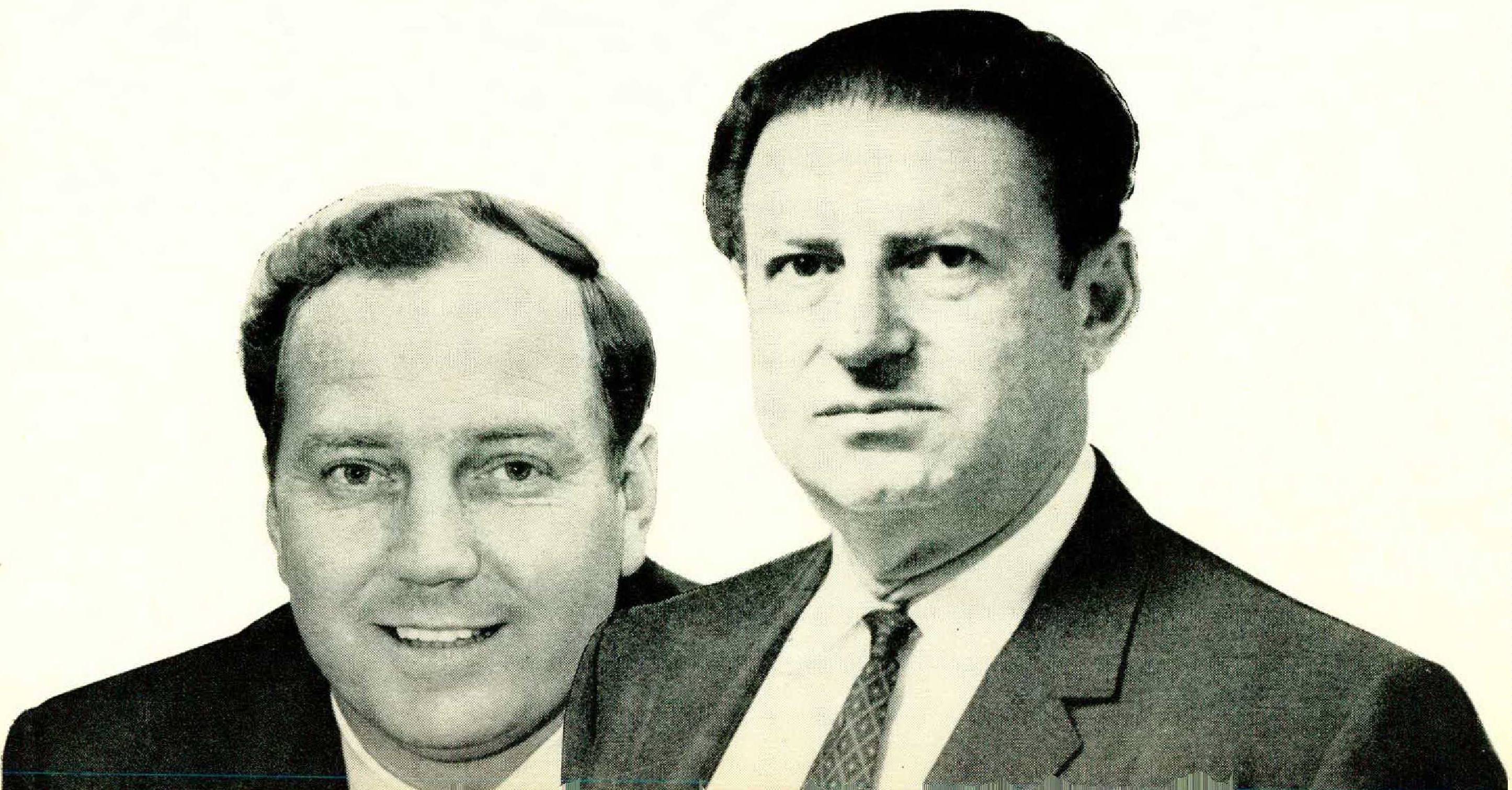
Since then Chotiner, like Dent, has been helping the President maneuver various candidates in and out of races, organizing campaigns, scheduling speakers, prying projects from the bureaucracy. Chotiner advised, for example, on the reorganization of the faltering campaign of George Murphy. For the record, Chotiner denies that he does any of this. He explains, in carefully measured words— in the manner of a man locked in mortal combat with his mouth—that his title is counsel to the President, and therefore he cannot say what he does for his “client.” “To infer,” he says, “that the White House is engaged in any political endeavors isn’t correct. The White House isn’t the place for it, and the public would resent it.”
Chotiner and Dent divided up the states on which they work, and theoretically Chotiner reports to Dent, but in fact he does not. At times, they haven’t spoken at all; at other times, their communications have been at shouting level. The dispute was over power, rather than any particular point of view. Nevertheless, things got so bad by late summer that the political organization had to be reorganized once again. Chotiner, moreover, still did not get on with Morton, and some of the President’s advisers considered him too old-style in his politics. The change was made, one Republican official said, because there was not enough “political input” in White House tlecisions. But it was really a different kind of input that was being called for. And so a new White House group was set up to handle political strategy for the fall—consisting of Dent, Chotiner, Haldeman, Finch, and Rumsfeld. Finch and Rumsfeld were also heavily scheduled for the speaking circuit. Both are Nixon men, and flexible, but they represent the younger, more progressive, even handsomer, face of his entourage. Thus, as organizational and political exigencies, and the moderate tack, required, his Messrs. Clean were moved up to join Spiro Agnew at center stage.
There are a number of political verities, like the one that the White House does not involve itself in politics, which are trotted out when political strategists would rather not talk about what they are doing. Another of them is that the political leaders of the party, Presidents in particular, do not get involved in primaries or the selection of candidates. The reluctance to talk about this sort of thing is understandable, for it can get messy. But the verities are part of the game, the word-cover for what is really going on, and not meant to be taken seriously—any more than platforms or campaign speeches—by sophisticates in the political arts. To the envy of the Democrats, who do not have at hand the tools of persuasion that come with the White House, the Nixon organization has taken more time and care in constructing the slates for this fall’s elections than lias, as memory serves, any other recent Administration. Not since Franklin D. Roosevelt tried—and failed—to “purge” opposition members of Congress has a White House been so overtly involved in congressional elections.
The target, as it has been reported, is the Senate. But not just a Republican Senate, a Senate of Nixon Republicans. While the hope is to gain control of the Senate, the charm of that prospect is considerably enhanced by the fact that most of the Republican Senate candidates arc dependable Nixon supporters. The candidates Mr. Nixon is backing in this fall’s elections, and the varying enthusiasm with which he is doing so, reflect his tastes, instincts, and vision of ihe future of the Republican Party. The men he most favors are, like Nixon, to the right of center, party loyalists, scrappers. They are his kind of men, the sort that he is most at home with in politics, just as in his dealings with the Senate he is more compatible with the Robert Doles and Robert Griffins than with the John Sherman Coopers and George Aikens. Although in his policies the President may be, as he describes himself, a “centrist,” in his politics he has been following not so much a Southern strategy or modified Southern strategy, as a conservative strategy. Moreover, in the supposed age of New Politics, of galloping disinterest in the political parties, Nixon and his men are relentlessly pursuing quintessentially partisan, old politics. “The President,” says one of his more candid political advisers, “is going to lend his weight to those candidates he thinks are sympathetic to him and try to get a more conservative Senate.”
The strategy of concentrating on the Senate is not so ingenious as it is obvious, for the Senate is, as compared with the House, the place where control is more likely to be won. A net gain of only seven seats is required, and a number of the Democrats who had had the fortune to be elected first in the recession of 1958 and then in the Gold water debacle of 1964, were presumed to be vulnerable. Moreover, it is the Senate, not the House, that has given the President trouble on key issues, such as the war, Haynsworth and Carswell, and the ABM. The appeal of an opposition Senate, which, Trumanstyle, can be pounced on for opposing the President, is far less than that of one which is controlled by one’s own party, with less capacity to harass on issues and appointments, or to conduct embarrassing investigations. As witness to the relative importance placed on the House and Senate, some of the most promising members of the House Republican Party have given up their House seats to try for the Senate. Senate-fever is a common, bipartisan House disease, but several of these Republicans were persuaded bv the President to succumb to it.
The President has some things to offer which help his case: money, projects, appearances by Cabinet officers and even himself, organizational help, and, if all else fails, a presidential appointment in the hereafter. Of the twenty-five Democratic seats up for re-election this fall, sixteen were selected for special attention by the Nixon organization: in Texas, Tennessee, Florida, New Jersey, Connecticut, Man land, Utah, Nevada. Wyoming, New Mexico, North Dakota, Michigan, Minnesota, Missouri, Ohio, and Indiana. A respectful distance is being kept from Henry Jackson of Washington, who has supported the President on the war and the ABM. For a while there was thought of leaving another war supporter alone, Gale McGee, the Democrat from Wyoming. But the President encouraged Representative John Wold to run against him. Similarly, the interest in building a Southern Republican Party yielded to the White House’s disinclination to cause any discomfort to John Stennis of Mississippi. who as chairman of the Armed Services Committee has been cooperative.
The President showed up at the All-Star baseball game in Cincinnati with Congressman Robert Taft, and at a meeting in North Dakota with Congressman Thomas Kleppe, both Senate candidates. Congressmen George Bush of Texas and William Brock of Tennessee are pet candidates. John Danforth, the Republican Senate candidate in Missouri, is more liberal than these men, but the White House encouraged him to run anyway, on the theory that getting Stuart Symington out of the Senate would be worth it. But there was almost no disposition in the White House to help the apostate Charles Goodell, who turned liberal and antiwar after he was appointed to the Senate, in his three-way race against the liberal Democrat, Richard Ottinger, and the Conservative, James Buckley.
The White House is raising a special campaign fund, the money to be directed to favored candidates. The Republican Senatorial Campaign Committee, headed by John Tower, the Texas conservative, makes an even-handed distribution of its funds, but also serves as a conduit for earmarked money, most of which, it turns out, is for conservatives. Cabinet officers have been briefed on the priority races, and warned against doing the sorts of things that could foul a candidate’s chances. Dent and Chotiner keep an eye on such matters as cattle and milk prices, or textile and shoe imports, for their effects on the elections. Long hours are put in at the White House on deciding where the President or Cabinet officers will speak for which candidate, where their appearances would help or hurt.
Whether or not the Republicans win the Senate, gains would be of crucial importance. To begin with, they would mitigate the fact that Mr. Nixon was elected by a minority in 1968, and erase at last his image as a “loser.” (He won the presidency, to be sure, but barely, and with substantial assistance from the fractured Democrats.) Republican gains would also deliver a blow to the Democrats in their attempts to regroup and raise money for 1972. The President is well aware of the risks of such extensive participation in the congressional elections, participation which history says is unlikely to pay off. But he is also aware that he may be needing help himself two years from now, and ii would not do for the party to have suffered losses in 1970 while he was otherwise occupied.
There are at least two Republican parties, moderate (or “liberal”) and conservative, each with its assets. (Some say there are three, including the center one represented by Nixon.) The moderates control several statehouses, and are represented in a group of about a dozen senators, who are for the most part attractive, issueoriented, and in a position to give the Administration fits on key votes in the closely divided Senate. For such a junior group, they also have had unusual access to the media. But the conservatives control the party. They are the county chairmen. They predominated at the last two Republican national conventions, and they will again in 1972. Conservatives head the Senate and House campaign committees.
Ihe isolation—even alienation—of the moderate wing has been real, and not, as the White House likes to charge, a creation of the press. And its sources are deeper, in the case of the Senate, than any failure of the mechanics of congressional liaison. The Senate moderates—Marlow Cook of Kentucky, Richard Schweiker of Pennsylvania, William Saxbe of Ohio, James Pearson of Kansas, Mark Hatfield of Oregon, Charles Mathias of Maryland, and others—have a different view of the country, and of the future of the Republican Party, than does the White House. They see the Nixon politics narrowing the base of the party, driving out the young, the blacks, and the intellectuals, and some ol the middle class, who have been important parts of their own constituencies. They feel, as one liberal House member put it. that the Administration is “out of touch with what is going on in the mainstream of America.” They cannot relate to an Administration whose symbolic figures are Art Linkletter and Bob Hope and Billy Graham.
If the gap between this group and the While House is exacerbated by anyone, it is by the White House. Relations with the moderates are governed by the them-versus-us mentality with which so many at the White House persist in viewing those who oppose them. The President, according to one senator, continually refers to two lists—the votes on the ABM and on the Cooper-Church amendment to limit the President’s actions in Cambodia—as the litmus tests of loyalty. A senator who strays off the reservation for a vote or two is likely to find himself locked out. “Once you don’t vote with them,” says a Republican senator who hasn’t more than once, “it’s tit for tat. Instead of forgetting and forgiving, it’s stiff and uptight. Word gets around that you’re not with them. Your phone calls don’t get returned; there is no follow-through on your requests.”
One of the Administration’s dwindling number of moderates suggests that the breach is less a matter of ideology than of an expectation on the part of those closest to Nixon of overwhelming loyalty to the chief. “They have a xenophobic attitude,” he said. An important constituent of a liberal Republican congressman met a White House aide at a party. He asked if the aide knew his congressman. “Yes,” the Nixon man replied, “but he’s not our kind of Republican.”
Yet much of the moderates’ problem is of their own making, it is no accident that the conservatives control the party. It was technically in the moderates’ hands for two decades, from 1940 until 1960, but their muscles went flaccid after their last great victory in 1952, when Eisenhower was nominated instead of Taft. The moderate governors were too busy running against each other for President in the 1960s to take concerted action about the party itself. Meanwhile, the conservatives were willing to do the grubby, dreary work of party organizing that so many of the moderates have considered beneath them. The moderates still do not seem to have a strategy. “We are too busy working on the issues here,” said one of the senators.
Despite the many incentives to support it on the part of business, this has never been the Administration of the corporate America that supported Willkie, Dewey, and Eisenhower. It is not inhabited by their breed; its competence is suspect. The handling of the economy, the failure to end the war, and the effects of both on this country have alienated many businessmen further. Some Republican executives, such as J. Irwin Miller and Norton Simon, are considering ways to change the party, but in the large the businessmen have not been able to pull themselves into concerted action.
There is a lot of talk in the air about a new party, one led perhaps by dissident (and therefore unlikely to be nominated) Republicans such as John Lindsay and John Gardner, and Democrats from the McCarthy and Kennedy movements. The party, the idea goes, would be the place for the increasing number of independent voters. Some see it as one that should try to become a major party, and win; others see it as an instrument for bringing leverage on the existing parties. There is also the thought that Lindsay or Gardner might run as a Democrat, leading the moderate wing of the Republican Party into the Democratic camp. The vibrations out of New York are that Lindsay is quite interested in these possibilities. Gardner is starting his “third force independent movement, designed to influence national legislation and reform of both parties. He disclaims presidential interests. The White House is not convinced. The new party talk is little more than that as yet. Few senators of either party show interest in it, being in insufficient despair to give up the bases they have. Even Eugene McCarthy, who has written in advocacy of a new party, at last report was contemplating being a force at the next Democratic convention.
Some Republican theoreticians would not be all that heartbroken at the departure of the party’s Brahmins. Te theory goes that the exit of the Yankee WASP’s would break their remaining power in the party, and is a necessary prelude to the entrance into the party of two discontented groups: blue-collar workers and small town Baptists. (This is in a way the other side of the coin oi the argument of some Democratic theoreticians that the conservative Southerners must be purged.) While Nixon is not given to buying such rigid formulas, enough has happened to suggest that at times the theoreticians have had their innings: Vice President Agnew’s attacks on Kingman Brewster anti Lindsay; the President’s thinly veiled attack on Senator George Aiken during his speech announcing the Cambodian invasion.
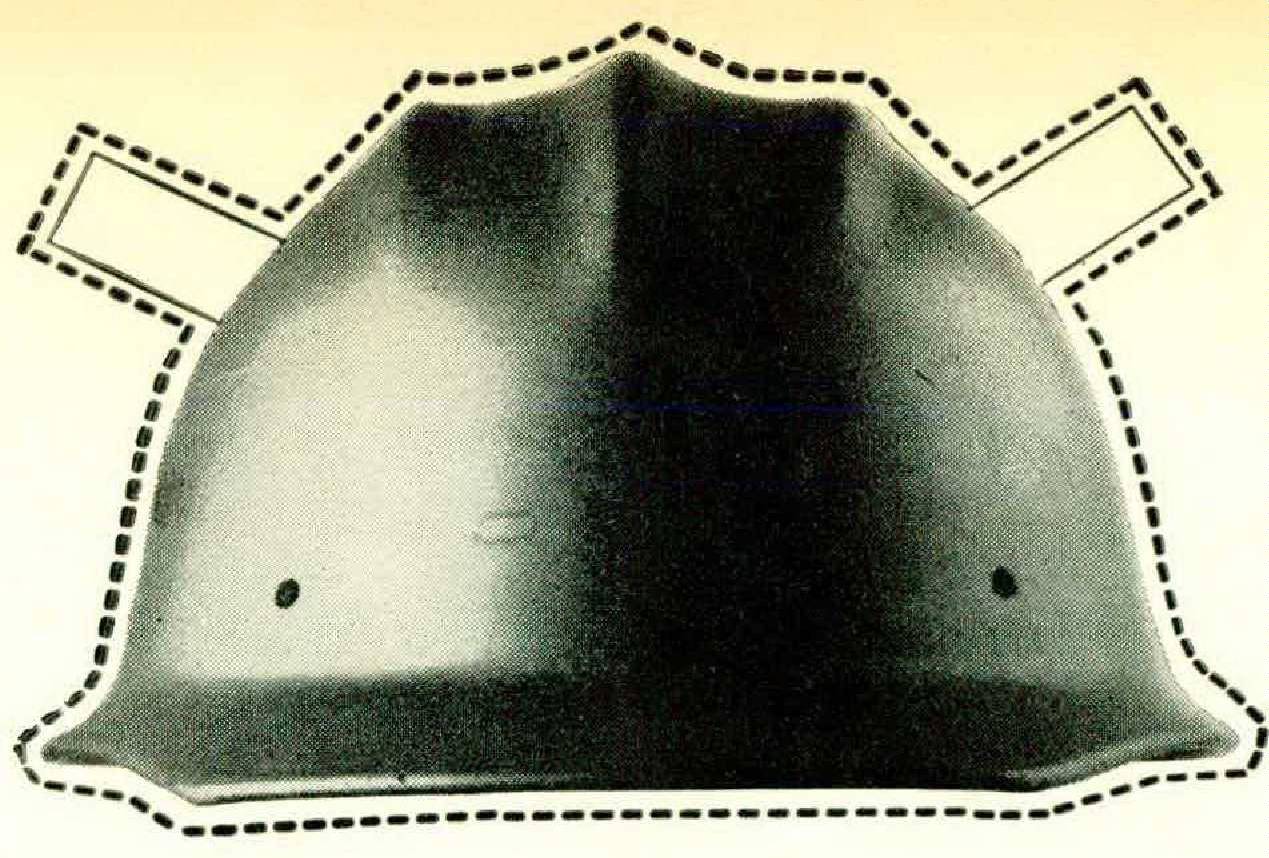
While there can be too much reading of the tea leaves, there is no question that the Administration is romancing the traditionally Democratic blue-collar workers, who are now all the rage. A special study was prepared to see what would make them happier. The answer, a typically Democratic one, was more federal assistance. But there is not much federal bread to go around these days, and in any event there is another strategy for winning bluecollar support: through the war. “We can’t get the unions on the economic issues,” said a Republican political strategist, “but maybe we can get them on the war.” Thus the public presidential blessings upon the “hard hats,” after what one presidential aide described as their “great parade” in New York.
They made, he said, “what we viewed as a remarkable display of patriotism and support for the country and support for the men in Vietnam. The President called them to compliment them on their parade, and they asked to come in and present him with a hard hat.”Thus the White House goes to extra lengths to brief veterans’ groups, who in turn gin up support for the President’s war policy. But while such an alliance might offer the Administration short-term bonuses, it has its dangers: fueling of the idea that “patriotism” lies in supporting the war does not, for a President who worries about such things, make it any easier to end the war. The White House is concerned about reaction from the right to a less than “honorable” settlement. It could be a reaction of its own making.
The Administration, in other words, is still playing the old game of coalition politics, at a time when all of that is supposed to be breaking down. There is even a new organization called the Black Silent Majority, which has been given support by the Republican Congressional Committee. The same congressional committee has also published a brochure showing blacks appointed by President Nixon to what it calls “leadership” federal positions. The list includes Johnson appointees, civil servants, and clerks.
The real political worry within the White House, despite the denials, is about Ronald Reagan. When Mark Hatfield made the supposedly shocking statement that if Nixon did not run again, or stumbled in his handling of the war and the economy, Reagan would be the Republican nominee, he was simply talking elementary politics, stating something that has been on many minds. It is the current fashion at the White House to say of the Wallace threat that third-party movements usually go into decline alter they have tried and failed; others say that this is wishful thinking. In any event, the Wallace threat is not dismissed. Strom Thurmond, who, it is now officially believed, saved Nixon from Reagan at the 1968 convention, is still in a position to cause discomlort at the White House, and he does. Clarke Reed, the Mississippi Republican state chairman and head of a group of Republican leaders of twelve Southern states (“Me and Jeff Davis”), flies into Washington to beard the Administration about three times a month, (“There’s always something going on I don’t like.”) Mr. Reed sometimes leaves satisfied.
So it should not be bewildering when Nixon assures Thurmond that he did not intend to do what he never intended to do (send “vigilante squads” to the South to “coerce” school integration) or when John Mitchell puts on a happy face and suggests that the name of the “no-knock law be changed to something more felicitous, like “quick-entry.” Whatever twists and turns the policies take, the politics of the Republican Party are, in the near term, immutable. “I would expect,” said one of the President’s political advisers, “that the 1972 campaign would be like the one in 1968.”
Presidents, it seems, are inclined to worry more about the right than the left. Lyndon Johnson did the same thing. One Johnson man suggests that this is because the right appears more ominous, and the left has never accumulated sufficient power to make itself be taken seriously. Neither White House has been very impressed by the power of ideas, which has been the left’s main strength, as opposed to that of numbers. But everyone knows what happened to Lyndon Johnson.
- Edmund Muskie, too. is considered safe in his bid for re-election to the Senate this year, but he is not being ignored. I he Republican National Committee circidated to state chairmen a memorandum saying that Muskie “is now actively running for President,” and that “when he is in your area, it would he great” if he had to answer the attached list of questions. The questions had to do with pollution and busing, and they were, of course, loaded. They could be asked by the media, it was suggested, or in question and-answer sessions after Muskie speeches. Muskie’s office reports that they have been.↩