On Living in a Biological Revolution
Harvard historian DONALD FLEMING takes a controversial look at the hazards and the sociological problems that are being spawned by the new discoveries in biology. They constitute a revolution, he believes, likely to be as decisive in the history of the next 150 years as the Industrial Revolution has been since 1750.
Here are a dozen things that we have discovered in the last fifteen years.
1. We have discovered
the structure of the genetic substance DNA — the double helix of Watson and Crick — the general nature of the process by which the chromosomal strands are replicated.
2. We have discovered
in viruses how to achieve the perfect replication of DNA molecules that are biologically effective.
3. We have discovered
the code by which DNA specifies the insertion of amino acids in proteins.
4. We have discovered
how to produce hybrid cells between the most diverse vertebrate species, including hybrids between man and mouse; and some of these hybrids have gone on multiplying for several (cellular) generations.
5. We have discovered
the power of viruses to invade bacterial and other cells and to insert the genes of the virus into the genome of the host; and we have good reason to conjecture, though not yet to affirm, that this phenomenon is involved in cancer.
6. We have discovered
hormonal contraceptives and grasped in principle the strategy for devising a contraceptive pill for both sexes, by knocking out certain hormones of the hypothalamus, the master sexual gland of the body.
7. We have discovered
on a large scale in the livestock industry that deep-frozen mammalian sperm, suitably mixed with glycerol, can be banked indefinitely and drawn upon as desired to produce viable offspring.
8. We have discovered
in human females how to produce superovulation, the release of several eggs into the oviduct at the same time instead of the customary one, with the possibility on the horizon of withdrawing substantial numbers of human eggs for storage, culture in test tubes, or surgical manipulation, without destroying their viability.
9. We have discovered
in rabbits how to regulate the sex of offspring by removing fertilized ova from the female before they become implanted in the wall of the uterus, “sexing” the embryos by a technique entailing the deletion of some 200 to 300 cells, flushing embryos of the “wrong” sex down the drain, and then in a substantial minority of cases, successfully reinserting in the uterus embryos of the desired sex that proceed to develop normally.

10. We have discovered
drugs, above all the hallucinogens, that simulate psychotic states of mind; and have thereby rendered it that the latter of mind; and have thereby rendered it plausible that the latter are the product of “inborn errors of metabolism” and as such remediable by the administration of drugs.
11. We have discovered
in principle, and to a certain extent in practice, how to repress the immunological “defenses” of the body.
12. We have discovered
a combination of immunological and surgical techniques by which the kidney, liver, or heart can be transplanted with fair prospects of the recipient’s survival for months or even years — the first constructive proposal for turning our death wish on the highways to some advantage.
Each of these is a major discovery or complex of discoveries in itself, but they add up to far more than the sum of their parts. They constitute a veritable Biological Revolution likely to be as decisive for the history of the next 150 years as the Industrial Revolution has been for the period since 1750.
Definitions of what constitutes a revolution are legion. An undoctrinaire formulation would be that every full-scale revolution has three main components: a distinctive attitude toward the world; a program for utterly transforming it; and an unshakable, not to say fanatical, confidence that this program can be enacted — a world view, a program, and a faith.
In this sense, Darwinism did not usher in a fullscale biological revolution. Darwinism was a profoundly innovating world view, but one that prescribed no steps to be taken, no victories over nature to be celebrated, no program of triumphs to be successively gained. Indeed, one of the most plausible constructions to be put upon it was that nothing much could be done except to submit patiently to the winnowing processes of nature.
This defect was not lost upon Darwin’s own cousin Sir Francis Galton, who tried to construct an applied science of eugenics for deliberately selecting out the best human stocks. But Galtonian eugenics was sadly lacking in any authentic biological foundation. Once the science of Mendelian genetics came to general notice about 1900, a more promising form of eugenics began to commend itself, the effort to induce artificial mutation of genes in desirable directions.
This was long the animating faith of one of the most extraordinary Americans of the twentieth century, the geneticist Herman J. Muller. He was the actual discoverer, in 1927, of artificial mutation through X rays. But this great achievement, for which he got the Nobel Prize, was a tremendous disappointment to Muller the revolutionary. There was no telling which genes would mutate in which direction, and he came to suspect that the vast majority of mutations were actually harmful in the present situation of the human race.
Muller at the end of his life — he died in 1967 — was thrown back upon essentially Galtonian eugenics. He did bring this up to date by his proposal for sperm banks in which the sperm of exceptionally intelligent and socially useful men could be stored for decades and used for artificial insemination. He also envisioned, in the not too distant future, ova banks for storing superior human eggs. But none of these modern touches, these innovations in technique, could conceal the fact that this was still the old eugenics newly garbed, but equally subjective and imprecise.
BIOLOGICAL ENGINEERING
The Biological Revolution that Muller failed to bring off was already in progress when he died, but on very different terms from his own. There is a new eugenics in prospect, not the marriage agency kind, but a form of “biological engineering.” When this actually comes to pass, chromosomes, segments of chromosomes, and even individual genes will be inserted at will into the genome. Alternatively, germ cells cultured in laboratories will be enucleated and entire tailor-made DNA molecules substituted. Alternatively still, superior genes will be brought into play by hybridization of cells.
The detailed variants upon these general strategies are almost innumerable. They all have in common the fact that they cannot be accomplished at present except in viruses and bacteria or in cell cultures. But it would be a bold man who would dogmatically affirm that none of these possibilities could be brought to bear upon human genetics by the year 2000.
That is a long way off for the firebrands of the Biological Revolution. The Nobel Prize winner Joshua Lederberg in particular has been pushing the claims of a speedier remedy, christened by him “euphenics,” and defined as “the engineering of human development.” The part of human development that fascinates Lederberg the most is embryology, seen by him as the process of initially translating the instructions coded in the DNA into “the living, breathing organism.” Embryology, he says, is “very much in the situation of atomic physics in 1900; having had an honorable and successful tradition it is about to begin!” He thinks it will not take long to mature —“from 5 to no more than 20 years.” He adds that most predictions of research progress in recent times have proved to be “far too conservative ”
The progress that Lederberg has in mind is the application of new embryological techniques to human affairs. He is at once maddened and obsessed by the nine-months phase in which the human organism has been exempted from experimental and therapeutic intervention—such a waste of time before the scientists can get at us. But the embryo’s turn is coming. It would be incredible, he says, “if we did not soon have the basis of developmental engineering technique to regulate, for example, the size of the human brain by prenatal or early postnatal intervention.”
SEX CONTROL
Nothing as sensational as this has yet been attempted, but the new phase in embryology that Lederberg heralded is undoubtedly getting under way. The most conspicuous figure at present is Robert Edwards of the physiology laboratory at Cambridge University. In 1966 Edwards reported the culture of immature egg cells from the human ovary up to the point of ripeness for fertilization. He made tentative claims to have actually achieved fertilization in test tubes. The incipient hullabaloo in the newspapers about the specter of “test tube babies” led Edwards to clamp a tight lid of security over his researches in progress.
In the spring of this year, however, he and Richard Gardner announced their success in “sexing” fertilized rabbit eggs before implantation in the wall of the uterus and then inducing 20 percent of the reinserted eggs to produce normal full-term infants. The aspect of these findings that attracted general attention, the prospect of regulating the sex of mammalian offspring, is not likely to be of permanent interest. For this purpose, Edwards and Gardner’s technique is obviously a clumsy expedient by comparison with predetermining the “sex” of spermatozoa — presently impossible but certainly not inconceivable within the next generation.
The real importance of Edwards and Gardner’s work lies elsewhere. They have opened up the possibility of subjecting the early embryo to microsurgery, with the deletion and “inoculation” of ceils at the will of the investigator, and the production of viable offspring from the results. The manufacture of “chimeras” in the modern biological sense — that is, with genetically distinct cells in the same organism — is clearly in prospect.
Work in this vein has just begun. The only branch of euphenics that has already become something more than a promising growth stock in science is the suppression of immunological reactions against foreign tissues and the accompanying, highly limited, successes in the transplantation of organs.
BIOLOGICAL REVOLUTIONARIES
The technical details and immediate prospects in eugenics and euphenics, however fascinating, are less important than the underlying revolutionary temper in biology. The most conspicuous representatives of this temper are Lederberg himself, the biochemical geneticist Edward L. Tatum, and Francis Crick of the model — all of them Nobel Prize winners, with the corresponding leverage upon public opinion. Robert Edwards, though slightly singed by the blast of publicity about test tube babies, is clearly in training for the revolutionary cadre.
One of the stigmata of revolutionaries in any field is their resolute determination to break with traditional culture. For a scientist, the most relevant definition of culture is his own field of research. All of these men would angrily resent being bracketed with biologists in general. Biology has always been a rather loose confederation of naturalists and experimentalists, overlapping in both categories with medical researchers. Today even the pretense that these men somehow constitute a community has been frayed to the breaking point.
At Harvard, for example, the revolutionaries have virtually seceded from the old Biology Department and formed a new department of their own, Biochemistry and Molecular Biology. The younger molecular biologists hardly bother to conceal their contempt for the naturalists, whom they see as old fogies obsequiously attentive to the world as it is rather than bent upon turning it upside down.
In one respect, the molecular biologists do overlap with the contemporary naturalists and indeed with most creative scientists in general — in their total detachment from religion. In a way, this is a point that could have been made at any time in the last seventy-five years, but with one significant difference. Herman Muller, for example, born in 1890, had no truck with religion. But he was self-consciously antireligious.
The biological revolutionaries of today are not antireligious but simply unreligious. They give the impression not of defending themselves against religion but of subsisting in a world where that has never been a felt pressure upon them. They would agree with many devout theologians that we are living in a post-Christian world, to such an extent that some of the most doctrinaire biological revolutionaries are able to recognize without embarrassment, and even with a certain gracious condescension, that Christianity did play a useful role in defining the values of the Western world.
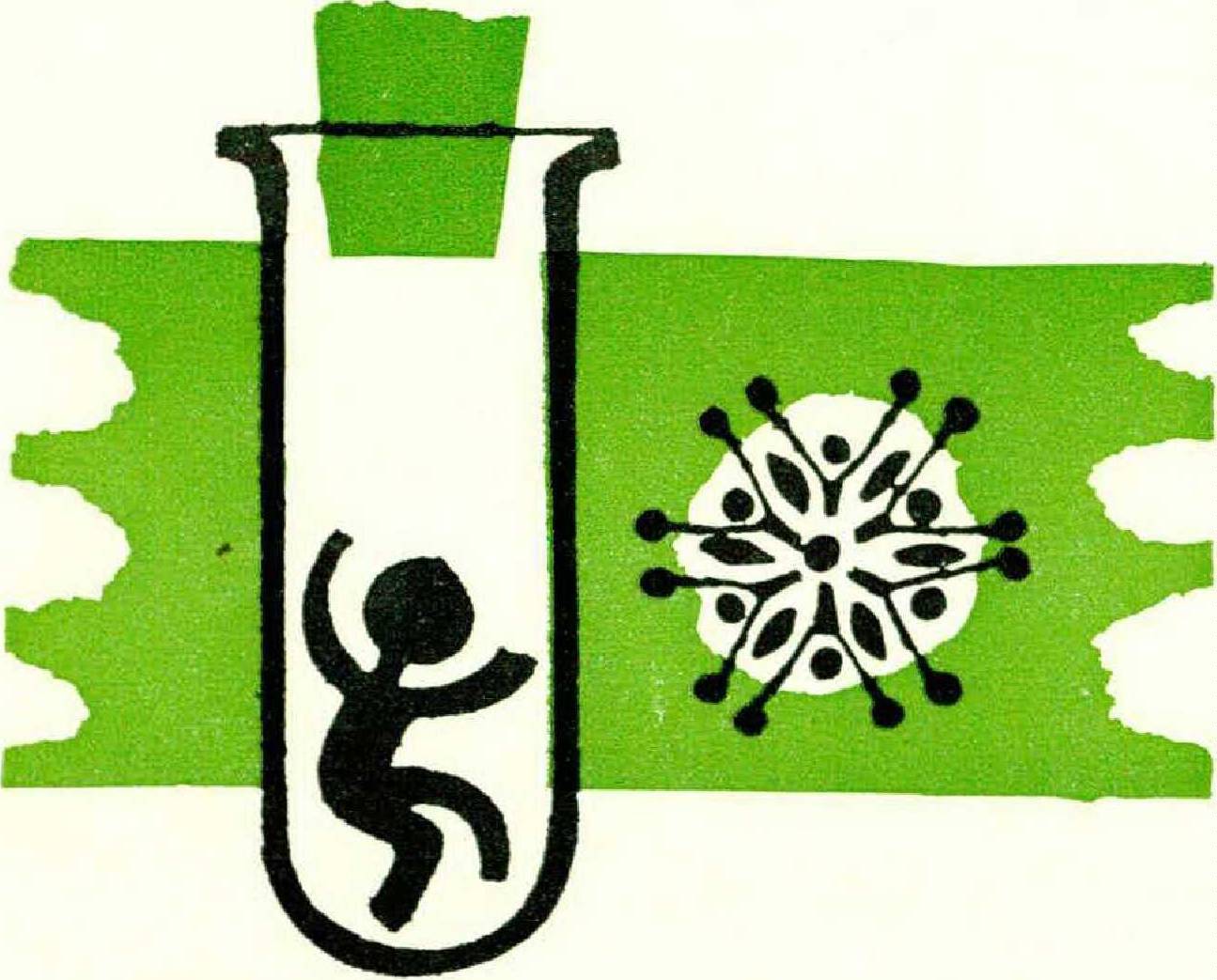
The operative word here is in the past tense. Francis Crick says that the facts of science are producing and must produce values that owe nothing to Christianity. “Take,” he says, “the suggestion of making a child whose head is twice as big as normal. There is going to be no agreement between Christians and any humanists who lack their particular prejudice about the sanctity of the individual, and who simply want to try it scientifically.”
This sense of consciously taking up where religion left off is illuminating in another sense for the revolutionary character of contemporary biology. The parallel is very marked between the original Christian Revolution against the values of the classical world and the Biological Revolution against religious values.
All the great revolutionaries, whether early Christians or molecular biologists, are men of good hope. The future may or may not belong to those who believe in it, but cannot belong to those who don’t. Yet at certain points in history, most conspicuously perhaps at intervals between the close of the Thirty Years’ War in 1648 and the coming of the Great Depression in 1929, the horizons seem to be wide open, and the varieties of good hope contending for allegiance are numerous. But the tidings of good hope don’t become revolutionary except when the horizons begin to close in and the plausible versions of good hope have dwindled almost to the vanishing point.
For the kind of good hope that has the maximum historical impact is the one that capitalizes upon a prevalent despair at the corruption of the existing world, and then carries conviction in pointing to itself as the only possible exit from despair. Above everything else, revolutionaries are the men who keep their spirits up when everybody else’s are sagging. In this sense, the greatest revolutionaries of the Western world to date have been precisely the early Christians who dared to affirm in the darkest days of the classical world that something far better was in process and could be salvaged from the ruins.
Both of these points are exemplified in the Biological Revolution that has now begun — despair at our present condition, but infinite hope for the future if the biologists’ prescription is taken. Anybody looking for jeremiads on our present state could not do better than to consult the new biologists. “The facts of human reproduction,” says Joshua Lederberg, “are all gloomy — the stratification of fecundity by economic status, the new environmental insults to our genes, the sheltering by humanitarian medicine of once-lethal genes.”
More generally, the biologists deplore the aggressive instincts of the human animal, now armed with nuclear weapons, his lamentably low average intelligence for coping with increasingly complicated problems, and his terrible prolificity, no longer mitigated by a high enough death rate. It is precisely an aspect of the closing down of horizons and depletion of comfortable hopes in the second half of the twentieth century that conventional medicine is now seen by the biological revolutionaries as one of the greatest threats to the human race.
Yet mere prophets of gloom can never make a revolution. In fact, the new biologists are almost the only group among our contemporaries with a reasoned hopefulness about the long future — if the right path is taken. There are of course many individuals of a naturally cheerful or feckless temperament, today as always, but groups of men with an articulated hope for the future of the entire race are much rarer. The theologians no longer qualify, many Communists have lost their hold upon the future even by their own lights, and the only other serious contenders are the space scientists and astronauts. But just to get off the earth is a rather vague prescription for our ills. Few people even in the space program would make ambitious claims on this score. In a long historical retrospect, they may turn out to have been too modest.
This is not a charge that is likely ever to be leveled against the new biologists. It is well known by now that J. D. Watson begins his account of his double-helix double by saying that he had never seen Francis Crick in a modest mood. But after all, modesty is not the salient quality to be looked for in the new breed of biologists. If the world will only listen, they know how to put us on the high road to salvation.
CUSTOM-MADE PEOPLE
What exactly does their brand of salvation entail? Perhaps the most illuminating way to put the matter is that their ideal is the manufacture of man. In a manufacturing process, the number of units to be produced is a matter of rational calculation beforehand and of tight control thereafter. Within certain tolerances, specifications are laid down for a satisfactory product. Quality-control is maintained by checking the output and replacing defective parts. After the product has been put to use, spare parts can normally be supplied to replace those that have worn out.
This is the program of the new biologists — control of numbers by foolproof contraception; gene manipulation and substitution; surgical and biochemical intervention in the embryonic and neonatal phases; organ transplants or replacements at will.
Of these, only contraception is technically feasible at present. Routine organ transplants will probably be achieved for a wide range of suitable organs in less than five years. The grafting of mechanical organs, prosthetic devices inserted in the body, will probably take longer. Joshua Lederberg thinks that embryonic and neonatal intervention may be in flood tide by, say, 1984. As for gene manipulation and substitution in human beings, that is the remotest prospect of all — maybe by the year 2000. But we must not forget Lederberg’s well-founded conviction that most predictions in these matters are likely to be too conservative. We are already five to ten years ahead of what most informed people expected to be the schedule for organ transplants in human beings.
The great question becomes, what is it going to be like to be living in a world where such things are coming true? How will the Biological Revolution affect our scheme of values? Nobody could possibly take in all the implications in advance, but some reasonable conjectures are in order.
It is virtually certain that the moral sanctions of birth control are going to be transformed. Down to the present time, the battle for birth control has been fought largely in terms of the individual couple’s right to have the number of babies that they want at the desired intervals. But it is built into the quantity-controls envisioned by the Biological Revolution, the control of the biological inventory, that this is or ought to be a question of social policy rather than individual indulgence.
Many factors are converging upon many people to foster this general attitude, but the issue is particularly urgent from the point of view of the biological revolutionaries. In the measure that they succeed in making the human race healthier, first by transplants and later on by genetic tailoring, they will be inexorably swamped by their own successes unless world population is promptly brought under control. The irrepressible Malthus is springing from his lightly covered grave to threaten them with catastrophic victories.
LICENSED BABIES
The only hope is birth control. The biologists can contribute the techniques, but the will to employ them on the requisite scale is another matter. The most startling proposal to date for actually enforcing birth control does not come from a biologist but from the Nobel-Prize-winning physicist W. B. Shockley, one of the inventors of the transistor. Shockley’s plan is to render all women of childbearing age reversibly sterile by implanting a contraceptive capsule beneath the skin, to be removed by a physician only on the presentation of a government license to have a child. The mind boggles at the prospect of bootleg babies. This particular proposal is not likely to be enacted in the near future, even in India.
What we may reasonably expect is a continually rising chorus by the biologists, moralists, and social philosophers of the next generation to the effect that nobody has a right to have children, and still less the right to determine on personal grounds how many. There are many reasons why a couple may not want to be prolific anyhow, so that there might be a happy coincidence between contraception seen by them as a right and by statesmen and biologists as a duty. But the suspicion is that even when people moderate their appetite in the matter of babies, they may still want to have larger families than the earth can comfortably support. The possibility of predetermining sex would undoubtedly be helpful in this respect, but might not be enough to make people forgo a third child. That is where the conflict would arise between traditional values, however moderately indulged, and the values appropriate to the Biological Revolution.

This issue is bound to be fiercely debated. But some of the most profound implications of the Biological Revolution may never present themselves for direct ratification. In all probability, the issues will go by default as we gratefully accept specific boons from the new biology.
Take, for example, the role of the patient in medicine. One of the principal strands in Western medicine from the time of the Greeks has been the endeavor to enlist the cooperation of the patient in his own cure. In certain respects, this venerable tradition has grown much stronger in the last century. Thus the rising incidence of degenerative diseases, like ulcers, heart trouble, and high blood pressure, has underscored the absolute necessity of inducing the patient to observe a healthful regimen, literally a way of life.
This has been the whole point of Freudian psychiatry as a mode of therapy, that cures can be wrought only by a painful exertion of the patient himself. We often forget, for good reasons, how traditional Freudianism is after the one big shock has been assimilated. In the present context, it actually epitomizes the Western tradition of bringing the patient’s own personality to bear upon his medical problems.
Where do we go from here? The degenerative diseases are going to be dealt with increasingly by surgical repair of organs, by organ transplants, and later on by the installation of mechanical organs and eventually by the genetic deletion of weak organs before they occur. The incentive to curb your temper or watch your diet to keep your heart going will steadily decline.
As for mental illness, the near future almost certainly lies with psychopharmacology and the far future with genetic tailoring. Though the final pieces stubbornly decline to fall into place, the wise money is on the proposition that schizophrenia and other forms of psychosis are biochemical disorders susceptible of a pharmacological cure. If we are not presently curing any psychoses by drugs, we are tranquilizing and antidepressing many psychotics and emptying mental hospitals.
Neuroses, the theme of Freudian psychoanalysis, are another matter. It is not easy to envision a biochemical remedy for them. But even for neuroses, we already have forms of behavioral therapy that dispense with the Freudian tenet of implicating the patient in his own cure. For the very long future, it is certainly not inconceivable that genetic tailoring could delete neurotic propensities.
Everywhere we turn, the story is essentially the same. Cures are increasingly going to be wrought upon, done to, the patient as a passive object. The strength of his own personality, the force of his character, his capacity for reintegrating himself, are going to be increasingly irrelevant in medicine.
GENETIC TAILORING, BOON OR BANE?
This leads to what many people would regard as the biggest question of all. In what sense would we have a self to integrate under the new dispensation? The Princeton theologian Paul Ramsey has now been appointed professor of “genetic ethics” at the Georgetown University Medical School, presumably the first appointment of its kind. He thinks that genetic tailoring would be a “violation of man.” To this it must be said that under the present scheme of things, many babies get born with catastrophic genes that are not exactly an enhancement of man. Our present genetic self is a brute datum, sometimes very brutal, and anyhow it is hard to see how we can lose our identity before we have any.
As for installing new organs in the body, there is no evident reason why the personality should be infringed upon by heart or kidney transplants per se. Brain transplants would be different, but surely they would be among the last to come. States of mind regulated by drugs we already possess, and obviously they do alter our identity in greater or lesser degree. But even here we must not forget that some identities are intolerable to their distracted possessors.
We must not conclude, however, that the importance of these developments has been exaggerated. The point is that the immediate practical consequences will probably not present themselves as threatening to the individuals involved — quite the contrary. Abstract theological speculations about genetic tailoring would be totally lost upon a woman who could be sure in advance that her baby would not be born mentally retarded or physically handicapped. The private anxieties of individuals are likely to diminish rather than increase any effective resistance to the broader consequences of the Biological Revolution.
One of these is already implicit in predicting a sense of growing passivity on the part of patients, of not participating as a subject in their own recovery. This might well be matched by a more general sense of the inevitability of letting oneself be manipulated by technicians — of becoming an article of manufacture.
The difficulty becomes to estimate what psychological difference this would make. In any Hegelian overview of history, we can only become articles of manufacture because “we” have set up as the manufacturers. But the first person plural is a slippery customer. We the manufactured would be everybody and we the manufacturers a minority of scientists and technicians. Most people’s capacity to identify with the satisfactions of the creative minority is certainly no greater in science than in other fields, and may well be less.
The beneficiaries of the Biological Revolution are not likely to feel that they are in control of the historical process from which they are benefiting. But they will not be able to indulge any feelings of alienation from science without endangering the specific benefits that they are unwilling to give up.
The best forecast would be for general acquiescence, though occasionally sullen, in whatever the Biological Revolution has to offer and gradually adjusting our values to signify that we approve of what we will actually be getting. The will to cooperate in being made biologically perfect is likely to take the place in the hierarchy of values that used to be occupied by being humbly submissive to spiritual counselors chastising the sinner for his own salvation. The new form of spiritual sloth will be not to want to be bodily perfect and genetically improved. The new avarice will be to cherish our miserable hoard of genes and favor the children that resemble us.