The Greatest American Poet
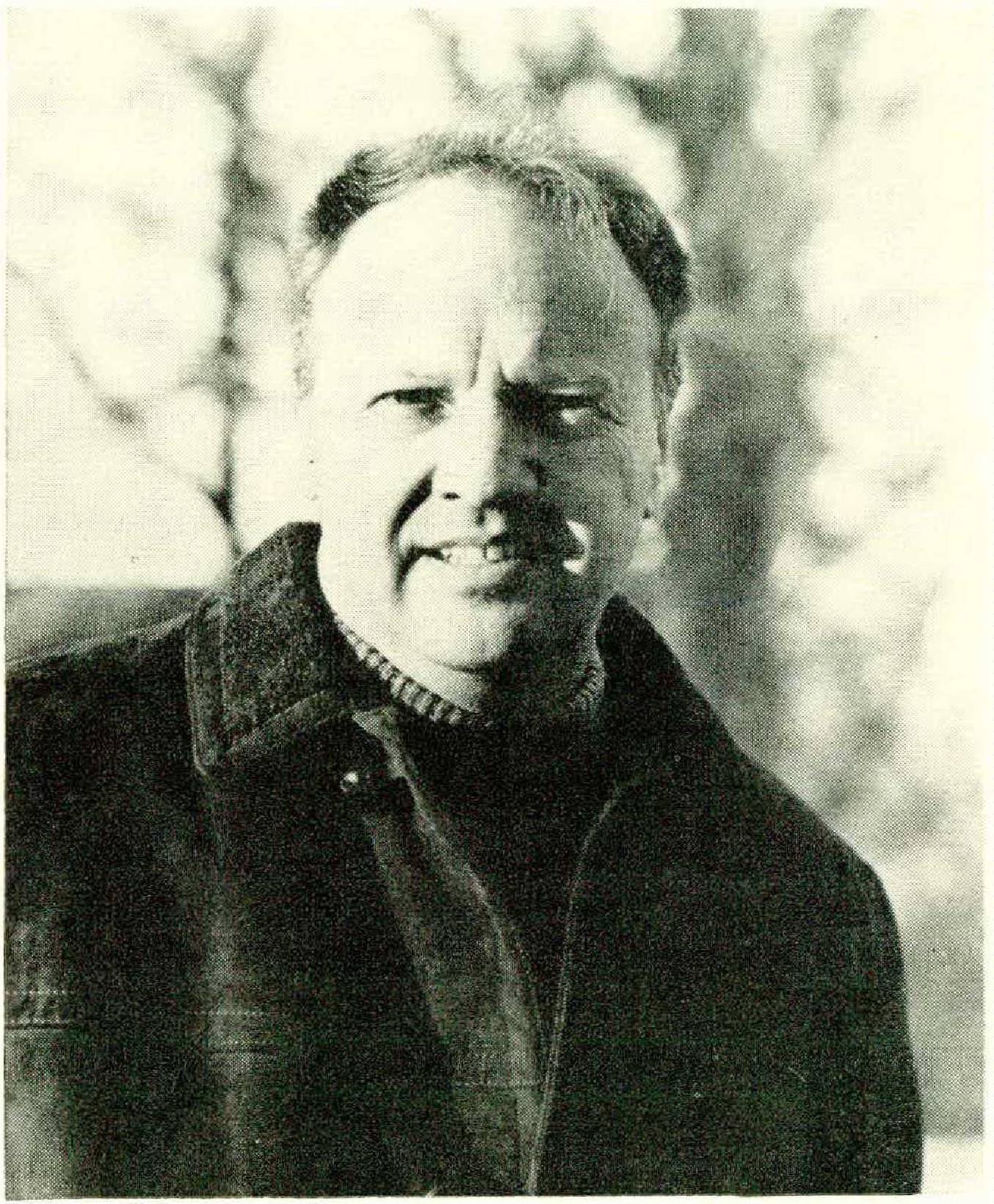
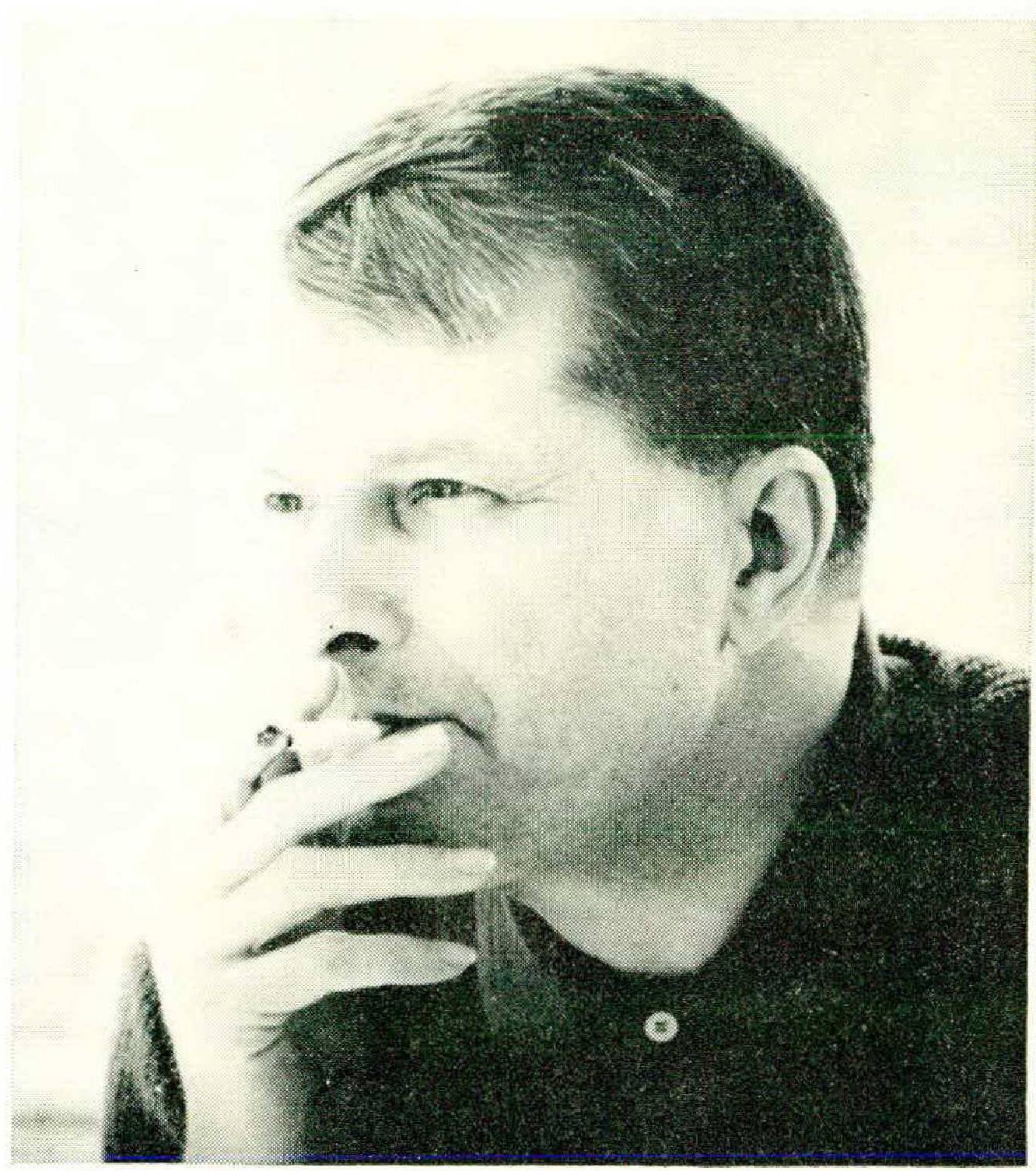
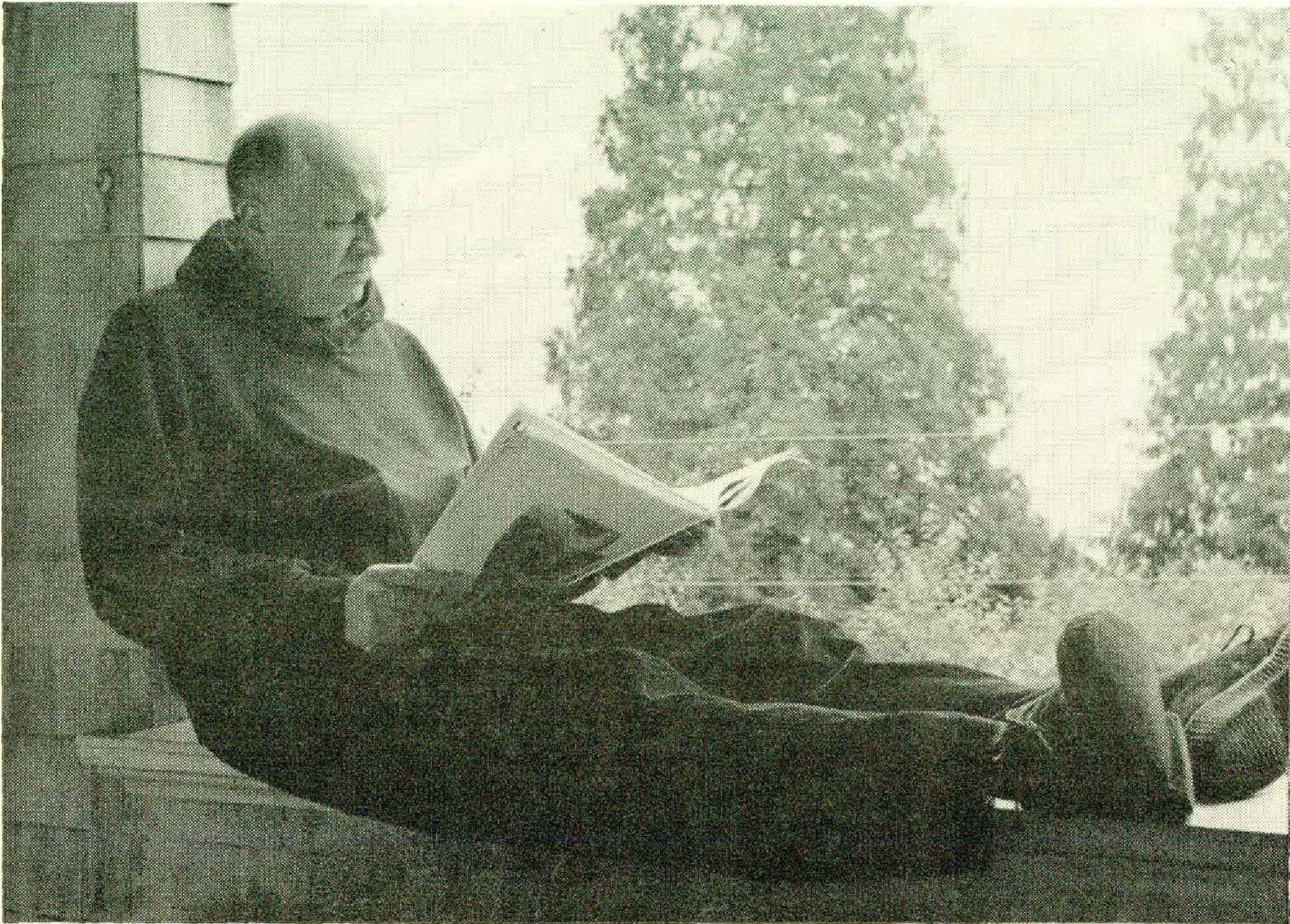
Three men of driving individuality and boiling talents come together here in a remarkable group portrait. One is the author, a former star athlete, fighter pilot with more than 100 missions on his record in World War II and the Korean conflict, and today recognized among America’s leading poets. Second is Allan Seager of Michigan, a writer whose talent far exceeds the recognition he had earned from the public and the critics before his death in May. And the third is the subject of Seager’s newly published biography, the late Theodore Roethke, whom James Dickey proposes to crown “the greatest poet this country has produced.” In conjunction with Mr. Dickey’s memoirreview, we publish, beginning on page 58, excerpts from Mr. Roethke’s notebooks, edited by David Wagoner, poet and novelist (BABY, COME ON INSIDE).The edited notebooks are scheduled to be published by Doubleday sometime in 1969.
THE Atlantic FOUNDED IN 1857
BY JAMES DICKEY
ONCE there were three men in the living room of an apartment in Seattle. Two of them were present in body, watching each other with the wariness of new acquaintance, and the other was there by telephone. The two in Carolyn Kizer’s apartment were Theodore Roethke and I, and the voice was Allan Seager in Michigan. All three had been drinking, I the most, Roethke the next most, and Seager, apparently, the least. After a long-distance joke about people I had never heard of, Roethke said, “Allan, I want you to meet a friend of mine. He’s a great admirer of yours, by the way.”
I picked up the phone and said, according to conviction and opportunity, “This is Charles Berry.”
“This is who?”
“Your son, Amos. Charles Berry, the poet.”
“The hell it is!”
“I thought you might like to know what happened to Charles after the end of the novel. In one way or the other, he became me. My name is James Dickey.”
“Well, thanks for telling me. But I had other plans for Charles. Maybe even using him in another novel. I think he did finally become a poet. But not you.”
“No, no; it’s a joke.”
“I had it figured. But it ain’t funny.”
“Sorry,” I said. “I meant it as a kind of tribute, I guess.”
“Well, thanks, I guess.”
“Joke or not, I think your book Amos Berry is a great novel.”
“I do too, but nobody else does. It’s out of print, with the rest of my stuff.”
“Listen,” I said, trying to get into the phone, “I doubt if I’d’ve tried to be a poet if it weren’t for Charles Berry. There was no call for poetry in my background, any more than there was in his. But he wanted to try, and he kept on with it. So I did, too.”
“How about Amos? What did you think of him?”
“I like to think he’s possible. My God! A middle-aged businessman trying to kick off all of industrial society! Get rid of the whole of Western civilization and go it on his own!”
“Yeah, but he failed.”
“He failed, but it was a failure that mattered. And the scenes after the rebellious poet-son meets the rebellious father who’s just killed his employer and gotten away with it — well, that’s a meeting! And Amos turns out to be proud of his boy, who’s doing this equally insane thing of writing poetry. Right?”
“Sure. Sure he’s proud. Like many another, when the son has guts and does something strange and true to what he is. Say, is Ted Roethke still around there?”
“Yes. He’s right here. Want to speak to him?”
“No; but he’s another one. He’;s one of those sons. But his father didn’t live long enough to know it.”
That was my introduction to Allan Seager, a remarkable man and a writer whose works — Equinox, The Inheritance, Amos Berry. Hilda Manning, The Old Man of the Mountain, The Death of Anger, A Frieze of Girls — will, as Henry James said of his own, “kick off their tombstones” time after time, in our time and after. His last book and his only biography, The Glass House (McGraw-Hill, $6.95), is this life of Roethke, who is in my opinion the greatest poet this country has yet produced.
DURING his life and after his death in 1963, people interested in poetry heard a great many rumors about Roethke. Most of these had to do with his eccentricities, his periodic insanity, his drinking, his outbursts of violence, his unpredictability. He came to be seen as a self-destructive American genius somewhat in the pattern of Dylan Thomas. Roethke had a terrifying half-tragic, half-low-comedy life out of which he lifted, by the strangest and most unlikely means, and by endless labors and innumerable false starts, the poetry that all of us owe it to ourselves to know and cherish. If Beethoven said, “He who truly understands my music can never know unhappiness again,” Roethke’s best work says with equal authority, “He who truly opens himself to my poems will never again conceive his earthly life as worthless.”
The Glass House is the record — no, the story, for Seager’s novelistic talents give it that kind of compellingness — of how such poetry as Roethke’s came to exist. It was written by a man who battled for his whole adult life against public indifference to novels and stories he knew were good, and fought to his last conscious hour to finish this book. Some time after meeting him by telephone, which was in the spring of 1963, I came to know him better, and two summers ago spent a week with him in Tecumseh, Michigan. Most of that time we talked about the biography and about Roethke, and went over the sections he had completed. From the first few words Seager read me, I could tell that this was no mere literary biography; there was too much of a sense of personal identification between author and subject to allow for mereness. Seager said to me, in substance, what he had written to a friend some time before this:
Beatrice Roethke, the widow of Theodore Roethke, has asked me to write the authorized life of her husband. I was in college with him and knew him fairly intimately the rest of his life. It is a book I’d like to do. Quite aside from trying to evoke the character that made the poetry, there are a good many things to say about the abrasion of the artist in America that he exemplifies. We were both born in Michigan, he in Saginaw, I in Adrian. We both came from the same social stratum. Much of his life I have acted out myself.
Though Seager did not witness the whole process of Roethke’s development, not having known the poet in his childhood, he did see a great deal of it, and he told me that he had seen what happened to Roethke happen “in an evolutionary way.” More than once he said, “Ted started out as a phony and became genuine, like Yeats.” And, “I had no idea that he’d end up as fine a poet as he did. No one knew that in the early days, Ted least of all. We all knew he wanted to be a great poet or a great something, but to a lot of us that didn’t seem enough. I could have told you, though, that his self-destructiveness would get worse. I could have told you that awful things were going to happen to him. He was headed that way; at times he seemed eager to speed up the process.”
I saw Roethke only twice myself. I saw only a sad fat man who talked continually of joy, and although I liked him well enough for such a short acquaintance, came away from him each time with a distinct sense of relief. Like everyone else who knew him even faintly, I was pressed into service in the cause of his ego, which reeled and tottered pathetically at all hours and under all circumstances, and required not only props, but the right props. What did I think of Robert Lowell, Randall Jarrell, and “the Eastern literary gang”? What did I think of the “gutless Limey reviewers” in the Times Literary Supplement? I spent an afternoon with him trying to answer such questions, before giving a reading at the University of Washington. Carolyn Kizer, an old friend and former student of Roethke’s, had given a party the day before the reading, and I was introduced to Roethke there. Though I had heard various things about him, ranging from the need to be honest with him to the absolute need not to be honest, I was hardly prepared for the way in which, as Southerners used to say, he “carried on.” I was identified in his mind only as the man who had said (in the Virginia Quarterly Review, to be exact) that he was the greatest poet then writing in English. He kept getting another drink and bringing me one and starting the conversation over from that point, leading (more or less naturally for him, I soon discovered) into a detailed and meticulously quoted list of what other poets and critics had said about him. I got the impression that my name was added to those of Auden, Stanley Kunitz, Louise Bogan, and Rolfe Humphries not because I was in any way as distinguished in Roethke’s mind as they were, but because I had provided him with a kind of climactic comment: something he needed that these others hadn’t quite managed to say, at least in print. And later, when he introduced me at the reading, he began with the comment, and talked for eight or ten minutes about himself, occasionally mentioning me as though by afterthought. I did not resent this, though I found it curious, and I bring it up now only to call attention to qualities that must have astonished and confounded others besides myself.
Why should a poet of Roethke’s stature conduct himself in this childish and embarrassing way? Why all this insistence on being the best, the acknowledged best, the written-up best? Wasn’t the poetry itself enough? And why the really appalling pettiness about other writers, like Lowell, who were not poets to him but rivals merely? There was never a moment I was with Roethke when I was not conscious of something like this going on in his mind; never a moment when he did not have the look of a man fighting for his life in some way known only to him. The strain was in the very air around him; his broad, babyish face had an expression of constant bewilderment and betrayal, a continuing agony of doubt. He seemed to cringe and brace himself at the same time. He would glare from the corners of his eyes and turn wordlessly away. Then he would enter into a long involved story about himself. “I used to spar with Steve Hamas,” he would say. I remember trying to remember who Steve Hamas was, and by the time I had faintly conjured up an American heavyweight who was knocked out by Max Schmeling, Roethke was glaring at me anxiously. “What the hell’s wrong?” he said. “You think I’m a damned liar?”
I did indeed, but until he asked me, I thought he was just rambling on in the way of a man who did not intend for others to take him seriously. He seemed serious enough, for he developed the stories at great length, as though he had told them, to others or to himself, a good many times before. Such a situation puts a stranger in rather a tough spot. If he suspects that the story is a lie, he must either pretend to go along with it, or hopefully enter a tacit conspiracy with the speaker in assuming that the whole thing is a joke, a put-on. Unfortunately I chose the latter, and I could not have done worse for either of us. He sank, or fell, rather, into a steep and bitter silence — we were driving around Seattle at the time — and there was no more said on that or any other subject until we reached his house on John Street. I must have been awfully slow to catch on to what he wanted of me, for in retrospect it seems quite clear that he wished me to help protect him from his sense of inadequacy, his dissatisfaction with what he was as a man.
My own disappointment, however, was not at all in the fact that Roethke lied, but in the obviousness and uncreativeness of the manner in which he did it. Lying of an inspired, habitual, inventive kind, given a personality, a form, and a rhythm, is mainly what poetry is, I have always believed. All art, as Picasso is reported to have said, is a lie that makes us see the truth. There are innumerable empirical “truths” in the world — billions a day, an hour, a minute — but only a few poems that surpass and transfigure them: only a few structures of words which do not so much tell the truth as make it. I would have found Roethke’s lies a good deal more memorable if they had had some of the qualities of his best poems, and had not been simply the productions of the grown-up baby that he resembled physically. Since that time I have much regretted that Roethke did not write his prizefighting poems, his gangster poems and tycoon poems, committing his art to these as fully as he committed himself to them in conversation. This might have given his work the range and variety of subject matter that it so badly needed, particularly toward the end of his life, when he was beginning to repeat himself: they might have been the themes to make of him a poet of the stature of Yeats or Rilke.
Yet this is only speculation; his poems are as we have them, and many of them will be read as long as words retain the power to evoke a world and to relate the reader, through that world, to a more intense and meaningful version of his own. There is no poetry anywhere that is so valuably conscious of the human body as Roethke’s; no poetry that can place the body in an environment — wind, seascape, greenhouse, forest, desert, mountainside, among animals or insects or stones — so vividly and evocatively, waking unheard of exchanges between the place and human responsiveness at its most creative. He more than any other is a poet of pure being. He is a great poet not because he tells you how it is with him — as, for example, the “confessional” poets endlessly do — but how it can be with you. When you read him, you realize with a great surge of astonishment and joy that, truly, you are not yet dead.
Roethke came to possess this ability slowly. The Glass House is like a long letter by a friend, telling how he came to have it. The friend’s concern and occasional bewilderment about the subject are apparent, and also some of the impatience that Roethke’s self-indulgent conduct often aroused even in those closest to him. But the main thrust of his life, his emergence from Saginaw, Michigan (of all places), into the heroic role of an artist working against the terrible odds of himself for a new vision, is always clear; clearer than it ever was to Roethke, who aspired to self-transcendence but continually despaired of attaining it.
HEROIC Roethke certainly was; he struggled against more than most men are aware is possible. His guilt and panic never left him. No amount of praise could ever have been enough to reassure him or put down his sense of chagrin and bafflement over his relationship to his father, the florist Otto Roethke, who died early in Roethke’s life and so placed himself beyond reconciliation. None of his lies — of being a nationally ranked tennis player, of having an “in” with the Detroit “Purple Gang,” of having all kinds of high-powered business interests and hundreds of women in love with him — would ever have shriven him completely, but these lures and ruses and deceptions did enable him to exist, though painfully, and to write; they were the paraphernalia of the wounded artist who cannot survive without them.
These things Seager deals with incisively and sympathetically. He is wonderful on the genesis of the poetry, and his accounts of Roethke’s greatest breakthrough, the achievement of what Kenneth Burke calls his “greenhouse line,” are moving indeed, and show in astonishing detail the extent to which Roethke lived his poems and identified his bodily existence with them in one animistic rite after another.
On days when he was not teaching, he moped around Shingle Cottage alone, scribbling lines in his notebooks, sometimes, he told me, drinking a lot as a deliberate Stimulus (later he came to see alcohol as a depressant and used to curb his manic states), popping out of his clothes, wandering around the cottage naked for a while, then dressing slowly, four or five times a day. There are some complex “birthday-suit” meanings here, the ritual of starting clean like a baby, casting one’s skin like a snake, and then donning the skin again.
It was not exhibitionism. No one saw. It was all a kind of magic.
He broke through to what had always been there; he discovered his childhood in a new way, and found the way to tell it, not “like it was” but as it might have been if it included all its own meanings, rhythms, and symbolic extensions. He found, in other words, the form for it: his form. Few writers are so obviously rooted (and in Roethke’s case the word has special connotations because the poet has so magnificently put them there) in their childhood as Roethke, and Seager shows us in just what ways this was so: the authoritarian Prussian father and his specialized and exotic (especially in frozen, logged-out Saginaw) vocation of florist, the greenhouse, the “far field” behind it, the game park, the strange, irreducible life of stems and worms, the protection of fragile blooms by steam pipes, by eternal vigilance, and by getting “in there” with the plants and working with them as they not only required but seemed to want. Later there are the early efforts to write, the drinking, the first manic states, the terrible depressions, the marriage to Beatrice O’Connell (a former student of his at Bennington), the successive books, the prizes, the recognitions, the travels, the death at fifty-six.
I doubt very much if Roethke will ever have another biography as good as this one. And yet something is wrong here, even so. One senses too much of an effort to mitigate certain traits of Roethke’s, particularly in regard to his relations with women. It may be argued that a number of people’s feelings and privacy are being spared, and that may be, as has been adjudged in other cases, reason enough to be reticent. And yet a whole
— and very important — dimension of the subject has thereby been left out of account, and one cannot help believing that a writer of Seager’s ability and fierce honesty would have found a way to deal with it if he had not been constrained. To his credit, however, he does his best to suggest what he cannot overtly say. For it is no good to assert, as some have done, that Roethke was a big lovable clumsy affectionate bear who just incidentally wrote wonderful poems. It is no good to insist that Seager show “the good times as well as the bad” in anything like equal proportions; these are not the proportions of the man’s life. The driving force of him was agony, and to know him we must know all the forms it took. The names of people may be concealed, but the incidents we must know. It is far worse to leave these matters to rumor than to entrust them to a man of Seager’s integrity.
Mrs. Roethke, in especial, must be blamed for this wavering of purpose, this evasiveness that was so far from Seager’s nature as to seem to belong to someone else. It may be that she has come to regard herself as the sole repository of the “truth” of Roethke, which is understandable as a human
— particularly a wifely — attitude, but is not pardonable in one who commissions a biography from a serious writer. Allan Seager was not a lesser man than Roethke, someone to be sacrificed to another writer’s already overguarded reputation. As a human being he was altogether more admirable than his subject. He was a hard and devoted worker, and he believed deeply in this book; as he said, he had acted out much of it himself. If he hadn’t spent the last years of his life on The Glass House, he might have been able to finish the big novel he had been working on for years. As it was — thanks again to Mrs. Roethke, who, in addition to other obstacles she placed in Seager’s way, even refused him permission to quote her husband’s poems — he died without knowing whether all the obstacles had been removed.
Certainly this is a dreadful misplacement of loyalty, for Roethke deserves the monument that this book could have been. He had, almost exclusively by his art, all but won out over his babydom, of which this constant overprotectiveness on the part of other people was the most pernicious part. He deserved to be treated, at last, as a man as well as a great poet. And it should be in the exact documentation of this triumph — this heroism
— that we ought to see him stand forth with no excuses made, no whitewash needed. Seager had all the gifts: the devotion to his subject, the personal knowledge of it, the talent and the patience and the honesty, and everything but the time and the cooperation, and above all, the recognition of his own stature as an artist with a great personal stake in the enterprise. He died of lung cancer last May.
Since I was close to the book for some time, I am bound to be prejudiced; I am glad to be. Even allowing for prejudice, however, I can still say that this is the best biography of an American poet I have read since Philip Horton’s Hart Crane, and that it is like no other. God knows what it would have been if Allan Seager had had his way, had been able to do the job he envisioned, even as he lay dying.