New Poetry: The Generation of the Twenties
by Peter Davison
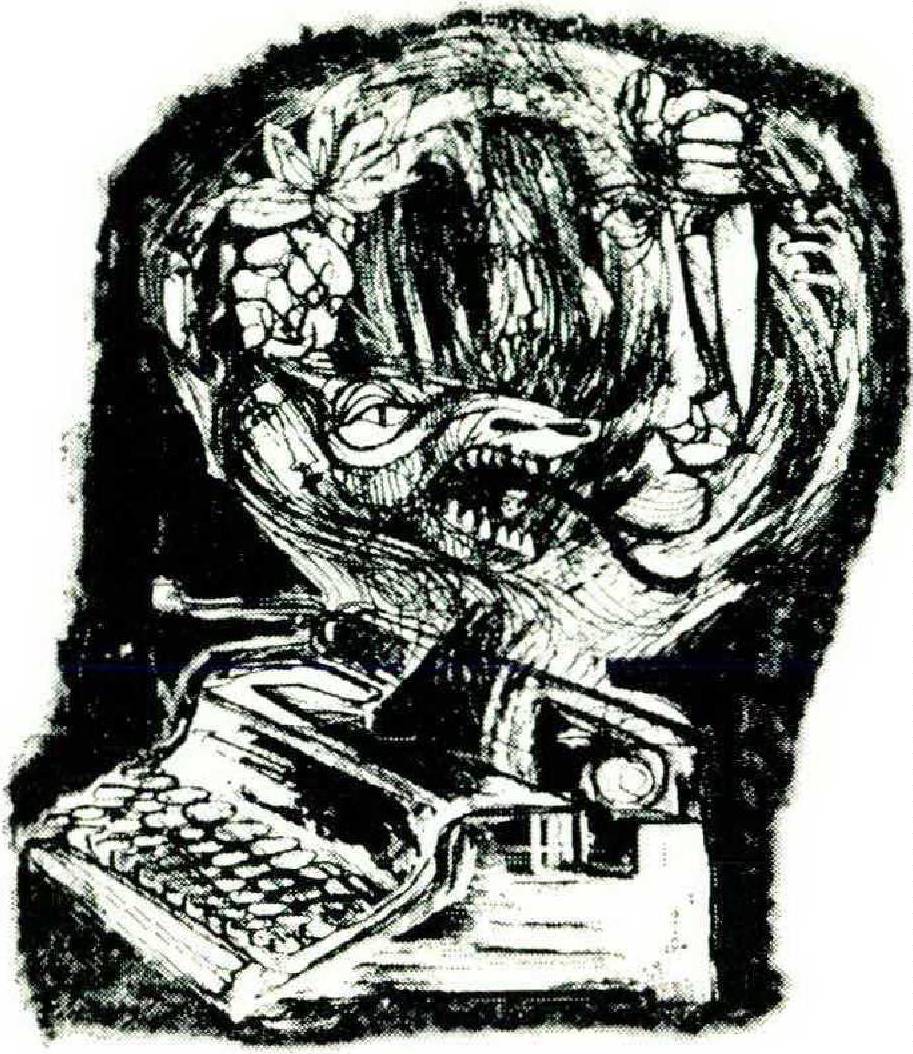
Poetry seldom makes headlines, and such public notice as has come to the art in the past year has, as usual, accrued mostly either to polemicists or to elder statesmen. Yet it could be argued that the real work of American poetry in 1967 was exhibited in new collections by men and women born in the 1920s whose work shows fully developed craftsmen responding with all their powers to the challenges of their time.
Hardly a man in America today takes poetry more seriously than ROBERT BLY. A pungent critic, an undaunted moralist, a hackled dissenter, he is a sworn enemy of worldliness in the conduct of life and in the conduct of poetry. His views have been voiced with both shrewdness and bias for some years past in his own little magazine, The Sixties, published at intervals from his farm in western Minnesota. Bly’s first book, Silence in the Snowy Fields, contained poems of conscious purity and selfeffacement. His second, THE LIGHT AROUND THE BODY (Harper & Row, $3.95), follows the example of Pablo Neruda in combining mysticism with polemics. (“From the Chase National Bank/ An arm of flame has come. . . .”) The juxtaposition, as in much of Neruda’s work, seems often arbitrary and simplistic, perhaps because Bly on principle has persisted in his effort to exclude egotism from his poetry. This is doubtless admirable as a moral position, but for a poet it casts out one devil at the risk of admitting seven more. The true mystics have been absorbed with self, and even the best lines in Bly’s work show how helpless he is, like the rest of us, before the appetite of his own personality. (“I have risen to a body/ Not yet born,/ Existing like a light around the body,/ Through which the body moves like a sliding moon.”) Bly’s native personality is a powerful one, and his poetry would benefit by a franker exposure to it.
ROBERT GREELEY has a very large following. His earlier poems, though limited in range, displayed subtlety of sound and intricacy of feeling. In WORDS (Scribner’s, $4.95) his range has narrowed to the vanishing point, and his energy has subsided almost into catatonia. These poems are so exiguous, so limited in emotion, language, and movement as to be hardly perceptible. (“Patterns/ of sounds, endless/ discretions, whole/ pauses of nouns,/clusters. . . .”) Creeley’s new work announces the victory of the inarticulate. A battle against glibness has been won, but at a terrible price: almost all the organs of language have been removed. These poems vary neither in tone, in form, in imagery, nor in intention. (“I/ am writing to you,/ wishing to be rid of/ these confusions.”) Each poem is muttered between the walls of a room to a single listener; and the recurrent imagery of windows, wetness, empty holes, and trees provides little fertilization for the barren language. Creeley’s poetry has reached a dead end of self-limitation, but I hope that this gifted poet will reach out to something fresh and enterprising in his future work.
ALAN DUGAN is one of the most consistent poets of his generation — consistent even in his inconsistencies. He writes in personas, each an extension of himself, the most powerful and productive of which is still that of the army veteran, the conscript, the shanghaied, the scapegoat: “tradition is for the rich/ to love, the clerks/ to ape, the poor/ to suffer. ...” Though his subjects and situations vary widely, the outcome and the moral are mostly the same. He is a closed-end poet who starts his verses with striking titles and finishes them off with the air of having temporarily delayed an avalanche. His language is strong, his style pungent, and he does what he sets out to do. I mean this as praise. In POEMS 3 (Yale, $4.50 and $1.45) he continues to mine the veins of style and subject he struck in his first two books, and there is no reason to expect or require that he turn in a different direction in future.
Some of the most beautifully textured contemporary verse outside the work of Richard Wilbur is to be found in THE HARD HOURS by ANTHONY HECHT (Atheneum, $5.00), which is also my nominee for the most beautifully designed book of poetry of last year. Hecht, who has published less than he should during the last fifteen years, is an openended poet who leaves his poems’ meanings to go on echoing in the reader’s consciousness; unlike Alan Dugan’s, his poems do not sew themselves together by way of conclusion. They are full of literature, of the Bible, of history; Hecht often sets them in a legendary past, though many have keenly contemporary backgrounds. One long poem, “Rites and Ceremonies,” is among the finest by an American to wrestle with the implications of Hitler’s Final Solution. There are rich musical versions of Baudelaire, Du Bellay, and others. These poems are ornate, brocaded, stately, and beautiful, but they also have the capacity to strike on the nerve: “What the intelligence/ Works out in pure delight/ The body must learn in pain.”
Poets like Creeley see through the eyes of a single speaker only, and therefore speak only in one voice. Others, like Dugan, establish a basic tonality on the instruments of numerous speakers. W . S. MERWIN in his early work wrote in the second manner with a verse technique as dazzling as that of any poet of his generation. In his last two books, The Moving Target (1963), and now, THE LICE (Atheneum, $4.50 and $1.95), he has adopted an idiosyncratic version of the first manner. He has abandoned formal metrics and punctuation, moving into loose two-stress and three-stress lines which join images together in a steady rhythmical cycle. His new poems, which when gathered together seem like serial fragments of a much longer work, explore the elusiveness of our perceptions (“Everything that does not need us is real”), express the vagueness of our intimations of ourselves (“Where else am I walking even now/ Looking for me”), expose the uncertainty of anything but the search for veracity (“But we were not born to survive/ Only to live”), and achieve all this in a groping syntax that re-enacts the movements of the mind, Merwin has invaded dangerous and uneasy areas of consciousness, and if his new poetic style sometimes seems forbidding and opaque, it may be the resistance of the reader’s perceptions that makes it so.
The poems in HOWARD NEMEROV’S sixth collection, THE BLUE SWALLOWS (Chicago, $4.50), seem to exhibit their grace under less pressure than is evident in the work of poets like Merwin and Dugan. If so, it may be a tribute to the poet for turning away the charge of events with a flick of the wrist, like a matador. These poems have a calm surface, whether they be witty glosses on the Great Society or somber riddles about man and nature and history. The surpassing virtue of Nemerov’s poetry has always been clarity rather than passion. In this latest book he has begun to take on the apparently (but only apparently) easy movementthat Robert Frost mastered, and to tackle philosophical problems as Frost did. Much of the most evocative of Nemerov’s work has always taken place in the presence of water; for example, a poem which begins “I stand and watch for minutes by the pond/ The snowflakes falling on the open water,” which moves on, in dialogue form, to speculate in expanding ripples about the Many and the One, in a manner not unlike Yeats’s “Dialogue of Self and Soul.” These poems shine with wit, sing out with descriptive certainty (A mud turtle: “His lordly darkness decked in filth/ Bearded with weed like a lady’s favor . . .”), and explore the bewilderment of a mature and civilized man surveying the world without animus.
MAY SWENSON, with Marianne Moore and Elizabeth Bishop, is one of the most meticulous poets writing today. In HALF SUN HALF SLEEP (Scribner’s, $4.50) she extends even further the formal cunning and sensuous resilience that characterized her selected poems, To Mix With Time. Her new work (apart from some expert translations from the Swedish) falls into three categories: observation of natural objects, games played with word transformation, and poems in shapes (always a favorite device of Miss Swenson’s). The eye and the hand are as cunning as ever, but the emotional freedom of the poems seems sometimes to have been cramped by the very
elaboration of technique. The reader is too often made aware of being in the presence of the mot juste, as in this opening of a poem about a carrousel: “Under a round roof the flying/ horses, held by their heels to the disk of the/ floor, move to spurts from a pillar of/ music. . .”Though the garments are still beautiful, something deliberate and self-conscious has begun to stiffen the joints of Miss Swenson’s poems. Too few of them are at liberty to fulfill Robert Frost’s famous dictum: “Like a piece of ice on a hot stove the poem must ride on its own melting ... a meaning that once unfolded by surprise as it went.” Let us hope that in her next collection she may recover some of the freedom of her earlier poems, when technique was only the servant of her imagination.