Tanzania
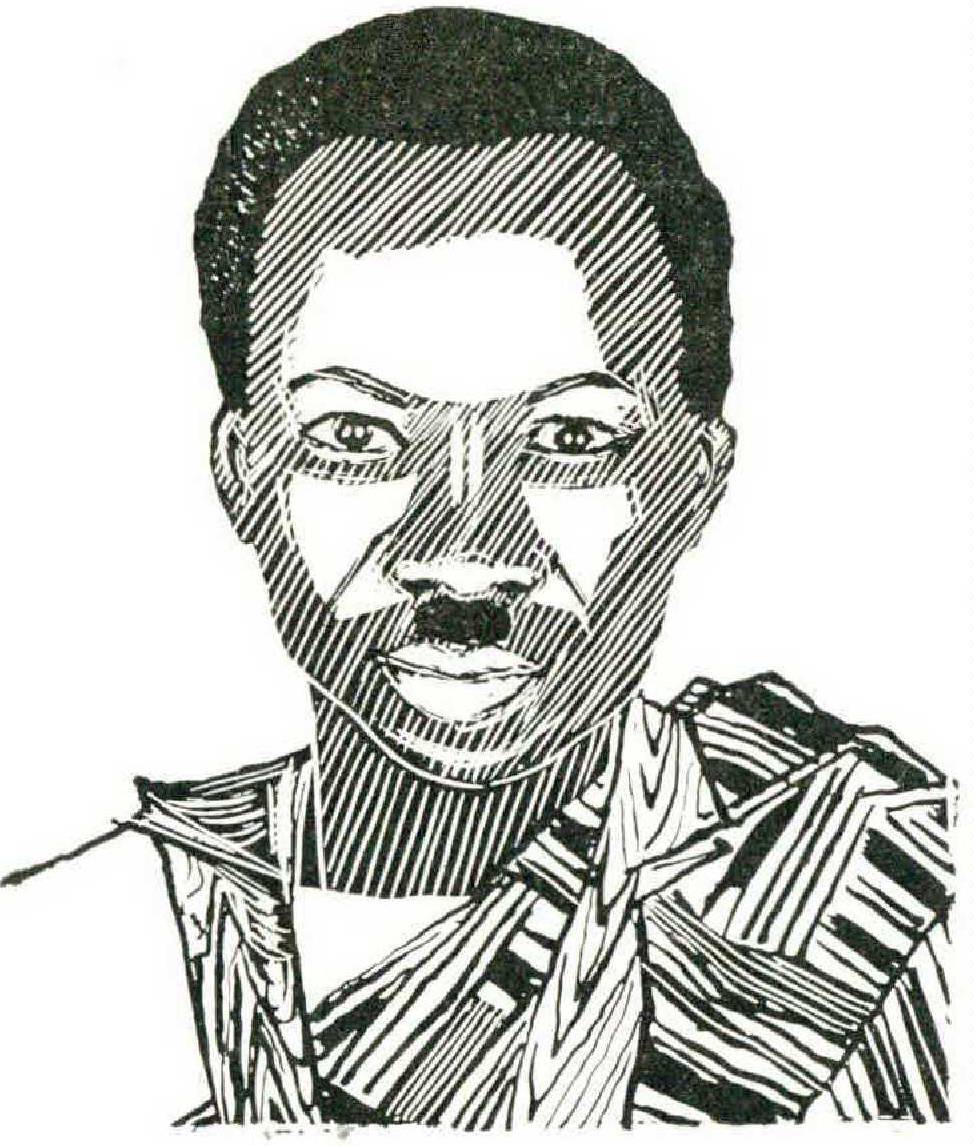
The East African country of Tanzania began early this year to do what few countries ever do: put its principles into practice. Theoretically socialist since independence was granted in 1962, but displaying for the last several years a tendency to yearn for the ways of capitalism, it is now undergoing a forced march to the left on the orders of its President, Julius Nyerere. Business, industry, commerce, education, and agriculture are all being vigorously shaken up and prodded toward stricter accordance with the policy of Ujamaa — literally “familyhood,” but freely translated as socialism. Tanzania is one of the few states on the continent that has as its leader a genuine man of ideals, one sometimes wryly imagined by Europeans as being something of a saint. Nyerere claims that only by devotion to the lonely doctrine of self-reliance can the semblance of independence be transformed into a living reality. Nor has he ever been in doubt as to the kind of society he wanted to see created in his country: At the time of independence, he said, “We determined to build a country in which all her citizens were equal: where there is no division into rulers and ruled, rich and poor, educated and illiterate, those in distress and those in comfort.”
Other men have mouthed more or less these same words in a mood of emotional ecstasy induced by watching the national flag flutter for the first time in the wind of change; few expected to treat them very seriously. Tanzania’s President insists on unimpeded progress toward Utopia. But he is not there yet, nor, after recent events, does he seem either the saint or the miracle worker he was once imagined to be.
An easy birth
The country over which Nyerere rules as President is large, poor, and backward. But it has certain advantages over comparable African states. There are only 10 million people to be spread over its 360,000 square miles, so scarcity of land is no problem. Except for occasional drought in one or another district, the soil can produce enough food for the population once it is efficiently worked. Local production is primarily agricultural, but Tanzania’s balance of trade is favorable; its exports total £64 million, and its imports total only £40 million.
Although there are 120 tribes, there are no major tribal problems, thanks to a British decision to make (coastal) Swahili —a mixture of Bantu and Arabic — the language of instruction in schools. Swahili is now the lingua franca of the whole country, thus enormously simplifying problems of administration and increasing Tanzania’s sense of nationhood. Finally, independence was an easy birth, achieved without violent rebellion against the colonial British regime, and the nation became a one-party state.
But there is the other side: the per capita income is only £21 — $58 — a year. One third of all children die before they are five years old. Kwashiorkor, the protein-deficiency disease which swells the belly, dulls the eye, and leads to permanent mental retardation if not swiftly treated, is widespread. One half of the adult working population, whether on the land or in urban communities, doesn’t get enough to eat and so can’t function efficiently. European grumbles that it takes “three Africans to do the work of one European” are frequently true: a diet of tea and starch produces remarkably little energy.
First there was mainland Tanganyika, then in 1961 independent Tanganyika, and in 1962 the republic of Tanganyika. In 1964 came union with its offshore neighbor, the island republic of Zanzibar, following a rebellion of Zanzibar Africans against their ruling Arab aristocracy. The new nation renamed itself Tanzania.
The President of the new federation, forty-five this year, had been in his youth the first black Tanganyikan to go to a British university: Julius Nyerere gained his M.A. at Edinburgh. There he wrote his first pamphlet (unpublished). It was on the race problem in East Africa and indicated a rare breadth of vision at a time when his people were subjected to so rigid a discrimination that they were not even allowed to use the same door as Europeans when they visited a doctor progressive enough to treat them privately at all. “We appeal to all the people of Tanganyika,” he wrote as a student at Edinburgh, “to regard themselves as ordinary citizens; to preach no divine right of Europeans, no divine right of Indians and no divine right of Africans cither. We are all Tanganyikans and all East Africans. The race quarrel is a stupid quarrel; it can be a very tragic quarrel but if we all make up our minds to live like ordinary sort of fellows and not to think that we were especially designed by the Creator to be masters and others specially designed to be hewers of wood and drawers of water, we will make East Africa a very happy country for everybody.”
Racial equality became fundamental to Nyerere’s political philosophy. And although on his return home he founded the Tanganyika African National Union (TANU) as an exclusively African organization, he insisted that this was only a temporary expedient necessary to arm Africans with the self-confidence to manage their own affairs. Even before independence, his point having been made, the party opened its ranks to all races. Today, any official position is theoretically open to any citizen, regardless of his race. There is a former British national as Minister for Agriculture, an Asian as Minister for Finance, and a former Anglo-American; Marion Lady Chesham, originally from Philadelphia, sitting in the House of Representatives. But behind the facade of official banishment of racialism, the reality of it persists.
Outward harmony
As the independence movement gathered momentum, Nyerere began to spell out his blueprint for the future. Not only should Tanganyika be nonracial, it should be founded on the tribal principles of traditional African society which he called Ujamaa —familyhood, or African socialism. This differed from traditional socialism in that it did not have its roots in the class struggle but grew out of the ideal of sharing everything that was available. “Capitalism and exploitation,” he declared again and again, “were unknown in Africa before the coming of the colonialists, and they should not be accepted as natural in an independent Tanganyika since they are totally foreign to African ways of thinking. In our traditional African society we were individuals within the community. We took care of the community, and the community took care of us. We neither needed nor wished to exploit our fellow men.”
He was at one with other African leaders in calling for nonalignment and independence from the main power blocs. “We have,” he said in his independence address to the United Nations, “entered a world riven by ideological dissension. We are anxious to keep out of these disputes and anxious to see that the nations of the continent are not used as pawns in conflicts which often do not concern them at all.”
Inevitably, “nonalignment” occasionally meant collisions with the West. Large sums of West German aid, for example, were lost when Nyerere refused it if the price was a reversal of the decision to permit East Germany to open an unofficial consulate general; there was a rupture of relations with Britain which resulted in the freezing of a £7.5 million loan.
But on the whole, Tanzania seemed by the beginning of this year to be a self-respecting country where Africans, Asians, and Europeans apparently lived together in outward harmony. The Tanzanians seemed serious-minded, honest, and rather humorless; those who looked for a sense of purpose in an African country found it in Tanzania. Even the foreign business community was beginning to have confidence in the avowedly leftist President and was recommending Tanzania as “safe” for investment.
Shades of racialism
There were problems, of course, and to probing foreign observers the main one seemed to be the officially nonexistent but festering racial animosity. This would spurt up occasionally in administrative decisions (from which there was no appeal) to deport Europeans heard commenting impolitely on either the country or its inhabitants. One young teacher was sent back to Britain for muttering snappishly under her breath when annoyed by an example of bureaucratic inefficiency, “This is a crazy country.”
It also manifested itself in outbursts in the press against Asian “bloodsuckers” and “economic bedbugs” who allegedly held uncooperative and anti-African attitudes. “Do not the Asians,” wrote one complaining reader of the Nationalist early in February, “still live in exclusive communities and meet in temples only to backbite the African? Do they not still continue to use foul means to destroy co-operative societies and make sure money circulates only among themselves? Do they not use all sorts of deplorable means to make sure they drain the country of its hard earned currency?”
African feelings, although bitter, could be understood. With trade still largely in Asian hands and Europeans the chief spenders, a situation existed which bred resentment, envy, and helpless fury.
This distance between the official word on racialism and the fact of its existence has not greatly preoccupied the President since independence. He has had other concerns. Although outsiders saw Tanzania making solid and steady progress, for Nyerere the past five years have brought a dragging feeling of disillusion. He has watched the gap between the few “haves” and the many “have-nots” grow larger instead of smaller as the number of educated Africans in well-paying government jobs increased. Foreign aid has dwindled. Increased production of primary products has brought few benefits because of lower prices on world markets for Tanzania’s exports and higher prices for its imports.
Across the continent, Nyerere saw one African government after another topple and turn to military rule, the foundations of civilian authority eaten away by corruption. And he had to accept the impotence of Africans to help the black Rhodesians against Smith. “There is,” he said glumly after an unsuccessful OAU meeting at the end of last year, “a devil abroad in Africa.”
Down with elitism
Particularly distressing to him was what he felt to be the diminishing idealism of his own people. Nyerere with his conception of an indigenous Ujamaa is, on the face of it, a supporter of neither Soviet nor Chinese Communism — Comunism, he says, sacrifices the individual to the state in the same way as fascism does. But the fact is that he came back from a visit to China in 1965 bubbling with enthusiasm for Chinese frugality and self-denial, which he may have confused with poverty, and proceeded to translate his impressions of China into a government-run Tanzanian revolution along lines at least superficially Maoist.
“There are hardly any private cars in China,” he said in a radio broadcast on his return, “and people go to work by bus or bicycle. Government officials too use cars only when it is really necessary for their job — and then the cars are small and cheap ones. Workers who do not need to spend all their money on food, clothing, and housing do not buy a lot of unnecessary things just because they would be nice to have or because someone else has them; they lend their money to the government instead so that more investment, more education, and more health facilities can be provided.” He added, “This attitude we have to adopt too.”
Nevertheless, the trend continued. Almost overnight a governmental middle class seemed to be springing up. Ministers and senior party officials, most of whose illiterate parents scratched for subsistence somewhere up-country, were building houses for rent at exorbitant sums to foreign diplomats, investing in commercial ventures — a favorite was the purchase of oil trucks for the run between Tanzania and Zambia — or accepting directorships in European companies anxious to have an African or two on the board.
What hurt Nyerere most were signs that the younger generation of intellectuals rejected his doctrine that public money spent on their education (secondary and university education are free) must be repaid by a lifetime of dedicated service to the nation. His frustration broke out publicly last October, when university students protested compulsory national service. This, they claimed, was a waste of their talents; national service ought to conscript only the uneducated masses, with whom students ought not to have to mix. They marched in procession to the State House to tell the President so. A furious Nyerere had them taken off the campus under armed guard the following day, and forbade them to return for two years. More than three hundred students were affected, or about two thirds of the university student body — a desperately needed future class of lawyers, economists, or administrators.
The country was stunned; and reeled again when the President announced that in a further bid to halt “elitism” he was cutting his own salary by 10 percent and all civil servants’ salaries as well. For good measure, ministers would no longer have cars provided for them by the government, but would have to drive their own.
Two Tanzanias
This was only the beginning. Nyerere set off at Christmas on a tour of the country’s regions, deriding farmers who left the work to their wives while they dozed in the sun sodden with “pombe,” the locally brewed liquor. He told them to build their own roads, dig their own ditches, and put up their own schools instead of begging for everything from the government. Privately, he was pondering the specter of Tanzania dividing into two countries: that of the rural poor, still steeped in witchcraft, unable to read or write, not yet part of a cash economy; and the indifferent, relatively affluent educated minority who were taking over not only the jobs but the mental attitudes of their former colonial masters.
At the end of his six-week tour the President revealed his new hard line to a National Executive meeting of TANU in the town of Arusha, and on February 5 the Arusha Declaration was made known to the nation. It reiterated that Tanzania was pledged to socialism and selfreliance. Only socialism could lead to a society where “there are no exploiters and no exploited,” and only through self-reliance could real independence be won: “There is no country in the world which has progressed and developed by relying on foreign aid,” said Nyerere. “Indeed, those countries which have pinned their hopes on foreign aid are sinking lower and lower in development.”
In theory this was nothing new, and it had in fact become tedious through repetition; but this time Nyerere proceeded to act on his rhetoric quickly. The Arusha Declaration announced that “no TANU or Government leader was henceforth to be associated with the practice of capitalism or feudalism,” that he was not to hold shares in any company or be a director of any company, or receive more than one salary, or own a house in which he did not live. Twenty-four hours later came an announcement of nationalization of the banks, and there began a whirlwind week of crisis at the end of which eight major flour mills as well as the most important export-import firms and some large industrial concerns had all been taken over by the government.
Nor was Nyerere’s revolution finished even then. He turned next to a radical revision of the educational system. Although the curriculum had been made more relevant to local needs than it was under British rule, education in Tanzania was still geared to the achievement of as high an academic standard as possible. Children in Tanzania who fail to get into secondary school, as the vast majority do, have very little choice but to scratch a living from the land. Nyerere’s new proposals call for the complete reorientation of the school curriculum toward the needs of these children who will not be going on to secondary school and for whom an agricultural training is the only realistic one. Schools, he said, should become self-sufficient communities growing their own food and cultivating their own land; and while the bright child would still have every opportunity to go on to a higher education, the less bright would learn to be a useful member of an agricultural community.
Revolution or standstill?
Nyerere has risked the pace of his country’s development before — by his attitude toward offers of aid, by his dismissal of the university students —but this time it is possible that he may have brought development to a standstill. The immediate result of the nationalization measures has been a complete stagnation of business. Asians, disturbed by a xenophobic campaign by the Minister of Home Affairs to round up and deport all noncitizens, feel no confidence in their future and are putting very little money into their businesses. So stocks are running down.
Equally serious in the long run may be the shamed resentment felt by government and party officials at the President’s austerity campaign. They have struggled hard for their education, and are thrilled with the material benefits it has brought them. They don’t see why their enjoyment of their new way of life does any harm to the peasants. Nor do they relish Nyerere’s new habit of haranguing against “intellectuals” as potential traitors whom the “imperialists will attempt to use to topple progressive governments.”
As for reaction abroad, the hasty and totally unprepared manner in which nationalization was rushed through wrecked business confidence in Tanzania. There is little money in Dar es Salaam to pay those whose companies have been nationalized, whatever the President may in all sincerity say about intending compensation to be “full and fair.” And while Nyerere’s personal honesty and integrity are not doubted, his declining sense of realism is viewed with alarm.
Moreover, no amount of self-help, admirable in itself, can make up for the capital investment needed for development. It is now questionable whether much at all will be forthcoming. Tanzania may therefore be moving into a period of stagnant if righteous isolation — driven back on itself not only as a consequence of the reaction to its policies abroad, but equally as much because Nyerere does not believe contact with the wicked world can solve any of his country’s problems.
He said in an address to the F.A.O. in 1963: “Disparities between the rich and the poor nations are bound to get bigger just as the runt of the litter always goes hungry.” The solution he tentatively proposed then was the withdrawal of the underdeveloped countries from contact with the rest of the world, although he admitted that any such action would be “a backward step . . . which might lead to the deliberate development of a jingoistic hostility towards the wealthy minority.” Nevertheless, he felt the cost might one day have to be met “to defeat the poverty, both objective and relative, which now oppresses us.” A continuation of the present combination of “aid” and “free international competition,” he said, would never do that.
It looks today as if Nyerere is preparing for his prophecies to come true, at least in his own country. For the rest of East Africa, nervously watching Tanzania, Nyerere’s ideas seem to have little appeal. And there is always the possibility that Nyerere may himself fail, as a result of asking too much of his own people. But it is hard for any challenger to oppose a man who never, morally, puts a foot wrong.
REPORT CONTRIBUTORS
Douglas Kiker, theATLANTIC’SWashington correspondent, is also on NBC’s capital staff. James McC. Truitt is Tokyo bureau chief forNEWSWEEK.Martin Arnold is on the metropolitan staff of the New YorkTIMES.In future issues, as in this one, some reports will be unsigned at the request of their authors. TheATLANTIC,of course, assumes responsibility for them.