Backstage With Shakespeare, Morley, and Bogart
“Show me a man who has enjoyed his school days and I will show you a bully and a bore.” That is a Morleyism, one of the many to be found, atony with this ATLANTIC excerpt, in ROBERT MORLEY: A RELUCTANT AUTOBIOGRAPHY, soon to be published by Simon and Schuster. Mr. Morley, who needs no introduction to theaterand filmgoers, may be one of the last of a dwindling breed of truly professional actors. As the passages that follow attest, he may also be one of our least appreciated iconoclasts.
by Robert Morley and Sewell Stokes
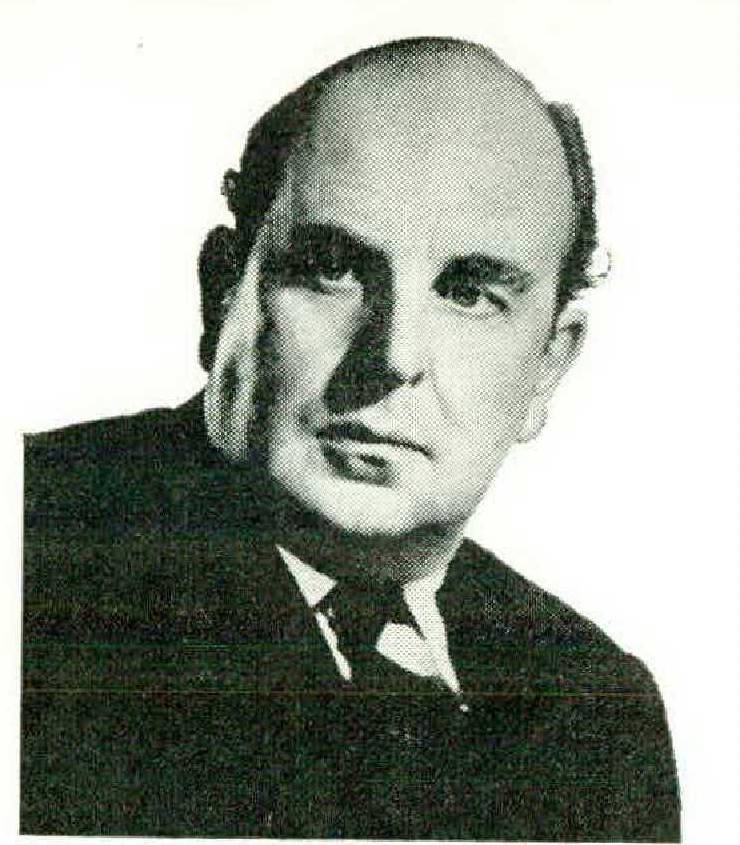
FOR some time past I had been urging Robert Morley to write an autobiography that would correct the possible impression of him as just another overweight actor bemused by his own public image. That there was very much more to him than that, few people were in a better position than myself to know. If, therefore, he was loo lazy to do the job himself, why not let me do it for him?
This suggestion had struck him as at least feasible. If we worked on the thing together, he thought something might come of it. I sincerely hoped that something would. At times my friend is inclined to talk nonsense. But more often what he has to say makes very good sense indeed. And unless a man is seen in his entirety, he is in danger of not being seen at all. With this in mind, I let him rattle on.
“I was,” said Morley, “sitting in the Carlton Hotel in Cannes with Lady Willoughby de Broke, and I upset coffee all over Angela Fox’s dress. ‘Cold water,’ said Her Ladyship to the waiter, ‘cold water for coffee, hot water for blood.’ The whole of Warwickshire was suddenly before my eyes, like a Brueghel painting; everywhere were riderless horses and dying huntsmen.
“Angela, Robin, and I were motoring through the lush lands on our way to Ravello, where I was to start filming Beat the Devil for John Huston and Humphrey Bogart, who was producing the picture with, surprisingly, his own money. It was a perfect location, a small Italian town perched on the cliffs overlooking the coast road to Amalfi; and regrettably we arrived late. ‘Not to worry,’ said the production manager; ‘we thought we’d have needed you before now, but wc haven’t. We don’t even need you now; in fact, we shan’t need anyone until Truman Capote has returned from Rome. Truman has taken over the script. He was here for a week conferring with John, but he had to go back to his raven. The bird simply refused to talk to him on the telephone and may be quite ill. On the other hand, as Truman says, he may be just sulking.’
“ ‘Meanwhile?’ I asked.
“ ‘Meanwhile,’ said the production manager, ‘I’m sure John will be glad you’re here. He’s gone to Naples for the night, but he’ll be back.’
“‘Meanwhile,’ said Robin to me, ‘you’re on salary.’
“ ‘Meanwhile,’ said Angela, ‘where are our rooms?’
“ ‘The Prince Tasco has all that under control,’ said the production manager. ‘I’ll find out where he is.’
“The Prince Tasco was at his villa; he suggested we should join him there. ‘It is more comfortable than the hotel, and you can have the suite we reserved for Bogart, who prefers company.’ Bogart said the villa was like the prince, cool and luxurious. The prince introduced us to his wife and daughter. ‘My sister was here the other day,’ he said. ‘She lives in America and never stopped telling me of the wonderful laborsaving devices she has in her kitchen. I told her that we could get a glass of champagne at any hour of the day or night by simply pressing a button. She didn’t believe me, so I gave her a demonstration.’ He got up and touched the bell, and a servant arrived with a freshly opened bottle of Bollinger and glasses.
“I became very fond of Tasco. Much later in the story, when he hadn’t paid the hotel bill for the unit and the actors were beginning to go hungry and to find their beds unmade, he explained that it was customary to squeeze the hotels until, being desperately short of ready money, they would settle the bill for cash, and for half what they were claiming. He had the cash waiting. ‘But,’ he said, ‘there is a psychological moment to settle. Meanwhile, the actors must put up with it.’ ‘But not me,’ I told him. ‘We must never be short of housekeeping money at the Villa Carlotta.’ ‘Of course not,’ he promised, and he kept his word. Besides, as he pointed out to me, he was living there himself. In the Villa Carlotta we had ten servants, and the cook specialized in spaghetti souffle and spiced sausage.
“The night after we arrived, a prominent member of the unit nearly burned down the hotel. The local doctor arrived and dressed his burned hand. Then he took the production manager to the window and pointed down the hillside to a small house on the cliff path leading to the beach. ‘From my home to this hotel,’ he said, ‘there are eight hundred and nine steps, too many for an old man like myself. Tomorrow you must go to Naples; you must engage Dr. Vascotti to come and live up here with all of you. He is a friend of mine, and you will have to pay him a great deal of money, but he will be worth it. He is an expert on alcoholic poisoning.’
“Truman came back after a few days, and no one quite liked to ask him about the raven, but I think it had died. As the production manager had said, he had been brought in by John Huston to write a new treatment of the story. He wrote it page by page and read it aloud to us all, page by page, every morning. He never seemed to manage to write very much on any one day, hut then as we didn’t film very much either, it didn’t matter. The dialogue was at least always mint fresh.
“We settled into the villa, tested the bells for ourselves, and waited. A few evenings later Givenchy, the great French dressmaker, arrived. He had been hastily summoned by David Selznick, who wanted Jennifer Jones’s entire wardrobe redesigned. He kept looking out of the window at the view and murmuring, ‘Exquise . . . e’est exquise.' The next morning he had disappeared. Miss Jones played her role dressed entirely in white. The story was that Givenchy produced the toiles of her dresses for the fitting, and that they were mistaken by David for the finished products. The English crew complained constantly; they loaded their lamps and equipment on the backs of the natives and then grumbled at how slowly they moved up the mountain. Only Huston remained entirely content. He hired a cargo steamer, and we all put to sea. Jennifer climbed to the top of the mast, lost her nerve, and climbed down. Huston besought her to try again. After an argument, she left in a speedboat. Hours later she returned, ready for a second attempt. Huston declined her offer. When the sun went down, they decided to turn the boat around and sail for home. To the surprise of everyone except the captain, who had presumably worked out that the time taken in any direction must equal the time taken on the return journey where the same route is followed, we didn’t get to bed till six the next morning. Meanwhile, there was nothing to eat or drink. All work stopped for two days, in protest. Driving my car to the dock. I lost the way and turned down a cul-de-sac. Beside me sat Tasco’s daughter, a beautifully languid Roman child. ‘Do you mind looking behind you,’ I asked her, ‘while I reverse, and let me know if anything is coming?’ She turned her head gracefully; I backed, at some speed, into a truck. Both vehicles suffered considerably. We were instantly surrounded by hostile peasants. The princess wound up the window and sat back. ‘I thought,’ I told her sharply, ‘you had agreed to help. I asked you particularly to let me know if anything was coming.’ ‘It wasn’t coming,’ she assured me, ‘it was there all the time.’
IN THE evenings we would play chemin de fer with Bogart and John, though for only a tenth of the stakes they were accustomed to, or drive into Naples. There were two roads, one by the coast and the other through the mountain passes. This road was not recommended; it had a sinister reputation, for in the war an American plane that had crashed in the vicinity had been entirely stripped of valuables in one night, the valuables including the clothes of the airmen. It was hinted that the same fate awaited any actors whose cars broke down. Nevertheless, we went by the mountains, turning in our imagination every poor peasant into a bloodthirsty bandit.
“Sitting in the Square in Ravello, one gradually became conscious of the few people whom the company was not employing, among them a very thin Englishman with a straggly golden beard. With him were usually an enormously plump lady and a small boy of about five. He was, so the crew told me, an artist, an old Wykehamist, and starving. ‘Why not encourage the poor chap and buy some of his pictures?’ one of the ‘grips’ suggested. ‘Why, indeed, don’t you?’ I replied. But a few days later it was I who made the pilgrimage to his shack perched on the side of the mountain above the town.
“In answer to my knock a voice bade me come in, and what struck me as soon as I was inside was the darkness. I’d always understood you needed a north light to paint by. I suppose I’d expected to come upon something more like a huge window overlooking a Chelsea mews. But here was this dim, squalid little room, furnished with a wooden table and chairs and a dilapidated bed. The large woman was with the artist, and also the small boy. Though they probably knew who I was, I introduced myself, and I said that if the artist cared to let me see some of his pictures, I thought perhaps I could help him. I suggested buying a couple of them to take back with me to London, where I could show them to friends of mine who were particularly interested in avant-garde painting. By saying this, I thought I might get the pictures a bit cheaper.
“He made no objection to my seeing the pictures. ‘There they are,’ he said, and when I looked around the room, there they were — everywhere, except on the walls. They covered the bed, the table, and the chairs. Piles of them littered the floor and were stacked against the walls. They were not painted on canvas— I suppose he couldn’t afford that — but on paper of every description: brown wrapping paper, sheets of foolscap, pages torn out of books, old newspapers. Leafing through the collection, I observed that the paint on some of them was sticky, so that when you picked up a painting, some of the paint from the one underneath came off on the back of the one you were holding. This made me highly nervous because it seemed to me to decrease the amount of paint, and thus the value of the picture. But as the artist didn’t appear to mind, after a time I ceased to worry.
“They were all abstract pictures, and I noticed the paint ran in blotches down the page, never across it, giving the effect of Japanese scrolls. To me they were quite meaningless; they might have been daubed by the small boy who stood in a corner of the room as motionless as a statue. After I’d looked at them for some time I started to comment. ‘That’s charming,’ I said. ‘That’s very bold; I do like that . . . no, I don’t think I like that quite so much’ — you know, the silly things one does say when one hasn’t a clue. Then I asked how long it took him to paint his pictures. It was a perfectly ridiculous question, but I couldn’t help being impressed by the amount of work he’d done. ‘I really don’t know,’ he said. ‘Well, how many in a day?’ ‘I sometimes do six,’ he said, ‘sometimes only one.’ Then I said, having, I thought, sufficiently prepared the ground, ‘May I ask what the price of one of these pictures is?’ It was an awkward question to put anyway, and I felt more awkward still when he told me that he usually sold them for about forty-five guineas each. (I made a mental calculation that the pictures in that room alone must be well over ten thousand pounds’ worth.) ‘As a matter of fact,’ I said, ' I’ve only got twenty-five pounds on me. I suppose you couldn’t possibly let me have one for that?’ He said of course he could, and invited me to help myself.
“So now I had to decide which one to take. And I wasn’t looking for one that was particularly different from the rest — they all seemed much the same to me — but for one that was dry, as I didn’t want the paint to come off on the way home. I spread them out on the bed, pretending not to be able to make up my mind which of them appealed to me most. Then for the first time the little boy came to life. He came forward, picked up two of the pictures I was examining, and very politely turned them round the opposite way. Feeling a perfect fool, I cut my inspection short, paid my twenty-five pounds, thanked the artist, and hurried out. They watched me go as if I were some sort of gypsy, which irritated me; because all along I had thought of them as gypsies.
“Returning down the goat track, I looked at the painting I’d bought and decided that never before had I got so little value for my money. In the square, the first person I saw was Humphrey Bogart. ‘Look, Bogey,’ I said, ‘I’ve got a picture here by a British artist who is likely one day to be very famous. I was wondering if you’d care to buy it.’ I offered it to him for thirty-five pounds, but he didn’t seem very interested. He kept asking what it was meant to be. I told him it was obviously meant to be Horse Guards Parade on a wet afternoon. It could, however, be something else: a piano on its back . . . four fish and a football ... in fact, almost anything. That was the beauty of ultramodern pictures like this one: they impressed different people differently — like the pictures one sees when one looks into the fire. But still Bogart didn’t seem to want it, so I told him he was missing a bargain. Later I offered it to other members of the company, none of whom wanted it, even when I reduced the price to a fiver. When we finally left Ravello, I still had the picture and no room to pack it. So I put it on top of the wardrobe. Always in the past, and particularly when staying in Paris. I have found the top of the wardrobe in hotel bedrooms an admirable place to put anything one is anxious to leave behind — books of erotic literature, for instance. So now I climbed onto a chair, put the picture on top of the wardrobe, closed the bedroom door, and gave the key to the porter. That, I believed, was the end of the incident, so far as I was concerned. But of course it turned out not to be.
“A year or so later, in a London gallery, I was telling a dealer that to try and persuade me to buy ultramodern pictures was a waste of his time. They didn’t interest me, ‘I know,’ he said, ‛but it’s such a pity, because I could probably pul you on to something rather good. You never buy a picture that is likely to increase its value, yet at the back of your mind is always the hope that it will.’ He then insisted on showing me some unframed paintings that had arrived the same morning. Directly he held the first one up. I knew the artist. The splodges that ran all down the page still looked to me a bit damp. ‘I can tell you who painted that,’I said; ‘a man who lives in a shack at Ravelio. ‛Not any longer,’ he said. ‘He now has a very nice flat in the Bois de Boulogne.’ ‘How’s that?' I asked him, and was told that the artist had been taken up by the dealers. £At the moment I’m offering his pictures at between three hundred and four hundred pounds, but it won’t be long before they re worth a thousand each. I think his prices will absolutely rocket. He s the new Masson, you know.’ I said, ‘Really, I’m afraid I never realized how good he was. But as a matter of fact, I do happen to have one of his early works.'
‘’This was not quite true, of course. On the way home I wondered if I shouldn’t get on a plane, go back to the hotel in Ravelio, climb on the chair, and retrieve my property. But I decided against the plan, things having a habit of disappearing.
AMONG the visitors we entertained at the villa was Jenny Nicholson, who reported from Rome for the Daily Mail. I left her on the terrace to admire the view, and instantly she recognized her surroundings. ‘My,’ she said, ‘so you have the villa of the Black Duke.’ Site then told me the fascinating and tragic story of the owner of the villa, who had fallen in love with his wicked chauffeur, and how the latter had over the years acquired complete ascendancy over his master and the title deeds of all his estates, and finally refused him the necessary money for an operation on his eyes, so that he was now practically blind. Shocked by such infamy, I was unprepared therefore a few days later to be told that the duke himself had called and wished to meet me. I received him in his own living room, noting that for a blind man he seemed comparatively clear-sighted and that his companion, whom I assumed to be the chauffeur, not surprisingly was a good deal better turned out than he was himself. I persuaded His Grace to stay to luncheon and was at all times overeffusive in my manner toward him, while maintaining what I trusted was a noticeable coldness toward his companion. It was only toward the end of the meal that I discovered that far from being accompanied by a chauffeur, the duke was in the company of his brother, a distinguished nobleman like himself, and at one time an ambassador to the Court of St. James’s. As for being the Black Duke in the legend of Jenny Nicholson, that was either another local landowner or a figment of Miss Nicholson’s imagination.
“Perhaps the most spectacular of all the scenes in Beat the Devil was the one in which the venerable Rolls-Royce went sailing over the cliffs into the sea beneath. In order that this maneuver should be carried out without a hitch, the technical experts forgot their customary card game on the evening before the execution and perfected their plan. It was, they explained, to have a small Italian mechanic secreted on the floor of the car out of sight of the cameras, who would apply the brakes just before the car, with Bogey and myself inside, plunged over the ravine. The cameras would then be stopped and shooting only resumed when all three of us had safely alighted.
“ ‘We won’t rehearse this,’ said John; ‘it’s perfectly straightforward. The car has stopped, so you, Robert, will be pushing it from behind, with Bogey walking at the side and steering. Then as the car starts to move, just run along, open the door at the back, and jump in. Bogey will meanwhile have got into the driving seat.’ The car moved rather faster than I had expected, and I entirely failed even to open the door, let alone jump inside. Bogey, the complete professional, accomplished the maneuver, but happening to glance down at the floor where the mechanic should have been lying, discovered that he had not after all come on the trip. Bogey leaped from the car a second before it crashed. Everyone was loud in their praise of his agility. He was, you will remember, financing a good deal of the picture.
“ ‘If I had been in the car, I might have been killed.’ I told Huston. ‘Yes, but you weren’t, were you, kid? So now you’re fine, just fine.’ Huston always told everyone he was fine. Once, walking down Fifth Avenue with a party of friends, he came across a dead man on the pavement. Everyone else avoided the corpse, but not John. The story goes that he knelt beside the man, and taking his limp and lifeless hand, held it for a few critical seconds before replacing it carefully on the pavement. ‘He’ll be just fine,’ he told the waiting ambulance men, ‘he’ll be just fine.’
“No one can accuse me of being a great actor, but you know, I’ve always felt I could have become one,” Morley remarked.
“Then why didn’t you?”
“I wrote in one of my plays: ‘God says take what you want from the shelves and pay the price.’ I never wanted to pay the price. In our business there are two sorts of people, the entertainer and the dedicated actor. The entertainer is the one who doesn’t wear makeup. Laurence Olivier put it another way: ‘Some actors go into the theater for what they can get out of it, others for what they can put into it.’ I have the highest regard for those members of my profession who continue to act in Shakespeare, but I have reached an age when I can no longer bear to watch them doing so. I daresay I am not the right person to discuss Shakespeare, as I have very seldom succeeded in finishing any of his works. (Indeed, I have sometimes wondered how he always managed to do so. He is the only playwright I have ever heard of who didn’t leave a whole bundle of first, second, and as was the custom in those days, third, fourth, and fifth acts of unfinished masterpieces.) Nevertheless, I was asked the other day, as part of the quadricentenary celebrations, to select the ten Shakespearean characters that had intrigued me most over the years. In Hamlet, I unhesitatingly plumped for Cornelius.”
“For Cornelius?”
“You’ve obviously forgotten.” Morley, having put failure behind him, was now beginning to enjoy himself. “Cornelius is one of the ambassadors to Norway. He has only a small part and speaks only half a line in unison with his friend Voltemand. On his second entrance, Claudius includes him vaguely in an invitation to a feast and advises him to have a lie-down beforehand. What plans, one asks oneself, had Shakespeare for him? Was he to get drunk at the party and provide the comic relief that Hamlet so sadly lacks? Or was he to play an even more significant part in the tragedy — as Gertrude’s lover? Perhaps he was to be the one who had staged the ghost effect as an elaborate practical joke.
“One thing is certain, Shakespeare would never have thought up the name Cornelius at all unless he had some ambitious plan for the lad. What could have gone wrong? What caused him to abandon the ostensibly far more provocative part of Cornelius and concentrate on the relatively mundane and predictable Hamlet? A theory with which I have played from time to time is that, in fact, Shakespeare conceived the part for the son of one of his friends who wanted to put his lad on the stage. Shakespeare may have borrowed his horse or been under some other obligation to him. He may even have been the one who introduced him to Anne Hathaway. At all events, Shakespeare did what he could, and then found that the boy was incapable of speaking the lines (hence the device of having Voltemand speak one with him). After that Shakespeare had to rewrite the play. I’m sorry,’ one can hear him explaining, ‘the part just didn’t work out. . . . No, no, Hal, your boy was fine. He was sensational, but that’s show business.’ ”
Morley paused, then suddenly recalled another character from his list, about whose peculiar treatment by Shakespeare he also holds an intriguing theory — the Shipmaster in The Tempest. “We know that toward the end of his life Shakespeare grew increasingly intolerant of actors. When rehearsing The Tempest, his farewell play, which as the title suggests was to be a tale of adventure at sea, pure and simple, he took a violent dislike to the actor whom he had engaged to play the Shipmaster, and who in the original version (and indeed all subsequent ones) opens the play with the line ‘Boatswain!’ So enraged was he by the manner in which this actor handled the ensuing scene, which included the now missing soliloquy about life aboard ship, that he dismissed the company for the afternoon, and taking the script home with him, overnight rewrote the play, so that the ship was wrecked and the entire action took place on a desert island. He left the Shipmaster to do his worst with ‘Good, speak to th’ mariners! Fall to’t — yarely, or we run ourselves aground! Bestir, bestir!’ Keeping strictly to the letter, if not to the spirit, of the actor’s contract, Shakespeare allowed him one further entrance in the last scene, but gave him nothing to say.
“Then there is Antonio. My interest in that character has been greatly influenced by the fact that I played it on tour in Sir Frank Benson’s production of Twelfth Night; actually, I doubled the part with Sea Captain — a real challenge to any actor. I had only about ten minutes in which to exit as the Captain and change both my beard, which was elaborate, and my costume, which was simpler but included button-up boots, and rush back onto the stage for my first entrance as Antonio. Only once during the entire tour did I meet the challenge and arrive on time to ask Sebastian, ‘Will you stay no longer? nor will you not that I go with you?’ And on that occasion I had omitted to button both my boots and my breeches.
“Besides the Shipmaster and Cornelius and Antonio (so long as he is doubled with Sea Captain), my list included Varrius in Measure for Measure, who not only doesn’t speak throughout the piay but doesn’t even appear; Ragozine, in the same play (only his head is required — another real challenge); and of course, Cobweb, Peaseblossom, Mustardseed, and Moth. Especially Moth.
“That was my list.” said Morley, “for what it’s worth. I don’t suppose it’s worth much, but in a quadricentenary year every little bit helps.”