Washington
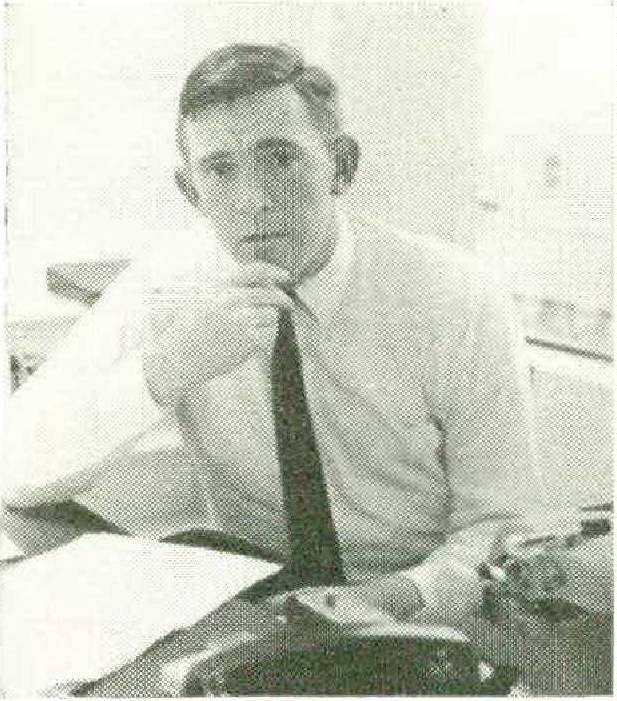
With this issue, Douglas Kiker becomes the regular writer of the ATLANTIC’S Washington Report. He will contribute longer articles on public affairs as well. Mr. Kiker, thirty-six. married, and the father of two children, is a Washington correspondent for the National Broadcasting Company. He was White House correspondent for the now departed New York HERALD TRIBUNE, onetime Director of Public Information for the Peace Corps, and before that covered politics and civil rights in his native Georgia. He is the author of two novels.
BY ANY modern comparison the legislative record of the 89th Congress was an impressive one. In making their case for re-election, its members could say that they made a start, at least, in answering the needs of the old people, the young people, the sick people, the poor people, the black people, and the city people — and that adds up to a lot of voters.
Yet the members of “the Fighting 89th,” as the White House likes to call it in salute, seemed to share a general sense of apprehension rather than confidence as they finished their work in Washington and headed home for the campaigns.
It was as if one night early this fall all of them had awakened in a cold sweat from a common nightmare in which an angry constituent was shouting, “What a mess you’ve managed to get this country into in two short years. Our boys are getting killed in Vietnam. Prices have shot sky-high. And the Negroes are trying to move in and take over our neighborhoods.”
The politics of Vietnam
The September primaries offered some evidence that congressional candidates who wanted to step up the war would get favorable voter response and those who advocated de-escalation and withdrawal would not. (In private conversation, President Johnson has scoffed at the idea that “peace” candidates might prove popular this fall.) But the primaries left unanswered the crucial question of whether or not the Administration’s present Vietnam policy remains as politically marketable as it once was.
Noticeably lacking in top Republican statements was any new, more strident demand for increased bombing in North Vietnam. The omission reflects the fact that only a small covey of congressional hawks really believes massive air strikes to the north would bring a quick and easy victory in the south. Congress did sense that many, many voters do believe this, however– perhaps enough to make a difference in some tight races.
Richard Goodwin, a former special assistant to President Johnson, also has concluded that this public pressure to get it over with is building, and proposed in an address to the executive council of the Americans for Democratic Action that a national committee against a wider war be formed to provide “a counterpressure against those who urge a more militant course.”
The President frequently has said he regards pressure from the hawks as potentially more dangerous than pressure from the doves, and thus, purely on paper, it might have been reasonable to expect him to welcome the Goodwin proposal. But such sweet reason fails to take account of how Johnson reacts when anyone in whom he has shown trust speaks his mind. He is reported to have said, “It’s like being bitten by your own dog.” His tendency to treat all criticism from anyone he has dealt with as that of an ingrate was further indicated by press reports of presidential displeasure with American Jews for criticizing Vietnam policy– the President’s attitude is that since we have backed Israel’s fight for survival, Jews ought to back our light in South Vietnam.

Goodwin also pressed the charge that there is a difference between what the Administration is doing and what it says it is doing in Vietnam. “There has never been such intense and widespread dissension and confusion as that which surrounds this war ... it has almost numbed the capacity to separate truth from conjecture or falsehood,” he said. He explained that “only the strongest of feelings” compelled him to become the first former Johnson White House aide to speak the unspeakable.
To those who know him, his explanation was unnecessary, for Goodwin’s recent history in American politics is far more complex than merely that of a spy who has come in from the cold. His ultimate loyalty always has been to Robert Kennedy. But as a special assistant to Johnson, he was the author of many of the policy statements he attacked in this address. He is a member in good standing of the East Coast political-intellectual jet set. Yet he is a man with a sophisticated appreciation of political reality who realized he was violating an unwritten White House rule — as have others in recent Administrations — which states that access to inside information imposes an unusual responsibility for interim silence, however agonizing, upon anyone who leaves such a unique position as that of Special Presidential Assistant. The decision must have posed a torturous dilemma for him, but Vietnam does that to people.
House Republican Leader Gerald Ford told Capitol Hill reporters before Congress adjourned that he believes the President realized that his present Vietnam policy would be a source of trouble for Democrats at the polls. In fact, he said he would be very much surprised if Mr. Johnson didn’t “try to pull a rabbit out of the hat somewhere along the line.” As possibilities he suggested “some dramatic new peace move, or a blockade of Haiphong harbor, or both.”
About a week after Ford made that prediction, United Nations Ambassador Arthur Goldberg attracted world attention when he presented a new peace proposal to the General Assembly. The United States, he announced, was willing to stop bombing North Vietnam if “corresponding and appropriate” military de-escalation by the other side could be assured, and was also willing to withdraw American troops from the south, “as others withdrew theirs” under UN supervision. He also promised the Viet Cong a role in any peace talks.
The proposal did not represent any new U.S. decision to give in to Communist demands that American raids be stopped and American troops withdrawn unilaterally as a prelude to any peace talks. Neither did it represent any concession which the Administration was not prepared to make months ago, given the chance. What it did represent was a dramatic new attempt by Washington to convince both Hanoi and Moscow of its sincere — indeed, almost desperate — wish for a negotiated settlement acceptable to both sides. Reportedly the move was made at the urging of Ambassador Goldberg, who pleaded for “something new” with which to counter increased criticism of existing U.S. policy by other UN delegates.
But whatever it accomplished, this latest probe served to illustrate a tragic irony: Hanoi steadfastly refuses to be convinced that the United States, after expending so much money and effort in this war, ever would make even miniscule concessions in a negotiation. North Vietnam apparently will never appreciate the President’s dilemma: he wants out, but on his own terms, and what he would never allow to be taken away by force he well might willingly give away in diplomatic compromise.
The result is that there is no way to go but slowly upward if you don’t want to keep on standing still; in other words a continuation of present policy. However, it was the President who formulated that policy in the first place, and as the fall progressed, he kept defending it as passionately as ever. Even his decision to meet in Manila with leaders of Asian nations allied with the United States appeared to be an attempt to redecorate the same old house, rather than move to some splitlevel in a new suburb.
Inflation is another matter. Everybody is against it, and everybody agrees something must be done about it, and soon. The Republicans charged that the Administration did too little too late, and whispered to voters that the White House would be calling for a tax increase first thing next year. But would the electorate accept an increase in taxes? By mid-fall it was clear that voters this November would not be given the chance to say.
White backlash
Northern white reaction to Negro riots and housing marches caused almost as much worry among Democrats as Vietnam. The Northern white backlash exists as a fact of political life in Washington now. It killed the 1966 civil rights bill. It prompted Senate Minority Leader Everett Dirksen to predict that Republicans would gain seventy-five House seats. It gave birth this fall to a new and potentially powerful coalition of old-time Southern segregationists and nominally liberal Northern congressmen who represent minority districts in urban areas.
Congressmen, whose instinct is for self-survival, are sincerely frightened by the backlash, and if the November elections were to give strong evidence of its rising vitality, the legislative effects in the 90th Congress would be felt far beyond the area of civil rights. One only had to observe congressmen like Mississippi’s John Bell Williams and Chicago’s Roman Pucinski buddy-buddying during the House debate on the civil rights bill to realize this.
Congressional Republican leaders, to their great discredit, used the issue this fall for all its possible worth. Everyone in Washington is convinced that the GOP must pay its civil rights bill sooner or later if it ever is to regain its position as an equal in the nation’s two-party system. But the Republicans, by their actions and by their words, were saying in the fall of 1966, “Not yet, not yet,” and one sensed they would be saying the same thing two years from now, for the minority, lonewolf party has sniffed the unexpected scent of possible national victory, and its tired blood is running hot.
It is an irresponsible but irresistible reaction. In its approach to the civil rights problem just now, the GOP is like a crazed, middleaged, middle-class, small-town Ohio salesman out on a credit-card binge; he knows he will be apprehended eventually, but he hopes for a chance to spend a week in Rio first.
The integrity of LBJ
By mid-fall it also became apparent that a fourth issue, in addition to Vietnam, inflation, and civil rights, would be a definite factor in the election, and that was the question of the personal integrity of Lyndon Johnson. This undoubtedly was the first off-year election in modern times when the sincerity of the President was a major issue.
Republican leaders readily admitted in private that this was the case, and publicly they played to it every way possible. They were playing to it when they charged that he already had decided to escalate the ground war in Vietnam and raise taxes but would wait until after the elections to announce it. They were playing to it when they said he was fiddling around with figures, juggling books, and withholding the truth about the real cost of the war. Denied the use of the war itself as a clear-cut issue, they chose instead to concentrate on the man who enlarged it—and the continuing decline of the President’s national popularity appeared to justify the tactical decision. By October even the most conservative Republican leaders were genuinely jubilant over the chances for success, and House Minority Leader Ford was predicting a minimum gain of forty seats.
The Republicans sensed the existence of a wide need among liberals and conservatives alike to voice dissent in this election. They sensed that even some of Mr. Johnson’s normally solid supporters thought he should be put down a bit. And they sensed that the President’s biggest problem was that he was so easy to protest against; he was perfectly fitted for the role.
The Republicans were not the only ones to sense this national mood. Senator William Fulbright displayed an acute sense of timing when he ordered Senate Foreign Relations Committee hearings on the American commitment in Thailand, with the clear implication that the situation there could lead to another Vietnam.
The Democratic danger
The Democratic danger was simple to define: fewer people vote in off-year elections, and thus an enlarged vote of protest would guarantee an enlarged loss for the party in power, and off-year elections are by nature protest votes.
Political sophisticates maintain that local issues frustrate the attempt to discover national trends in offyear election results. No one doubted, however, that the President would identify any reasonable result as a national mid-term vote of confidence, or that the Republicans would describe any gain as a repudiation of both the President and the Great Society.
Mr. Johnson told visitors this fall that he wasn’t as interested in seeing Democrats elected as he was in seeing candidates elected — or, in the case of some Republicans, re-elected — who will provide him general support. As a result, he campaigned selectively and refrained from using his office as a forum to call for a national rally around Democrats.
On the other hand, the Democrats didn’t seem to mind especially. If he chose to roam into their neck of the woods they welcomed him, but they did not besiege him with pleas for help. One could read into this almost anything he wished. But evidence indicates that it was more than just the drooping personal popularity of Mr. Johnson. Congressional Democrats were just as happy to go it alone this time because they didn’t quite know what to expect from the folks at home. The one thing they seemed not to expect was any great public display of appreciation for the accomplishments of the 89th Congress. Voters appeared to be so concerned about the future that they had little time to look back at the legislative record of the immediate past.
Neither, with any certainty, did the White House know what to expect this November, despite all the polls which were commissioned. One of Mr. Johnson’s special assistants clipped a newspaper article this fall in which Richard Nixon was quoted as saying it would be a calamity if the Republicans won back fewer than forty House seats. If the calamity occurred, the President’s man planned to wave the clipping around for all to see. He was absolutely sure he would get the chance. But until the votes were in, he kept the clipping well hidden.
— Douglas Kiker