Reader's Choice
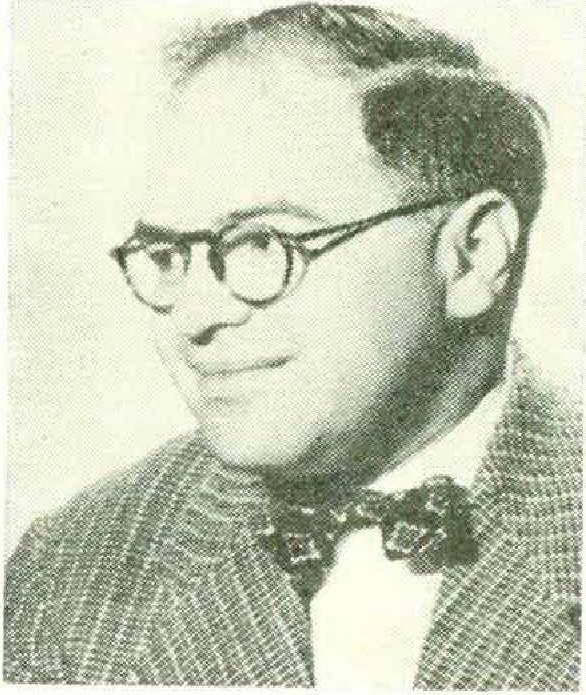
BY OSCAR HANDLIN
CHILDREN OF ALLAH (Atlantic—Little, Brown, $6.95) is AGNES NEWTON KEITH’S fourth effort to describe the encounter of an American woman with the underdeveloped regions of the world. Mrs. Keith was born in the United States but married a Canadian forestry expert whose duties have taken him for thirty years to live among primitive peoples. The Keiths’ experiences in North Borneo supplied the data for Land Below the Wind and White Alan Returns. Bare Feet in the Palace dealt with their life in the Philippines. The subject of Children of Allah is the newly created nation of Libya and its bleak desert territory.
Mrs. Keith’s strength lies in the honesty and clarity of her perceptions. She writes not as an expert, but as a wife and mother, occupied with her household, husband, and children, sensible and kindhearted, but subject to the ordinary misfortunes of life. There is only this difference from any other American woman, that she happens to live in a strange country which she makes comprehensible because it is viewed through the eyes of a familiar kind of person. She writes simply, without condescension toward her subjects and with a determined effort to understand and sympathize with the people she encounters.
In a sense, the pattern of her reaction is recognizable. It derives in good part from the missionary impulse that in the past sent thousands of Americans on errands in the wilderness. Like them, Mrs. Keith is eager to help; she becomes “Mom” to the houseboy and doles out first aid to the neighbors. But unlike the missionary, she is relativistic in her point of view. She does not claim to possess a unique truth; nor does she sit in judgment upon the people or the society she encounters. She is willing to accept others on their own terms and thus escapes the trap of selfrighteousness.
Mrs. Keith arrived in Libya in 1955, four years after that nation had been pulled into being from the three rather heterogeneous provinces of Tripoli, Cyrenaica, and the Fezzan. A newly created king had been installed, who ruled as religious chieftain as well as temporal monarch.
The area, however, is rich in history. The Turks, Romans, and Greeks who were once its suzerains have all left their marks upon the countryside. The physical survivals of great cities still dot the landscape. Some of Mrs. Keith’s most vivid pages describe the settings and the historic background of these ancient monuments.
Nevertheless, her chief concern is with people. The diverse population of Libya consists of Arabs, Berbers, and Africans, as well as a residue of Europeans left over from the Italian occupation. The cultural and social differences among these elements give the country its unique character. Three important forces, on the other hand, unify Libya by the common problems they create. Mrs. Keith perceives and describes each of these carefully.
The most pervasive influence on the country is the desert, which for centuries has been edging toward the sea and which subjects the humans who live in it to unusual strains. Mrs. Keith was particularly concerned with desert life because it was her husband’s task to plan the reforestation that might halt that advance of the waves of sand. Her vivid descriptions of the hardships of trips deep into the interior and her accounts of the life of the permanent residents of the oases are exciting and moving.
Islam is the second force that holds the new nation together. Mrs. Keith is not concerned with theology or the formal organization of worship. She focuses instead on the social impact of North African Mohammedanism. Her descriptions of the effect of the traditional faith upon women and upon family life are perceptive. The absolute seclusion of wives and daughters and the total authority of the male head of the family narrow the opportunity for the development of individual personality. Custom, habit, and inertia are oppressive and diminish the capacity of Libyan society to meet the challenges of the modern world.
Yet it will not be easy to shake off the fatalistic qualities of the established religion, even though their human cost is high. After the earthquake in Barce, for instance, fresh blood is flown in by the Americans, “but although it is badly needed it is refused by Libyan authorities because of the possibility that some may have come from Jewish donors.”
Finally, the disruptive consequences of modernization have a unifying influence. Mrs. Keith considers this phenomenon primarily the outcome of the discovery of oil. But the shake-up of the traditional society, no doubt, is part of a larger process which is also transforming much of Asia and Africa in our times.
Modernization at first creates as many problems as it solves. The few women who have adopted Western ways and values are no happier than those who remain within the harem. Riots in the streets and the questioning of all authority are the outcome of changes which generate energies for the flow of which there are no acceptable channels. Corruption, a normal part of life in the old regime, becomes intolerable in the new.
The appropriate response to the problems of a poor and backward society is by no means simple. Libya has been the beneficiary of aid from the United Nations and its agencies as well as from the United States. But there can be no certainty about the beneficence of the results. Barce, for example, had only 10,000 inhabitants before its earthquake; the provision of emergency relief, however, elicited fully 20,000 names on the list of those receiving aid. Some perhaps belonged to nomads attracted to town by the lure of handouts; others no doubt were imaginary and existed only to fill the pockets of influential chieftains.
Nor does aid always win friends for those who extend it. Mrs. Keith is indignant to find that she and other Americans are consistently overcharged. The Libyan attitude seems to be: “Only two piastres each to the Italians who ground our noses in the dirt for years! But three piastres to the Americans who send us gift wheat!”
It is with reference to the problems of modernization that Mrs. Keith, like many other Americans, is uncertain about the proper standards and objectives. The missionaries of the nineteenth century had no doubt about what was right or wrong; consciousness of their own superiority shaped their attitudes. Mrs. Keith is more tolerant, more willing to accept the validity of other points of view, less anxious to impose her own standards on others. She knows, for example, that unrestrained population growth creates difficulties, yet she is unwilling to give birth control advice to women who request it but whose husbands disapprove. The tolerance is admirable. But will a modern state emerge in the desert unless someone is willing to shatter the crust of custom?
THREE NOVELS
INCUBUS by GIUSEPPE BERTO (Knopf, $6.95) is the fourth of this author’s books to be translated into English. His earlier novels and collections of short stories attracted relatively little attention in the United States. Incubus deserves a larger audience than its predecessors. It is a genuine masterpiece.
The protagonist of the novel, approaching the age of sixty, looks back over the course of his life. His youth was spent in the fascist period. The tattered values inherited from his family were hardly relevant to the world in which he had to make his way; nor was the Schooling which left him half-educated. He drifted into the army, where he acquired thoroughly hedonistic attitudes. Demobilized, he became a hack writer, turning out movie and TV scripts while toying with the three chapters of the unfinished novel that would bring him glory. Much of this part of the narrative is undoubtedly autobiographical.
When the hero is about forty, the death of his father precipitates an emotional crisis. Spiritually adrift, the man feels that he is guilty of something, although of what he is not sure. The need to identify the burden he bears raises the question of the purpose of his whole life.
At first, he considers the cause physical and launches upon a long effort to locate the disease, in the course of which he blunders into marriage and fatherhood. Then it becomes clear that the cause is not physical at all, and that awareness brings him to psychoanalysis. In the end, he withdraws into isolation, severs the ties with his family, and is content to work, as his father did, in a little garden, looking without desire at the unattainable golden oranges of Sicily across the straits. He has recognized the futility of struggle against his heritage.
The book is a successful effort to probe the individual consciousness. The hero, who never gives his name, seeks an awareness of himself, an understanding of his relationships with family, friends, and the outer world. The style is appropriate to the theme. The narrative is perfectly lucid, yet it pours out without conventional syntax or paragraph breaks in long sentences which reflect perfectly the stream of his consciousness while remaining miraculously readable. The writing sustains hilariously funny passages, such as the hero’s first encounter with a brothel, and yet also reaches lyrical heights, as in expressing the adolescent’s yearning for beauty or the old man’s parting from his daughter. The translation by William Weaver is a tour de force, done in a subtle, colloquial English prose which nevertheless retains the flavor of the Italian original.
American readers of Incubus will be reminded of Herzog both in theme and style. Yet Berto’s novel is far superior to Bellow’s in its coherence and its control of detail. The amazingly successful use of shifting time perspectives is an illustration. The story is told by a man of about sixty; when he remembers his father’s death some twenty years earlier, he also recalls that he then remembered his own boyhood, thirty years before that. The shifts are not only managed so skillfully that the reader is never confused, but they are also reflected in the writing, which moves without apparent break to the diction appropriate to each age.
There is a cinematographic quality to the book as a whole. The continuity of the narrative, the flow of the conversations, and the techniques of cutting and flashback reflect the experience of the scriptwriter. The nameless character and much of the subject matter show a close connection with the early Fellini of the White Sheik, De Sica, René Clair, and Chaplin. There are scenes in which the humor is so funny as to be literally painful — the hospitals, the rendezvous of husband and wife in a Tyrolean hotel, the miserable family hat shop, the boy cheated of his promised bicycle by his sensible parents, even the description of a father’s cancer. As in the great movies, we laugh at those scenes to make the anguish of their truth tolerable.
Among modern novels, Incubus is most akin to Ulysses. Like Joyce, Berto has attempted to show modern man, in a process of self-discovery, learning to face his loneliness and his inability to communicate with others. There is one difference. Ulysses ends in a great paean of affirmation, Incubus in resignation. A half century of history separates the two works.
DAN JACOBSON’S THE BEGINNERS (Macmillan, $6.95) is a family chronicle written in a much more conventional mode. The novel belongs in the familiar genre of treatments of Jewish family life in which the elements of chief interest are the realistic descriptions of detail. The narrative focuses on South Africa, although it reaches back to Lithuania, from which the Glickmans migrated, and it follows the third generation to Israel and to England.
An occasional character stands out: Sarah as a young woman in her first encounters with the unfamiliar environment of the veld. There are moving incidents, such as the description of the anti-Semitism of the university. But the crowded pages lack coherence or narrative force, and the effect of the short episodic chapters becomes tedious well before the conclusion.
The father-son relationship appears in a Communist context in YURI BONDARYEV’S SILENCE (Houghton Mifflin, $4.95), a novel of postwar Russia, translated by Elisaveta Fen. Bondaryev is a competent writer, able to invest his characters with interest. But his book is worth reading less for its literary merit than for the light it casts on current Soviet values.
The story concerns two young men who return from the war to Moscow, a city dominated by the spirit of Stalinism. Konstantin lacks principle and is therefore able to adjust to the environment of intrigue. But Serghey is honest, and his convictions create difficulties. The secret police unjustly arrest his father for cosmopolitanism, and Serghéy himself is expelled from the Party and forced to give up his post in the Mining Institute. In the face of these injustices, silence is the prevailing attitude of the bystanders.
But from his father, an old Communist, Serghéy inherits the true faith. The young man does not lose hope, but moves to the frontier, where he accepts a lowly position in which he will assist in the upbuilding of his country. We leave him looking “at the iron pile-driver of the mine, at the steam-engine, the railway trucks, the houses.” There is work to be done. “And at that moment he felt himself undefeated.”
All the faults from which Serghéy suffered are due to Stalinism. The injustices are products not of the social or the political systems, but of the malevolent personality who happened to hold power. Furthermore, Bondaryev does not doubt that cosmopolitanism is a crime; he criticizes only the falsity of the accusation, for he writes entirely within a framework of Party-line assumptions.
CONSTITUTIONAL GOVERNMENT
In 1966, the United States still operates within the framework of a Constitution devised in 1787. A great industrial nation rules a population of almost 200 million by the terms of a document written almost two centuries ago in a sparsely settled rural society. However excellent the original frame of government, its success depended also upon a dynamic adaptation to changing conditions. The Constitution itself and the mechanism of adaptation are complementary aspects of the American political system.
CLINTON ROSSITER’S 1787 THE GRAND CONVENTION (Macmillan, $7.95) is a straightforward account of the process by which the Constitution was composed. Professor Rossiter is strongest in his description of the dominant personalities assembled in the Constitutional Convention. But there is also an adequate analysis of political theory and of the social and economic background.
Rossiter’s interpretation emphasizes the quality of the elite group which wrote the Constitution. This was not a popular document but the product of a select gathering of distinguished and principled men.
The case is not quite that simple, however. The framers were not working in a vacuum, and they did not deal with abstractions. They had to devise a Constitution that would conform to the experiences of the people, who could either reject or accept it. And once adopted, the organization of government did not remain static. The ingenious electoral college for the choice of a President, described in detail, never operated as intended; and the Cabinet and political parties, to which no reference was made, quickly became pivotal institutions.
It was not the genius of its authors that accounted for the success of the Constitution, but its flexibility. Its close relationship to the life of the people facilitated adjustments that kept the Constitution alive. The capacity for development is above all evident in the evolution of the presidency, which has changed radically in practice although without any alteration in the letter of the Constitution.
PRESIDENTIAL LEADERSHIP
JAMES MACGREGOR BURNS’S discussion of PRESIDENTIAL GOVERNMENT (Houghton Mifflin, $5.95) provides the material for an interesting evaluation of recent developments. A knowledgeable political scientist, Professor Burns has examined the consequences of the tremendous expansion of presidential power in the past sixty-five years. His conclusion is optimistic. The presidency is at the peak of its prestige, and far from being a threat to democracy — as die Founding Fathers feared — it has become the major single institution sustaining it. No cult of personality has developed around the office despite its power; instead it has become “a bulwark of individual liberty, an agency of popular representation, and a magnet for political talent and leadership.”
Professor Burns was, of course, writing in 1965; one wonders whether the prospect would have been as pleasing in 1955 or in 1925. Still, the failures of the past century have sprung from the inadequate rather than the excessive use of power. For the structure of our political institutions demands a President who is not an isolated charismatic individual, but a leader capable of harnessing a Collective executive impulse toward the achievement of a national purpose. The men of 1787 could hardly have foreseen that.
WESTERN CHARACTER
RICHARD DILLON’S THE LEGEND OF GRIZZLY ADAMS (Coward-McCann, $5.00) is the well-told story of a mountain man who supplied an important ingredient in Western character. A Yankee who headed to California in the gold rush, Adams was a hunter and trapper who successfully puffed up his own reputation and established a profitable alliance with P. T. Barnum.