I Am, Yours &C. The Art of Writing Letters
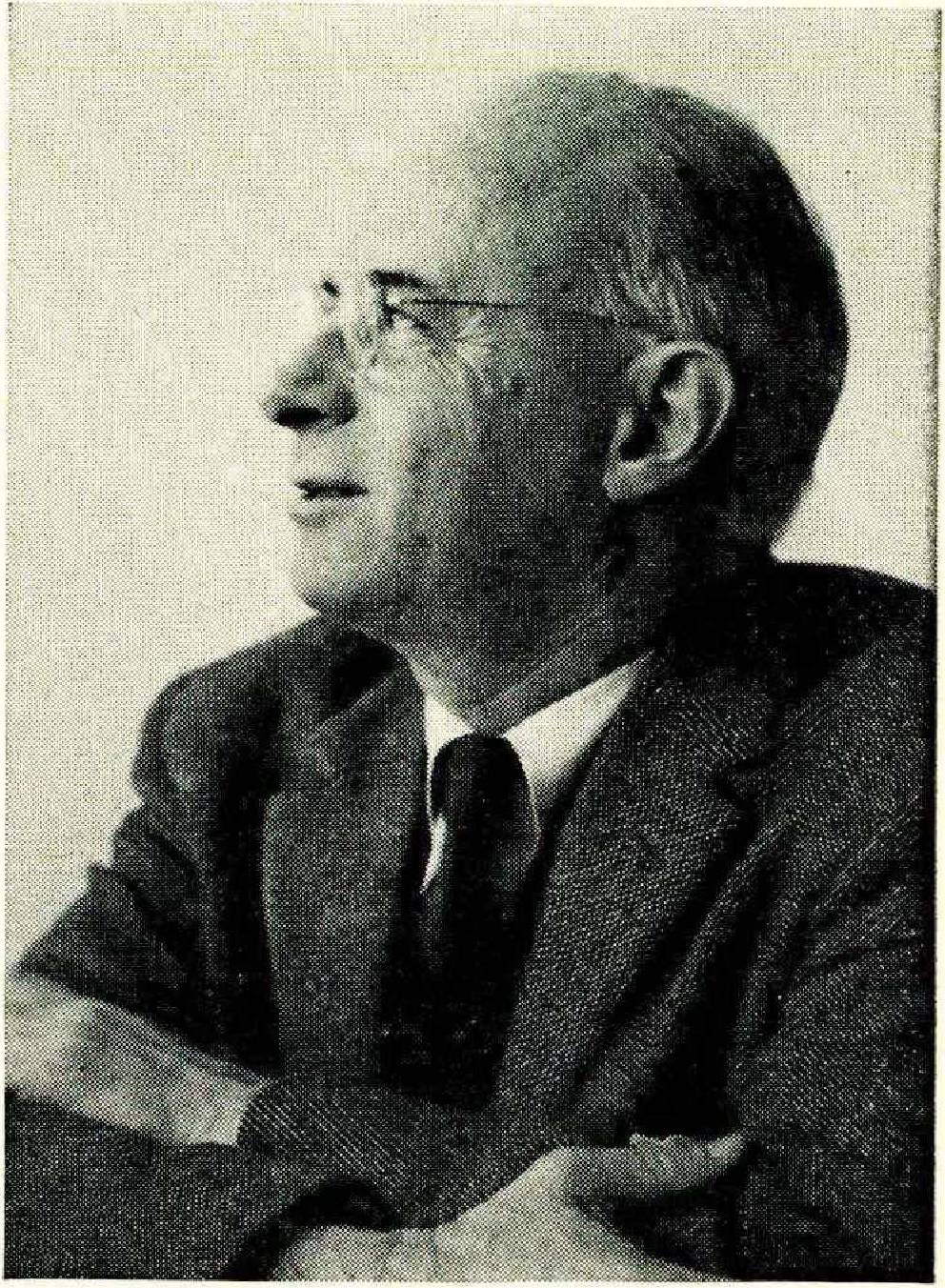
Louis Kronenberger, ATLANTIC critic and essayist, here examines an art that is frequently pronounced dead, yet somehow manages to stay alive and to take on added fascination in the age of the telephone, the tape recorder, and the communications satellite.
LETTER-WRITING is commonly bemoaned as a lost art, for which explanations abound. Where people once wrote letters, they now make long-distance calls. Press, radio, and television now broadcast news that letters once did much to supply. And most people, if they do write letters, dash them off or dictate them; seldom take the time, or have the time, to be interesting in what they say or engaging in how they say it.
But, though the fashion of writing letters may have ceased, surely the fascination in reading them continues. It is easy to see why: whatever their century, they can bring us very close to things; can trade in lively chitchat and anecdote, go in for confidences, tell more about the writer than they meant to tell, and, if they reach us from far-off times or places, convey the picturesque and parenthetical details that are elsewhere so hard to come by. Such varieties of subject matter, which are the brawn and marrow of most good letters, often constitute one of the lighter forms of literature at its best. Less frequent, but alone able to be great, are the letters— moving, enveloping, enlarging—dictated by deep purpose or emotion, inspired by crisis, ignited by events. But these are almost always single great letters; they do not predominate with even the greatest letter writers.
Today’s pressures, its headlong speed and hurry, argue letter-writing to be an expiring art. Yet I doubt that it is. It has, certainly, become a neglected “accomplishment”; people no longer cultivate it as a social grace or consent to it as a personal duty. But there is no need to think it a lost art. For, though we perhaps cannot speak with authority about letter-writing today, certainly yesterday and the day before it was brilliantly alive. From Henry Adams and William James to Chekhov and Van Gogh and John Jay Chapman, and from them to Rilke and D. H. Lawrence and T. E. Lawrence, there was magnificent letter-writing, and of many kinds. And all these years and earlier — in fact, since just about the advent of the postage stamp — letter-writing has been glibly mourned as done for.
As for mourning the “neglected accomplishment,” there is perhaps small need. What such letter-writing often produced was a too genteel sprightliness, a too provincial cleverness, a watercolor prose. The Victorian ladies whose treasured letters were passed from hand to hand were often a politer version of the Lyndonian women who today lead discussions at the Clef and Crayon Club. Still, women do tend to be better at letter-writing than men; more graceful and conversational, more sinuous at gossip. But with this, as with other minor arts — gardening, decor, cookery — though women in general are better, men on the whole are best.
Moreover, a number of such men, of the very best letter writers, quite demolish the chief explanations for letter-writing’s decline. No one led a more intense or active life than Byron or Dickens; yet, with no help from phones, typewriters, or probably even fountain pens, they produced a staggering amount of literary work and wrote a staggering number of letters. Clearly the whole thing has to do, not with the time at one’s disposal, but with temperament and with talent.
To define that talent in terms of a distinguished letter writer is difficult, since we must first, I think, define what makes a genuine one as against one whose letters, despite their salutations and signatures, are really not letters at all. A gift for words, even for wit, is not quite the test; and certainly solid content is not. Despite notable exceptions, the true letter writer, I would think, sounds a human note, achieves an easy tone, creates a personal (even tête-à-tête) relationship. The eighteenth-century masters of the form felt a highbred obligation to please, even to act as a sort of epistolary host or absentee gay dinner partner. If this defines just one good kind of letter writer, it equally disbars a bad kind: people who, whatever their gifts, hold forth, pontificate, grind an ax, preach a sermon, or already envisage their letters in book form.
In the end, the good letters that bespeak care, thought, social effort may be no more successful than the good relaxed and even slapdash ones. For these can be sheer talk (with no fear of interruption), sheer opinion (with no fear of contradiction), sheer impromptu (with no fear about form or syntax). In them we hear an actual voice, now raised, now lowered, now laughing; the whole thing completely unstudied. The whole thing, as a result, manages to be literature by virtue of not being.
LETTERS go on and on being published, republished, definitively published, though not necessarily as high points in letter-writing. Thus Ford Madox Ford’s recently published Letters, edited by Richard M. Ludwig, have decided interest for what they tell of the man and his career, decided value for what they tell of literary life from the 1890s to the 1930s; but they never transcend their subject matter. On the other hand, a new onevolume edition of not so much the letters as excerpts and snippets from the letters of that Jacobean man-about-town, man-about-court, man-aboutcountry-houses, John Chamberlain, is agog with once big news, once ripe rumor, historical anecdote, and period bric-a-brac. It abounds in tidbits like this about Pocahontas, after she became the rage in England and just before her death there:
With her tricking up and high style and titles, you might think her and her worshipful husband to be somebody, if you do not know that the poor company of Virginia, out of their poverty, are fain to allow her four pound a week for her maintenance.
Three definitive editions of letters particularly claim attention, one of them far along in its vast career, two others just getting under way. In the great Yale edition of Horace Walpole’s correspondence, Volumes XXXII—XXXIV, extending from 1761 to 1797, contain his letters to the Countess of Upper Ossory. These chronicle, with the courtliness, acidity, and verve of a greater man-abouttown, -court, and -country-houses than John Chamberlain, the patrician doings and misdoings of their day; and no letters of Walpole’s offer better proof that his gossipiness is the capstone of his greatness. His forte at letter-writing does not quite jibe, however, with the format of his letters. The three volumes are magnificent in their detailed scholarship, and munificent in their sharing it with others. But even for cultivated readers, the lively text is so riddled with footnotes as for research to upstage reading, and genealogy to lord it over the text. Wilmarth S. Lewis, the editor and great Walpole expert, may be right in feeling that such myriad footnotes don’t constitute “breaking a butterfly on a wheel”; less certain is that fourteen footnote numerals in nine lines of text don’t resemble a lot of small dead insects on a page. Yet one would more happily acclaim this edition on its own terms were readers better served on theirs; were there, or were there to be, a well-chosen, judiciously edited, not too costly Walpole in four to six neat volumes. But there isn’t, and a delightful letter writer remains ill favored in the realm of Literature, which Walpole himself would have been the first to set above scholarship.
Just off the press is Volume I of the Letters of Walpole’s older, almost as notable, but not so well known contemporary Lady Mary Wortley Montagu (1689-1762). Robert Halsband, who wrote the standard life of Lady Mary, has edited the letters with great authority and scholarship and has scrupulously kept the footnotes below the Plimsoll line. My one small reader’s complaint is that by following Lady Mary’s original, often all too original, spelling, he gives something of an andante pace to a text in itself allegro vivace.
The daughter of a duke, Lady Mary became the wife of a Whig ambassador to Constantinople. While there, she penetrated the harem; from there, she contrived the letters that were first to bring her fame; and from being there, she introduced into England the Turkish custom of inoculation against smallpox. A gorgeously quarrelsome woman, she found letter-writing the best preservative of her friendships and a splendid outlet for her talents. In middle life she and her husband separated, to meet no more, but to correspond with pleasure for twenty years. Moving, a kind of gypsy grande dame, restlessly and observantly about the Continent, Lady Mary became, as time passed, both scandal and legend, and at length an illustrious freak and slattern. Told at the opera that her hands were dirty, she answered: “You should see my feet.”
This first volume of her letters carries Lady Mary through her Turkish years, chronicling her beleaguered, often spitfire courtship, her elopement and first years of marriage in England, and her early European travels. Here she is writing to Lady Rich about life in Vienna:
That perplexing word reputation has quite another meaning here than what you give it at London, and getting a lover is so far from losing, that ‘tis properly getting, reputation — ladies being much more respected in regard to the rank of their lovers than that of their husbands. But what you’ll think very odd, the two sects that divide our whole nation of petticoats are utterly unknown. Here are neither coquettes nor prudes. No woman dare appear coquette enough to encourage two lovers at a time, and I have not seen any such prudes as to pretend fidelity to their husbands. . . . In one word, ‘tis the established custom for every lady to have two husbands, one that bears the name, and another that performs the duties; and these engagements are so well known that it would be a downright affront and publicly resented if you invited a woman of quality to dinner without at the same time inviting her two attendants of lover and husband, between whom she always sits in state with great gravity.
Finally, there is recently published the first volume in an immense edition of Shaw’s letters. Here is a writer and letter writer every bit as prolific and lively as Byron or Dickens, and needing annotation as much as Walpole or Lady Mary, Shaw’s very able editor, Dan H. Laurence, has found a method that serves specialist and general reader equally well — namely, introductory material throughout, conveying, at times in narrative form, all varieties of information. This first of four volumes, which runs to 877 large pages, takes us from 1874 to 1897, or to a Shaw just past forty. It concerns a number of his romantic attachments (he was a virgin until twenty-nine); his career as art, music, literary, and drama critic; his personal and platform career as a Socialist; his novelist years, and far more abundantly, his early playwriting ones; and much writing to Ellen Terry and to Charlotte Payne-Townshend, his future wife. Already Socialism’s most unflagging businessman (a volume of letters could emerge from his publishers’ files alone), here as elsewhere he is generally ebullient, stimulating, exasperating. Almost everything being quotable, but very little outstandingly so, I have ended by opening the book at random:
I have lost my father and my sister, with whom I was on excellent terms; and I assure you their deaths disturbed me less than a misprint in an article. If my mother dies before me, I am quite sure that I shall not be moved by it as much as I was moved by your poem on the death of your mother. The inevitable does not touch me; it is the non-avoidance of the evitable, the neglect of the possible, the falling short of attainable efficiency, clearness, accruacy, and beauty, that set me raging.
Shaw is not among the best or truest letter writers, his letters being too often Epistles to the Thespians, or the Fabians, or the Philistines. This book is a feast, but at one of Literature’s more public and voice-carrying tables. Shaw in his letters is unmistakably himself, only there is no really private self. Too often the touch is a trifle metallic, didactic, forensic; the face too prominently, or too protectively, bearded. The letters constantly offer witty advice, but still advice; deliberate performing, but still performing; goodhumored bullying, yet bullying for all that. But this vast unwearied outpouring will prove on many grounds indispensable.
How letter writers should be classified and ranked means far less than how diversified and rewarding, in subject matter, tone, and appeal, are good letters themselves. Thus there are the letters that may be said to lack subject matter — by no means the least talented. We find Walpole, Gray, Lamb, Edward Fitzgerald often making an art of necessity, of bricks without straw, of lives without incident. Lamb will start a letter:
I have been to a funeral where I madea Pun, to the sternation of the rest of the mourners.
Or he will end one:
Your sister Hannah spoke 34750 words in twenty or twenty-and-one minutes last Saturday. There was a man with me who took them down.
At the farthest remove from this are those letters — in Keats, Flaubert, Henry Adams, Rilke at their best — that have resonance, penetration, distinction, and which no excerpting can do justice to. Even so, much emerges from the end of a long letter of Rilke’s on Cézanne:
9 October 1907
Suddenly, this old man [is] deep in his work, painting nudes entirely from old drawings he did forty years ago in Paris, knowing that no model would be permitted him in Aix. . . . So he paints from his old drawings, and lays his apples on counterpanes . . . and places his wine bottles in between. And (like Van Gogh) makes his “saints” out of such things; forces them, forces them to be beautiful. . . . And sits like an old dog in the garden — the dog of a vocation that summons him again, and beats him, and lets him go hungry. And he clings, with all his strength, to this unfathomable master, who only for a while on Sunday lets him turn back to God, as to his previous master. — And outside the people say “Cézanne” and gentlemen in Paris write his name with a flourish, proud of being in the know.
Here is Henry Adams on “the least imaginative people I ever met,” the Samoans:
They are pure Greek fauns. . . . As LaFarge says, they have no thoughts. They are not in the least voluptuous . . . they live a matter-of-fact existence that would scare a New England spinster. Even their dances — proper or improper — always represent facts. . . . Old Samasoni, the American pilot here . . . tells us that the worst dance he ever saw here was a literal reproduction of the marriage ceremony, and that the man went through the entire form, which is long and highly peculiar, and ended with the consummation — openly before the whole village, delighted with the fun — but that neither actors nor spectators showed a sign of emotion or passion, but went through it as though it had been a cricket match.
The epistle royal perhaps deserves a word. A great bad letter writer who, read in bulk, is quite wonderful (for she keeps growing on you) is Queen Victoria. In her letters, all the words that should be omitted are underlined instead; the least pointed of styles produces the most exclamationpointed; and there are constant shuttlings and shifts from a Hausfrau, to a Queen, to a Queen in Alice in Wonderland. No one, conversely, could be more grandly curt than Good Queen Bess to the Bishop of Ely:
Proud Prelate: You know what you were before I made you what you are now. If you do not immediately comply with my request, I will unfrock you, by God.
This brings up epistolary mayhem in general: it is probably the most surefire category to quote from, malice, defiance, and anger being as immediately pungent as garlic. Here Dr. Johnson’s letters to Chesterfield and Macpherson are too famous; Swinburne’s to Emerson is too shrill; Stevenson’s to Dr. Hyde is not really a letter; Franklin’s to Strahan only counts for the wag of its tail:
You are now my enemy, and I am Yours,
B. Franklin.
Let me offer a modern poisoned dart (which, so to speak, boomeranged) from the odious Edmund Gosse to the editor of the Revue des Deux Mondes:
June 7, 1924
I should very much regret your paying Mr. Joyce the compliment of an article in the Revue des Deux Mondes. You could only express the worthlessness and impudence of his writing, and surely it would be a mistake to give him this prominence. I have difficulty in describing to you, in writing, the character of Mr. Joyce s morality . . . he is a literary charlatan of the extremest order. His principal book, Ulysses . . . is an anarchical production, infamous in taste, in style, in everything. . . . He is a sort of M. de Sade, but does not write so well. . . . There are no English critics of weight or judgment who consider Mr. Joyce an author of importance.
But let us conclude on a different note, with one of the most moving of farewells, and in its own way one of the truest and tenderest of love letters. Here is William James, writing from Europe to his dying father, whom he — rightly — feared he would not see again:
We have been so long accustomed to the hypothesis of your being taken away from us, especially during the past ten months, that the thought that this may be your last illness conveys no very sudden shock. You are old enough, you’ve given your message to the world in many ways and will not be forgotten. . . . I should like to see you once again before we part . . . just to tell you how full of the tenderest memories and feelings about you my heart has for the last few days been filled. In that mysterious gulf of the past into which the present soon will fall and go back and back, yours is still for me the central figure. All my intellectual life I derive from you; and though we have often seemed at odds in the expression thereof, I’m sure there’s a harmony somewhere, and that our strivings wall combine. What my debt to you is goes beyond all power of estimating — so early, so penetrating and so constant has been the influence. . . . As for us, we shall live on each in his way — feeling somewhat unprotected, old as we are, for the absence of the parental bosoms as a refuge, but holding fast together in that common sacred memory. We will stand by each other and by Alice, try to transmit the torch in our offspring as you did in us, and when the time comes for being gathered in, I pray we may, if not all, some at least, be as ripe as you. As for myself, I know what trouble I’ve given you at various times through my peculiarities; and as my own boys grow up, I shall learn more and more of the kind of trial you had to overcome in superintending the development of a creature different from yourself, for whom you felt responsible. . . . It comes strangely over me in bidding you good-bye how a life is but a day and expresses mainly but a single note. It is so much like the act of bidding an ordinary goodnight. Goodnight, my sacred old Father! If I don’t see you again — Farewell. Your
William.