The Peripatetic Reviewer
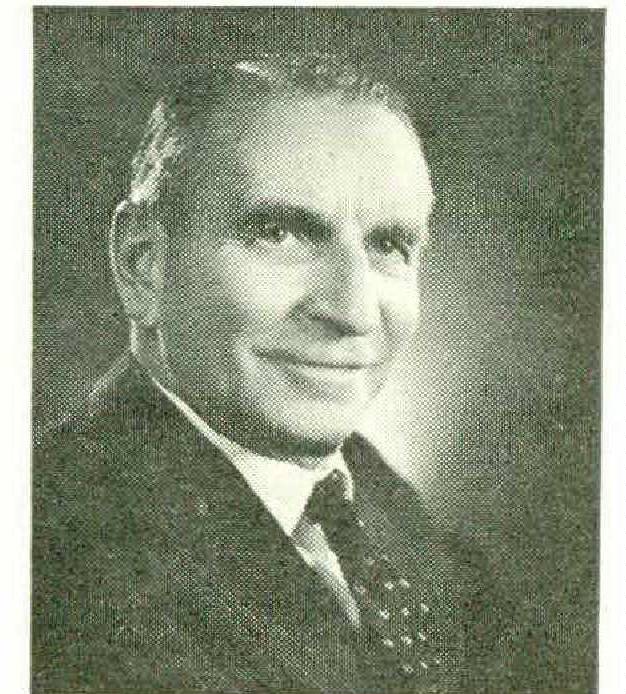
BY EDWARD WEEKS
BECAUSE the state of Arizona needs water, it is proposing to mutilate the Grand Canyon by damming the lower Colorado River, the stream which runs like a main artery through that miraculous gorge. Since this is a quick-time deal, the proponents are careful in the newspaper publicity and the lobbying in Congress not to mention the Grand Canyon, which might give an affront to some, referring instead only to the pretty names of the dams to be built. These dams, mind you, won’t supply the water Arizona wants; they are supposed to supply the hydroelectric power from the sale of which will come the money to finance the multibillion-dollar Southwest Water Plan. The whole scheme is projected on a series of doubtful premises: 1) that the hydroelectric power thus generated will find a ready market for many years to come, 2) that no other sources of water are discernible within the decade, and 3) that no one cares what happens to the Grand Canyon. I submit that this is a matter of concern to many more than the citizens of Arizona, and that those who operate in what Secretary Udall calls “a sort of bureaucratic trance” should reconsider.
Certainly Arizona needs water; the need has been as apparent as the nose on your face since the late forties, but need has not slowed down the zeal of the realtors intent on building up Phoenix and Tucson, or caused any less wasteful use of water, common to the more abundantly supplied East. What the need has produced is this quicktime scheme now being so quietly engineered by the Bureau of Reclamation.
It will take ten years to build those dams in the Grand Canyon. The Bureau of Reclamation cannot guarantee that the dams will not be obsolete before they are finished. It cannot guarantee that in ten years the hydroelectric power they hope to generate will be as cheap or as salable as the power from oil, gas, coal — or atomic reactors. It cannot guarantee that by 1975 the conversion of salt water into fresh will not have gone far to rescue Arizona from its present plight. What it can guarantee is that the dams it plans in Marble Gorge and at Bridge Canyon, within the Grand Canyon, “would destroy,” as David Brower, executive director of the Sierra Club, says, “not only the living river but also the unique life forms that through the ages have come to depend upon the river’s life. The major part of the canyon walls would still be there, but the pulsing heart of the place would be stopped.”
Down through the millennia the Colorado River carved a mile deep to create the Grand Canyon, and the river will go on shaping it unless it is mucked up and baked dry by the bureau. Standing on the rim in 1903, Theodore Roosevelt said, “In the Grand Canyon, Arizona has a natural wonder which, so far as I know, is in kind absolutely unparalleled.... I want to ask you to do one thing in connection with it in your own interest and in the interest of the country. . . . Leave it as it is. You cannot improve on it. The ages have been at work on it, and man can only mar it.”
The Bureau of Reclamation and the Army Corps of Engineers regard themselves as the only “pros” who know what’s best for the future, and we who dare question their objectives are the “amateurs,” to be brushed aside, as Rachel Carson was brushed aside by the drug manufacturers, as “sentimentalists,” “conservationists in their ivory towers.” This struggle between the pros and the amateurs, between those who serve the quick demands of urban growth and those who heed the long obligation of our national heritage, has been intensified since 1946, and it will be constantly renewed. Both sides have learned one thing: when the people are aroused to what is at stake, the planning slows down. When the enormity of General Pick’s plan for damming and flooding the Missouri River basin was at last comprehended by the many communities involved, the plan was rejected. Under these circumstances the pros resort to propaganda and disguise, hoping their plans will be endorsed by Congress before there is an outcry.
The most powerful and trustworthy of the vigilantes is the Sierra Club of San Francisco, founded by John Muir and still fighting to preserve the Redwoods, the National Parks, or a vulnerable national monument like the Canyon. Books are their weapons, books like TIME AND THE RIVER FLOWING: GRAND CANYON by FRANCOIS LEYOET (Sierra Club, $25.00), with its magnificent color photography of the walls, the ever varying riverbed, the Colorado in all its moods, and the interrelation of plant and animal communities. Pictures and text emerge from a boat trip a year ago down the Colorado River and through the great gorge from Lee’s Ferry to Lake Mead, which is the main strand of the narrative, but Mr. Leydet digresses to describe the Mountain Meadows Massacre, to tell how the red men lived here when this was their domain, and to measure the political and economic pressures which were brought under control when the boundaries of the Grand Canyon National Park were originally drawn — and thought to be inviolate.The many photographs —better in reds and purple than in blues and green — record the damage already inflicted on the Colorado River by the damming of Glen Canyon in 1963; braced by the testimony of men like Wallace Stegner and Joseph Wood Krutch, and in full knowledge of the life the river still supports, one wonders how in the Enternal, Washington could vote for its strangulation.
MAX, THE IRONICAL ONLOOKER
To those who were schooled in the 1900s, Max Beerbohm’s caricatures, like his essays, were the work of a perfectionist; his talent may have been a small one, but he exercised it with such wit and style, and he had such glorious subjects to work on — the great figures in England from 1890 to 1930 — that no one thought to question his brilliance. A delightful conversationalist and a dandy, “the incomparable Max,”as Shaw called him, was on his way to being a minor classic when the changes which assailed his beloved London after 1918 drove him to seclusion in Italy. His life for all its flavor was an uneventful one; and to tell it, that fine biographer DAVID CECIL rightly decided to draw as much as possible on Maxs own words and to give us a succession of detailed portraits. I think that his AMt\ (Houghton Mifflin, $6.95) will hold a special fragrance lor those who remember the man and his period.
The first portrait Lord David gives us is of Max the spoiled darling. He was the youngest and much the smallest of five children, a dark elfin creature who matured without adolescence and was the pet of all. One older brother was Herbert Beerbohm Tree, untidy, histrionic — “he could say no to few women, and few women could say no to him” — an actor-manager, extravagantly successful with his own theater, where he entertained the great world and where in the corner of his dressing room so often sat little Max, observing. His handsomest brother was Julius, so exquisite in dress, a gardenia in his buttonhole, with the low-pitched, expressionless voice of a gambler. Max lived by dramatizing himself, and the mask which he cultivated unquestionably owed something to these elders.
After thirteen years of unadulterated happiness, he was sent to boarding school. At Charterhouse he maintained his self-sufficiency. He was proud of his clothes, took great care of his hair; his imagination fed on Edward Lear and Thackeray, and here the drawing which he had begun at eight or nine blossomed into caricatures of his masters and classmates. A few disliked him for his sarcasm, but he was too popular to be bedeviled.
The next portrait is of the Oxford years, and it is a beauty. Dandified, detached, and unathletic Max moved up to what he called “the little city of learning and laughter" at a time when it was fashionable to be aesthetic. Max set a peculiar value on intimacy, and at the dinners of the Myrmidons, in his undergraduate delight in the music halls, in his friendships with Reggie Turner and Will Rothenstein and his admiration of Oscar Wilde, he could be at once the wit and the aesthete. About this period he was to write his most fanciful book, zuleika Dobson, one of the two or three by which he will probably be longest remembered.
He came down from Oxford an immaculate fashion plate with a talent that soon admitted him to literary circles. He contributed to the Yellow Book; was made fun of in Punch; was admitted to an intimacy with Oscar Wilde; fancied himshelf in love with Cissey Loftus, the new star at the Tivoli; and when he succeeded G.B.S. as the drama critic for The Saturday Review and at last began to publish his own work, he was taken up by Edmund Gosse and Henry James. These were the lustrous years, and in a mosaic of reminiscence, letters, and good talk the biographer gives them their true color.
Max’s letters are often revealing. The one to Lord Alfred Douglas warning him not to tempt Reggie is a case in point. But his letters to the women he loved are affected, colorless, and cool, and the protracted period of his courtship gives his biographer a hard time. The humor that went into his brilliant parodies, A Christmas Garland, and the deeper irony that went into his Seven Men seem not to have spilled over into his correspondence. The last portraits of Max as a war refugee in the tiny gatehouse at Abinger and of his autumn in Rapallo are lively because of the reminiscence which visitors like S. M. Berman coaxed out of him, for his talk retained the old magic long after his writing had ceased.
EDITH SITWELL
TAKEN CARE OF by DAME EDITH SITWELL (Atheneum, S5.95), though it is labeled an autobiography, is really more of a medley, a selection of judgments and experiences: remembrances of those she has loved and those who aroused her wrath, glimpses of the British eccentrics who have always delighted her; fine passages illuminating the differences between modern art and art of the past; an interpretation of the literary experiments, such as her Façade, which brought down on herself and her brothers the abuse of the critics; absurdity in action, pomposity in three dimensions, such as the royal visitors to Montefugoni; and, repeatedly and most rewarding, the principles which she has translated into poetic technique and general applicability. It is a book of special meaning to those who knew and loved her.
Miss Sitwell’s childhood had nothing like the happiness of Max Beerbohm’s. Jane, Jane, tall as a crane, was subjected to a good deal of misery by her eccentric father and her pretty, desultory mother. She was not inspired by her schooling; she would not be a debutante; but she did have two lifelong allies in her brothers, Sir Osbert and Sacheverell, and the determination to make her own way as a writer. I wish she had told us more about her declaration of independence — when it came and how received. What she does tell us is of those who helped and of those she was fond of, Gertrude Stein, Pavel Tchelitchew, who painted six portraits of her, Roy Campbell, and Dylan Thomas, whose poetry she championed. She was thin-skinned and when antagonized would retaliate in light, dry, savage satire, as in her sketches of Lytton Strachey, D. H. Lawrence, Percy Wyndham Lewis, and F. R. Leavis. She was tenderhearted, and her sense of a world falling into barbarism was acute. Her last chapter, with its dreadful depiction of a Los Angeles slum — wide, empty spaces, blazing light, dumb derelicts drifting on the wind, “a shrunken world of no horizons" — is a glimpse of the terror she must have felt toward the end. She was a brave woman of impeccable taste.