The Ring
On his graduation from Williams College in June of last year, ANDREW SMITH received the Hubbard Hutchinson Fellowship for creative writing, an award which has permitted him to work on a novel and a musical comedy at his home in Southport, Connecticut.
by Andrew Smith
I WOULD have asked her long ago except that she always got very excited whenever I hinted that it might be a possibility. And if she didn’t get nervous, she got mad and thought I didn’t respect her. Like the time I said, “Francie, sometimes when I see you, you fire me up so much that I want to get right down and lick the ground.”
As far as I’m concerned, I like her. But now that we finally got engaged over this ring, I’m afraid I’ll miss something, like the next payment to the First National Trust, and then she’ll probably end up marrying the bank.
When I was in the navy, I learned to type, so that now I can write down a few things that are going on between Francie and me. And if I don’t write it all down I’ll forget it, and if I forget what it’s like at this stage in the game, I sure as hell am not going to remember what it’s like when things cool off in fifty-six years. I think too many people forget what a kick getting married is; after payments, kids, and general change of life set in.
Well, it all begins very quietly and usually among friends, or in a lot of little things which have nothing to do with what Francie calls “concubinal bliss.” For instance, today Francie and 1 went downtown a little to buy some underpants for her father. We have been doing things like that for months, things that should be done by her mother, or by Francie in her lunch hour or on the way home from work. When you start making a big deal out of every little thing that has to be done, like spending all day one good Saturday buying her old man underpants, then it’s time you either got in or got out, because you’re already in it up to your elbows.
When the engagement happened to me, we weren’t buying underpants, but we might as well have been. We were buying ball-point pens for a party between Francie and me, and Frank and Marge, and George and some pig from Portland who was always climbing in the phone booth with him.
Francie is big on games, and for this one she needed six ball-point pens or else she couldn’t put it over. Everything is a production for Francie when it comes to throwing a party. Like, after dinner she’ll only fill the cups halfway with coffee because she hasn’t got any of the doll cups especially made for it.
“Look,” I say. “Why does it have to be pens? What’s this game called, Signing Checks?”
“It’s called Battleship, and pens are better,” she says.
“But I know a caddy master who’ll give me a thousand pencils for free,” I say. “You could use a different one for each word.”
“Do you want to appear like a bum in front of your brother?” she says.
“I’ve appeared like worse in front of him, and I don’t see why I should start buying ball-point pens for Frank now,” I say.
“You don’t seem to understand that pens are better for a game you play after dinner,” she says.
“I know a better game,” I say.
“What’s that?” she says.
“Dessert,” I say, “and all you need is a spoon.”
We are arguing in the middle of Alfie’s stationery store, and the clientele is taking it for a big laugh.
“Why do you embarrass me every time we go out of the house?” she says.
“I’m not embarrassing you,” I say. “I’m trying to educate you.”
“Well, don’t educate me; just buy these pens,” she says.
I pick up six ball-points and walk over toward the cashier,
“Battleship,” I say. “Sounds like a great game. Will it ever replace night baseball, Francie? Do you remember in the old days when all we did was neck?”
This last line I deliver to the cashier, who gives me a look with his eyebrows. Meanwhile, Francie is still shopping around.
“Will that be all?” he says.
“Will that be all, Francie?” I say.
“Would you buy me this book?” she says.
“What book?” I say.
“This Sex and the Single Girl,” she says.
“No,” I say.
“Why?” she says.
“Because there’s no such thing,” I say. “It’s folklore.”
“What do you know about it?” she says.
“In your case, plenty,” I say.
“Like what, for instance?” she says.
“Like, for instance, you’re not the single girl you used to be,” I say. “And you never were.”
So while I pay the man and watch him fumble through eighty paper bags trying to find the right one for pens, Francie storms out to the sidewalk and stands facing a telephone pole with her arms folded.
When I come out, I can see that she is really fuming, so I walk up behind her and put my hands on her belt.
“Don’t lock your jaws on me, Francie,” I say. “Come on, I’ll buy you an ice cream.”
“Maybe you’d like to do everything yourself,” she says.
“Not a chance, Francie,” I say. “You know I’m not that kind of guy, and besides, it’s against my religion. But there’s nothing that says we can’t plan on getting married. We’ll announce it here on the telephone pole like everyone else.”
Unfortunately, there were a few other things announced on the telephone pole besides love, which didn’t make my intentions appear any too honorable. But it was enough for Francie, and I could see her whole body relax. She put her hand behind her neck and smiled like somebody had just took off her shoes.
“Now what made you say a thing like that, Art?” she says.
“Well, as a matter of fact,” I say, “I said it to keep you off the street. Now let’s go home.”
“See, I knew you were kidding me,” she says, and her mouth turns upside down like I just took a lollipop out of it.
“Who says I’m kidding?” I say. “I’ll marry you right here on route two if that’ll make you happy.”
“Well, do you mean it or not? Marriage is not for laughs,” she says.
“Yeah, I know,” I say. “It’s forever. Wait a second.”
So I walk up to the drugstore to think it over and happen to look in the window, and there’s a diaper rash display looking back at me. My stomach pops at that for a few seconds, and I turn back down the street. Just before I reach Francie, I reach the department store where they are dressing and undressing the models in the window. Now this appeals to me more than the diaper rash, and I stand there and soak it up a little while I’m trying to decide exactly what to do.
Well, Francie decides it for me, because she comes up and starts rocking back and forth on her shoes. And every time she rocks she gives me a nudge, and every time she nudges I nudge her back, so that in no time at all we’re pushing and shoving and leaning up against one another like two kids. Francie gets laughing out loud, and everybody else on the street is generally getting their kicks watching us. It was very jolly there on the sidewalk.
“OK,” I say, “let’s go buy an anklet or a photoident bracelet.”
“That’s the nicest thing I’ve heard in six months,” she says, and starts blowing her nose.
Switzer’s Jewelry happened to be unfortunately close by, so Francie drugged me around the corner with one hand while she was crying with the other hand.
“Try this girl on for a ring,” I say.
“Are you and the young lady interested in an engagement ring?” the jeweler says.
“Not exactly,” I say. “But we’d like to buy one.” Francie is still crying, but she manages to navigate over to the diamond rack. Looking over her shoulder, all I can see is zeros.
“That one,” she says, pointing.
“Which one?” I say.
“If you are interested in a fine stone, perhaps you would like something from our private collection,” the jeweler says, going into the back.
“What did you point at?” I say.
“Just that medium-small one on the left,” she says, taking a long sniff and then crying it up again. The jeweler comes in with a tray of boxes.
“Perhaps this will suit the young lady,” he says, and opens one of the boxes.
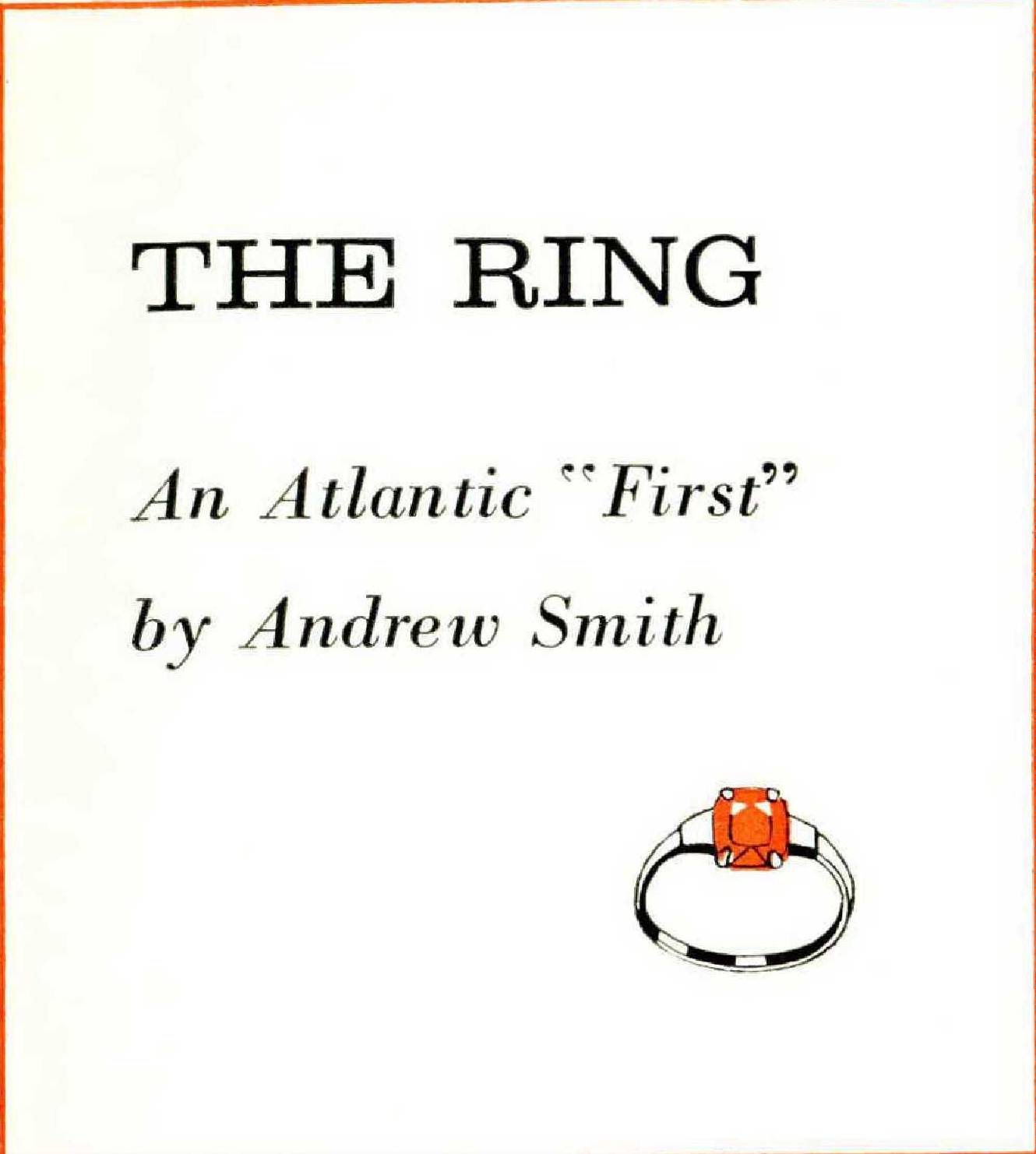
There was one of the loudest silences I had ever heard. Francie stopped blowing her nose. What caught us by surprise was that instead of diamond, there was red. And the red spilled out over the box and onto the counter and into her face. Francie reached for it ever so slightly, and the jeweler had it on her finger in a second. Naturally, it was a perfect fit.
“It’s a ruby,” she says. “I love it.”
“Put it back,” I say.
“How much is it?” she says.
“Put it back.” I say.
“Fourteen hundred and fifty dollars,” the jeweler says.
“Put it back,” I say, getting pale.
“Oh, Art,” Francie says. “You can buy it.”
“Sure, I can. Then we’ll go buy the Taj Mahal so you won’t clash,” I say.
“If you buy this for me now, you can wait as long as you want before the wedding,” she says.
“When I get married,” I say, “I want to get married. And not just cash in.”
“We can do both,” she says.
“I don’t make that much money, you know,” I say.
“I know,” she says; “but then again you’re not having that much fun either.”
“We can do both,” I say.
I figured it this way. You only live once, and basically it’s like buying a Volkswagen, where the only thing that depreciates is the driver. And Francie’s good for a few thousand miles in the next forty years.
So that’s the way it happened. Nothing’s changed really. Except that this week we bought underpants instead of ball-point pens. I’m fourteen hundred dollars in the hole; Francie says “we” about eleven times as much as she used to; and everybody thinks what a sport I am for going for a ruby ring. And they’re right, because if I had to do it all over again, I’d be a sport and do it all over again.