A Note on Man-Animal, Animal-Man, and Animal-Animal Perception
It was William James who pointed out that we do not see the bear, become frightened, and run away; but, rather, that we see the bear, run away, and become frightened.
Yet even today, seventy-five years after publication of James’s monumental Principles of Psychology, little has been done to interpret (let alone ameliorate) this position. To be sure, much has been written about becoming frightened, and still more about running away. However, the mechanism enabling us to see the bear is still only imperfectly understood.
Nor are we alone in this regard. For the bear himself, while fully conversant with frightened running, would be ill prepared to say why we see him, he sees us, or even why he sees other bears.
The ultimate why of anything may well exceed our reach, if not our grasp (thus, why do we so often ask ‘"why”?). Yet wc may at least essay the ostensibly more modest, but in a deeper sense more vainglorious, question how this, as well as other things, has come about.
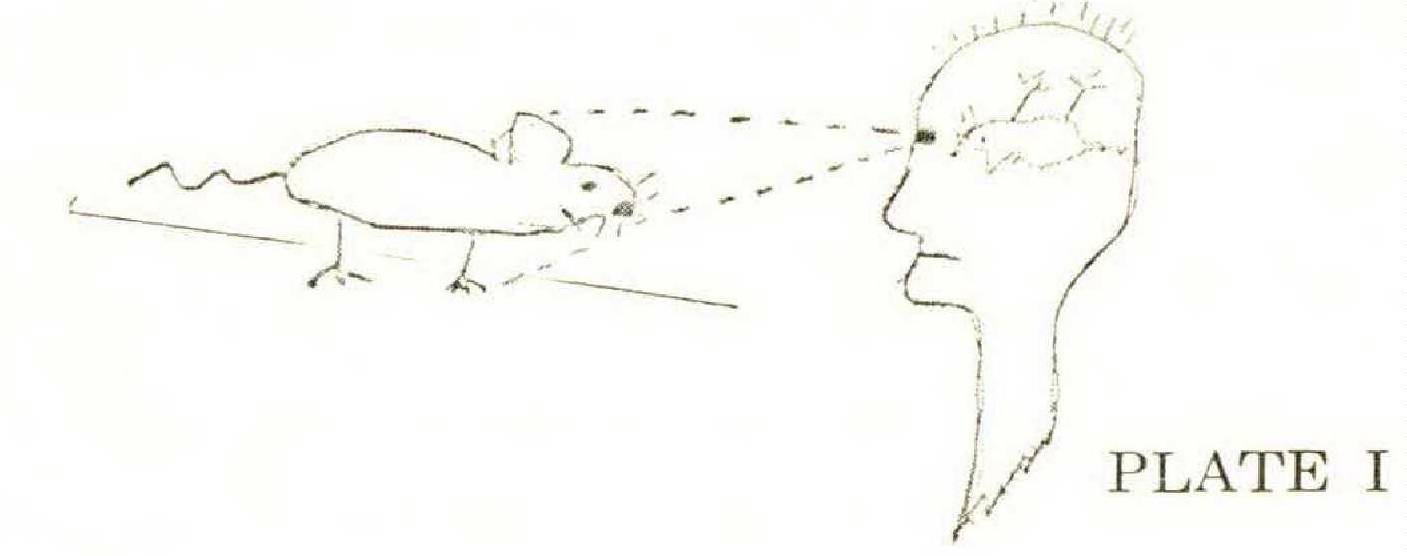
A. Man-Animal
PLATE I shows, in schematic outline, how we see the bear. Actually, the animal depicted is not necessarily a bear, but has been generalized so as to represent any animal of suitable size and shape.
Rays of light (consisting of photons and other lightlike items) leave the extremities of the bear and enter the human eye. Due to some mixup in the eye or the brain or both, an inverted image of the bear is then formed in our heads.
There is some reason to suppose that it is this inversion which is responsible for much of the fright to which James alluded. However, this aspect of the matter is, in reality, beyond the scope of the present discussion.
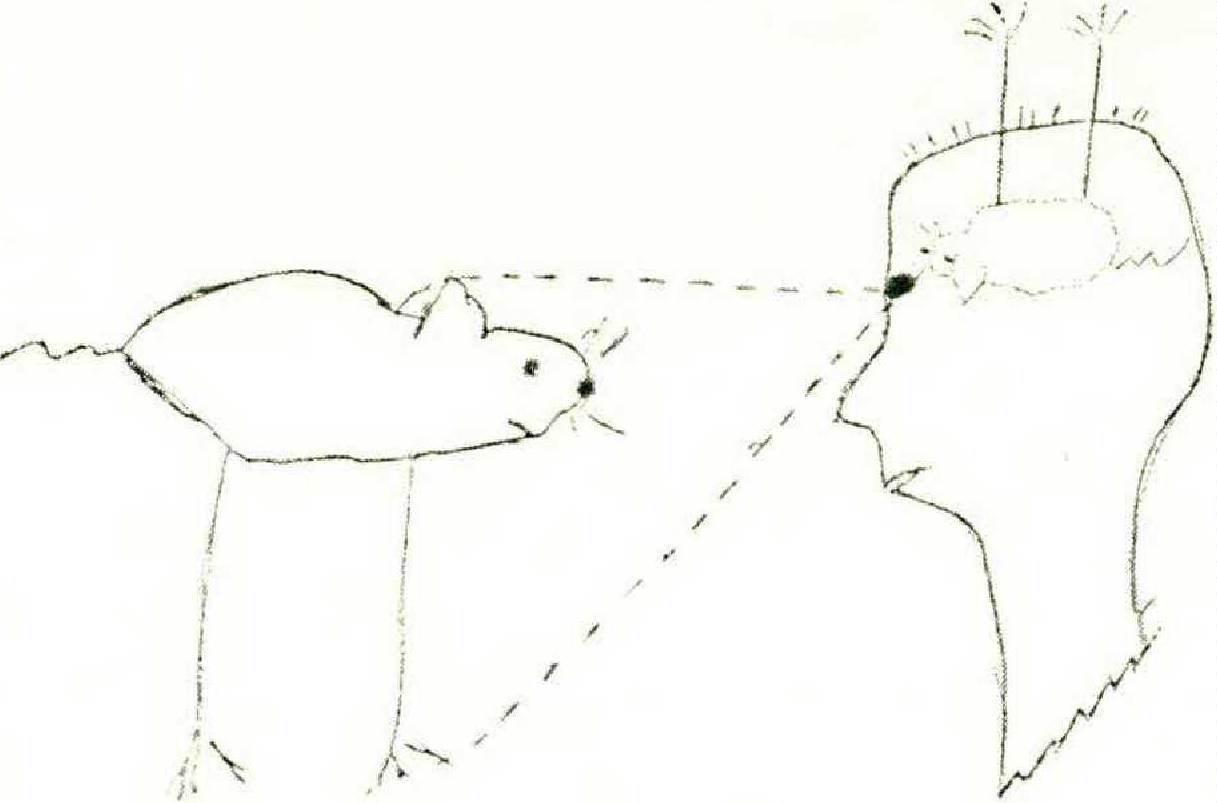
B. Unsuitable Animal
PLATE II. Here the vital importance of not looking at large animals is illustrated. Thus a bear with unsuitably long legs would, as indicated in the plate, form an optical image with the legs (from, roughly, the knee down) protruding upward through the observer’s skull. This could have the most serious consequences.
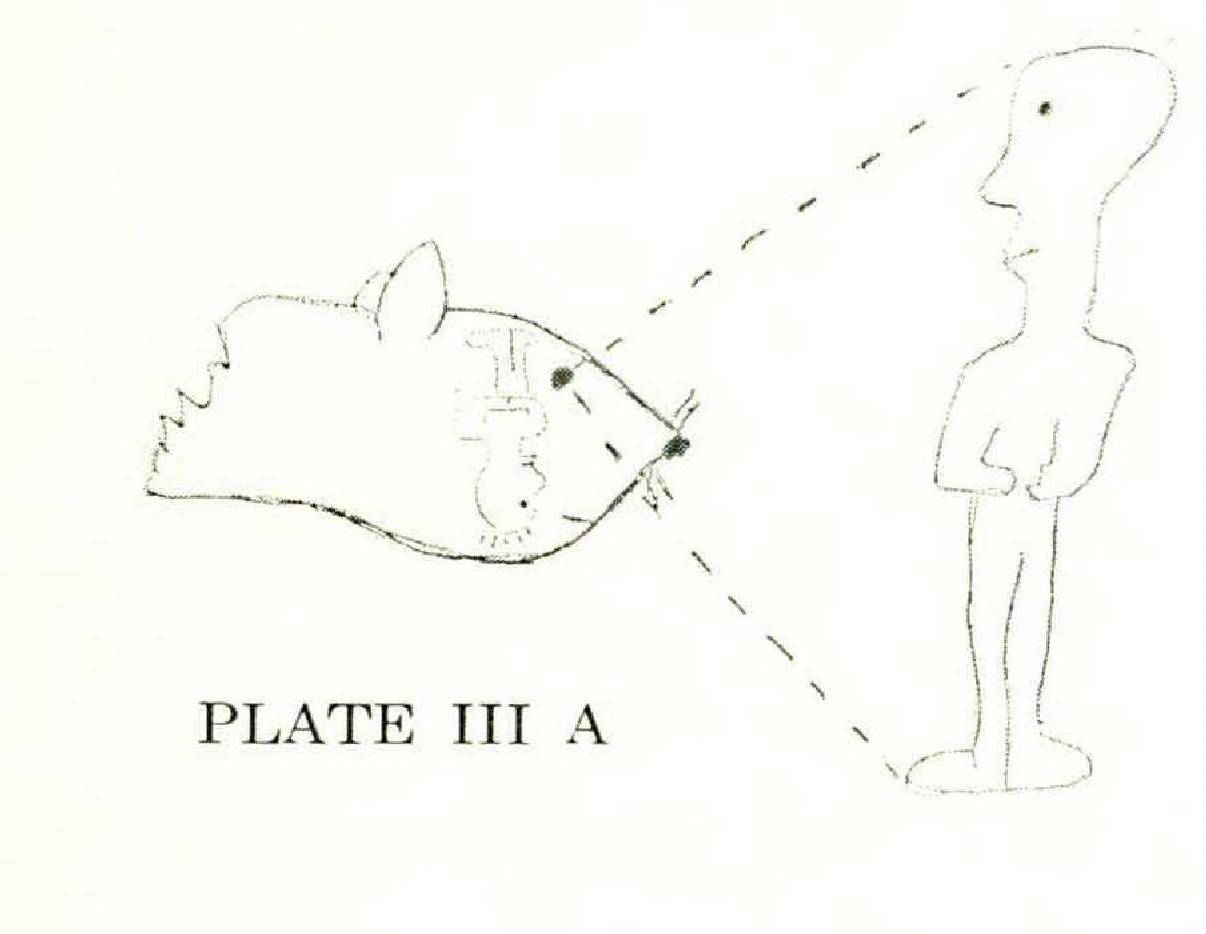
C. Bear’s-Eye View
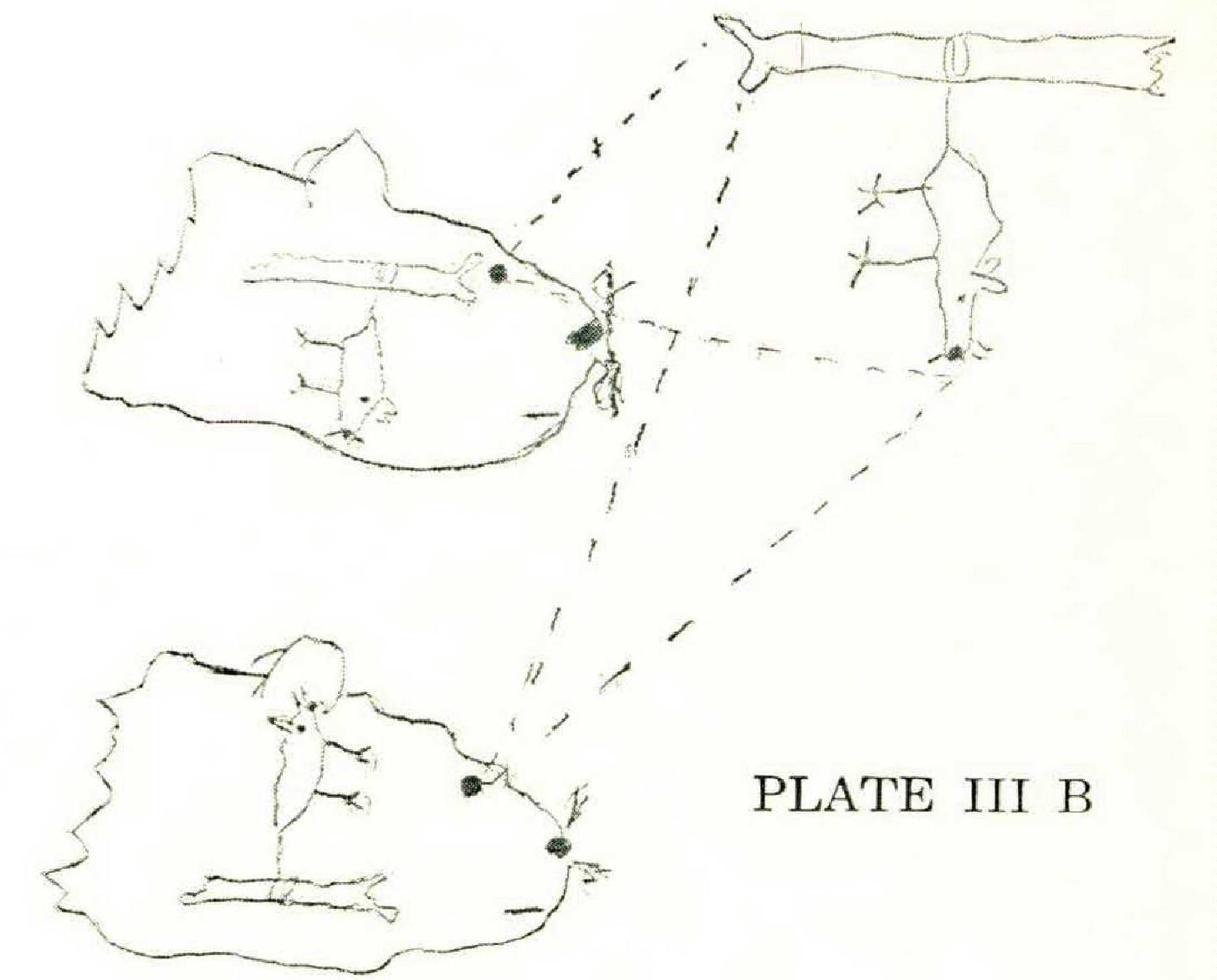
In PLATE II A, a bear is shown seeing a man. Here again inversion of the optical image has, unfortunately, occurred. However, PLATE III B suggests two possible expedients. The bears in the plate are both looking at a tree sloth, which, of course, normally resides upside down. The upper bear is wearing corrective lenses so that his image of the sloth is inverted once by the lenses and then reinverted in his head. As a result he “sees” the sloth as it usually appears in nature.
The lower bear is a wild one whom it was not feasible to fit out in this way. However, as shown by the plate, he sees the sloth right side up, which, in all probability, will prove more satisfactory in the long range.
The question of the sloth’s-eye view of these two bears is far too complex to admit of definitive analysis here. Presumably, however, the problems neither of physical nor of optical inversion would, in this instance, be oi overriding concern. For if the sloth is prepared to accept the inversion of everything else with equanimity, it is difficult to see why an exception should be made for bears.
D. Reciprocally Unsuitable Bears
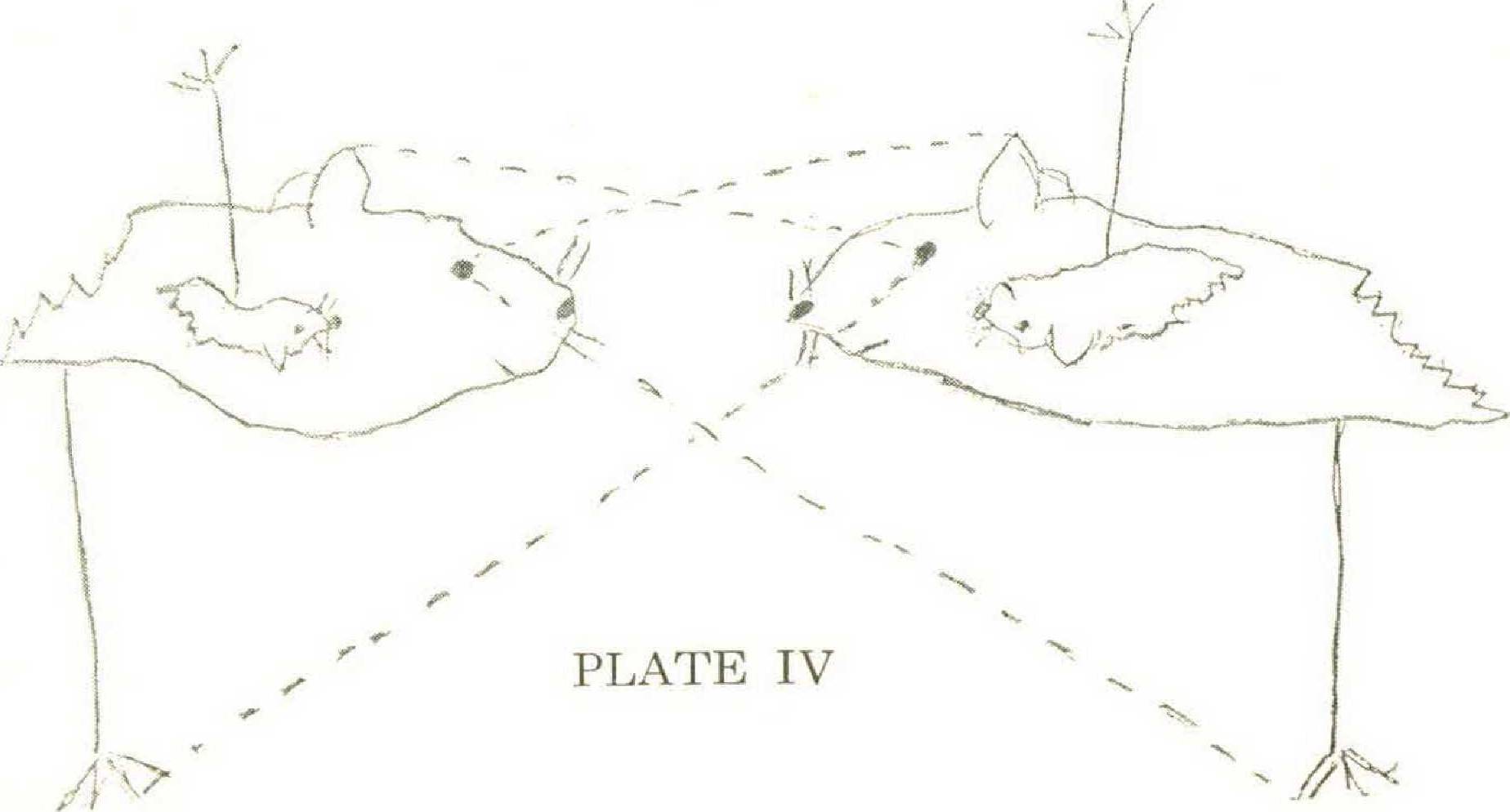
PLATE IV depicts two long-legged bears (actually, animals, as noted above) looking at each other.
As a practice exercise, the reader should list the three salient features of animal-animal perception which are illustrated by this drawing.
The advanced student may also wish to pursue this subject further, by applying the principles set out in this paper to cognate problems such as the worm’s-eye view. (Hints: To a worm, which way is “up”? Do worms see anything worthy of the name?)
E. How to Comb a Horse
Start at the fetlocks, which are at the bottom of the horse, and work up to the top. In the center of the top of the horse, leave an uncombed place roughly circular in shape for the saddle. Don’t waste your time combing this spot, as the saddle would muss it anyway.
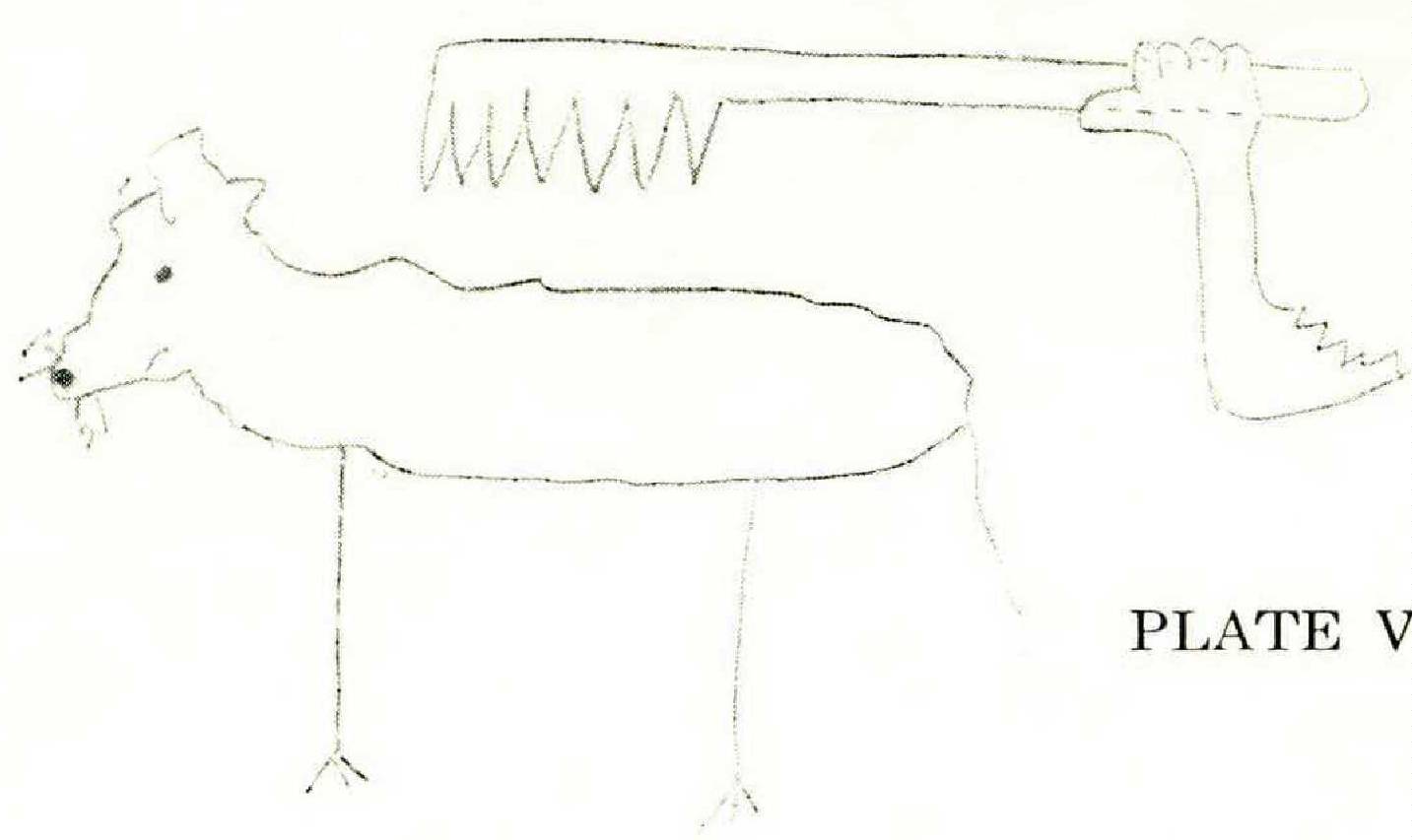
When you have combed top and bottom, comb the front and back. In combing the back it is best to use a rather long comb (PLATE V), for the horse may attempt to hit you with one of his rear supports (legs). Do not crop the horse’s tail. It is needed for removing flies and for balance. If you crop his tail, your horse will fall down and be covered with flies.
On the front of the horse, carefully comb the mane and around the ears. You will not have to comb any whiskers, as horses do not have them. If you find whiskers in front, it is wise to suspect a lion or tiger. Do not under any circumstances attempt to comb a lion or tiger.
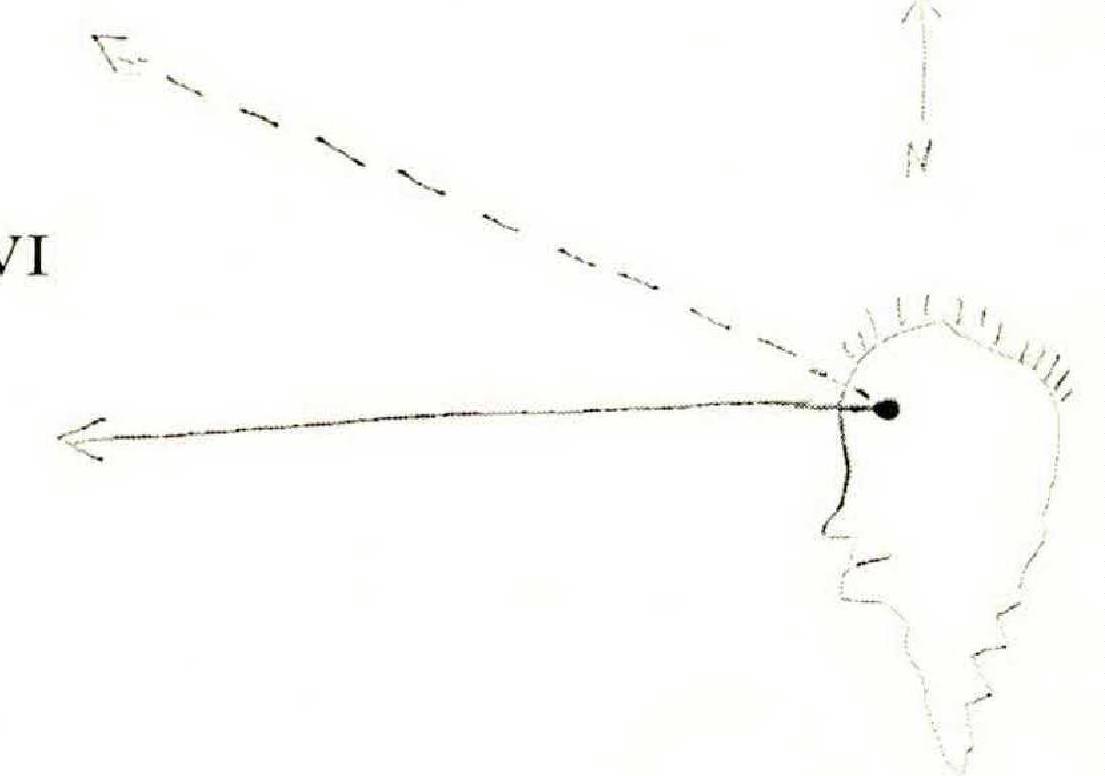
F. Horace Greeley (PLATE VI)
Photographs of this eminent publicist reveal that he was cross-eyed. It is regrettable that this should have been so, for the possibility cannot entirely be discounted that what he meant to say was “Go northwest, young man.”
G. Much (NO PLATE)
In this field, as in so many others, much has been done, but much remains to be done. So much, in fact, that no matter how much is done, much will still remain.
A commencement is not an ending, but a beginning.
A New ) orlc City lawyer and author,JOHN H. SLATEalso hopes to break into the entertainment world with a new television show calledSTUMP THE EXPERTS,in which some exports are hit with some stumps.