The Unions and Their Wealth
A. H. RASKINhas been covering major labor-management developments for the New York TIMES for almost thirty years and is now a member of the paper’s editorial board. In World War II he received the Distinguished Service Medal for his contributions to the army’s labor relations program. His journalistic awards include the Sidney Hillman Memorial Award, the George Polk Award, and the Page One Award of the New York Newspaper Guild.
THE House of Labor, once as Spartan an abode as any cold-water flat in the slums, now is so comfortably cushioned with cash that doorbell ringers from the financial community have become regular visitors. Unions, which only three decades ago were having trouble paying their electric bills, take in and spend nearly a billion and a half dollars a year in dues revenue and exercise an influential voice in the administration of at least three times that much in treasury, pension, and welfare reserves.
Wall Street remains a favorite whipping boy in union oratory, but the union stake in Wall Street has grown substantial enough to prompt increasingly cordial day-to-day relationships. A half dozen of the country’s biggest banks and brokerage houses sent special representatives to fraternize with the delegates at the biennial convention of the American Federation of Labor and Congress of Industrial Organizations in Miami Beach last December. Two months earlier, when the AFL-CIO executive council met in New York, the members of unionism’s power elite were besieged with invitations to lunch or dine in Wall Street board rooms. The extent to which affluence has created new challenges for responsible unionism received the federation’s official cognizance a year ago, when it established an investment department in its Washington headquarters to counsel its 132 affiliates on ways in which union money could earn more money with maximum concern for considerations of safety and social usefulness.
Its action came after the federation had vetoed dozens of schemes for employing union funds to give labor a direct pocketbook control over key sections of industry. The most ambitious of these discarded proposals to have unions turn capitalists in an upside-down species of Marxism was put forward by a pillar of the New York Stock Exchange. He suggested to William F. Schnitzler, the AFL-CIO secretary-treasurer, that each of the organization’s 13 million members be asked to put a dollar a week into an open-end investment trust. The money would be used to buy common stock in a selected list of giant corporations. When the union holding in any single company came to 5 or 10 percent of its total stock issue, the Wall Streeter observed, labor could demand a seat on its board of directors and thus exert a significant influence in shaping corporate policy on union recognition and collective bargaining.
Schnitzler read the proposal with distaste. His response to the broker was an explosive rejection of the notion that unions ought to usurp the functions of management. “If I had suggested that, you’d call me a Communist,” he snapped. He gave an equally chilly rebuff to another broker’s suggestion that all AFL-CIO unions register their stockholdings in a central file as a means of turning the heat on companies involved in strikes or contract deadlocks.
Pholographs courtesy of Wide World Photos.
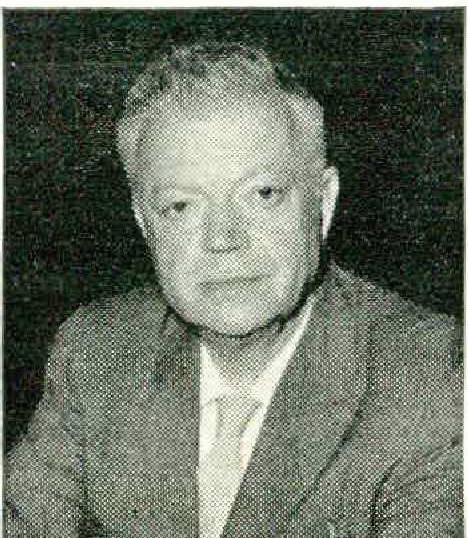
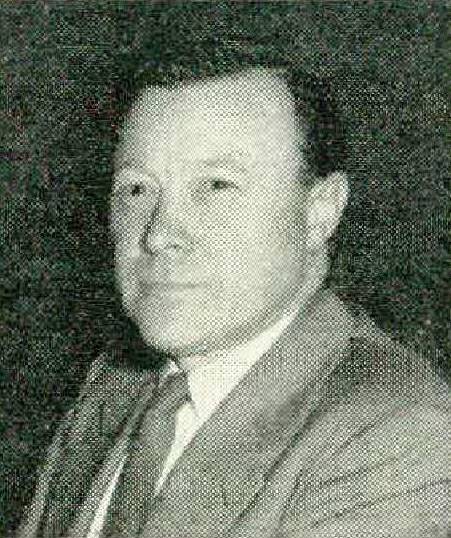
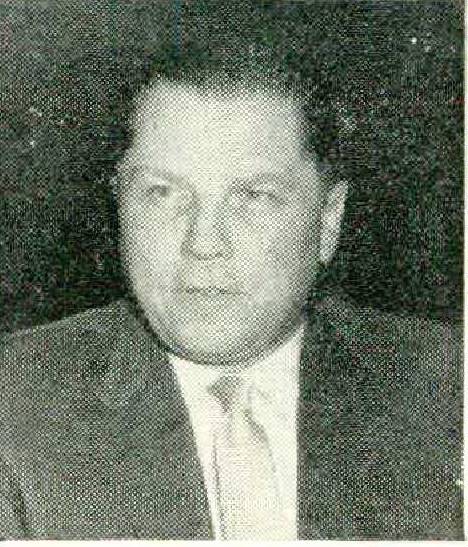
One government official asked a labor leader why unions with sizable reserves did not quietly buy control of one or another of the huge industrial corporations with which they dealt.
After a few moments of strained silence, the unionist consigned the thought to perdition with the crisp comment: “That’s not the kind of responsibility we’re after. It would slow down our fight for higher wages and greater fringe benefits.” Genuine as these protestations are that labor has no wish to become boss in a capitalistic distillation of collectivism, it is far from unthinkable that the piling up of employee benefit funds will eventually force unions toward a dominant role in the ownership of many large companies and the embarrassing necessity of occupying seats on both sides of the bargaining table.
WHO CONTROLS THE FUNDS?
The very speed with which pension money is accumulating provides a powerful impellent for such a breakdown in labor’s traditional reluctance to involve itself in issues of corporate finance. The reserves earmarked for employee retirement benefits already total $55 billion, and this sum is expanding at the rate of $5 billion a year. True, unions now have little to say about how these funds are invested. Ninety percent are administered by trustees selected solely by management. Union trustees have sole control over the handling of less than 3 percent, and the rest are jointly run. Even where the unions do control, their present preference in many cases is to leave investment policy in the hands of banks, consultants, or insurance companies.
However, it is an axiom of union philosophy that all money set aside for pensions is a form of deferred wages that belong to the workers and should be applied in ways that will conform to their ideas of what is good for them and for society. On this basis, there is every ground for expecting that labor will press for a more assertive role in the conduct of funds now under employer command. This will mean more money invested in housing for lowand middle-income families, hospitals, and community facilities. But it will also mean an increased union involvement in the purchase of corporate securities. Self-insured pension funds, with 43 percent of their money in common stock, are the biggest institutional buyers of stock in the United States. The more unions have to say about administering these funds, the more inevitably they will become a significant element in business ownership.
The First National City Bank of New York got a taste three years ago of the manner in which unions can now use the power of the purse as a weapon in much the same way that they have historically used the strike, the boycott, or other forms of mass economic pressure. The bank had declared in its monthly economic review that unions had become a “relatively unregulated type of big business,” with more wealth and power than was healthy for the country. The bank’s prescription for curbing unions was the enactment of state right-to-work laws.
This so outraged New York’s labor leaders that a dozen local unions threatened to call a strike against the bank — a strike not of union men, but of union money. Their plan was to register their anger by withdrawing tens of millions of pension dollars from the bank’s custody. They were not mollified until George Meany, president of the AFL-CIO, was promised “equal time” to set forth labor’s viewpoint in a subsequent issue of the economic review.
His statement denounced the bank for using its depositors’ money to advocate controversial legislation that had nothing to do with banking, characterized the power of bankers as vastly greater than that of unions, and praised unions as the nation’s most dependable bulwark against economic stagnation and class warfare. He took particular exception to the bank’s implied censure of union leaders for having “learned to know and enjoy superior living standards, formerly reserved to successful men in business, the arts, science and politics.” To Meany this sounded like a hangover of “barren feudalistic prejudice” intended to suggest that union presidents had less right to the good life than bank presidents.
UNIONS AS BIG BUSINESS
Apparently unnoticed by any of the union chiefs involved in the episode was the arresting indication it provided of the degree to which unions have taken on the aspect of big business, and in the process, have embraced many of the yardsticks and operating techniques of big business. A few years earlier the combined assets of all the protesting unions would have been so modest that any proposal that they marshal their money as a club to overawe the third largest financial institution in the United States would have seemed totally ridiculous.
Before Franklin D. Roosevelt’s New Deal started unions on their rapid upward climb in the thirties, union treasuries were almost empty, unions had no employer-financed pension or welfare funds, payless paydays were common, and the hair shirt was standard attire for most union officials. When Andrew Furuseth, the gaunt Norseman who founded the Sailors Union of the Pacific, was told in those days that he was going to be arrested for defying a no-strike injunction, he cast an uncomplaining eye around the verminous hall bedroom that was his home. “You can put me in jail,” he said, “but you cannot give me narrower quarters than as a seaman I have always had; you cannot give me coarser food than I have always eaten; you cannot make me lonelier than I have always been.”
Walter Reuther’s first post in the UAW was as president of a Detroit local that had only thirteen members, instead of the fifteen required by the parent union’s constitution. “The rest of us paid the dues of two men who hadn‘t joined yet so we could get a charter,” he explains. When Reuther was elected to represent the local at the UAW convention in South Bend in 1936, one member moved that the entire local treasury be turned over to him for expenses. The woman who served as treasurer insisted on an amendment to compel a full accounting and the return of any unspent money.
When Reuther assented, she fished into her purse and pulled out the local’s assets — a fivedollar bill. Reuther hitchhiked to South Bend, where he shared a hotel room with four other delegates. He was the only one officially registered.
His story has a counterpart in the early career of almost every top unionist. Hunger and hardship were the union builders’ constant companions. Arrests on the picket line, bloody clashes with employer strong-arm squads, week alter weary week of grinding effort with little sleep and never a day off—all these were the norm in a period when it was easy to think of unionism as a crusade. It was not unusual in that turbulent era for union constitutions to specify that the president was to earn no more than the highest-paid mechanic. The pay ceiling had the double purpose of enabling him to understand firsthand what his members needed and of reminding him that the next election might compel him to get used to earning his livelihood in the shop again.
LABOR’S NEW EXECUTIVES
How has affluence changed the character of unions and their officers? The specific answers are as varied as the organizations, the industries in which they function, and the men who head them. For many unions, the security which comes from large memberships, stable bargaining relationships, and plentiful funds has opened increased opportunities for beneficial service to workers, industry, and the general welfare. For others it has opened increased temptations to corruption, slothfulness, and abuse of union strength. Scarcely a week goes by without a fresh sign that the problems of stewardship are growing almost as fast as the funds. How these problems are solved may alter the whole nature of labor-management relations and even of our industrial society.
What is true for unions holds with even more dramatic force for their leaders. The hair shirt has given way to white-on-white broadcloth, imported fabrics, and custom tailoring. The emergence of industry-wide bargaining and the baffling complexity of union affairs have walled even the most zealous officials away from intimate contact with their rank and file.
The man in labor‘s executive suite no longer can get by on an elixir of idealism, energy, and personal magnetism. He must equip himself to deal intelligently with intricate questions of law, banking, corporate structure, business prospects, foreign trade, industrial technology, insurance, staff relations, civic affairs, and politics. He becomes a manager of labor, presiding over a bureaucracy that parallels in many ways the bureaucracy ruled over by the industrial managers he sits opposite in contract negotiations.
Perhaps the best way to gauge the differing impact of money on unions and union leaders is to take a close look at the country‘s two largest labor organizations — the 1,500,000-member International Brotherhood of Teamsters, headed by James R. Hoffa, and the 1,200,000-member United Auto Workers, under Walter Reuther’s leadership. Two organizations and two leaders could not possibly be further apart in their conceptions of what unions are for, how they should use their money, and where the line should be drawn between business and unionism. The difference does not stop with philosophy; it is mirrored in every phase of day-to-day operation.
DAVE BECK OF THE TEAMSTERS
The Teamsters, a union so powerful that few other unions can do without its help in strikes or organizing campaigns, has been banished from the AFL-CIO on charges of domination by corrupt elements. Its exile in 1957 stemmed from a fetid catalogue of misappropriation and misrepresentation drawn up in testimony before a Senate investigating committee. The inquiry revealed a nightmarish perversion of the American dream — mansions, racing stables, costly automobiles, handtailored suits, and a host of other luxuries arrogated to themselves by officials who treated the union’s money as their own. Take the rags-toriches record of Dave Beck, who stepped down as president to make way for Hoffa two months before the federation ordered the whole crew to walk the plank.
When he started driving a Seattle laundry truck in his senior year at high school, he was the penniless son of a carpet cleaner and a laundress. By the time he battled his way to the international union presidency, he had become a millionaire in his own right and had appointed himself labor‘s goodwill ambassador to the business community. The mayor of Seattle proclaimed him the city‘s most distinguished citizen; he was president of the Board of Regents at the University of Washington, Exalted Ruler of the Elks, and a member of the State Prison Board of Parolees.
The management of money — his own and the union’s — became an obsession with Beck. One day, after he had harangued the executive council of the old AFL for an hour on the wisdom of investing union funds in common stock, George Meany commented tartly: “You‘re a good businessman. You belong in the business world, not the labor world.” That was four years before the McClellan committee began letting the world know exactly what kind of businessman Beck was.
The record showed that he had taken $370,000 from the Western Conference of Teamsters with no indication that he ever intended to put it back. It was only after the Internal Revenue Service began checking his accounts that he explained he had always really considered the money a loan. Covering the missing funds involved Beck in a tangled web of borrowing from employers with whom the union had contracts. His ethics were elastic enough to keep this from presenting any worry about conflict of interest. He had already sold his palatial Seattle home to the union for $163,000, with an understanding that he was to occupy it rent-free for life. The sale was made with no notice that the union had supplied the funds to build the house in the first place.
Nothing was too petty or too mean to stir Beck‘s cupidity. He cheated the widow of his closest union associate out of $11,000 in a mortgage deal made with money the union had raised to take care of her. He borrowed $14,000 from two large trucking operators to help set up his son in a toytruck project. There was nothing speculative about this venture to have every Teamster local buy an elaborate model truck for display in its office. The sales announcement was accompanied by a Beck mandate, “Buy or you’ll hear from me.” The result was a net profit of $84,000 for Dave Beck, Jr., and his partner.
The partner was the son of Nathan W. Shefferman of Chicago, a union buster and labor relations fixer for Sears, Roebuck and dozens of other prominent companies. Shefferman was the original “I can get it for you wholesale” man. It was a slogan he applied with equal diligence to getting his industrial clients cut-rate union agreements and his labor cronies bargains in everything from motorboats to wall-to-wall carpeting. Beck was his best customer. The $94,000 in purchases he made over an eight-year period covered such diverse items as bow ties, pillowcases, love seats, golf clubs, a freezer, football tickets, six pairs of knee drawers, and five dozen diapers.
Beck left the McClellan hearings and the union presidency with not the faintest acknowledgment that anything he had ever done was even remotely deserving of censure. His certainty that no Horatio Alger hero could match his rectitude or merit has survived a conviction for filing false union tax returns, which he is now appealing. At latest reports, he was still telling visitors that all his actions were for the good of the Teamsters, that a big union should be run on the same lines as General Motors or United States Steel, and that labor should beware of the “socialistic” ideas of Walter Reuther.
JIMMY HOFFA’S EMPIRE
Beck’s replacement, Jimmy Hoffa, has his own brand of financial unorthodoxy, even though he exhibits little of his pudgy predecessor’s voracious interest in money as the vehicle for a well-upholstered existence. Hoffa’s interest is in money as an instrument of power, the sun, moon, and stars of his universe. He keeps no bank account, writes no checks, and deals only in cash — a method through which he has distributed hundreds of thousands of dollars.
The Senate investigators found that the range of businesses in which he had shared ownership in recent years was as wide as that of any holding company. Robert F. Kennedy, then chief counsel to the McClellan committee and now the Attorney General, traced the Hoffa proprietary interest through four trucking companies, a wholesale grocery, a brewery, a racetrack, an investment company, a boat-unloading enterprise, a taxi fleet, two summer camps, a professional prizefighter, and a Florida land-promotion scheme.
The land deal is currently haunting Hoffa in the form of a federal indictment accusing him of misusing $500,000 in union funds in a mail-fraud conspiracy. The charges grew out of the collapse of a project called Sun Valley, which had been started in 1955 as a retirement village for members of the truck union. Henry Lower, a fugitive from a California road gang, bobbed up on the Teamster payroll in Hoffa’s home city of Detroit to conduct a super sales campaign in support of the project. Lower collected $90,000 in fees and expenses, and began making arrangements for bank loans to improve the land. Evidence before the McClellan committee indicated that he got the desired sum of $500,000 from a Florida bank by informing it that Hoffa had a principal interest in Sun Valley and would place $500,000 of Teamster money on interest-free deposit in the bank as security for the land-development loan.
The principal interest, it later became known, was an option under which Hoffa and Owen Bert Brennan, head of Detroit Local 337, were to have the right to buy 45 percent of the land at the original price if the project proved successful. It never did. Lots were sold to 1382 people, the overwhelming bulk of them members of the union, but the promise of a dream city was not kept. Roads were not built, sewers and electricity not installed, improvements not made. The reason, according to the Senate investigators, was that Lower pocketed at least $144,000 of the bank loan. He was convicted on a narcotics charge in 1959, and he died of cancer last August. The indictment against Hoffa for his part in the transaction was thrown out on technical grounds last year, then reinstated. His lawyers are hopeful that they can kill the charges for good this time, but the Justice Department is just as optimistic that it can make them stick.
In his eighteen truculent appearances before the McClellan committee, Hoffa brushed aside suggestions that there was something inherently wrong about a union leader’s owning a business in his own industry or accepting substantial loans, without notes or interest, from the employers with whom he bargained. He maintained that the best way for a union chief to discover what an industry could give in negotiations was to become an employer himself.
The most piquant testimony about how this philosophy worked in practice involved the formation of a car haulaway agency that paid Mrs. Hoffa and Mrs. Brennan $155,000 in dividends on a $4000 initial investment. The business was in the nature of a gift to the two union wives by the Commercial Carriers Corporation after Hoffa had played a dominant role in forcing settlement of a 1948 strike against the company by nine ownerdrivers. One of the strikers asserted that Hoffa had ‘Jumped down our throats” to get the stoppage called off.
The Senate investigators accused the Teamster president of repeated betrayals of his union trust in ways that ranged from the loose handling of union money to the issuance of union charters to hooligans with long criminal records. With the hearings over, Hoffa sneers at all the charges as the product of men bent on weakening the union by discrediting its leaders. The Teamster convention in Miami Beach last July gave dutiful endorsement to Hoffa’s self-exculpation. It absolved him and his fellow officers of any wrongdoing, gave him an even freer hand in administering the union’s $38 million treasury, and made available still more to spend by raising per capita dues income from $8 million a year to $20 million. On the theory that the head of the biggest union ought to draw the biggest salary in labor, the convention ratified the suggestion of a Hoffa-led committee that he get a 50 percent pay raise. This put him in the $75,000-a-year class — $15,000 above the listed earnings of any other international union president. However, one of his own vice presidents draws $90,000 a year under a unique commission arrangement on union dues.
Hoffa insists that he has no direct ownership interest in business these days, but his financial talents find ample play in the management of upward of $75 million in union pension reserves. He swaggers through his meetings with bankers and real estate operators with the same assurance he shows in a gabfest at the end of a truck loading dock. The record of Sun Valley and other sour deals he has made gives him no pause.
He blames their apparent failure on the “scare publicity” they received from the McClellan probers. In the case of Sun Valley, he contends that in ten years the land alone would have been worth ten times the $500,000 he is accused of having misapplied. even if no one ever ran a bulldozer across it to transform it into a housing site. The pension fund of his Central States Conference of Teamsters is probably the biggest holder of mortgages on luxury hotels, motels, supermarkets, and even religious institutions on Florida’s Gold Coast.
The fund is Toots Shor’s landlord in the lavish new restaurant he has built in mid-Manhattan. The trustees expect to make 9 percent on their investment, and Hoffa says that, if necessary, the fund can still come out ahead by converting the building into a parking garage. He has equally fast defenses for the many other controversial investments in which he has had a voice. He asserts that it is all strictly business with him and that he gets no kick out of fraternizing with financiers or corporation executivesin searchof Teamster money.
“If I weren’t in this job tomorrow, there’s not one of ‘em would want to know me,” he says. “I don’t kid myself about that. They wouldn’t even say hello. I tell ‘em all, ‘What’re you looking for?’ The only guys I associate with are my own people. The guys on the loading dock or behind the wheel of a forty-foot rig, they’re the only ones that aren’t looking for a quarter when they say hello.”
His bleak view of conventional morality is made stonier by the huge sums the union has shelled out for lawyers since Hoffa took over. Included in his legal battery (so big some call it the Teamsters Bar Association) are former governors, senators, and heads of bar associations — all employed at high fees. For a man whose involvement with the courts requires such constant enlistment of the leaders of the bar, Hoffa takes no pains to mask his contempt. “Lawyers, all they give you is a piece of paper and a lot of educated conversation,”he says. “All they know is how to charge a thousand dollars for a court appearance — never anything less — just for sitting their can down and not opening their mouth. When we were trying to get rid of the court-appointed monitors over our union, we counted twenty-six lawyers in the courtroom at one time, and we were paying every one of them. Three quarters of them were fighting us, and we still had to pay them. The monitorship cost us three and a half million, and practically all of it went for lawyers.”
The convention opened the door for even bigger lawyer bills in the future. It approved a constitutional change under which the union treasury will serve as a legal aid fund for any Teamster officials who need lawyers to keep them out of jail. But Hoffa is careful to let the rank and file know that the union’s wealth can help them as well as their leaders. His aides delight in telling how he cracked down on a Detroit bank which had rejected the application of a member of Hoffa’s own local for a $500 personal loan.
The day after the member told Hoffa he had been turned down, the union head withdrew several hundred thousand dollars the union had on deposit in the bank. When the bank president telephoned to find out why, Hoffa snapped: “If our members aren’t good enough for you, you’re not good enough for us.” Stories of that kind help account for Hoffa’s invulnerability to outside pressure for his dislodgment. If he has a guiding principle, it is that unionism is a business whose officers are hired to sell their members’ labor “at the highest buck we can get.” Fundamental in such a concept is the notion that no one has a valid right to criticize the leaders so long as the “union business” keeps delivering regular dividends in fatter pay envelopes and in other benefits.
THE AUSTERITY OF WALTER REUTHER
This cash-register estimate of unionism gets no welcome in Walter Reuther’s United Auto Workers. It is an article of faith with Reuther and the men around him that unions must serve as instruments for basic community improvement, not as mere mirrors of the marketplace. “If I thought my job was to get the most I could for a selfish economic pressure group, without concern for the public welfare, I would get on the other side, where I could get more for my services,” the UAW president declares. “My interests simply do not lie in that direction.”
Reuther’s own salary of $24,040 is less than one third the Hoffa standard, and he is so scrupulous in differentiating between the part of his traveling expenses the union should pay and the part he should pay that he jolted McClellan committee accountants who studied the UAW books after they had tried for two years to unscramble the bizarre financial maneuvers of the Teamster high command.
Men accustomed to hearing that Beck had made a profit on the sale of land for the $5 million marble-and-glass palace he built for the union in Washington, or that Hoffa had received a paper bag containing $25,000 in cash as a loan from a grateful subordinate, learned that it was Reuther’s practice to deduct from the travel bill he submitted to the UAW a $1.50 charge for having his suit pressed in a hotel.
Emil Mazey, the auto union’s secretary-treasurer, says its officers’ salaries and expense allowances are the lowest for any top union. This reflects a conviction that union leaders lose their perspective when their earnings get too remote from those of the men and women for whom they speak. Mazey’s annual pay is $19,669 a year, and the four international vice presidents get $18,030 each. In the Teamsters, the going rate for organizers is $20,000, and for executive board members, $25,000 to $50,000.
UAW officers and staff representatives get a basic expense allowance of $35 a week, plus $8.00 a day for meals and other costs when they travel on union assignments. Reuther carries the austerity theme to the selection of automobiles the union rents for staff use. Cadillacs and other luxury makes are out; his own leased cars for this year are an Oldsmobile and a Rambler. Hoffa decrees Cadillacs for his business agents as a badge of opulence fitting to their station, but recently he has taken to driving a Chevrolet Impala because he finds it much easier to pilot through traffic.
The assets of the UAW are administered with a conservatism far greater than that exercised by the investment counselors for universities or churches. The union has a net worth of $55 million and a strike fund of $37 million, but its officers never have deluded themselves with the thought that this provides them with a margin for speculating in the stock exchange or buying high-risk real estate. They are mindful of the necessity for security and liquidity of capital in an industry where strike calls take a quarter of a million workers away from their jobs in a single Big Three walkout. Even the brief tie-ups the union conducted against General Motors and Ford last year drained more than $6 million from its strike reserves.
The bulk of the UAW money is in federal bonds, government-insured savings and loans securities, and interest-bearing bank deposits. The union holds a share or two of common stock in three hundred automotive and aircraft companies, simply as a device for ensuring that it will receive all the earnings reports the companies send their stockholders and for enabling the union to ask for the floor at annual meetings if it wants to make its voice heard on matters affecting the companies’ unionized workers. The total value of the union stock holdings was $21,817 at the end of last year.
The one element of venturesomeness in the UAW financial policy is in putting part of its resources in projects that the union considers constructive from a social standpoint. Its last convention authorized a $4 million mortgage loan from the strike fund to build an annex and two new clinics at the Metropolitan Hospital in Detroit. The project is an outgrowth of the union’s sponsorship of the Community Health Association, a comprehensive health and hospital insurance program for families in the motors capital. The union also is planning to use some of its funds to set up a pioneering staff training college, with its campus on the grounds of Solidarity House, the $6 million UAW headquarters in Detroit.
The union’s greatest unhappiness in the financial held is its extremely limited success in getting any of the $1.7 billion in automobile-industry pension reserves channeled into undertakings with an affirmative social purpose. In the trucking industry, pension funds are jointly administered, and the employer trustees are seldom disposed to quarrel with the proposals of Hoffa or other union spokesmen. But control over investment of the auto pension money is solely the province of management or of the banks management chooses.
Reuther complained before the last round of contract bargaining got under way in 1961 that the companies were concentrating on investments in luxury apartments and office buildings and ignoring the desirability of helping to provide improved housing and other facilities for workers. “It is a matter of simple economic justice and morality that monies belonging to workers should be used to advance their interests and to build better communities for them and their families, and not to serve the interests of people who have no equity in the pension funds,” the union head declared.
The first breakthrough came in June, when the Chase Manhattan Bank of New York, as trustee for the Ford pension plan, agreed to lend $1.2 million to finance the construction of eighty-five single-family homes in a low-rent development near a Ford assembly plant at Milpitas, California. The union is trying hard to encourage more such investments, but the receptivity of the companies is meager. Continued coldness may prompt a drive by the union, in its 1964 negotiations, for joint direction of the pension funds.
Reuther is satisfied that the union’s ascent toward affluence has not stripped it of its sense of mission. “We have retained our essential idealism,” he says, “but I will not pretend it has always been easy. You have to work at it. Ideals get tarnished quick under the corrosion of material prosperity.”
To make sure that the UAW will not drift toward corruption or autocratic rule, the Reuther union has reinforced its own self-policing machinery by creating a public review board of distinguished clergymen, educators, jurists, and arbitrators to act as watchdog over breaches of morals, ethics, and internal democracy. Any aggrieved rank-and-filer may appeal to the board if he feels the union has wandered from the path of justice or high ethical performance.
Reuther’s general belief that too many labor leaders ape the Lucullan appetites he associates with success in business or finance has not endeared him to his AFL-CIO colleagues. Nothing has been more symbolic of decadence in Reuther’s eyes than the long-established custom of having labor’s top officials hold their midwinter council meeting in a swank Florida hotel.
As president of the CIO, he almost torpedoed the 1955 merger negotiations with the AFL by balking at Miami Beach as the assembly place for the peace committees. When the federation’s insistence compelled him to yield, he showed his irritation at this compromise with mammon by flying all night in a coach plane and by canceling the suite that had been reserved for him at an oceanfront spa. Instead, he shared a double bedroom with an aide and rushed off to Washington less than an hour after the unity meeting ended.
In subsequent years he made the annual pilgrimage to Florida with undisguised unhappiness. He stayed at motels to save two or three dollars a day in room rent, brought in his own breakfast oranges and cereal, never went swimming, and departed before the sessions were over. Each year he renewed his argument that it was not seemly to gather in Miami Beach; the nearest he came to establishing his point was an occasional decision to switch to equally posh surroundings in Puerto Rico. When he wound up one plea by asking, “What do we want to do — live as well as the big interests?”, Harry C. Bates of the Bricklayers Union responded with a brisk, “Sure.” By now Reuther has stopped fighting. The special hotel rates the federation gets make the cost of meeting under the winter sun only a little higher than it would be in Washington, New York, or Chicago.
THE PRUDENCE OF DUBINSKY
At the December convention in Miami’s Americana Hotel, Mrs. Reuther and David Dubinsky of the International Ladies Garment Workers Union sat together at a dinner for Asian and African labor delegates and discussed the changes money had made in unions and their practices.
“In the old days we had to pay for our gains with our blood and our lives,” Dubinsky observed. “Of course, we had no problem about our officials’ stealing, there was nothing to steal. Now that we have money, we have problems. But it is better to have the money with the problems than to go back to the old days. Money has given us opportunities we never had before, to do good things not just for our own members but for the country and the world.”
As head of a union born in the sweatshops of the lower East Side at the beginning of this century, and now the custodian of $425 million in treasury and trust funds, Dubinsky could cite abundant support for his judgment. In the last twenty years the ILGWU has distributed $32 million in contributions to labor, liberal, and charitable causes all over the world. It has used much of its wealth to build cooperative housing, health centers, luxurious summer resorts for workers, and many community projects.
In the fortnight before the convention, Dubinsky had conferred with a delegation of mayors from distressed coal centers in Pennsylvania on mortgage loans to put up housing in their communities. He had helped lay the cornerstone at a new building of the Fashion Institute of Technology, toward which the union had given $75,000. He said farewell to six garment workers from Nigeria, Tanganyika, Kenya, and Rhodesia who had just completed a half year in an ILGWUfinanced study course designed to equip them for union leadership in their home countries. And he had taken the lead in a broadening of the garment union’s investment policy to permit the placement of $25 million a year in government-guaranteed notes to help small farmers modernize their farms, and thus avoid extinction by the huge factories that are bringing automation to agriculture at a breathtaking pace.
The ILGWU, in common with most unions, shies away from direct involvement in corporate ownership. It did build a $46,000 garment factory in Virginia several years ago to provide jobs for union members stranded by an unsuccessful strike against a runaway New York shop. After two unionized employers had tried with scant success to make a go of the plant, it was sold to a third at a small loss.
In 1959 the Hatters Union invested $300,000 in a rescue operation that kept alive the century-old Merrimac Hat Company in Amesbury, Massachusetts, and saved the jobs of its 325 employees. The union became majority stockholder, took over six of the nine directorships, increased sales, and has shown a profit every year. The ticklish task of negotiating union contracts with itself has been handled with little sense of ambivalence by retaining the old president and all other members of the supervisory team and leaving the bargaining responsibility in their hands.
One innovation, in what Alex Rose, president of the parent union, calls an example of “private enterprise plus,” has been the establishment of a system of wage dividends under which the Merrimac workers get a cut of the profits after provision has been made for regular stock dividends and specified corporate reserves. There have been a few complaints from importers and rival manufacturers, who contend that the union-owned plant gets an unfair break on its labor costs and that the union uses its economic power to give its products a preferred sales position, but the union ridicules such charges. “There has been no change in the company’s operations or management, only a change in motivation,” Rose says. “We have not made spectacular profits because we have never been interested in that as an end. Our only idea is to keep the company going so jobs will be preserved.”
The most graphic demonstration of the complexities that arise when labor leaders double as industrial owners has been provided by John I,. Lewis of the United Mine Workers, whose switch from scourge of the coal operators to chief defender of the industry in its battle for survival against the inroads of oil and natural gas has created nearly as many headaches as it has cured.
The mine union, rich in money but poor in members as a result of the squeeze-out of 500,000 coal diggers by mechanization in the last forty years, has invested $70 million in coal companies, coal-carrying railroads, coal-burning public utilities, and other corporate enterprises. Lewis, whose approach was once the signal for all protectors of property to leap to the barricades, now controls the National Bank of Washington, with resources just short of a third of a billion dollars.
One result of all the envelopment in high finance has been the union’s conviction in a federal district court in Knoxville, Tennessee, last May on charges of violating the antitrust laws. The union was found guilty of conspiring with big producers to monopolize the industry and force marginal operators out of business. Its defense was that all it had done was to promote the unionization of nonunion mines and safeguard union wage and welfare standards. It hopes the higher courts will sustain that view. But the record of the use of union money to benefit some operators at the expense of others, to protect some jobs and wipe out others, to accelerate a technological change that multiplies royalty payments to the union welfare fund at the same time that it throws on the industrial scrap heap the men the fund is supposed to shield will continue to raise perplexing questions on union practice, whatever the ultimate outcome of the court appeals.
POLITICAL CONTRIBUTIONS
Money has given labor a louder voice in politics, although it contends that its political spending is petty cash in comparison with that of industrial fat cats. Official reports filed with Congress by sixty labor committees showed $2,450,000 spent in the 1960 presidential campaign, most of it to back Kennedy and other Democratic candidates. However, this listing leaves out many items of political outlay that unions are not required to report. One AFL-CIO vice president estimates that the total for the 1960 national, state, and local elections came to well over $5 million.
How much this spending has increased labor’s ability to get the people it wants elected or to influence public policy after elections remains an open question. Incontestably, the place where labor’s political participation has been most meaningful has been in taking over the job Democratic party machines once did of getting workers and their families to register and vote. With the decline of the big-city party organizations, unions are now by all odds the most dependable mechanism for swelling registration. The other great campaign value unions have is their ability to muster crowds for political rallies and to answer on short notice pleas for money needed in a hurry to meet an unanticipated campaign crisis.
The variety of other ways in which unions use their funds defies orderly presentation outside an encyclopedia. Unions in Sierra Leone get a typewriter, courtesy of AFL-CIO affiliates in this country. A Catholic labor school in New Delhi receives a $5000 gift. The federation has raised most of a million-dollar contribution to the Eleanor Roosevelt Cancer Foundation. In the needle-trades industries, from millinery through furs, and in the glass-container industry, unions have given hundreds of thousands of dollars to advertising campaigns in support of the products their employers make.
For many union chiefs, the worry about affluence is less over the danger that investments will get them too deeply enmeshed in running industry than over the debilitating effect the management of millions of dollars may have on their own ability to identify with their members’ problems.
George Meany has made it clear that he believes unionism evaporates when labor leaders become excessively enamored of their role as bankers, businessmen, or stock manipulators. Making money becomes more important than how it is made, and greed takes precedence over service to the rank and file. This is not to imply that there is any correspondence between a union’s susceptibility to venality and the amount of money it has. Some of the worst abuses exposed by the Senate investigators were in tiny organizations with slim treasuries. Those who want to sell out their members can always find ways to turn a dishonest dollar.
Labor’s experience in the two years since the Landrum-Griffin Act created a special fidelity bonding requirement for all union fiscal officers indicates that sticky fingers present a minor problem. Reports submitted to the AFL-CIO by eighty-two international unions showed that claimed losses averaged 10 percent or less of premiums paid to the bonding companies. Not one claim stemmed from embezzlement by union officials — this in a period when banks reported embezzlements by their executives or employees totaling more than $20 million. The result was a decision by the Surety Association of America to cut in half the surcharge on faithful performance bonds for unionists. The premium rate for bank fidelity bonds went up.
The most trustworthy defense against corruption lies in leaders who remember that unions exist to serve their members and that the accumulation of union funds has point only if it advances their well-being. In our mass industrial society, with its enormous concentrations of corporate and governmental power, funds arc essential for survival and for service. They can be administered in ways that are businesslike, without turning unions themselves into caricatures of business.
It is neither necessary nor fair to expect the men who govern union money to take a monastic vow of poverty to prove their dedication. What does require vigilance is that they not surrender to the idea that power, public acclaim, and soft living are the important things. The union is still the men and women who comprise it; the official has value only to the extent that he represents them faithfully and well.
given to faithfully Reprints of this article are available at ten cents each. Write THF, ATLANTIC, S Arlington St., Ilttston Id, Mass.