Red China's Population Problem
Educated at the University of Madras, Columbia, and the London School of Economics, S. CHANDRASEKHAR IS director of the Indian Institute for Population Studies in Madras. He has made a number of trips to Red China, the last in 1959. I his year he has been visiting professor of economics at the University of Pittsburgh.
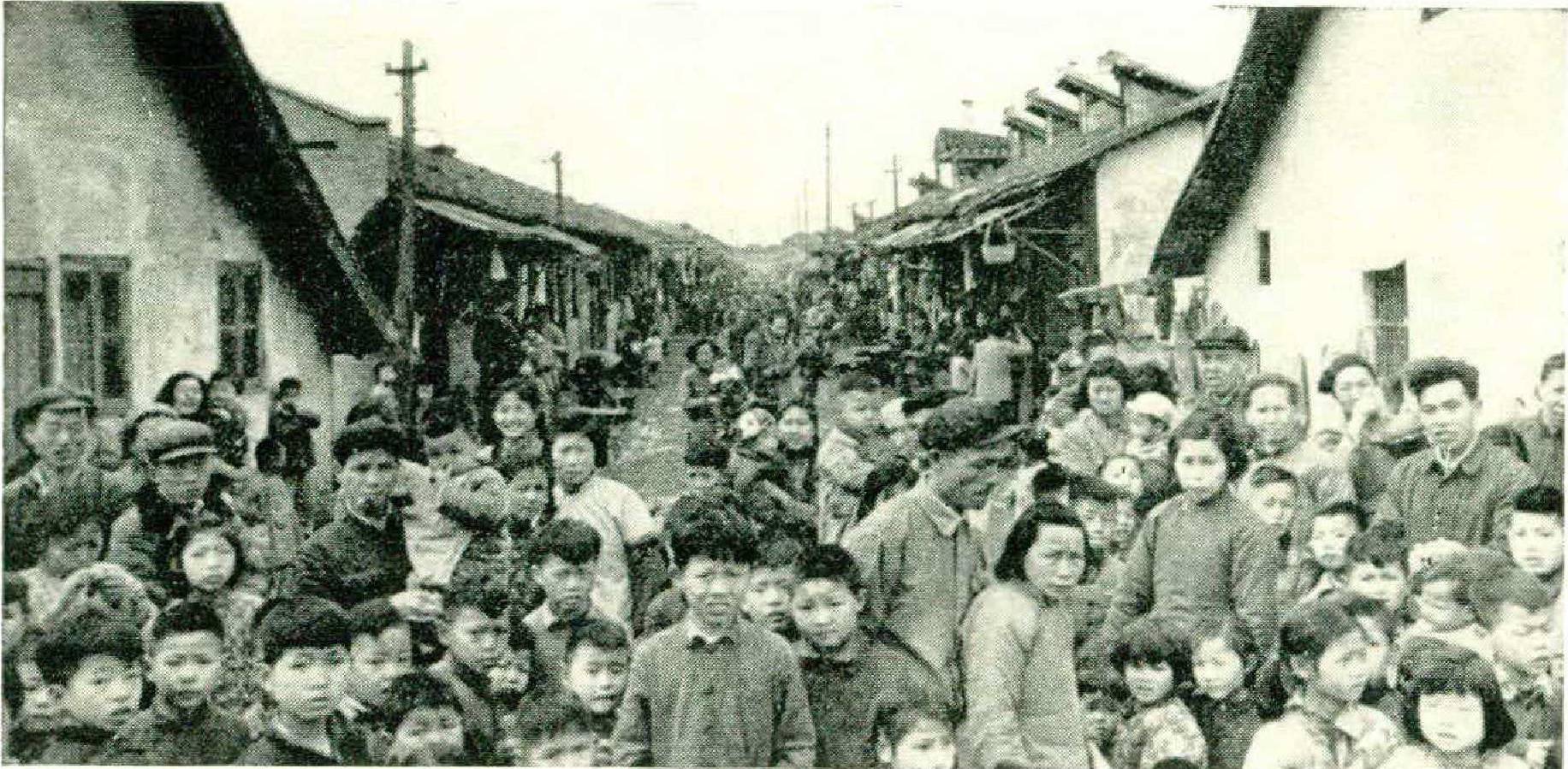
PERHAPS more than any other aspect of Communist China, the problem posed by its enormous population growth has begun to cause anxiety and concern to its neighbors in Southeast Asia. It is true that the size of a country’s population, however great, cannot constitute a threat to the peace and security of a region if the country is backward and its people impoverished. But Red China is not only organized and united under a strong regime, it is on the path of large-scale and rapid industrialization. Its military potential is on the increase every day. And, most important, the country has been forcibly converted to the aggressive, disciplined, and totalitarian ideology of Communism. When its teeming millions are considered in the light of all this, Communist China becomes a threat of unknown magnitude.
Before 1949, when the Communists seized power, the world was aware of China’s very large population, but a perceptive analysis of the country’s population problem was impossible, since no reliable source material, such as a national census or regular vital statistics, was available. The world outside China was vaguely aware that the country sheltered countless poverty-stricken millions and was, as a consequence, a land of frequent famine.
It must be said, to the credit of the Chinese Communists, that one of their first undertakings was a regular scientific census. It was announced in 1954 that the national census of 1953 had shown 583 million for the mainland. The census was carried out in a reasonably careful fashion, and the figure can be taken to be approximately correct.
Of the three factors which affect the trend of any population — births, deaths, and migration — the least important one, but, nonetheless, interesting in the Chinese Communist context, is migration. Some thousands of old and infirm people have escaped (or were permitted to escape) from Kwantung province to Hong Kong and Kowloon. But apart from this, Communist China has no emigration outlets, nor has it demanded any. However, large population transfers into Tibet have taken place in the last three years, and Tibetans are rapidly becoming a minority in their own country.
As for immigration into China, the incessant Communist propaganda welcoming successful Overseas Chinese to the mainland has paid dividends. Nearly a million Overseas Chinese have returned to the mainland during the last decade and have been settled in specially built Overseas Chinese villages, near big cities, in relative comfort. These immigrants enjoy freedom of travel, send their children to special schools, own land and houses, and pay low taxes — privileges denied the ordinary native citizens. The Communist kindness to these Overseas Chinese is, of course, based on the government’s anxiety to obtain their lifetime savings, which constitute precious foreign exchange. However, on the whole, migration has been a negligible factor in China’s population growth.
The two factors which really affect a population are its birth and death rates, and in China the birth rate has been steadily rising, after a temporary fall, during the past decade. This has been due in part to the new marriage law, passed a year after the census, in 1954. This piece of legislation guaranteed individual and free choice of marriage partners, raised the age of consent from eighteen to twenty for males and from sixteen to eighteen for females, enforced monogamy, and outlawed concubinage. (In pre-Communist China, it was not unusual for boys and girls in their early teens to marry, or for old men to take young girls as concubines.) In Communist China, economic considerations do not act as a deterrent or delay to marriage, because work is compulsory and everyone is guaranteed a minimum of basic economic security, even if it is only a bowl of rice and a blue boiler suit. And children are the responsibility of the state. The overall effect of the new marriage law was that marriage became more prevalent than ever, and the nation’s birth rate rose to about forty per thousand, one of the highest rates in Asia.
However, even more decisive than the birth rate, in its effect on the growth of a country’s population, is the death rate. The birth rate in China has always been high, and yet the population, massive in numbers over the centuries, remained nearly stationary because of the high death rate. But since the Communists came to power, there has been a definite decline in the nation’s death rate. For 1959, the latest year for which official figures are available, it was twelve per thousand — an incredibly low figure for an Asian country. The infant mortality rate, a sensitive index to a community’s level of public health, environmental hygiene, and total cultural milieu, was around fifty per thousand births per year. Comparable figures before the Communist revolution were almost four times the present rates.
CAN these figures be true? Do these low death rates reflect the real conditions in Red China? I am inclined to believe that, allowing for some inaccuracy and exaggeration, they are more or less true and that they indicate the radically altered conditions in the country.
Anyone who visited pre-Communist China, as I did, will agree that public sanitation and hygiene were conspicuous by their absence. Garbage removal and conservancy measures were far from adequate; protected water supplies were confined to a few large cities; flies and vermin were ubiquitous; public health and medical services were woefully inadequate, and in certain parts of the country, totally absent. All this was responsible for an extremely high death rate.
But remarkable changes have taken place. The devil-may-care individualism of the Chinese, which was responsible for much of the country’s dirt and filth, has been eliminated, and a collective sense of responsibility for hygiene and sanitation has come to prevail. Traveling throughout the country, from Manchuria in the north down to Canton in the south, and from Lanchow in the west to Shanghai in the east, I was continually impressed by how clean and neat everything was — a remarkable phenomenon for a relatively underdeveloped Asian country. No longer do heaps of garbage lie scattered about the streets. Even remote villages have privies. Underground drainage and protected water supplies are being developed in every town. Flies and vermin have virtually disappeared. Numerous hospitals and medical schools and countless clinics have sprung up. In a word, the impossible has happened. China has been physically cleaned up, and the result is an understandable decline in the death rate.
How has China been able to accomplish this? The answer is, through force. The power of violence, for good or evil, should never be underestimated.
One consequence of all these changes and reforms, engineered by the Communists in less than a decade, has been an upsurge in population growth. Between 1953 and 1956, China’s population increased by some forty million. This was more than the Communists had bargained for. At this rate, China could add more than a hundred million people in a decade. The rural economy, slowly being transformed to an industrial base, could hardly cope with this spurt in numbers. There were regional famines — or “scarcity conditions”; long queues for a few ounces of pork and oil. The Communist earth could not suddenly feed these huge numbers, no matter what the statistics of production said.
There was, consequently, a great deal of thinking on the nature, dimensions, and significance of China’s population problems. To begin with, there was the Marxist ideology. Only in capitalist countries was there pressure of population on limited resources because of capitalist exploitation. In Communist countries poverty was impossible. And yet, there was food scarcity, and the standard of living of the great majority of the Chinese people continued to be among the lowest in the world.
Since it would be bourgeois and decadent to concede that there were too many Chinese under a Communist economy, a national debate on the merits of birth control was started — but birth control to safeguard the health of mothers, to give wives sufficient leisure, and to enable fathers to work longer hours and have enough time for study, not because of population pressure. All these reasons advanced for birth control were certainly valid enough, but at this juncture they were used primarily to conceal the real reason for birth control - overpopulation.
However, in the course of a few months, there was a radical change, and the authorities came to accept the fact that China was overpopulated and that six hundred million were too many for the task of building a socialist society in China, Perhaps the Marxist dogma on population was inapplicable to China at its particular stage of economic growth. With this rationalization — and despite, I believe, ideological disagreement from Moscow — a nationwide campaign for birth control was launched.
Once the leaders were convinced that the Chinese economy could not cope with the existing numbers or the fast-increasing additions, birth control became an instrument of national policy. The nation was mobilized in favor of family planning, as only a Communist nation can be mobilized. For two years, speeches, articles, musicals, films, and exhibitions were dedicated to the imperative need of practicing family planning — for a solvent economy, for better health, for more education and greater production, and for more leisure. Contraceptive factories were set up with aid from the Russians, and free contraceptive devices were distributed at clinics in factories and communes. Unconventional methods of conception control and old wives’ tales from traditional Chinese medicine were discussed, including such methods as the swallowing of live tadpoles to produce temporary sterility. Sterilization was approved, and abortion was permitted on the slightest pretext. The campaign for small families was beginning to catch on.
And then suddenly, at the end of 1958, the whole campaign was called off without a word of explanation. Newspaper and magazine articles advocating birth control no longer appeared, birth-control exhibitions were closed down, and films on birth control were withdrawn. No responsible person ever again maintained in public that the country was overpopulated or advocated family planning. (The single exception was the septuagenarian economist, Dr. Ma Yinchu, and he was promptly deposed from his post as President of Peking University.)
Who, among the big five of Communist China’s bosses, was responsible for this sudden reversal and what the real reason behind the change was are anybody’s guess. According to some, China could not continue to defy the Marxist view of population when it was otherwise so firmly committed to Communist ideology, and orthodox Communist theory was bound to triumph over the economic difficulties of the day. Some complained that even the alleged superior economic and social system of Communism could not deliver them from their traditional hunger without resorting to population control. A sense of defeatism was spreading among the common people, as they began to suspect that the new leaders and their newfangled system were incapable of delivering the goods.
There is no doubt that the reason for calling off the birth-control campaign was partly ideological loyalty — the rejection of Malthus and the acceptance of Marx in toto on the question of population. Perhaps the leaders felt that they could not offer birth control when people asked for bread. In any case, there was a great need to give the people a psychological shot in the arm to bolster their confidence in the new government. The regime would have more support if it were able to boast that the people could have all the babies they wanted and that it was the government’s responsibility to take care of them.
Now nearly three years have elapsed. Birth control is still available, but only on a doctor’s recommendation. It may yet stage a comeback. The contradictions of Communism arc sometimes too devious and diverse for any logical analysis or understanding. But, in the meantime, Communist China’s population continues to explode, and today it has touched the 700-million mark. China’s neighbors, as well as students of political aspects of demographic trends, cannot but be concerned over such tremendous population growth and its effect on Asia as well as on China itself.
Will these massive numbers constitute an asset or a liability in China’s overall efforts for economic development? Does China have the available resources to ensure these millions and more to come the basic minimum requisites of civilized human existence? In general, a large population is more of a liability than an asset to an underdeveloped country with a low standard of living, but in a totalitarian country a large population can be a source of strength. People are expendable, and a large labor force can be compelled by the government to work on any project practically as slave labor, since no free choice of occupations or demand for higher wages is permitted. A vast defense force can be raised and maintained, given certain technical knowledge and equipment; and although in the next war the importance of the role of massive manpower may be doubtful, numbers could be used as a threat against the territories of neighbors.
Will a strong and united China, rapidly industrialized and mechanized, with a growing fighting force, be a source of aggression in the future? Will Communist China, with the economic and political system it embraces, use its population numbers as a pretext for a demand for Lebensraum? Are China’s rape of Tibet and illegal occupation of Indian frontier territory merely the beginning of a more serious threat to the integrity and peace of Southeast Asia?
It is obvious from all that the Communist Chinese leaders have been saying and doing since they came to power that they are motivated by two major objectives. The first is to build China into a strong nation on the basis of an industrial economy and military might. China has already embarked upon a large military build-up. It has immense reservoirs of men of the right age. It has the means of thorough indoctrination; this, as well as the high morale of its defense forces, was demonstrated during the Korean aggression. It is able to obtain from the Soviet Union all the latest military equipment which it is unable to manufacture within its borders.
The second objective is the penetration and subversion of the Southeast Asian countries. This China is trying to do with propaganda and, when necessary, with violent intervention through local national Communist parties. Thanks to the naïve thinking of neutralist nations in Asia, China has begun to achieve the second objective in some measure. It has also isolated and neutralized certain uncommitted Asian nations by talk of peace and coexistence, while it knows that nothing matters in the modern world as much as military might, for, as Mao once put it, “Political power grows out of the barrel of a gun.” The sooner Asia realizes the implications of the Communist Chinese game, the better will be the prospects of peace and security there.
It is reasonable to believe that, no matter what Communist China does in the next decade, its population numbers will certainly be an important factor in the decisions it makes. Communist ideology and population pressure are an alarming combination.