The Sabbath
Author, dramatist, and editor of the literary supplement of a leading Israeli newspaper, AHARON MEGGEDwas born in Poland, came to Palestine when he was very young, and was for many years a member of a kibbutz.
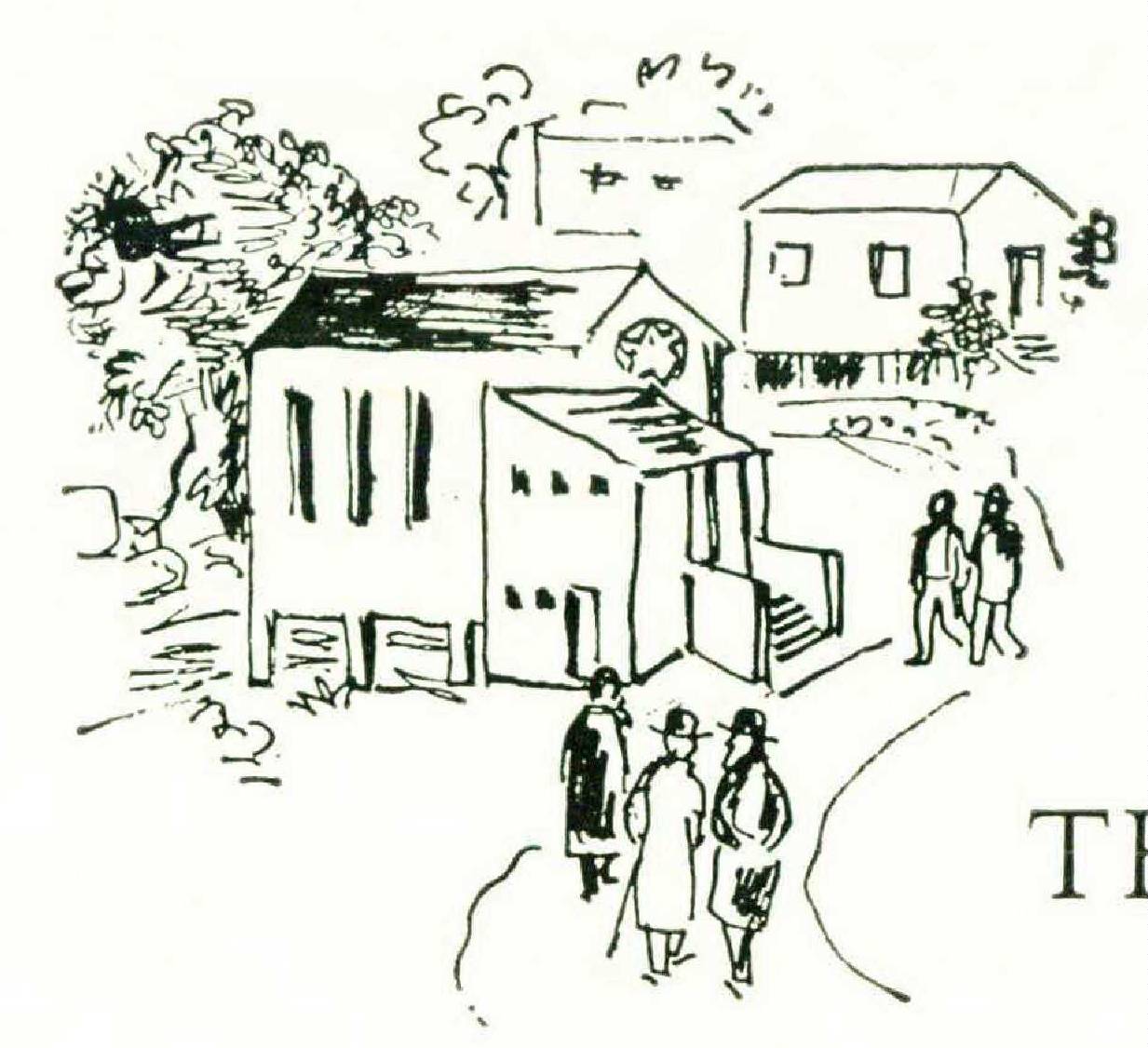
A BLAZING silence hung over the long sandy street. My father and mother slept their Sabbath afternoon sleep in the warmed hut. On the other side, in the stooped yellow house, surrounded by tall jacaranda trees, from which little leaves dripped into the pressed dust of the courtyard, slept Mr. Feldman and his two oafish sons. I could see them lying on the wooden slabs behind the green poles of the porch, the father with his dense beard, in which wasps nested, and nostrils out of which long hairs peeped like flies’ legs, and the sons, with long hairy limbs, as large as woodcutters’. All the dozen houses of the little village, which stretched to the end of the deep-sanded street, were sunk in slumber. The only sound was the hum of flies in the air from the loaves of dried dung in the courtyard.
I stood in my bare feet on the rough, horny stone of the steps, wearing only trousers and a stained cap, and when I squinted up at the roof of the hut which housed the synagogue, it flashed through my mind that this was the hour to execute the plot.
Behind the Russians’ hovel, surrounded by reed fences, behind its pumpkin patch, behind the field of tall yellow grass, stood the wild plum tree under which lay the treasure. None of the children who came to pick the fruit of the tree, both the green, bitter, kernel-hard balls and the sweet, yellow, luscious globes at the very end of the tall thorny tendrils, knew anything about it. Strange how they didn’t know. They tramped on it over and over in their bare feet when picking the tiny, worm-eaten fruit, etching long scratches over it with the dry branches in their hands — and didn’t know about it. It was buried in the sand, waiting for its time to come.
The sand burned so much that I had to jump from one pool of shade to another on the sides of the grass and the bushes and cool my feet in them a moment, putting one foot on top of the other, rocking on my stem, and then running on again, as if wallowing in fire. Along the reed fence the strip of sand was soft and soothing. The Russians’ dog came out of his kennel, began barking, but recognized me and stopped. His masters slept in the hovel, with its unmade beds. Red-feathered chickens scratched in the courtyard, splashing grains of sand through the fans of their wings. In the dovecote, doves dozed with their heads askew. Strings of red peppers and onions hung between one pole and the next. Rows of summer eggplants, with broad, serrated leaves, nestled on water-fresh grass. Then I caught a glimpse of the large pumpkins, with puffed-up bellies and thick necks, shining orange and yellow in the sun, the pumpkins from which, when they were dried and hollowed, with devils echoing inside them, the two old Russians made vessels for their kitchen. A tiny gilt needle of yellow-flowered thistle stuck in my heel, and I hopped on one foot to remove it with my fingernails. Then came the field of wild yellow grass, as sharp as knives; the stems of its flowers, so soft and hairy, all of whose ears could be stripped off with one pull between finger and thumb.
Three strides south of the trunk of the densetopped wild plum, the treasure lay buried. The shade was broad and cool there, and the wind rustled in the spiky branches. I lifted a dry, smooth eucalyptus branch, stripped off its bark, and poked around in the sand. I dug with it, and then with my fingers, until I reached dampness, until the wooden board covering the treasure came to light. Everything was in place. The pincers, the rusty hammer made entirely of cast iron, the two chisels, the iron pole, the nails eaten up by rust. The sack beneath them was rotten and falling to pieces.
I lifted my head and looked around me. No. there was nobody in sight. To the south were the watermelon patches, thin and thinned out, spread out on the hills cut by wind-swept ravines. In the middle of them was the watchman’s shelter, roofed with dry grass, lonely, rickety, sunny, with no one inside. In the distance were the Bedouin tents, with their flaps spread out, open to the sun and the dogs. A horizon as flat as white-hot tin. To the east were two clumps of eucalyptus trees, sunk in a rustling conversation, with seeds like earrings scattered at their feet. In the north and the west the solitary houses were sunk in a lazy sleep beneath the tired branches of trees. A blazing silence.
I put the pincers in one pocket and the chisel and hammer in the other, and closed the hole again with my foot. I stamped down the dust, which sank under me, glossed over my traces with the end of the dead branch, and spread over it dry leaves and shrunken wild plums.
Heavy-trousered, squinting all around me, I made for the synagogue hut. The soles of my feet burned from the sand, and only the islands of knotweed soothed them a little.
Like a cat I prowled in the courtyard, lest I wake my parents. The light scorched my eyelids. Arrows of sun hit my naked back. Behind our hut, hidden in a row of dry, dusty thorns, lay, like a dead giant, the ladder, eaten by dry rot, cracked, with loose rungs hanging upon rusty, headless nails.
The thorns rustled when I pushed my way through them toward the ladder, and white dust rose up from them like mosquitoes from their resting place and flew into my eyes. I lifted the giant on its legs, and it groaned. I carried it through the courtyard on my shoulders — very heavy, clumsy, cutting into my flesh — to the synagogue hut. No, there was no one around. The silence of hot sand and the deep Sabbath sleep. I placed the lame feet of the ladder on the sand and stood it up, supported by my hands and my forehead, until its top leaned against the locked attic.
WAT’S up there in the attic?” I had once asked my father.
“Nothing. It’s empty,” he answered, turning away.
“Rats.” My mother laughed.
I didn’t ask any more. I knew that they wanted to hide the truth from me, as they hid from me that they didn t believe in God. When my mother wanted to light the fire on the Sabbath, she whispered to my father that he should take me out so that I shouldn’t see. I pretended not to understand, but I didn’t forget it. Later I cried behind the hut. I knew they would be punished. Dozens of times a day I used to look at the attic, which whispered mysterious secrets.
In the morning, while I was still lying in bed wrapped in soft woolly dreams, there slid down to me, like an acrobat on a rope, the golden peacock from our schoolbook, going down on a golden rav dusted with gilt powder, which penetrated through a crack in the wide-apart wooden panels and fell on the clay floor of the hut. From Ophir it came, and to Ophir it returned, vanishing when the ray was extinguished. Then came the murmur of the people praying in the hut on the other side of the courtyard, and I saw the green-feathered cock, blessed with the wisdom of telling night from day, flying up to the attic. The praying voices flickered like candles, rising and falling, growing and dying down, and suddenly became the rustle of a windblown wood, and then all the wings were folded, as if night had fallen, a silent night in which only the sand whispered. Then I would rise silently and go out of the hut barefoot, crossing the sunsoaked courtyard and entering the darkness of the synagogue, taking up a tattered, yellow-paged prayer book and sitting down on a bench, among the smell of prayer shawls and tobacco coming from the thick beards. The black ravens of the big letters and the swallows of the small letters flew up to the attic.
Suddenly everybody rose to his feet; and standing between the feet of the giants, which moved like a forest, I strained my ears to catch what was happening there on top, above the blank wooden ceiling. Sometimes I heard a scraping sound like the quick scratch of fingernails; sometimes it was like the cooing of doves in a cote, or a light chirping, as when wooden panels are split open. Not rats. The attic gaped open in front of me, blackmawed, and with the treasure of prayers curled up in it among tattered bundles.
“Jin” said the broad-waisted Arab with the wrinkled face, with the long scales and stone weights, who came every morning with his donkey to sell millet from his sacks. And he put his finger on his mouth.
Jinnnnnn, shivered an iron string in the attic, echoing there until the rafters shook.
During the evening prayer — when the candles dripped wax, and their scent filled the hut, and shadows wandered up and down the walls with the weary whisper of prayer, which awoke suddenly, frighteningly, with May His Great Name Be Magnified And Sanctified from all four corners of the room at once, and died down again like a sacrificial fire flickering on the ashes — the attic filled with smoke; and then the shadows lay there silent, hidden and lurking in the corners, like children playing hide-and-seek in a forest, the whole long night, while the synagogue was empty and desolate in darkness, and in the street the stillness hid in the hollows of the cool sand.
When the yellow prayer shawls were spread out like the wings in the prayer of the Cohenim, and scorched, terrible voices swore oaths which fell to the ground like stones, I hid underneath them to see the terror which choked there, and trampled the voices with my feet lest they fly higher up.
Until one day they brought the body of the butcher, who had fallen from the cart on his way to the nearby village, and it was large and swollen and yellow when they placed it on the wooden board in front of the hut, and a strange smell came from it, a sweet smell, which I breathed deep into my lungs because it gave me a pleasure worthy of being kept until the end of days. Then the beadle went up to the attic, and for the first time I saw it opening, and he placed in it some packet or other, I didn’t know what, perhaps the epitaph from the tombstone, the bundle with the soul of the big butcher who had died. A plot gleamed in my sharp eyes. Yes, it was possible to climb up the ladder. One of these days, when no one would be about.
IN MY bare feet, burning from the hot sand, I climbed up the lame ladder, whose one leg was shorter than the other and whose rungs were slanted. One rung, rotten at the ends, fell out because of the rusty nail, and my leg swung in the open space. Sweat covered my back, and my pockets weighed me down. I held the prickly uprights of the ladder tightly and climbed up. Now that I was standing high up, I could look out at all the world: the deep-sanded street, the lonely houses standing hugged by silence under the sparse afternoon shade, the plots plowed with deep-splitting furrows, the faded patches, the square copse of eucalyptus and the rustling carpet inside it, the squat water tower on top of the hill, the green oases of the shady orange groves in the valley, the fallow fields and the fields of wild grass, the Turkish trench. I was as high as the dovecote in the Russians’ littered courtyard. I could speak to the cote from afar, as if from one tower to the next.
The lock was big and heavy and rusty. I took the pincers out of my pockets while holding the ladder in my other hand, pressing my body against the rough wall of the hut in order to squeeze the frame. The frame was stubborn, stuck tight to the wall, and even though I pressed the pincers so hard that they bit the wood in their sharp jaws, there was not enough room to catch hold of the frame. I put the pincers back in one pocket and took the chisel from the other. I inserted it between the frame and the board and moved it up and down to separate them. A creaking sound made my heart leap. The frame loosened a bit. Another few moves, and even the screws squeaked out of the dry wood. A bird cried out within me. I took the pincers out. I held the rickety ladder tightly. The pincers took hold of the screws and turned them around. One by one all three came out, fell down, and drowned in the sand below.
Now all the secrets would rush out and fling me to the ground. A dusty-winged owl would hit me in the face and fly to the black Bedouin tents. The prayers would escape from their bundles and glide to the branches of the nearby tree. In the commotion, all those sleeping in the houses would wake up, and that would be the end of the afternoon.
The door to the attic squeaked on its axis, and the musty smell hit me. It was dark inside, and only a small circle of light flashed on the wooden floor, and a ray of golden dust hung between it and the split roof tile. My eyes opened as wide as the eyes of a nightjar when my head entered the door. Dense spider webs hung here and there like tattered ropes, and behind them, in the rear — Fear not! Be not afraid of sudden fear! I pulled myself up from the ladder, and my knees rubbed the dusty boards. Fear not. I closed the doors behind me, and the lock rocked on its torn-out frame.
Old Feldman’s wounded eye stared at me from the darkness in the rear of the attic. Once he had struck an old, black Turkish shell which had been lying in his farmyard with his hoe, and fire burst out suddenly, and a wild, empty cry ran like a devil from one end of the sandy street to the other. Since then there had been a red hole burning in his eye like a fresh wound. The eye’s flame died down and became only a faded bundle of silent whispers. Perhaps whispers of evening prayers before the last people leave the hut and each departs lonely to his house. Or the soot of the candle’s flame rising to the ceiling. I could catch the long golden ray and grasp it as if holding a sword.
I crawled on all fours, and the golden ray was torn, and thousands of slivers of dust rushed about and swirled around crazily. Spider webs fell down on my shoulders, and untidy strands coiled around my arms. A rat ran past like a chill along my back. The sweetish, musty smell, like the smell of a moldering sack, rotting, hidden in the ground, came from the corner of the floor between the slopes of the roof.
I put out my hand to the throng of secrets. A heap of books— tattered, faded books, with torn bindings, gnawed pages, and pieces of cloth between them. As if my father didn’t know! I breathed the smell in deep. An old smell. Wax. Old men’s tobacco. The sacrificial incense of the night after the Sabbath, when the heat sinks and a cool vapor spreads over the sand. At night the prayers lie here together with the souls, which are given over for safekeeping in the evening and returned in the morning.
I bent over the heap to find the bundle with the big butcher’s soul which the beadle had thrown here. I froze on the spot when a voice called my name. It was my mother’s voice. She called twice and three times, and then my father also went out to the courtyard and called my name. I shrank up like the afternoon shade. I heard my breathing inside me and felt the sweat creeping over my back. Then my mother said: “Come, let’s go now.” And their steps receded to the street.
I sat on my haunches, with my arms on the books. If I would sit like this the whole evening, I would see how the prayers would come up to me. I would hear a clear loud voice, Bless Ye All The Blessed Lord, and immediately afterward, like a rushing stream of water, Blessed Be The Lord From This Time Forth And For Evermore, and immediately afterward the silent swishing of branches filling the whole room. In the silence I would be wrapped in sweet mysteries, as if under a blanket at night, with every rustle outside telling a story. No one would bother me. A complete rest without any fear. Alone.
Then this would be my permanent secret hideaway. When the stupid cowherd with the red face would open his yellow-fanged mouth and boo at me, so that the flickering tongue of a chameleon leaped out at me, I would climb up to the attic like a cat and close the door behind me. When the stout Arab with the wrinkled face would put his donkey in the shade and take me, with no one seeing, behind the hut to show me his genitals. When Weinberg the shopkeeper would chase me with his stick. When the beautiful Zipporah, whose armpits were covered with a forest of dark, dense hair, would beckon me with her finger and I wouldn’t know why. When my mother would faint and I would think she was dead. When the ember-eyed hyena would spring out of the wood on the other side of the fields.
I heard the pattering of feet in the sand below me, followed by the voices of children calling one another, coming closer. A small ball hit the ground in the courtyard and suddenly gave a hollow bang on the wall of the hut, until the shadows were frightened away from the corners of the roof. I lay in ambush like a rat in his hole. Little steps ran hither and thither, and my heartheats ran after them. They would find the ladder. The loose lock. They would call my father. I wanted to hide in the attic, so that I wouldn’t have to answer.
I crawled back and smashed the ray of dust again, which was now long and very slanting, and wiped the floor with my hands and knees and collected all the spider webs on my back. I opened a crack in the door and peeped out. There was no one in sight. The children were on the other side of the hut. A great day loomed in front of me when the door opened on its axis. I extended one foot outside, to the gap, to the prickly rung, and then another foot, more certain, and gripped the edge of the dusty floor. I was high up, open to the heavens, to the light, to the stretches of sand.
And suddenly it came, like an arrow in my back. A voice shouted my name, and at once feet pattered from all sides, and the mirror of light smashed to smithereens. Fear coiled around my body like a snake, with the cries thrown at me from below like the hail of gravel: Thief! Thief! In a moment a wild, vengeful crowd raged beneath me.
The ladder shuddered. Eight children shook its rickety legs, and their cries chilled my back. Come down, thief! Come down, thief! My knees knocked together with the shaking of the ladder, which trembled and slipped from its resting place. Dust sprang up from the boards of the attic. Shadows slipped loose from their bundles.
I jumped down and swallowed sand. In a moment the crowd was on my back, a pack of biting, tearing dogs, strangling me. The hat! The hat!
When I shook them off, there was no hat any more. A swarm of wasps hummed around me, biting and flying, biting and chasing. They were all after me. I retreated through the whole courtyard to the door of our hut. I fell into the room, pushed from behind, and slammed the door. A stone struck the closed shutter, and a triumphant cry accompanied its blow.
The darkness of noon which filled the room was barred by lines of golden dust. I stood imprisoned by the bars, bareheaded and burned-backed, and bit my lips. Tears burned in my eyes. The synagogue was empty of shadows. The attic remained open, and all the secrets flew out to the sandy hills.
Translated by Aubrey Hodes.