The Peripatetic Reviewer
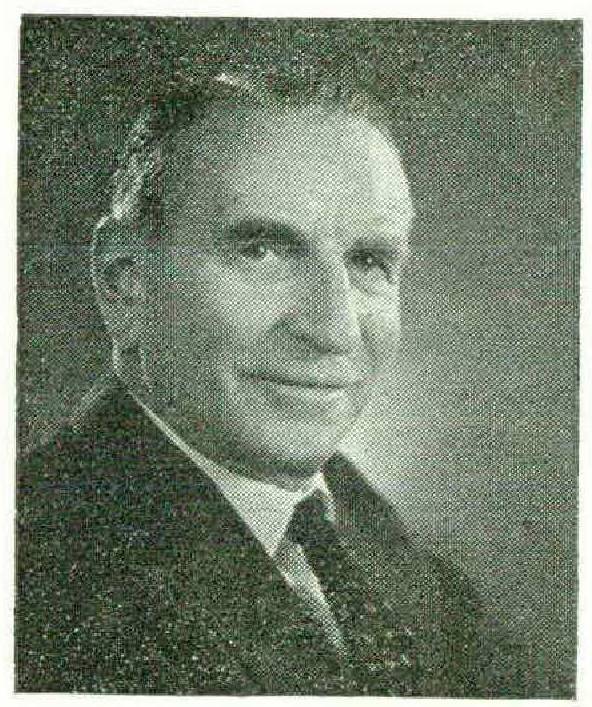
I THINK my father was just about the worst automobile driver that I can remember. I say this knowing that it is a little unfair, since he is no longer here to defend himself—or to remind me of others of his generation who were equally bad. They had been reared in the era of the horse; to them the gasoline motor was a foreign body. When they were called upon “to operate the machine,” they never quite trusted themselves or the machine, and this feeling of insecurity led to some strange performances. When President A. Lawrence Lowell of Harvard was spending his summers at Cotuit in the 1920s, his wild driving had to be seen to be believed, and only the unanimous pressure of the police, his family, and friends persuaded him to retire as a driver.
Father never retired and would have roared at you had you suggested that he should. He did not believe in buying a new car; he always had a trusted mechanic who would pick up for him a secondhand (or fourthhand) bargain, a Moon or a Willys Overland, of unbelievable performance and pedigree. Father drove in the center of the road with an impulsive tendency to verge into the left, or oncoming, lane. He had a dread of the ditch to the right, and he monopolized the crown because of his belief that he could and should overtake everything ahead of him. The only time I can remember his being utterly defeated was one Sunday morning when we were passing through Lancaster County on our way to the Blue Ridge; Father drew up in the rear of eight Mennonite buggies homeward bound from Sunday service, and the entire horse-drawn procession in the center of the road. Father tried the horn and went on to his favorite imprecations, but in the end we settled back and ate dust until, one after another, those stubborn buggies turned off to their farms.
Father steered with his left hand, employing the right occasionally for the horn or gear shift, but more often to brush his adversaries out of the way. He used a long sweeping gesture, which brought the full arm into play and which was intended to push the enemy to the curb, and this was accompanied by a “Move over, you goddamn fool!” Mother would attempt to pacify him, “Now, Ned, now, Ned,” but this only made him shout the louder. We six children had all been victims of his irascibility, and it secretly delighted us to see him vent himself on the innocent. We held back our laughter by trying not to look at each other, but we always hoped the enemy would retaliate and were pleased when he did. I realize now that Father was a pioneer and that the psychosis which obsessed him when he took the wheel would in time be typical of the country. On his two feet he was not a quarrelsome man, but behind the wheel he drove with the conviction that all pedestrians were idiots, that cars driven by women had no right on the road, and that, as the overtaking czar’s, his horn, and his alone, was mandatory.
The police did not encourage him in his illusion, particularly the state police, and he was pinched more often than we knew. His record reached a climax when the judge passing sentence in the Newark court said: “Mr. Weeks, you have been here before, and I must warn you that if you are brought into court once again, I shall have to commit you to jail.” This slowed Father down. So did the Depression, which deprived him of a car.
Father, as I have said, was a pioneer, and the personal feuds which he carried on, one at a time, with the car ahead have become a national pastime much more hazardous on a three-lane throughway. We are the rudest, most aggressive drivers in the world, worse even than the French, who exceed us only in noise. We do not have a fraction of the civility and forbearance with which the English make their narrow roads passable. English truck drivers all obey the code; they will wave you ahead or hold you back as the opening permits. American truck drivers will blink at you as they thunder by, but I do not find them as unfailingly kind as the British. The New England character, being taciturn anyway, dislikes to signal its intention; and for passenger cars turning left with no warning at all, I give the bay to the state of Maine. Maine’s contempt for the out-of-state motorist is an uncontrolled mania.
The worst abomination on our highways, we all agree, is the drinking drivers, armed with all that horsepower and made arrogant by alcohol. But if you want me to name the four most irritating, here they are:
1. The Road Cheater, usually in a Cadillac and often a politician, who lurches by you on the left to the head of the line when you have been halted at a roadblock. His motto, “Lines are for boobs, just let me in.”
2. Lover Boy. Lover Boy drives with his left arm supporting the roof of the car, his right encircling Maisie, who has snuggled close. Lover Boy is showing off at 70 with the radio blaring and a statuette of Our Lady of the Highways protecting him on the dashboard. A motorcycle cop would be safer.
3. The Scavengers. This family-in-motion is eating lunch, discarding through the open window Kleenex, ends of sandwiches, orange peel, and beer cans.
4. The Mincer and Weaver. Always a woman. The Mincer is out for a Sunday spin, mincing along at 31 mph and never happier than when she is being followed on a narrow road. The Weaver — well, one of them had been weaving up Boston’s Commonwealth Avenue in broad daylight when my friend paused beside her at a traffic light. “Madam,” he called, “you seem to be looking at something on the floor board. Your car has been weaving. What’s the trouble?” She glared back at him; then, with dignity, “I’ve been trying to decide which wallpaper I like” — indicating the samples on the seat — “not that it’s any business of yours!”
LAUGHING AT DEATH
I have been waiting for JOHN ASHMEAD’S first novel, and I am pleased to report that it is an exceptionally fine one. THE MOUNTAIN AND THE FEATHER (Houghton Mifflin, $5.00) tells more clearly, more ironically, more passionately than I have seen elsewhere the attractions and repulsions felt by our college-trained reserve officers when they were flung into the war against Japan. The author is well qualified to write this: his grandfather was surgeon to the imperial family of Japan, and John himself, who graduated from Harvard, had a knowledge of the language and the country which fitted him as a translator and interrogator in the Aleutian and Leyte island campaigns. He served under MacArthur at the war’s end and has gone back twice on Fulbrights to teach the Japanese. Given his tradition and experience, this novel should be a natural.
The hero of the book, Ensign Montgomery Classen, when he arrives at Pearl Harbor is the epitome of the Ivy League instructor turned warrior; he lives by the book, protects his thin skin with irony, as far as he dares, and looks for vulnerable spots in the armor of his Annapolis superiors. As he translates his way through wads of captured documents or interviews the few survivors of Guadalcanal, Monty comes to appreciate the tradition and dedication of the enemy. He finds his place in the pecking order of the headquarters; his caustic tongue gets him constantly into trouble; and in off hours, diffident and lonely, he searches until he finds Leilani, the nurse, part Korean, part Japanese, and totally enchanting. So he grows in our esteem and affection.
I congratulate Mr. Ashmead on the tone of his story. The men close to Monty—Gordian, the anthropologist from California, and “Arkansaw,” the Columbia intellectual — take the war as he does, with irony (it was the only way they could); and the disrespect with which they view Major Begel, Bradford Professor of History at Yale and now Marine historian with a swagger stick, or Correspondent Bulflash, or Admiral Hornbull is vastly entertaining, nor does it diminish the scope and violence of the campaigns in which they are committed. It is symbolic that Monty’s last assignment is to tape the suicide attacks on our carriers.
FROM SHADOW TO SUNLIGHT
VAN WYCK BROOKS, our most eminent literary historian, has been writing his autobiography in installments, and it seems to me that his latest, FROM THE SHADOW OF THE MOUNTAIN (Dutton, $4.50), is the best thus far. It begins in 1931, on his return to Westport, Connecticut, after a fouryear recovery from a nervous breakdown. He came back with something of the innocence of Rip Van Winkle, young again, dazed, and in his stomach “a hard ball of panic that was never entirely to disappear.” The book, written in a mood of reverie, tells of how he reoriented himself in the world of letters. A legacy relieved his mind and permitted his wife and himself to live where they pleased: in Chicago, on the West Coast, in the South, and in Europe he sought out old friends and made new ones, testing what had been written while he had been in the shadows, re-examining his younger opinions of Mark Twain, Emerson, Howells, and Whitman, and relishing the creativity of an America more exuberant and far less morbid than that of today. So refreshed, he tells us why and how he began to write his Makers and Finders.
In his postmeridian years, Mr. Brooks is disposed to be a kindly critic, but he firmly defends what he values, and his disapproval is never in doubt. He speaks of “the calm, the repose" that marked the stories of Willa Gather: he applauds Ellen Glasgow for having exposed the “inherent falseness” in much of the Southern tradition; he compares the effect of Europe on our expatriates with the effect of America on the exiles driven to us by Hitler; his vignettes of Mary Austin, Robert Frost, and Carl Sandburg are shrewd and lively; he questions the influence of T. S. Eliot; and of the dehumanization of art he writes: “As if the problems of life and the world had become too difficult to face, an art was gradually appearing that was really a game, based on a ‘loathing for the human,’as Ortega put it. . . .” Without raising his voice, and with the aid of some gleaming quotation, evidence of his wide-ranging reading, he has made this a provocative and illuminating book.
THE LINDBERGH CASE
Assiduous, unsparing, and voluminous is GEORGE WALLER’S story of the Lindbergh case, KIDNAP (Dial, $6.95). From the tons of newsprint he has sifted and transcribed in his clear reportorial style the record of the crime which was perpetuated on that windy night of March 1, 1932, and of what it did to the heroic young parents. He tells of the false clues and of the imposters from the underworld, of the brave optimism with which Jafsie Condon got in touch with the real abductor, and of how the police were held at bay until the ransom had been delivered. He explores the premonitions of Evalyn Walsh McLean, the bombast of Gaston Means, the minute evidence proffered by that expert in wood, Arthur Koehler, and so long ignored; and when, after sixty-two days, the body of the murdered baby is discovered, Mr. Waller depicts the elaborate pursuit which finally cornered Bruno Richard Hauptmann and the long trial which examined his guilt in the Flemington courthouse. It takes 592 pages to bring Hauptmann to the electric chair.
I seldom disagree with my friend John Mason Brown, who finds Kidnap “enthralling,” but in this case I do. I feel too little justification for this infinitely protracted account of a brutal murder, of a merciless kidnaper, and of the morbid curiosity which the country exhibited in his trial. The wealthy women who paid for reserved seats in the Flemington courthouse were not something to be proud of, and I squirm at being asked to take their place.