Reader's Choice
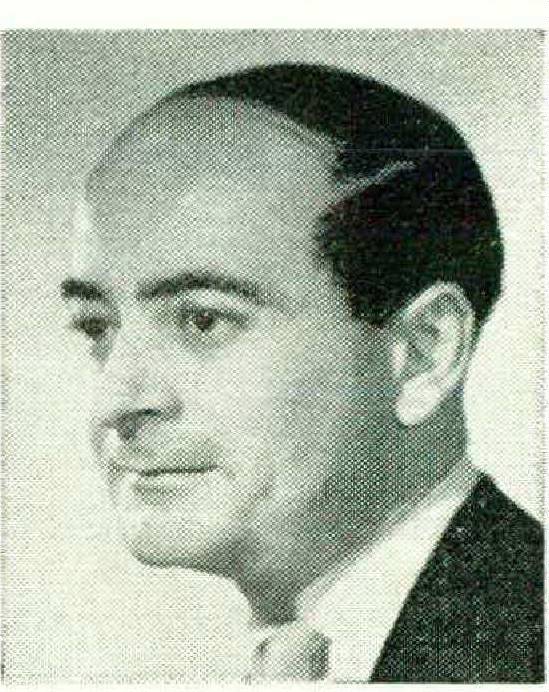
It is, I submit, unsettling if not wicked for the author of a personal history to leave one guessing as to where fact ends and semifiction begins. This is my one complaint about ROMAIN GABY’S splendid book PROMISE AT DAWN (Harper, $5.00). It is labeled nonfiction; the narrator is named Romain Gary; and he refers to his story, which coincides with the known facts of Gary’s life, as “an autobiography.” However, M. Gary has said: “This book is autobiographical in inspiration, but it is not an autobiography . . . truth has been reduced to artistic truth alone.” Thus one is doomed not to know how much art has doctored life when Gary recounts that, at the age of nine, he passionately courted a sadistic sub-nymphet by devouring earthworms, a mouse, an entire paperback novel, and one of his rubber galoshes; or when he describes how, during a violent air raid on London, he came to fight a duel with a Polish officer over an infinitely tiresome girl — pistols at ten paces in a hotel room rented for the occasion. What is certain is that Gary, whether he has reproduced, retouched, or departed from reality, has done so with inspired results. His book is packed with memorable incidents — comic, touching, bizarre, fantastic.
The dominant presence is Gary’s mother, Madame Kacew, daughter of a Jewish watchmaker from the Russian Steppes; a former actress, left penniless with her small son in Poland after a second divorce. And what an extraordinary creature she is. this doting Russian mother, who imparts to her young Tatar her absolute conviction that he is going to become a French ambassador, an eminent French writer, a military hero, and a Don Juan. Her master plan for Romain did not exclude his becoming a champion of the world in other spheres: Madame Kacew saw him successively as a Heifetz, a Chaliapin, a Nijinsky, a famous actor, and a tennis champion. She even conceived (but finally begged him to renounce) a scheme which would make him the greatest hero of his age, at the cost of his life: he was to go to Berlin to assassinate Hitler.
Ludicrous, pathetic, cagey, magnificently heroic, Madame Kacew comes brilliantly to life as a fusion of lunatic romanticism and indomitable resourcefulness. Romain was taught, like a son of royalty, every accomplishment, while his mother struggled and slaved to provide. She built up a salon de couture in Vilna. In Warsaw, she sold furs, antiques, and advertising space; and when things got tough, she became a dealer in “second-hand” teeth with gold fillings. When they settled in Nice, she boarded pets, read palms, scouted for deals in real estate, and eventually ran a pension.
Her dream for her son was more or less realized; he became a hero of the Free French Air Force, a wellknown writer, and a diplomat of France. “At the darkest moments of the war,” he writes, “I always faced peril with a feeling of invincibility. Nothing could happen to me because I was her happy ending . . . her victory.” After the Liberation, he made a sad and startling discovery: his mother had died shortly after he escaped to England and before dying had written and entrusted to a friend in Switzerland the two hundred and fifty letters which had sustained his confidence in his destiny throughout the war. Gary notes that he paid a price for his mother’s boundless adoration: “It is wrong to have been loved so much, so young. . . . You have known something that you will never know again. You will go hungry to the end of your days.”
Promise at Dawn is in turn extravagant, humorous, poignant, and reflective. Artfully combining the tragic and the comic, Gary has written an altogether original and captivating memoir.
LETTER TO A MOTHER
The author’s mother is the dominant force in another remarkable autobiography, VIRGILIA PETERSON’S A MATTER OK LIFE AND DEATH (Atheneum, $5.00); but here the theme is the opposite of Gary’s — implacable rejection. Miss Peterson has cast her book in the form of a letter to her mother, apparently a spoiled, imperious, elaborately charming, and neurotic woman, who never parted from her Ouija board, which guided her decisions and spelled out to her letters from the famous dead (Shakespeare, Beethoven) and from “A" (presumably the Almighty). She started, when her daughter was ten, her lifelong campaign of disparagement with a corrosive taunt which was to be endlessly repeated: “I always knew you were insane.” Even when she was an old woman and her daughter had rushed from Europe to comfort her after her husband’s death, she could only say: “Why did you come? You! I don’t like your face.”
What were the motives for this deliberate cruelty, this relentless hostility? It seems to me a flaw in the book that it poses squarely and dramatically a psychological mystery which the author, who dislikes “modern psychological theory,” is forced to treat as more or less impenetrable. Ironically, “modern psychological theory” is vividly corroborated by Miss Peterson’s own chronicle, which tells how she tried to be the opposite of her mother in all things; how, nevertheless, her mother remained her “inescapable Doppelgaenger” and “reigned supreme” in her conscience; how far-reaching and enduring were the lesions inflicted on her by maternal rejection.
Miss Peterson was the daughter of a successful New York “alienist,” and her book begins with glimpses of the life of an “upper middle” class family in Manhattan’s silkstocking district when she was a child — a flock of servants, limousines, summer in a spacious country house, travel, a serious commitment to culture. Then comes the author’s flapper phase; her joyous year at the University of Grenoble, where she fell in love with a Polish prince; her forced return to New York; and a youthful marriage which ended in Reno. At this point, in the best romantic tradition, she went to Poland and married her prince; but she found herself in a totally alien, rigid world, which her own rigidity prevented her from understanding. Her story concludes (after the collapse of Poland and a return to America) with her marriage turning to ashes, a season of despair, and an attempt at suicide. But there is a happy ending, tucked away in the author’s biography on the jacket.
The intensity of feeling in the book stamps it as a personal history which insisted on being written. And Miss Peterson — author of two previous books, critic, and accomplished lecturer — has composed it with discipline, style, and unsparing honesty. Her dramatic and moving story is one of the outstanding autobiographies written by American women.
DISSENT
MARY McCARTHY’S new book, ON THE CONTRARY (Farrar, Straus & Cudahy, $4.50), is a collection of essays written between 1946 and 1961, which fall under three headings: Politics and the Social Scene, Woman, Literature and the Arts. As the title suggests, Miss McCarthy is temperamentally addicted to dissent. Her singularity as a commentator is that she is a certified highbrow who, one might say, specializes in dissenting from opinions, ideas, and attitudes which are fashionable among intellectuals (and their middlebrow fellow travelers). Thus, one essay in the present book asserts that novelists, critics, and teachers of literature have gone haywire in their preoccupation with symbols. Another rebuts the arguments with which formerly liberal intellectuals, after becoming overzealous antiCommunists, have supported or condoned measures that infringed democratic liberties in America.
A chronic spirit of contradiction can easily lead to ingenious perversity and other excesses unless it is tempered by common sense. In an essay assailing the view that Americans are a materialistic people, Miss McCarthy insists that we value possessions only as tokens of “an ideal state of freedom,”that we don’t really want to use our new automobiles, and that we prove our asceticism by tolerating a way of life lacking in basic comfort. Her conclusion is that the virtue of American civilization is that it is so unmaterialistic. Now, it seems to me that here, and in a few other places. Miss McCarthy has let herself get quite carried away by contrariness and love of paradox. But, taken as a whole, the present book reveals in her a stronger strain of common sense than her reputation as an intellectual firebrand suggests.
Among the outstanding pieces are a couple of entrancing hatchet jobs — one on Simone de Beauvoir’s preposterous book about the U.S.A., the other on the fashion magazines; the story of an encounter on a railroad journey with an anti-Semitic colonel; two provocative essays on the present state of the novel and the problems of the contemporary novelist (including Mary McCarthy); and a penetrating discussion of realism in the American theater. Miss McCarthy’s well-known qualities — wit, style, audacity, and force of intellect — are very much in evidence in these “articles of belief.” I have not read this year a more spirited and distinguished collection of essays.
A SOUTHERN DRAMA
CLOCK WITHOUT HANDS (Houghton Mifflin, $4.00), the masterly new novel by CARSON MCCULLKUS, is best approached through its four main protagonists, who inhabit a small town in Georgia. J. S. Malone, age forty and owner of a pharmacy, learns that he has leukemia and is given a year to live. He has been a passive man who drifted into a rut, and the imminence of death makes him painfully aware of “the life he had spent unlived.”The only man to whom he confides his misfortune is old Judge Clane, the town’s leading citizen, a former congressman whose beliefs are fantastically — indeed, farcically — reactionary. Deprived of what he cared for most — his wife, the son he worshiped (who committed suicide), the satisfaction of his gigantic appetite (the doctors have forced him to diet), and a place in the political arena from which to uphold white supremacy — the judge, in spite of the presence of his beloved grandson. Jester, finds his life frighteningly empty. He decides to act on a long-cherished dream which will make him the restorer of the South’s glory; it is to induce Congress to redeem the currency of the Confederacy by claiming as the South’s due the aid accorded to other vanquished enemies, Germany and Japan.
To help wage this campaign, Judge Clane engages as “amanuensis” a clever blue-eyed young Negro, Sherman Pew, an orphan whose past is a mystery to which the judge alone knows the answer. Sherman becomes the joy of his life; he takes letters, reads aloud “the immortal” Longfellow , makes the judge’s toddies, and drinks with him. What the judge does not realize is that he is anathema to Sherman, a proud champion of “the Nigerian race” and wild hater of “Caucasians.”Sherman’s longing to make a crazy gesture of defiance against segregation precipitates the story’s crisis, in which two of the characters find themselves and two are destroyed.
The book differs appreciably from Miss McCullers’ earlier novels. It contains, to be sure, the theme which has always been at the center of her work — man’s loneliness and the eternal flaw in the machinery of love. The judge’s son, we learn, turned against him; Jester’s admiring devotion toward Sherman is received with chilling condescension or rudeness; Malone suffers from his complete spiritual isolation; and Sherman tries to cover up his by boasting of mythical travels, sexual conquests, and experiences of high living. But another and more hopeful theme is dramatized; the novel, as Miss McCullers points out, “is about response and responsibility — of man toward his own livingness.” The judge and Sherman, bemused by their obsessions, destroy themselves. But the wretched Malone, when chance singles him out to execute the verdict of the mob against Sherman, finds, for the first lime, the courage to act in accordance with his conscience. And Jester emerges from his daydreams and uncertainties with the conviction that he wants to carry on his father’s work as a lawyer: to fight on the side of justice against passion.
Readers who have wished in the past that Miss McCullers were a bit less fascinated by abnormality and grotesquerie may find this the most impressive of her novels. For the elements and devices of Gothic art are far less in evidence. The craftsmanship is impeccable, and there are two magnificent characterizations, in which there is a rich vein of wry comedy. The judge is an imaginative, full-bodied, complex creation; and Sherman, if less complex, is equally brilliantly realized. To my mind, Clock Without Hands is a strong contender for the 1961 National Book Award for fiction.
LOST
FACES IN THE WATER (Braziller, $4.00), a second novel by JANET FRAME, is a notable addition to the growing body of fiction which describes, from the inside, the world of the mentally deranged. Miss Frame, a New Zealander, is endowed with a poet’s imagination, and her prose has beauty, precision, a surging momentum, and the quality of constant surprise. The question her book inevitably raises is answered, on the jacket, as follows: Faces in the Water is “obviously in some measure autobiographical — for how else could one write of the afflicted in such detail and with such passionate identification?”
We know virtually nothing about the narrator, Istina Mavet, except that she spends eight or nine years in two mental institutions and is approaching thirty when she is released; her book recreates a world in which “there is no past present or future.” What is remarkable is that the narrator conveys, vividly and movingly, her own lostness and hallucinations, and yet describes with telling clarity what is happening to and around her: the overpowering dread of shock treatment; the almost inescapable brutalization of the overworked nurses; the pathetic comedy of the dances and celebrations, with their orgies of cake; the stink of loneliness and helplessness in the wards for chronic cases; all the grim, degrading rules and rituals of a mental institution, and the small delights of its inmates.
There is, it seems to me, one weakness inherent in novels of this kind. As Miss McCarthy observes in one of her essays, “love of truth, ordinary commonsense truth recognizable to everyone, is the ruling passion of the novel.” But in books depicting the twilight world of mental illness, “commonsense truth” is necessarily out of sight. The behavior of the nurses and doctors doesn’t make any sense, and one has the impression that luck or caprice determines the punishments and rewards, the upgrading and the downgrading (there is a hierarchy of wards — “sensible” patients at the top, “loonies” at the bottom). That one really wants to know the “sane” truth about Istina Mavet and her experiences is a tribute to the skill of her creator. Miss Frame has, unquestionably, written an extremely fine book.
THE SUEZ CRISIS
I am somewhat prejudiced against the novel of contemporary history, one reason being that it usually uses fiction as a vehicle for an editorial, and to be an editorial is not the function of the novel. Those who do not share this prejudice may perhaps respond more favorably than I did to THE LAST EXILE (Doubleday, $6.95) by JAMES ALDRIDGE, which has the merit of treating an area new to the American or British novel — Nasscr’s Egypt and the Suez crisis of 1956. Mr. Aldridge, a correspondent with eight books of fiction to his credit, is an Australian who lives in England and is married to an Egyptian.
The story starts out fairly promisingly, and Captain Scott has the makings of an unconventional hero. He is an Englishman, a brilliant soldier court-martialed and ruined during the war for not obeying a lunatic order; he has settled in Egypt, is a friend of Nasser’s (whose life he once saved), and works as a surveyor for the Egyptian frontier Department. His assistant, an Egyptian Jew with no interest in politics, is suddenly arrested for mysterious reasons. And we are plunged into the political and personal dramas of Egypt in the mid-1950s.
The foreign correspondent in Aldridge is determined to put us fully “into the picture.” He covers British intrigues (several); Zionist infiltration; the difficulties of the Egyptian Christians and local Jews; the character, accomplishments, and fixations of the new regime; the temper of the younger generation; I and so on. The result is a novel of inordinate length, with a regiment of characters and a dozen or more subsidiary plot lines. This is more than Aldridge, though he is a better novelist than most correspondents, can handle effectively. His constant skipping from one character and situation to another puts a strain on the reader; and his hero — weary, withdrawn, but committed by his flawless integrity to the Egyptians against his own country — becomes stiffer and less real as the novel progresses.
As fictional reportage, Aldridge’s extremely thorough coverage of the Egyptian scene is interesting, but it is colored by a pronounced bias. He tries to create a semblance of objectivity by documenting fully the frustrations and misfortunes of foreigners and minorities in Egypt as well as sympathetically explaining the fierce resentments of the Egyptians and the outlook of their leaders. But what stands in relief is that he is an idolatrous admirer of Nasser and a defender of all his actions; Britain, America, Israel are invariably in the wrong. One’s final impression is that the novel’s voice is the voice of “the blessed revolution.”The best I can say for The Last Exile is that it deserves a literary prize in Cairo.