The Peripatetic Reviewer
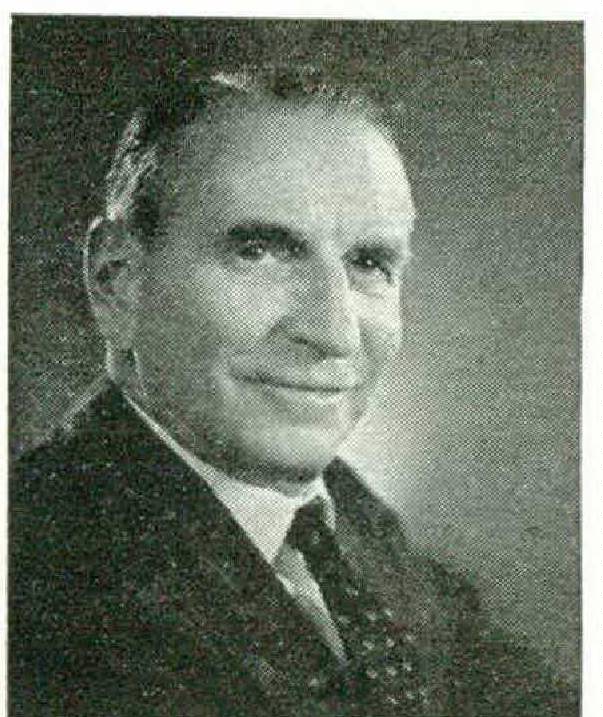
BY EDWARD WEEKS
SALMON travel upstream on a full moon, and fortunate the angler who travels with them.
What is it that turns the adult male, given to the sedentary pleasures of the city, into a trailsweating tramper in rubber pants, armed with a fragile stick of bamboo? Call it the return to second nature; for if one’s first prompting in summer is to escape from the city’s heat to the suburb, the second is to escape from the suburb to the wilderness.
The trail I follow edges the bank of the Northwest Miramichi, roughly five hundred and eightyfive miles north of the Boston Statehouse. You walk with the sound of the water in the air, and you are clad in rubber and in canvas shoes with felt soles because the pools you are hunting are accessible only to those who wade. (Four miles of trail between nine and noon in waders under a July sun remove most traces of Falstaff.) Not only does the adventure open your pores; it opens your antennae until every one of your senses is employed. This is a glacial, canyoned stream, and the path, with its crevasses of root and rock, can be punishing, so the first concern is where to place your tender feet. But the mind operates with split vision, one eye for the trail and one for the forest, noting the birds not seen at home, the crested flycatcher, the yellow-bellied sapsucker, the purple finch, the clustering sociability of the evening grosbeak. Nothing is too small — the violet among the bunchberry, the tiny candelabra of the wild white orchid, the black scales on the rock face showing how high the river rose in the spring flood; and so much is secret — the fresh dropping of a bear and the prints, but no bruin, and fifty yards further on, the skeleton of a deer. Was there any connection? I wondered, but, no, said Henry, my guide; he had found the dead doe and cremated her when they dug the camp out, and he supposed she had died of starvation. It had been a tough winter.
The most secret of our companions is the whitethroated sparrow, whose plaintive call is the signal that we have reached the wild places. My friend David McCord, the poet, and I shared the trail our first day, and listening to those far-carrying notes put his mind to work on a quartrain. It was finished and handed to me on a scrap of yellow paper by sunset:
By ledge of cedar root and stone
I hear the hidden bird unflown,
Cathedral in his tree above
Fhc level of my river-love.
I hear the hidden bird unflown,
Cathedral in his tree above
Fhc level of my river-love.
That “level" was tilting up the next morning when, with Henry and his net, I started on my way to the Bulkheads. Those two adjoining pools, Upper and Lower Bulkheads, a hundred yards of fast water, are the furthest extremity of Dam Camp, uphill and craggy all the way, and seldom fished. On the walk I relived some of my previous visits, and one in particular. It was sixteen years ago, my second on the river, and I was fishing with an inexpensive grilse rod, five flies, and a knotted leader which Jim White, my host, had pieced together and given me. In my pocket was a brand new Hardy leader of gut, my one extravagance, which in my innocence I was saving for an emergency. The grilse — the threeand four-pound freshmen salmon — were in every pool, but the mature fish were scarce and shy; the freshmen were lying beside them and ahead of them, and when the fly hit the water it was a grilse that took, and the ensuing rumpus put the heavier fish down. So Clark, my guide, and I were sent off to see what we could find in the Bulkheads.
It was hot, and I remember that the sweet scent of salmon emanated from Clark’s net. We were dripping from the high going over the ledges by the time we reached the Lower Bulkhead, and there Clark removed his shoes and socks, rolled up his pants, and, tiptoeing, began to reconnoiter, being careful to cast no shadow. This pool has a deep white-water throat which broadens and slows over sunken boulders; there are big spruce at the head and a wall of them to cast shadow on the northern bank. Suddenly, like Pavlova, with one leg suspended, Clark froze; then, so delicately as not to cause the slightest ripple, he returned to our bank to say that he’d spotted five large salmon lying in the shade at the outlet. Salmon, no grilse. It would be a long cast. “Here,” I said, handing him the rod, “you take the first crack while I get my shoes off.” I watched him as I peeled. The long line shot out and the fly made its slow arc; again; then, at a commotion, it tightened; I saw Clark set the hook with the power of his forearm — and the leader broke. Knee deep, he looked up at me with accusing eyes. “Clarkie, I didn’t tie the damn thing!” I cried. Then I reached for my new Hardy gut. Well, we soaked it for ten minutes, smoked, tied on my other Black Dose, and with bare feet I inched out along the sharp, slippery rocks to get within range. My first cast was short. “More line,” said Clark, who was spying from the bluff. This will be it, I thought, and it was. When the white belly began to show and at last the spent, silver body came into the net, we let out that involuntary shout of relief.
While we rested the pool, we argued over who would go next. “Try one more,” insisted Clark. No angler ever quite repeats his performance, and certainly no beginner. As I edged back into the pool, I paused short of my initial position. The line was heavily wet now and hard to pick up. “Give her the gun,” said Clark. I stripped off more line, swung the retrieve back, and started my forward lunge. There was an immovable tightness, a crack! — and I was left holding halt a rod, the fly high in the spruce at my back. Silence as I reeled in and looked sheepishly at my mentor. “The middle section,” he said, as he explored the break. “I think I could refit it over a good fire, but it will take time.” “Clarkie,” I said, “we’ve had it. Let’s go home.”
And now this was another day.
THE BURMA THEATER
Happy the holiday in which it is given to read a book as good as THE ROAD PAST MANDALAY by JOHN MASTERS (Harper, $5.00). A professional soldier who served the British Army in India, as four generations of his family had before him, Mr. Masters, in the first half of his autobiography, Bugles and a Tiger, told of his training with the Gurkhas in “the last twilit days of the Indian Empire.” This new book, which can be enjoyed in itself but will be the richer if one knows what has gone before, carries the narrative through to the end of World War II and is a fine measure of Colonel Masters’ maturity as a soldier and a man. There is romance here, and hard usage; courage, the bitterness of temporary defeat, and an admirable fairness in dealing with others.
Jack Masters was serving as a temporary captain of the 4th Prince of Wales’s Own Gurkha Rifles when the war opened, and they made their debut in some sharp, brief fighting against the Pétain French in Syria. His colonel, Willy Weallens, was one of the last of the Edwardian commanders (“Worse things happen at sea” is his characteristic comment when things go wrong), and for him his adjutant had a most explicit and delightful admiration. Of the Gurkhas, with whom Masters served for fourteen years, he is equally appreciative. “They are of Mongol extraction,” he writes, “small and sturdy in stature; mountain men all; endowed with an inborn honesty toward life that gives them perfect self-confidence; as fond of pranks as of discipline; cheerful under the worst conditions — especially under the worst conditions; brave, courteous. . .”At the Staff College at Quetta he assumed the larger responsibilities of a field officer, which he took to as naturally as a duck to water, and here at Quetta he also put his career in jeopardy by falling in love with the wife of a fellow officer and by asking her to divorce her husband. In this involved emotional state he is reassigned to the Gurkhas as a brigade major of a Long-Range Penetration force under Wingate, an assignment which sweeps him into the hardest fighting of his career. I don’t want to get ahead of his story; it is enough to say that Barbara loves him and that their leave together in the Himalayas is as fine a piece of descriptive writing as any of the battle episodes.
The author, as we know from his novels of India—Nightrunmers of Bengal and Bhowani Junction being two of the best—has a swift grasp of detail and a wonderful sense of comedy. In The Road Past Mandalay he is skillful in his portraiture of Willy and his fellow officers; he draws a lively contrast between “Vinegar joe” Stilwell and General Wingate as he watches them in action; he gives an illuminating account of the Chindit strategy; and the honesty of the standard by which he judges himself as a soldier and as a lover, one cannot fail to respect.
THE SUN GODS
Director of the Writing Center at Stanford University and a writer whose novels and short stories mark him as one of the most talented of his generation, WALLACE STEGNER, in his newbook, A SHOOTING STAR (Viking, $5.00), has made a penetrating, provocative study of the self-centered and overaffluent American wife. Sabrina Castro is sitting pretty — and there is never any doubt of her physical attraction — until she gets bored. Her physician husband, Burke, has a big practice in Pasadena and more concern for his patients than for her; Sabrina is childless, with plenty of money and more to come from her fabulously wealthy mother, but she has found nothing to spend it on except herself. In Mexico, to which she has fled in her boredom, she is caught up in a passionate, unpremeditated infidelity; it is so much a thing of the moment that she never quite believes in it (nor do we); remorse and self-disgust compel her to make an unsparing evaluation, and on page 91, spurred on by her good friends, the Macdonalds, she embarks on a rebellious readjustment.
This is a good theme, and I find it regrettable that Mr. Stegner should have marred its telling at the outset. All of the people who surround Sabrina are unattractive, if not repellent: the ice-water Burke; the silly, indulgent mother with her fads and her supercilious secretary; the sun-worshiping, selfish, oversexed brother, Oliver — well, with Sabrina debasing herself interminably, isn’t it expecting too much of the reader to take a rising interest in such a crew? A second shortcoming is the New England heritage which the family prides itself on; in such matters Stegner does not have the persuasiveness and irony which Marquand did. What is vital in this story is the dispute over the peninsula real estate, the mores of California, the unregenerate Oliver, and the vulnerability and the honesty of Sabrina when aroused.
THE LIGHT TOUCH
For the light touch I brought along THE FOXGLOVE SAGA (Simon and Schuster, $3.95) by AUBERON WAUGH, son of Evelyn. Novelists who follow famous fathers must submit to the inevitable comparison, and I give it as a compliment to Waugh the Younger that his witty short novel reminds me, at its best, of Decline and Fall. This Innocent’s Progress of young Martin Foxglove through an upper-class Catholic boarding school and into a regiment which is presumably the Guards has its moments of terse, keen satire. Martin is blessed with good looks and with a mother, Lady Foxglove, whose saintly sweetness is insufferable; what makes the story is the effect of mother and son upon the tougher, shrewder characters in their path. The school, the Royal Bermondsey Hospital, Mother Alice’s (nursing) home, and the regimental training are depicted in a cool, cruel prose. The author’s inexperience betrays him at the end, when he becomes tired of his characters and his story falls apart, but within its limitations, and for those who enjoy English banter, this is fun.