The Righteous Major
After a successful career as a corporation president, FREDERICK W. COPELANDmoved to Southern California, where for the past fifteen years he has been active as a management consultant. He here reveals for ATLANTICreaders and Civil War enthusiasts some hitherto unpublished information regarding his grandfather and how he tried to save the Union.
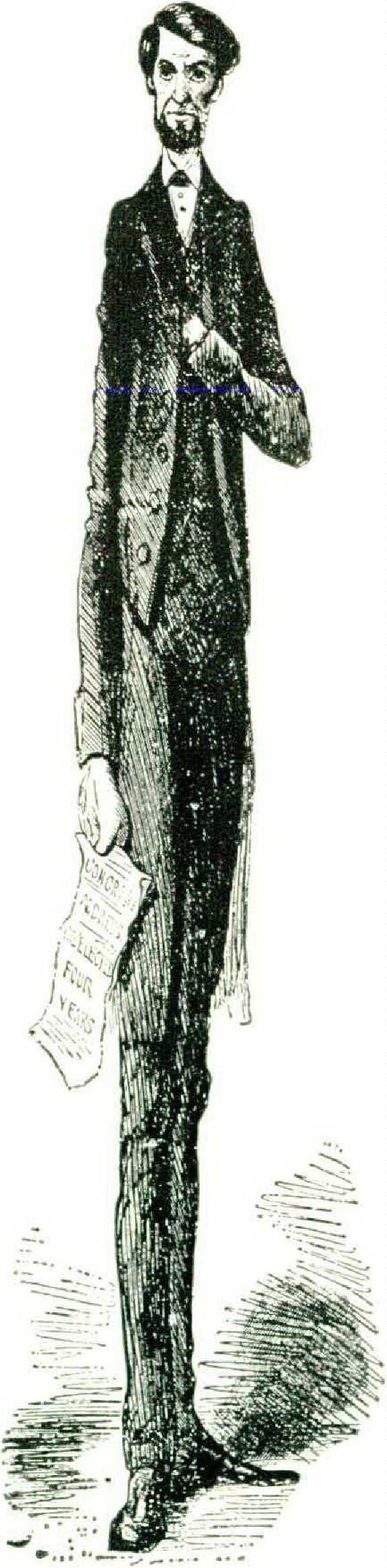
I KNEW nothing about my paternal grandfather except that his Civil War saber hung over our mantelpiece and there were two unusual anecdotes: that he had been suspended from Harvard College in 1850 for “unseemly applause” from his study window of a monkey and an organ-grinder; and that he had been treated very badly by President Lincoln. We grandchildren had a standard joke each year that we would not celebrate Lincoln’s birthday because Abe had done dirt to Grandpappy; but we never told this outside of the family, as we were not sure we believed the story ourselves and we knew that other children would scoff at it. Some years later, however, after my father’s death, we came upon a pamphlet, yellowed by age, bearing on its cover the following:
STATEMENT OF R. MORRIS COPELAND Ass’t Adjutant-General & Major of Volunteers DISCHARGED FROM SERVICE August 6, 1862
Boston: Printed by Prentiss & Deland 40 Congress Street 1864
This pamphlet of fifty-two pages is the attempt of a bewildered and heartbroken gentleman to write a defense against unspecified charges resulting in his being cashiered from the army. In humanizing his own story he humanizes, for good or bad, President Lincoln, Secretary of War Stanton, Major General Banks, a governor and a U.S. senator from Massachusetts, and other prominent figures of that time. He gives us indirectly an intimate picture of the confusion in Washington and at the battle fronts and the amazing ease with which a mere major of the Union army could virtually commute from the fields of action to Washington, New York, and Boston and consort with high officials of the federal and state governments and intellectuals such as Ralph Waldo Emerson, Henry W. Longfellow, and Louis Agassiz.
I am neither a biographer nor a historian, but I sincerely believe that by quoting selected passages and adding a few explanatory interpolations I can convey the poignancy and impassioned earnestness of the defense, the naivete that is almost selfincriminating, and the backstage picture revealing how some of our historically great could be just as vindictive and petty as we ordinary mortals.
At the outbreak of the Civil War, Grandfather left his wife and two children with his father in Vermont, abandoned his career as a landscape architect, and answered the call of the governor of Massachusetts for volunteers. He was commissioned quartermaster of the 2nd Massachusetts Volunteers and served with it in the field until appointed aide-de-camp to Major General Banks, with rank of major. He must have served with distinction in the campaign along the Potomac and up the Shenandoah Valley, as he received several citations and was twice recommended to command newly formed regiments. The record indicates, however, that, as is the case with most aides-de-camp to generals, one of his principal duties was to act as a wailing wall for his boss, who, like all generals, disapproved of the way the war was being conducted, and particularly the way he was being slighted, as compared with McClellan. Grandfather not only sympathized with the general but had his own ideas on winning the war, one of them being to raise Negro regiments under his own command. When he secured a furlough to go to Washington to approach his congressmen with this plan, General Banks asked him to drop in at the War Department and tell Secretary of War Stanton what a bind their army was in and how desperately they needed reinforcements.
Before I could enter at all into details he [Stanton] cut me short, saying that it was useless to waste time . . . for the President was in such a state of mind that he could do nothing with him. He then asked me about Gen. Banks position and prospects. I told him briefly how important it was that the general should be reinforced, and showed him on the map the exceeding weakness of our position. Mr. Stanton appeared annoyed by my statement and said that three generals all thought Jackson was in front of them, and all wanted troops. There being nothing more to be said, I left him.
Later in the day, however, Grandfather received an urgent telegram from General Banks to get in touch with Secretary Stanton again and report the desperate urgency of reinforcements. It was too late to see the secretary in his office, but Grandfather did not hesitate to pursue him, first to his home and then to where he was dining out. That he was treading on delicate ground never seemed to occur to him on this or any other occasion, but he happened to pick up a Massachusetts congressman and bring him along to see Stanton.
Mr. Stanton seemed much irritated that Gen. Banks should have telegraphed me instead of him; and again repeated that there could be no danger and he could send no troops. This was Tuesday night. The next Sunday Gen. Banks was in the most rapid flight.
Can anyone imagine a more unpardonable sin than giving to a public official, in the presence of a Massachusetts congressman, a warning of what would and did happen in spite of the official’s flat statement that it could not happen? But, unmindful of any indiscretion and apparently brushing aside his worries about Banks, Grandfather says, “Having previously received a fifteen-days leave of absence to enable me to go to Massachusetts, l left Baltimore on the evening of the 22nd and arrived in Boston Friday afternoon.”
There is no account of what he did with his weekend, but
Early Monday morning I went to the house of his Excellency Gov. Andrew to get the latest news. He showed me a large number of the most alarming telegrams received from Washington. . . . In the course of our interview he expressed his solicitude lest the already over-taxed militia of Massachusetts might respond tardily to the call for immediate volunteers; and asked me if I could not write some appeal to the people of Massachusetts, which would arouse them to their utmost efforts.
Reading between the lines, one suspects the governor said that recruiting was slow because people thought victory for the North was in the bag, whereupon Grandfather told him the Northern troops were getting licked and pushed around everywhere.
Eager only to forward the war, and hasten support to our shattered army, I sat down there, and wrote the following appeal to the people of Massachusetts, which was sent at once to the daily evening press: and before I could revise, examine or recall it, was spread over New England, and copied the next day into most of the Northern newspapers:
I shall quote only the most lurid lines:
AN APPEAL TO MASSACHUSETTS:
Have you heard the news? . . . Three weeks ago today he [Gen. Banks] was, with sixteen thousand men . . . holding twenty thousand of the enemy at bay; ready in one day more to move suddenly on their flank and crush them. Fremont was ready to occupy Staunton, whence fifty thousand men would have rushed victorious upon Richmond. [But] ten thousand men were ordered from him [Banks] to protect Washington [leaving] Banks with six thousand . . . to face twenty thousand. . . . Do you wonder . . . Major-General Banks has had to retreat? . . . The enemy follow our trail like hell-hounds. At Ball’s Bluff they shot prisoners in cold blood. At Bull Run they cut off the heads of dead men. . . . Men of Massachusetts . . . forget your trades and business, which will be of no value if this enemy is not destroyed. . . . Come to rescue Gen. Banks and the Second Massachusetts Regiment.
He admits that when he read his appeal in print he saw that he had made a mistake. An article signed by a regular army officer saying that the powers in Washington had passed up an opportunity to capture Richmond and had sacrificed thousands of Massachusetts’ finest boys was “likely to irritate the Secretary of War.”
I also feared it would annoy Gen. Banks, who had studiously avoided everything which looked like a complaint against the Government. . . . But it did not then, nor does it now, seem to me that I could be said to censure my superior officers, any more than that any person who simply narrates historical facts can be said to censure those whose actions make history.
THE reaction of General Banks was crisp and quick. Not knowing where to reach his wandering aide-de-camp, he telegraphed to the editor of the newspaper in Boston: “Major Copeland should secure some position in the Massachusetts regiments of equal rank to that he now holds. It is not consistent that he should return to his post here after his proclamation in Boston.” But this message reached Boston after Grandfather’s departure. He returned to camp, filled with his usual virtue and innocence, and was completely surprised when Banks greeted him with a demand for his transfer to any other army but his. Grandfather sent his application immediately to the War Department and to the governor of Massachusetts, continuing in the meanwhile to carry on his duties with Banks in what appears to have been a surprisingly cordial atmosphere.
As for the reaction of Secretary Stanton, when no reply was received to the request for transfer, Major Copeland asked Banks’s chief of staff, w ho was going to Washington, to press the matter with Stanton.
On his return, this officer reported that on mention of my name, Mr. Stanton denounced me with great severity; expressed his extreme surprise that Gen. Banks should retain so mischievous a person on his staff . . . and [said] that if I came into his hands again I should have cause to remember him all my life.
On the 5 th of July, Gen. Banks returned from Washington and at breakfast he told the assembled mess, some eight officers and their servants, of the disastrous rumors which were afloat in Washington as to M’Clellans movements, and the danger there was of the capture of his whole command. He said further that the President was believed to be much alarmed and uncertain what to do; and that the feeling generally prevailed in Washington that some one military chief should be placed in charge of the War Department and the armies in the field.
The big question was how to arouse public opinion, and this hit my impetuous Grandfather as a challenge to every red-blooded American. Who but he had a brother-in-law who ran a big newspaper? He must get the message immediately to Mr. C. F. Dunbar, of the Boston Advertiser.
Communication by mail was notoriously tardy and uncertain and the need for action immediate; and I again prepared my telegram: but in order to conceal its purport from the hasty inspection of telegraph operators, I enveloped it in a simple cipher of my own invention, arranged for the occasion, not very difficult to be interpreted upon careful study by one who would give time and patience to the task. As nearly as I can recall it my message read as follows:
“General Banks returned. M’Clellan defeated and liable to be captured. The President alarmed and uncertain what to do. Urge that a strong man be placed at the head of affairs and troops be sent rapidly from the west.”
I did not for a moment consider that I was doing anything improper; and I am unable still to see that I in any way violated propriety.
This hit-and-run philosophy of Grandfather’s is confirmed by his next statement.
The whole matter passed from my mind, and never recurred to me until after my return to Boston later in July, when in conversation with Mr. Dunbar, I remembered it, and asked him why he had never mentioned in his letters that he had received it. He said, because he never did receive it.
I remained with Gen. Banks, apparently in full possession of his confidence, until I was relieved, on the 11th of July, by the arrival of my successor . . . when by General Order ... I was ordered to report to Gen. Hunter.
On arrival in Washington he obtained a leave of absence for fifteen days and went at once to Boston. While in Boston he applied to Governor Andrew for command of one of the Massachusetts regiments. It is significant that he presented to the governor the following letter from General Banks: “Permit me to commend to your favorable consideration Major Copeland as an officer qualified to raise and command one of the new regiments of volunteers. He is an officer of energy and capacity.”
Grandfather, like most of his grandchildren, did not believe in wasting a moment of a vacation. He arrived in New York at the very end of his furlough and learned that his ship had sailed that morning and that there would not be another one for a week. He was probably relishing this conscience-free holiday in New York, when he picked up a copy of the Tribune of August 10, 1862, and read:
General Order No. 96
Major R. Morris Copeland, assistant adjutant general United States Vols., having violated an important trust committed to him while serving on the staff of the General commanding the Department of the Shenandoah is, by direction of the President, dismissed the Service of the United States, to take effect Aug. 1, 1862.
— By Order of the Secretary of War
In his own words, “A thunderbolt from a cloudless sky could not have been more startling.” Not having the faintest awareness of any misconduct in his past and feeling sure his innocence would be proved once he could face his accusers, he set off for Washington at once, but “to be provided against any emergency I procured letters of introduction from gentlemen in New York to prominent persons in Washington.” I never could figure out how he was able to meet and get the backing of prominent people everywhere and why, if he had the political astuteness to build these bridges, he did not realize the wretchedly poor politics of some of his own impulsive actions.
AS SOON as possible after arrival in Washington, Grandfather called on Mr. Welles, Secretary of the Navy, and presented a letter of introduction. On hearing his story, the secretary set up an appointment with President Lincoln for 11 o’clock that morning, and personally escorted him to Mr. Lincoln’s office, saying, “Mr. Lincoln, I wish to introduce to you ... an officer who seems to have suffered a great injustice; he is a. friend to our best friends, who especially request of you to give him a hearing and justice; and he deserves, for their sake, to receive proper attention.” (You will note the political hint “friend of our friends.”)
Grandfather then, “as composedly as possible,” read to Mr. Lincoln the official order of discharge, and said:
I have come to you, sir, as President of the United States, and Commander of the Army, to ask for simple justice as a citizen and soldier. . . . I have been several times promoted; have been seven times engaged with the enemy; have been twice honorably mentioned; and have now, in my pocket, letters recommending me in the strongest manner for the command of a cavalry regiment, from two majorgenerals, three brigadier generals, four colonels and several citizens. No complaint that I know of has been made against me; and yet I am dismissed the service with no more ceremony than one would kick out a dead dog. Will you allow this, sir? Will you allow the reputation I have made, my own and my childrens property, to be destroyed in the dark?
At this point in the narrative you will expect, as I did, to read how the Great Humanitarian, the Great Emancipator laid his hand on Grandfather’s head and said, “My poor boy, don’t give this another thought. I’ll see that justice wins over petty persecution.”
But, far to the contrary, Uncle Abe replied, “Well, sir, I know something about your case, and I’ll tell you what I know. You’re that man who went to Boston . . . and wrote letters and editorials abusing the Administration and made speeches, and did all you could to make a fuss.”
Grandfather denied everything except writing one article for the newspaper at the specific request of Governor Andrew to stimulate recruiting in Massachusetts.
But the President went on to say:
Well, I did not know you were dismissed. I never saw the order, that I know of, until today; though of course it has been laid before me and received my official sanction; and I dont know what the charges are. But I do know that you sent a most improper and malicious telegram, in cipher, to a Boston editor, which no officer has a right to do, saying I was scared, M’Clellan was to be captured, and we were all going to ruin. You thought you were very sharp and pu t it into some kind of cipher you made up; but we’ve got some very cute fellows in the telegraph-office, and one of them worked it out and sent it to me to read; and I could see plainly enough that you belonged to that class of men who are trying to make all the mischief for the Government that they can. Fact is, I believe you want to help run this government and because you dont get as much notice as you think you deserve, you are trying to make trouble. ... I am inclined to believe that you are a mischief making fellow and good for but little as an officer . . . and the sooner you are out of the service, the better.
Not a word about justice or the right of a defendant. to a day in court to hear the charges and attempt to refute them. The President’s tone of voice must have been even more emphatic than his words, because Grandfather, for once, was unable to add any comment in his narrative.
There began then one of the most pathetic runarounds that I have ever seen described. The disgrace was ghastly, but I think Grandlather was upset even more by the frustration of not being able to learn the charges or their source; he wanted to fight back but could not find his accuser.
He went first to the War Department and asked to see the charges. The undersecretary said, “Certainly,” but disappeared into Stanton’s office and on return announced curtly that the charges were not available. Hastening to Boston, he asked Governor Andrew to appeal on his behalf. The governor was very sympathetic, as well he should have been over the consequences of his request for a letter to stir up recruiting, but he said he was powerless in Washington and the best he could do would be to write to Senator Sumner, the United States senator from Massachusetts, asking him to give a hearing and all possible assistance. In this letter, which is quoted in the Statement, the governor very tactfully admits that Major Copeland “is ardent, earnest and impulsive . . . but incapable of intentional violation of trust.”
On arrival in Washington, Grandfather presented the letter to the senator and was warned offhand that “the Government is excessively prejudiced against you.” Pressed further, the senator went to see Secretary Stanton on the major’s behalf and reported, “I asked him if the matter was closed. He said it was; and if reopened he would treat you worse than he had. He said he did not object to your having criticized the action of the Government but that a staff-officer should send the editor a telegram in cipher, is utterly inexcusable.”
Grandfather thought up what sounded like a smart end play; he would get Governor Andrew to appoint him to some new regiment of volunteers, and Washington would not notice him in the package. The governor wrote that he had tried this, but all commissions had to be confirmed by the War Department, and they always vetoed Copeland.
During the winter of 1862-1863 Senator Sumner personally appealed to President Lincoln for reconsideration of the Major Copeland case, but received no reply. Senator Sumner was then asked to deliver to President Lincoln a very strongly worded petition pointing out the injustice of ruining the life of a fine man like Major Copeland without stipulating charges or granting a fair court-martial. The petition ended with, “This is not only unfair to the individual but creates in the minds of the public a very poor impression ol the Government.” And who do you think signed this petition? Here is the list:
R. Waldo Emerson J. M. Forbes Jas. Savage William B. Rogers Thomas Hill Jas. Walker Jas. Freeman Clarke Amos Tuck Ezra Lincoln J. G. Goodrich Ls. Agassiz
Jared Sparks J. R. Lowell Henry W. Longfellow Josiah Quincy, Jun. William I. Bowditch Henry Lee, Jun. Charles Hale Henry L. Bowditch G. S. Hillard Sami. G. Howe
Senator Sumner reported back that the President had given him a full hearing in which to present this petition and was not openly unsympathetic but said the case could not be reopened without personal offense to Mr. Stanton. The senator wrote, “From the beginning I have been personally satisfied that Major Copeland had fallen into a military indiscretion, which was not in any just sense a breach of trust; and I have expressed this to the President and the Secretary. I do not, therefore, disguise my disappointment at the result, which I now report.”
Grandfather pricked up his ears when he heard that a commission had been appointed in Washington to examine cases of officers who had been dismissed without a hearing and who desired to come before the commission; but when he applied for a hearing he was told the application must first be cleared through the War Department. He applied through channels and never received a reply.
Major Copeland’s Statement ends with simple dignity:
Having thus exhausted every resource, I am now, more than a year after my discharge, compelled, as the only hope for my reputation, to appeal to the verdict of those who may read this account.
The logical conclusion from all the evidence I can collect is that I was dismissed because I clothed my thoughts in a language unfamiliar to the War Department; for the President told me he did not think I could have been dismissed for the telegram, but on charges . . . preferred by General Banks. Gen. Banks has denied ever presenting any charges. Gov. Andrew has been informed that the telegram is the only charge against me. . . . This is preposterous and carries us bac k to the only tenable ground, that the real offence is my letter of May 26th [the newspaper article] for which Mr. Stanton told Major Perkins and Gen. Banks he would give me cause to remember him all my life.
That a President of the United States might resent public criticism and punish the offender is never said or implied in Grandfather’s Statement.
The reader will have to admit that although Grandfather may not have been very smart or discreet, he was a hound for punishment, and whether it was unseemly applause for an organgrinder, in defiance of the authorities at Harvard, or being kicked around by the President of the United States and the Secretary of War, he always knew he was right. My wife and my children are quick to point out that the above is a family trait.
In 1870 — eight years too late — Mr. R. Morris Copeland, civilian and with both health and pocketbook impaired by his military disgrace and subsequent efforts to clear himself, received the following telegram:
By direction of the President, General Order No. 96, Aug. 6, 1862, from this office directing the dismissal of Major R. Morris Copeland, asst. adj. gen., U.S. Vols., is hereby revoked and his resignation is accepted to take effect Aug. 8, 1862.
— By Order of the Secretary of War
I was once told that when this telegram reached West Castleton, Vermont, the whole town put on a celebration that was a “corker.”