The Wine of the Tetrarch
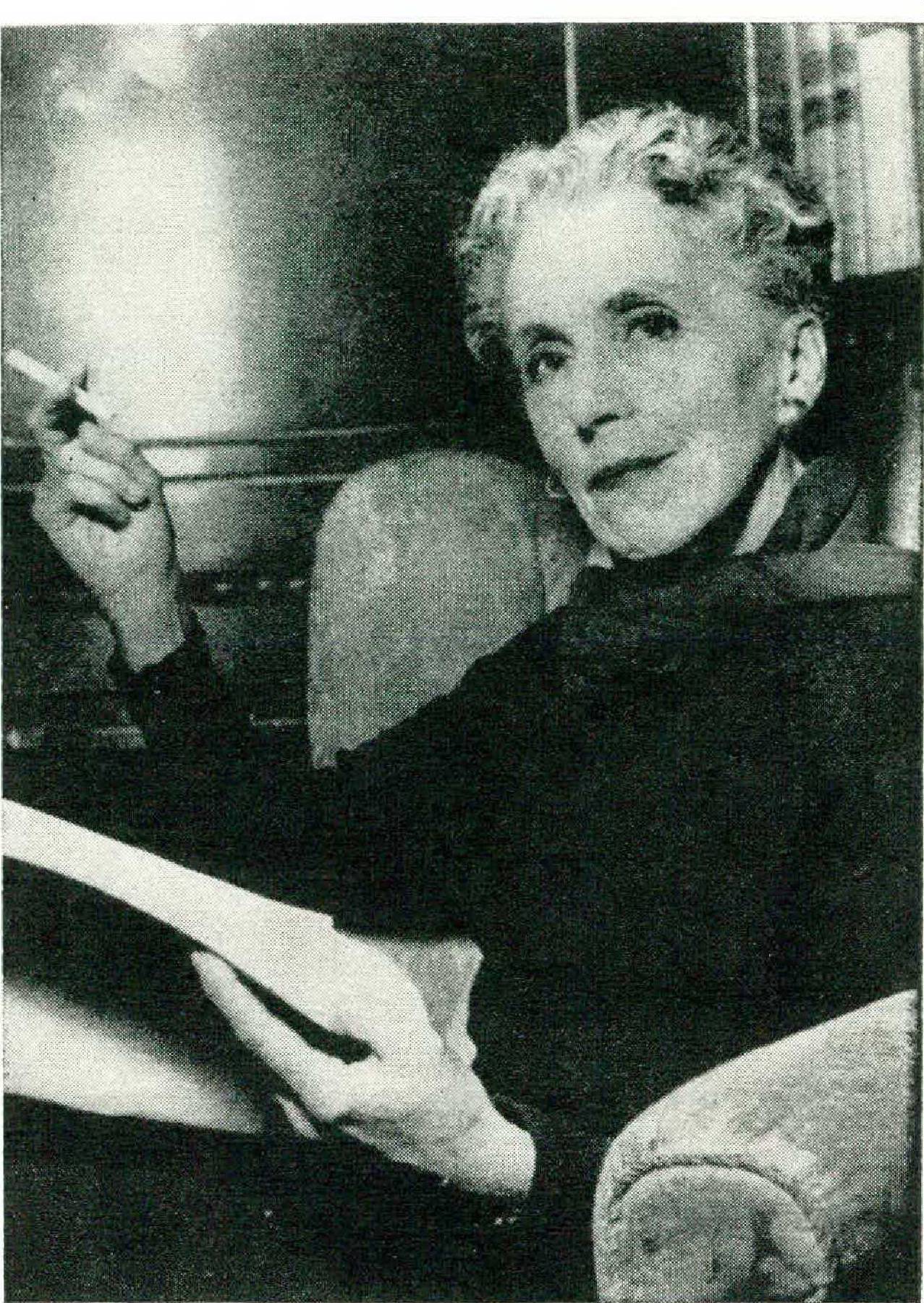
This story by ISAK DINESEN, Denmark’s leading writer and in private life the Baronesse Karen Blixen, is a revision and elaboration of an episode which originally appeared in her famous book, SEVEN GOTHIC TALES. Readers who were fortunate will remember how effectively she read this aloud on her visit to this country earlier this year.
WHEN, upon the first Wednesday after Easter, the Apostle Simon, called Peter, was walking in the streets of Jerusalem, so absorbed in the thought of the Resurrection that he did not know whether he was treading the pavement or was being carried along in the air a few feet above it, he noticed, in passing the temple, that a man was standing by a pillar waiting for him. As their eyes met, the stranger stepped forward and addressed him. “Were you not also,” he asked, “with Jesus of Nazareth?”
“Aye, I was. Indeed I was,” Peter answered in greatest hurry.
“Then,” said the man, “I would fain have speech with you. I have been looking for you. I do not know what to do. Will you come inside a tavern that I know of, close hereby, and have a cup of wine with me?”
Peter, because he could not disengage his mind sufficiently to find an excuse, followed, and soon the two were seated together inside the tavern.
The place itself to the Apostle looked somewhat dark and dubious, but the stranger seemed to be well known there and held in respect. He at once obtained a table to himself at the end of the long room and out of earshot of the other guests coming and going; he also ordered the best wine of the house for himself and the Apostle.
Peter now took a look at the man, and found him to be a highly impressive figure. He was a big, strongly built, swarthy man of thirty-three, who carried himself with much pride. He was badly dressed in a patched goatskin cloak, but with it he wore, round a slim waist, a fine scarf of rich, soft, and shining crimson silk; he had a gold chain round his neck, and upon his hands heavy silver rings, one of which was set with a big turquoise. It now seemed to Peter that he had seen this man before, in the midst of terrible anguish and turbulence. But he did not remember where.
“If you be indeed one of the followers of the Nazarene,” the stranger said, “I want to ask you two questions. I shall tell you my reasons for asking them as we go on.”
“I shall be glad if I can help you in any way,” said Peter, still absent-minded.
“Well, help,” said the man. “Now first: is it true what they tell of this Rabbi whom you served, that he has risen from the dead?”
“Yes, he has indeed risen,” Peter answered.
“Nay, I have heard rumors about it,” said the man, “but I did not know for sure. People will tell you many things. And is it also true that before he was crucified he told you himself that he would rise, so that you knew it was going to happen?”
“Yes,” said the Apostle, “he told us. We knew that it was going to happen.”
“Do you think then,” the stranger asked, “that every word which he has spoken is certain to come true? Prophets prophesy many things.”
“Nothing in the world is as sure as that,” Peter said.
The man sat silent for a while.
“I shall tell you why I ask you this,” he suddenly said. “It is because a friend of mine was crucified with him on Friday, at the Place of a Skull. You saw him there. To him this Rabbi of yours promised that he should be with him in Paradise on the same day. Do you then take it that he did go to Paradise on Friday?”
“Yes, he did go there, and he is there now,” said Peter.
The man again was silent.
“Well, that is good,” he said. “He was my friend.”
Here a small barelegged boy of the inn brought wine in a pewter can and two pewter cups. The man poured wine into the cups, the light shining on his rings, looked at it, and set it down.
“And this,” he said, “is the other thing that I wanted to speak to you about. I have been drinking many wines since Friday, and they have all tasted bad to me — poor stuff. I do not know what has happened to the wine in Jerusalem, it has no longer either body or flavor to it. I myself think it is due to the earthquake which we had on Friday afternoon. Nobody but me seems to realize what a big, unusual earthquake that was. It has turned all the wines of the city bad. Insipid.”
“I do not think this wine is bad,” said Peter, to cheer his host, for he looked sad, as if lost.
“Is it not?” said the man hopefully and drank a little from his cup. “Yes, this also is bad,”he said, and set down the cup once more. “If you call it good, it is perhaps that you have not got much knowledge of wine. I know good wine from bad, and it has once given me much pleasure in life. Now I do not know what to do.”
Now about this man Phares,” he again took up the thread of the talk, “I shall tell you all about how he was taken prisoner and put to death.
“He was my friend, a brave man, and he had a few brave men with him. He was a highwayman on the road between Jerusalem and Jericho. On that road there came along a transport of wine, which the Emperor of Rome sent in a present to the Tetrarch Herod, and amongst it was a hogshead of red Capri wine which was beyond price. One evening — in the very same place where we are now — ” said the man, looking round him, “I was talking to Phares, and I said to him: ‘I would give a year of my life to drink that red wine of the Tetrarch’s.’ He said: ‘For the sake of the love I bear you, and to show you that I am not a much lesser man than you, I shall kill the overseer of this transport and his men, and have the hogshead of red wine buried under a cedar on the mountain, and you and I will go out there to dig it up, and drink the wine of the Tetrarch together.’ He did indeed do all this, but as he came into Jerusalem to find me, he was recognized by one of the men of the transport who had managed to escape, and was thrown into prison and condemned to be crucified.
“I was told of it, and I walked about in the town for two nights and two days, thinking of a means to help him escape. In the evening of the first day, in passing the temple, I saw on its steps an old beggar, whom I had seen in the same place before. He was ill, his legs swollen to the size of an elephant’s legs and all bandaged up, and he was also mad. He would stand on the temple steps of an evening, crying out, cursing the people of the town, and proclaiming the end of the world. As he was mad, people only used to laugh at him. But upon this evening it happened that a centurion was coming by with his men, and when he heard what the beggar cried about the Tetrarch Herod’s wife, he was angry. He told the old man that if he did the same thing again he would have him sleep in the prison of Jerusalem, and he would have him dealt twenty-five strokes of a lash in the evening and twenty-five more in the morning, to teach him to speak with respect about great people.
“I listened, and I thought: This is the opportunity for me.’ So in the course of the next day I had my beard and hair shaved off, I smeared my face in nut oil and dressed myself in rags. I also bandaged my legs to the size of the beggar’s, but within the bandages I hid a sharp file and a long, thin, strong rope. In the evening, when I walked up to the temple, the madman had been frightened and had not turned up and I took his place on the steps. Just as the watch was passing, I shrieked out, in the cracked voice of the beggar, curses against Caesar in Rome himself. And as I had thought, the watch took hold of me and brought me to the prison, and no one recognized me. I was given, there, twenty-five strokes with a lash, and for the sake of the future I took note of the face of the man who beat me. But with a piece of silver I bribed the turnkey to shut me up for the night in the room where Phares was kept, high up in the prison, the which, as you know, is built into the rock.
“Phares fell down and kissed my feet, he also gave me some water, the only he had. But later we set to work to file through the iron bars of the window. It was set high up in the wall; I had to stand on the shoulders of Phares, or he on mine — which was not so good, since my shoulders were sore after the beating. But as the dawn began to spring, and the houses and streets of Jerusalem below us, with the hills and the olive woods further away, were growing gray, we broke the bars, and tied the rope onto the stumps. I made Phares go down first — the rope was not quite long enough, so that at the end of it he had to let himself drop four or five feet. Then I got out, but it happened that just at the same hour a batch of soldiers came to the place with a new prisoner from the Mount of Olives. They had torches with them, and by their light they caught sight of me as I was hanging on to the rope, on the wall. Now Phares could have got away if he had run, but he would not go before he had seen what was happening to me, and in this way we were both taken once more, and they saw who I was.
“This is how it happened,”said the stranger.
“All this,” said Peter, who to begin with had listened with only half an ear, but as the tale advanced had become more attentive, “I hold to be very brave of you, and it must be good to you to remember how you were ready to give your life for your friend.” At that he sighed deeply.
“Oh, I have lived too long in the woods to be frightened by an owl,” said the stranger. “Has anybody told you of me that it was my habit to run away from danger?”
“No,” said Peter. “But then you tell me,” he went on after a moment, “that you too were made prisoner. Still, since you are here, you will have got off somehow?”
“Yes, I got off,” said the man and gave Peter a queer, deep glance. “And I meant, then, to revenge Phares’ death. But since you tell me that he is now in Paradise, I do not see that I need to worry. And now I do not know what to do. I do not care to dig up the hogshead of the Tetrarch’s wine and drink it.”
“It would be sad for you without your friend,” said Peter. He felt that he ought to reproach the man with the theft of the Tetrarch’s wine and the murders, but somehow, tonight, he had not got it in him to do so. “And when you had been telling him that you would give a year of your life for it.”
“It is not of that that I am thinking,” said the stranger. He stopped and put in, “And a year of my life is not the same to me now as it was when I talked with Phares.”He then went on: “But it may have happened that the red Capri wine, although it was buried, has gone bad like the wines of Jerusalem and will give me no pleasure. And what then?”
Peter sat for a little while in his own thoughts. “ Friend,” he said, “there are other things in life to give you pleasure than the wine of the Tetrarch.”
“Yes, I know,”said his host. “But what if the same thing has happened to them as well? I have got two fat young wives, one with black and one with red hair, waiting for me at home, and just before this happened I purchased a thin little girl of twelve, with big frightened eyes, a virgin — I have not seen her since. I might try those. But the earthquake may have affected them as well as the wine, so that by now they will have neither body nor flavor to them. If it can turn all the wines of Jerusalem insipid, it may well also be capable of turning life itself insipid, with everything there is to it. And what then?”
Now Peter began to wish that this man would stop his complaints and leave him to himself. “ Why,”he asked, “do you come to me about this?”
“You remind me,” said the stranger. “I shall tell you. I have been informed that this Rabbi of yours on the last night he lived gave a carouse to his followers, and that there a highly special wine was served, which had to it some highly special body. I have been thinking of it ever since. Indeed — and I do not know why — I have been thinking of it as if nothing else did really exist in the world. Tell me now, you that were with him, if there will be any of this wine left over — I shall pay you your price for it.”
Peter stared at him. “O God ! O God,” he cried out and upset his wine, so that it ran all over the table and the cup rolled onto the floor. “You do not know what you are saying! That wine, which we drank on Thursday night — with all his treasure, with his Empire itself, Caesar in Rome cannot pay for one drop of it!”
He was so terribly shocked and revolted that he rocked to and fro in his seat, he even beat his forehead three times against the wood of the table before him. Still, after a while, in the deep darkness and distress of his mind the order of the Lord, that he was to be a fisher of men, was brought back to him. SO again, after a time, he lifted his face, gazing at the man the other side of the table and endeavoring, out of his long experience in the fisherman’s trade, to place this dark and heavy fish before him, swimming so lonely, and to decide what kind of net to set for him. A misgiving, a sadness came upon him, as if of all men in the world this was the one that he could not help. He brought forth his finest tackle: another word of the Lord’s. “My son,” he said, “take up thy cross and follow him.”
The man, at the same moment as he, had been about to speak. Now he broke off and looked very darkly at the Apostle. “My cross?” he exclaimed. “Where is my cross? Who is to take up my cross?”
“No one but yourself can take up your cross,” said Peter. “But he will help you carry it. Have patience and strength. I shall teach you more about this.”
“Teach?” said the stranger. “It seems to me that you know nothing about it yourself. Help? Who is it wants help to carry the sort of cross which the carpenters of Jerusalem make these days? That bowlegged Cyrenian would have had no opportunity to show off his muscle on my behalf. Strength!” he went on after a moment, his fury deepening. “You will never have known a man as strong as me. Look,” he said, and flinging back his goatskin cloak showed Peter his mighty chest and shoulders, marked by more than one deep white scar. “My cross! The cross of Phares was to the right, and the cross of the man Achaz, who was never much good, to the left. I should have taken up my cross in a different way to any of them. Do you hold that three hours is a long time to last on a cross? Wherever I have been, I have stood a head higher than the people around me, about as much so as he did there, upon his cross.” Once more he stopped and put in, in the same way as before: “And might not other people come and tell you that it was he who had taken my cross?” Then again he went on: “Do not hold, you, because tonight I do not know what to do, that I have not been in the habit of telling others what to do, or that they have ever been disobedient.”
The terrible blasphemies of this speech passed Peter’s mind almost unnoticed. For in going through the events of the last week he had now come to the moment when in the garden he had cut off Malchus’ ear and had vowed to control his temper. So he did that now, and answered not a word.
After a while the stranger, as if impressed by the Apostle’s silence, became silent too. He looked at him. “And you,” he said, “who have been a follower of this master. Whom will you have to tell you, now, what to do? What do you think will happen to yourself now?”
Peter’s face, lined and marred by grief, slowly softened and cleared. After another few seconds he spoke, in a low voice. “I trust and hope,” he said, “that my faith, though it be tried with fire, be found onto praise and honor. I trust and hope that it be granted me to suffer and die for my Lord. Sometimes even,” he went on, hiding his eyes with his hand as if faced with too resplendent a light, “sometimes, in the hours of these last nights, I have imagined that at the end of the road a cross might await me.” He was silent once more, then whispered down into his lap: “Although you may think that I be boasting, and that I be too mean for that.”
“No,” said the man, “I think it likely that these things of which you have spoken will indeed happen to you.”
This unexpected faith in his own secret, deep hopes struck Peter as an almost miraculous piece of generosity in the stranger. The heart in his breast melted with gratitude, he blushed like a bride. He ought, he realized, to do anything within his power in return for such noble understanding and support, and for such words of heavenly beauty. “Forgive me, sir,” he said. “Forgive me, my child, for not having helped you as I ought to have done. So much has happened to me in these last days. And then, since Thursday night since Thursday night in the garden” — he sighed deeply — “I have not slept.”
“Oh,” said the man, “I hardly expected anything better.”
“While we have been here talking together,” Peter said, “you have told me that you did not know what to do. Tell me: in what matter are you in such doubt? Even as to the good wines of which you have been speaking, I shall do my best to help you. And I find that after all I may be in a position to do so. Some time back, I now call to mind, I was a guest at a wedding feast where some most noble wine was brought forth in a most noble way. I shall set off tomorrow to go back to the town where it took place and find out whether there might be any of that wine left. Believe me, my journey shall be easy to me if it may ease your heart.”
“I have not,” said the stranger, “been talking of any particular matter. I do not know what to do at all. But I suppose,” he went on after a silence, “that I had better go and dig up that wine of the Tetrarch’s, and lie with that small girl that I told you of. I may as well try them.”
He here got up from the table and draped his cloak round him.
“Do not go yet,”said Peter, who by now could hardly bear to let the stranger out of his sight. “Not just now. There are many things of which you and I ought to speak together.”
“I have to go in any case,” said the man. “There is a transport of oil on its way from Hebron, which I must meet.”
“Are you trading in oil then?” Peter asked.
“In a way,” said the man.
“But before you go, tell me one thing,” Peter said. In his mind he took hold of the rough, dark hand close to his own and held onto it. “What is your name? For if I knew it, and could enquire about you, we might meet again.”
The stranger was already standing in the doorway. He now turned round and looked at the Apostle with arrogance and a slight scorn. He looked a magnificent figure.
“Do you not know my name?” he asked. “My name was cried all over Jerusalem. There was not one of the curs and mongrels of the city who did not yelp it out with all his might. Not one of them who did not, on Friday morning, howl it out. ‘Barabbas!’ they barked. ‘Barabbas! Give us Barabbas!' My name is Barabbas. That name shall be remembered.”
With these words he walked away.