The Vermont North Country
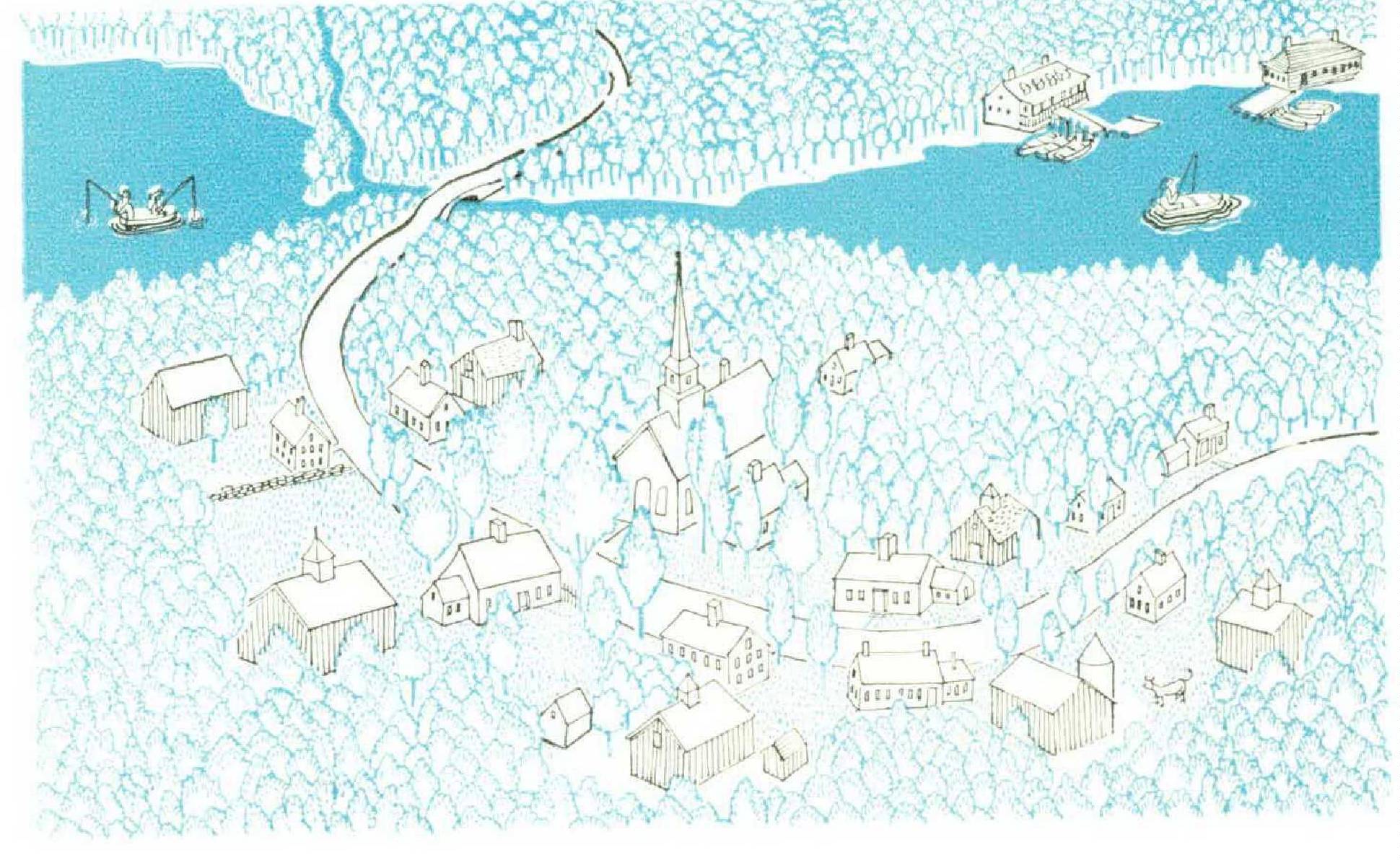
ACROSS the top of New England stretches a wide band of north country so fresh and unafflicted as to make one forget that the Great Tourism Machine had ever been invented. Green, diversified, and tranquil, this is the most interesting blend of lake, island, forest, and mountain in the East. Composed of two Yankee segments as varied as the countries of Scandinavia, the Vermont and New Hampshire north country constitutes a distinct pays on its own, a subregion little known to travelers.
In the north country the traveler finds relief from the usual tourist traps; the roads are unhurried, the villages friendly, the inns and lodges small, surprisingly good, and inexpensive. Distances are short; there are no waste spaces along the way. Burlington, the largest town, has 33,000 people; traffic — especially on the east-west roads — is light. It is a land of uncomplicated pleasures: of quiet lakes, of back-road drives to hidden trout streams; of church suppers and town fairs and old-home days; of small family-run restaurants where the food, grown locally, is as good and abundant as it is simple and inexpensive.
Summer comes late in the north: August through October are the prime months. Heavy forests with mixed hardwoods and conifers make for brilliant foliage color, at its best from the end of September through the first week of October. Traffic on the way north through Vermont and New Hampshire is usually heavy on foliage weekends, but the man who moves on weekdays can wander on impulse and be sure of hotel space any time after Labor Day. These months of the harvest are the time, too, to watch for village festivals, especially the grange suppers, turkey suppers, and game suppers that bring the casual visitor face to face with authentic New England home cooking.
At their best these feasts result from the combined genius of ten or twenty Vermont housewives, each contributing her specialty: the crusted baked beans, the puff-topped shepherd’s pie, scalloped potatoes with a top toasting of cheese, chicken pie and dumplings, or baked Vermont ham — and then the spread of cakes, doughnuts, and pies. Biscuits, perhaps, baked right there in the Grange Hall, and cider pressed the same morning from new “Macs.”Watch the bulletin boards of village post offices and the newspapers of the nearest large town for the dates; find out in advance if seats are reserved (or if there are two or more sittings). If not, go early.
For a more intensive experience of the region, two adjoining areas nicely condense all its best qualities: 1) the northeast corner of Vermont, often known as the Northeast Kingdom, and 2) the top of New Hampshire, from cross-state U.S. 2 to the Canadian border. Separated by the lovely Connecticut River valley, these are two very different, and characterful, versions of the north country. Wild, mountainous, and thinly populated, with a most appealing cluster of lakes, they have the feel of frontier country and yet are readily accessible. Accommodation ranges from luxury hotels to a variety of inns, lodges, and sporting camps. Both areas are favorites with the handful of hunters and fishermen who have discovered them.
The Northeast Kingdom — made up of three of Vermont’s least-traveled counties — is an area that remains as little known even to most Vermonters as it does to the rest of the world. Highland country with a mixture of dairy farms and deep woods, it lies surprisingly close to the sophisticated summer colonies to the south; served by three federal highways, it yet remains a remote and curiously overlooked corner of New England. Its villages do not dress themselves up for visitors, its entertainments are meant for local consumption. It is a surviving slice of rustic, independent Vermont, aloof from the hybrid summer worlds of Dorset, Woodstock, or Manchester. Nor is it a coincidence that the two authentic county fairs in Vermont are both held here, at Barton and Lyndonville.
From the south this area is easily reached by highway up the rich, calm Connecticut River valley or, with less traffic and a more intimate view of the Green Mountain interior, along Vermont 100, that runs all the way to the Canadian border. St. Johnsbury, “the maple center of the world,” is the region’s gateway town. Within a fifty-mile radius of St. Johnsbury are some of New England’s most impressive features: Smuggler’s Notch, Willoughby Lake, Mount Mansfield, and the great New Hampshire notches. But above all it is the proximity of Canada, Lake Champlain, and the New Hampshire north country that makes the Kingdom so advantageous a center for off-track excursions. From Newport, for example, with its pleasant inns and lodges, trips by water on Lake Memphremagog can be made thirty-four miles into the mountain-rimmed Quebec countryside. It is forty miles by road (bus service) to see the lively Friday morning farmers’ market at Sherbrooke. The circular drive from St. Johnsbury northeast to St. Albans bay on Lake Champlain, then back through Enosburg Falls and Hazens Notch to Orleans opens up some of the most attractive areas of the marvelously fresh Green Mountains.
In the Northeast Kingdom you can walk twenty-five miles through woods without seeing a house. But within it and on its fringes there are, for contrast, some of the most enjoyable of the old Vermont villages, quiet and unself-conscious. Among them are, notably, Greensboro, Morgan Center, Lyndonville, Peacham, Lower Waterford, and Craftsbury. (Several of these were “discovered” by the New England professors, men with an unerring eye for the best of what is left of the original New England.) Almost all are blessed with a lake nearby.
In these villages and around the lakes are many (but not too many) places to stay where the abused name of “inn” still has real meaning; small places, mostly owner-managed, where the home cooking that made New England’s culinary reputation is often sustained with fervor. Caspian Lake in the rolling upland country of Greensboro provides a good example of how neatly these pleasures can be combined. The lake itself is 3000 acres of clear water refreshed (at 1400 feet) by mountain air. Hidden away at the end of a back road are an inn and a lodge, called respectively Lakeview and Highland and accommodating, together, seventy-five people. They offer beach, boats, riding horses, wonderful back-road drives, and smörgåsbord. The inn is owned and run by a Scandinavian, a man experienced in Continental cooking who, to the delight of the neighboring householders, is his own chef.
All this (including the food) costs about $10 a day (the lodge) or $40 to $70 a week (the inn). These are fairly representative of rates in the area. There are other good inns scattered in strategic places, among them the Darling Inn (Lyndonville), the Craftsbury Inn (Craftsbury), and the Hotel Barton on three-mile-long Crystal Lake (Barton). And in the classic Vermont village of Peacham there is Elkins Tavern, of Revolutionary War vintage, a very small place on the memorable back road from Danville to Groton. Memorable too is the sharp shift of scene as one moves from these pastoral highlands, through the forests beyond St. Johnsbury, across the Connecticut River valley, and into the alpine atmosphere of the White Mountains — all in an hour’s drive.
Along Vermont’s two main roads to the north country a number of new motels have recently appeared. A notable example — calling itself a “motor inn” and living up to the description — is the Marble Edge, four miles above Manchester. Across the road in the village of East Dorset is the charming contrast of the old Mount Aeolus Inn.
Of the Northeast Kingdom’s fifty lakes and ponds, Willoughby is the most dramatic: a rarity in New England for its grandeur. Enclosed by stark cliffs, with a good assortment of accommodations along its five-mile length, it stands almost at the center of the region, making an ideal base point. All around it is fine hiking, riding, and climbing country.
Nearby are Seymour and Echo lakes, their sand beaches dominated by the peaceful slopes of Elan Hill, a nice contrast to the high drama of Willoughby. In the immediate vicinity are an inn, a lodge, and a colonial tourist home in Morgan Center. The inn and lodge are open through the November deerhunting season; they make an excellent base for excursions past isolated Norton Lake (a favorite among local anglers) and through the great forests around the Averill Lakes. Accommodations in these wilderness places are scarce but quite satisfactory: a camp of five housekeeping cottages (with boats and motors for rent) on Norton Lake, and a more elaborate inn-and-cottages resort setup — with guides, horses, and boats — on the Averill Lakes.
Another tempting road runs from Island Pond, a lumbering and trading center on the edge of the deep forest, seventeen miles to Bloomfield on the Connecticut River and then south to Maidstone State Forest on large, secluded Maidstone Lake. For a thoroughgoing plunge into the woods, try the good back road two miles north of East Burke that runs to remote Granby. The sheriff of Essex County, who lives in Granby, would be the man to ask about guides and accommodations for the exceptional deer hunting in this neck of the woods.
The angler who keeps a rod ready in the car will find plenty of cause to stop and fish, especially as the cool nights of early fall begin to liven up the fish again. Five lakes alone — Big Averill, Little Averill, Forest, Wallis, and Norton — closely grouped in the northeast corner of the Northeast Kingdom offer a variety and abundance of sport (four kinds of trout, salmon, and small-mouth bass). There are plenty of boats to hire, and the hotelkeepers will arrange for guides.
For the more restless soul there are a half-dozen golf courses, scenic cruises on Willoughby and Memphremagog, horses and miles of riding trails. On Mount Pisgah (overlooking Lake Willoughby) and Mount Wheeler, well-equipped alpinists will find some of the best rock climbing in the East. The Appalachian Mountain Club, 5 Joy Street, Boston, and the Northeastern Vermont Development Association in Lyndonville will supply information.
Less ambitious climbers will find innumerable trails leading to high places and long views. The hiker’s trail up Mount Pisgah, for instance, is said to offer more fine views than any other mountain in the Northeast, with the possible exception of the trail on Mount Lafayette in the White Mountains. The great roadless tract called Avery’s Gore, whose only inhabitants are lumberjacks, has a lonely, breathtaking forest-fire lookout tower on Gore Mountain. The highest mountain in northern Vermont, Jay Peak, stands west of Newport; it is conveniently climbed by the Green Mountain Club’s Long Trail, for a view that extends from Montreal to Lake Champlain and the Adirondacks to the White Mountains. Easier still: a paved road in the Darling State Forest (well equipped for tent camping) ascends Burke Mountain (3267 feet) to reveal mountain, lake, and forest for a hundred miles.
(Next month: The New Hampshire North Country.)