Climbing Kilimanjaro
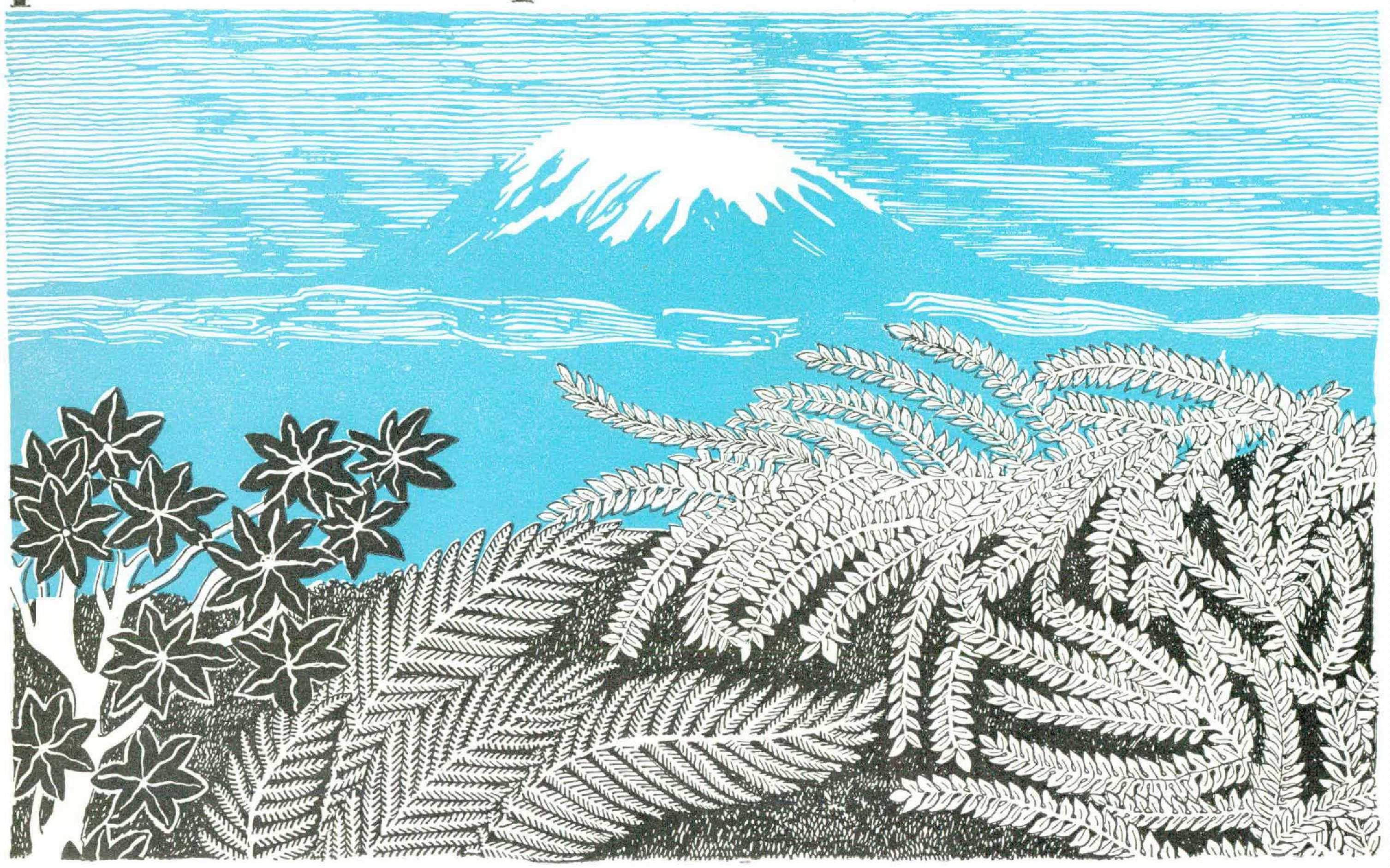
I once enlisted in an army, and after that experience I vowed that I would never voluntarily expose myself to discomfort again. That was still my point of view when I arrived at the Kibo Hotel in Marangu, Tanganyika, Africa. I was traveling with two friends of mine from New York, Deirdre and Elizabeth Ahearn, and the three of us were thoroughly enjoying our trip through Africa. We had been told that the Kibo Hotel was a lovely place high in the hills, far off the beaten track, and with excellent food.
It was all of that, but there was more. The first evening, as we sat before a fireplace in an informal living room whose walls were covered with Masai spears and the mounted heads of gazelles, we became aware of Kilimanjaro.
“Are you young people here to climb the mountain?” an old Englishman with white hair and a red face asked, and then took a swallow of the gin and tonic in his hand.
I answered “no” immediately, since I was determined that I was not going to climb any mountains ever, but the girls were more curious, and politely asked which mountain.
“Kilimanjaro, of course,” the old boy replied, pulling his chair up closer. “You’re in the foothills right now. All the parties leave from here. You should try it. It’s just a walk, really.” He smiled at Elizabeth, and then his expression hardened as he looked at me. “It only takes five days,” he said. “You really should do it.”
By late the next afternoon I had assumed that the crisis had passed, that the girls had forgotten about mountain climbing, and that we would be checking out of the hotel and on our way the following morning. We were sitting in the lovely garden of the hotel, having tea and gazing out over the green hills to the dusty African plains in the distance. A couple of monkeys were playing in a cage on the lawn, the sun was shining, and the only sound was that of the teacups.
Suddenly a line of men came into view, around the edge of a brilliant flowered hedge, and came up the walk to the hotel. In the lead was a tall young man with a khaki sun helmet, khaki shirt, khaki shorts, khaki knee socks, and formidable hobnailed boots. His face was dirty and cruelly sunburned, and there was a dazed expression on his face. Behind him came seven Africans, all carrying big olive-colored duffel bags on their heads. Their legs were covered with wet red mud, and they all looked as if they were about to drop from exhaustion.
“Hello,” the young man said, I stopping at our table as the rest of his party went past onto the terrace of the hotel. He took off his sun helmet and leaned on his alpenstock. “1 did not get to the top,” he said in a Strong German accent. He looked like a young golden-haired god, but he was a tired young god. He grinned ruefully at his sun helmet, “If you get to the top the porters put flowers on your hat. I could not get up. When I wake up this morning my head was sick. Kaput.” He bowed to the girls and walked into the hotel.
I looked at the girls, and knew I was in for it. This last encounter had been the acme of romance. It was as if drums and bugles were resounding in the silent garden. Strangely enough, I began to feel better about the situation: if that perfect Alpine specimen had failed, there was no particular disgrace in my failing.
By late the next afternoon we were emerging from the rain forest after several hours of climbing. The hotel had equipped us from head to toe, and behind us came Thomas, our ancient Chaga guide; Sambwe, our cook; and seven porters. These porters were possessed of superhuman strength. At a rest stop I had hefted one of the duffel bags that they carried on their heads, and estimated it to weigh substantially more than an army full-field pack. I knew that in my duffel bag there were five blankets, several sweaters, shoes, and pieces of high altitude gear, plus a camera and other equipment. It was with no little surprise that I watched this duffel bag go hurtling by me balanced on the head of one of the Chaga porters, whose pinksoled black feet would literally sprint through the cold red mud of the steep trail. These men would run a mile or so ahead of us and then sit waiting for us to catch up. Then they would get up, politely follow us for about a hundred yards, and then, incapable of going as slow as our maximum speed, pass us again, muttering apologies in Swahili as they tore through the thick undergrowth at the side of the path. Only Thomas, our sad-eyed old guide, stayed with us at all times.
The first night was spent in Bismarck hut, where a stove helped to keep us warm in the foggy mountain night. It was at Bismarck that we began to comprehend, for the first time in a day of slippery, exhausting, jungle climbing, what a broad and high language barrier stood between the nine Africans and ourselves. We asked for water and were given tea. We asked for coffee and got fruit juice. We asked what time we would start off again the next morning and received polite indications that we were not understood.
By the next day, moving up through steep alpine meadows, the porters had begun to move somewhat more slowly, and I occasionally forced myself to stay up with them. Thus I moved along for a mile at a time in a cloud of Swahili, and although I may delude myself, I think I began to get some idea of the conventions of that tongue, but I never had the faintest idea of the subject of conversation.
The morning of the third day life became earnest. The porters put sandals on their feet. Thomas took the girls and me aside after breakfast, and by repeating place names, accompanied by many gestures, he conveyed the plan of battle. We were to make the final hut, Kibo, by evening. We had to carry with us all the wood and water we would need for the next thirty-six hours. Wc would cat dinner tonight at Kibo hut, sleep until the middle of the night, and then start up to the summit in darkness. Whatever the outcome of our assault on the mountain, we must get back down that last sheer slope, out of Kibo during the afternoon, and be back here at Peter’s hut that evening.
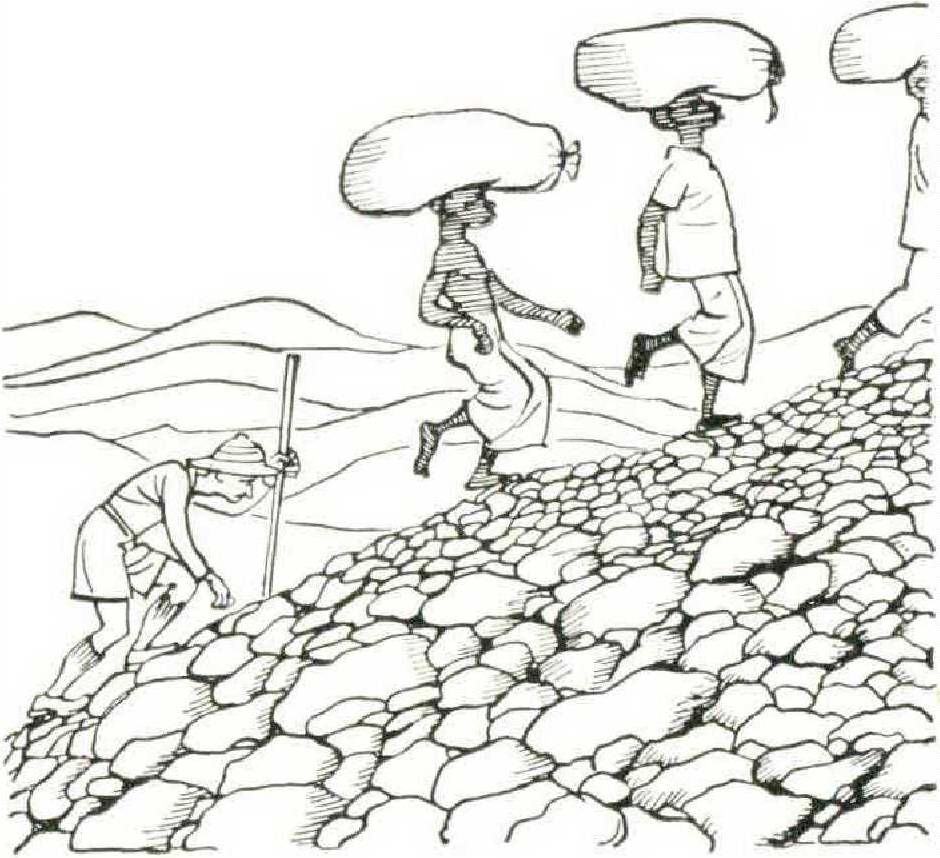
Finally understanding each other for the first time in the trip, Thomas and I set off at the head of our column, followed by the girls, who looked very fetching in shapeless high-altitude clothes and widebrimmed men’s hats, with Band-aids across their noses to protect them from sunburn and windburn. Soon we moved into a strange world. We left behind some trees which looked like huge pineapples supported by stems eight feet high, and entered an altitude where bushes became shrubs and shrubs became moss. After a sandwich lunch, we hiked up onto the Saddle, and from there on we were no longer on earth.
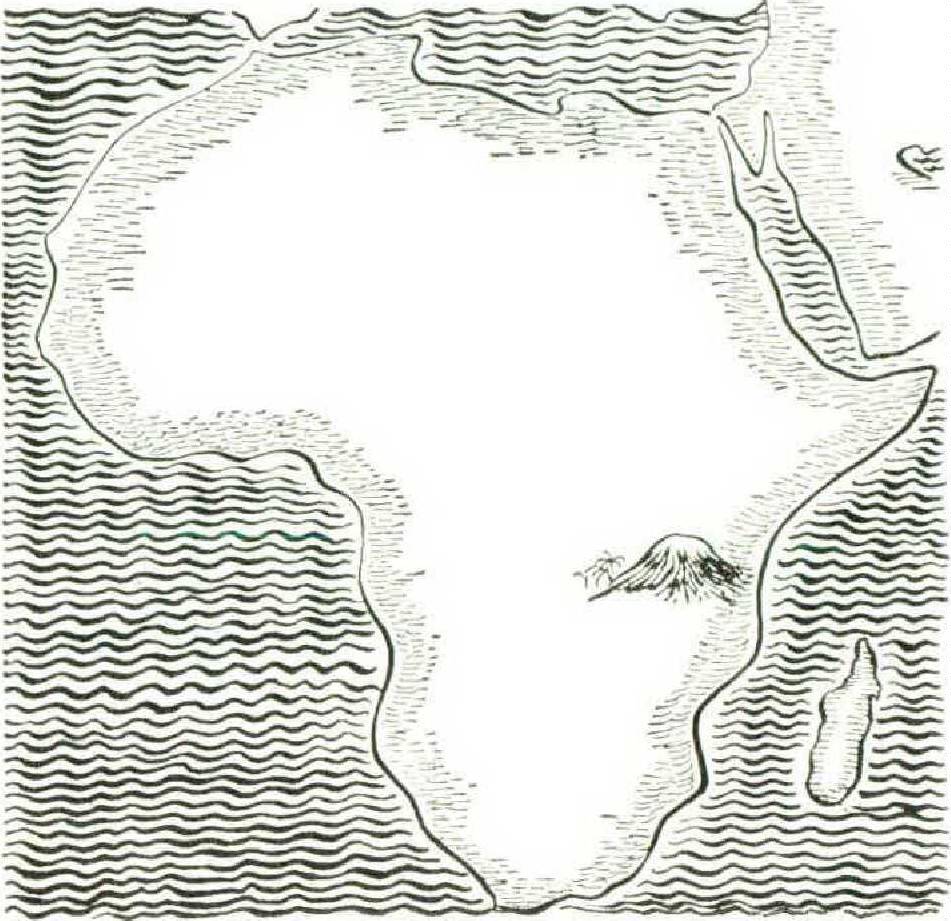
The Saddle is a deceptively vast shallow bowl located at fifteen thousand feet. At one side of it the jagged snowy spires of Mawenzi thrust two thousand feet up out of the volcanic plain. On the other side of it stands its immeasurably bigger brother, Kibo, the great classic peak of Kilimanjaro. Seen suddenly as one comes up onto the Saddle, Kibo possesses both remarkable beauty and a certain stark and massive ugliness. The far side of the mountain has symmetry and the Fujiyama-like snows, but here, at the back door, the snow merely trims the edge of the crater, and the shape is that of Gibraltar. It rises out of the lifeless stratospheric plain like what it is: an enormous mountain. It is just that one has already been climbing Kilimanjaro for three days, and the sight of an enormous mountain on top of the mountain is both terrifying and awe-inspiring.
After a few minutes of staring, one settles down to the immediate problem, which is this desert of volcanic dust, so high up that even the moss has stopped growing on the boulders which the old volcano has thrown across the plain. We moved toward Kibo, but vve no longer had a conventional frame of reference. The mountain and the Saddle were so huge that all the ordinary sense of space fled. Our porters went ahead of us and to our amazement disappeared into the distance, a distance which we thought was no more than half a mile between the mountain and ourselves. Hours later we were still walking toward that mountain, walking slowly through the graybrown pebbles and stones and dust. The mountain obligingly became larger and larger, until it filled half the sky. The sun went down behind its crest, and a viciously cold wind started whipping across the Saddle. The altitude was at last taking a toll. We could move forward no more than forty or fifty yards at a time. The simplest movements became an effort, and twenty yards of walking would bring about a severe beating of the heart.
That night was one long shudder. We lay in our bunks, fully dressed and staring into the darkness as we shivered. Every breath we took was a deep search for oxygen, and all three of us suffered from a combination of stabbing headache and nausea. At one o’clock in the morning there was a loud and authoritative banging on the door of the cabin, and I staggered out of my bunk and let in Thomas and Sambwe, who had been spending the night in the cooking shed. We drank some tea, retied our bootlaces, adjusted our gloves and hoods and scarves, and stepped out into the night.
It was an eerie scene. Thomas stood in front of the hut, a small, stooped black man wearing a brown wool cap and an old khaki army coat. He had woolen puttees on above his climbing boots, and he was carrying a cane in one hand and a lantern in the other. We all nodded, and started up the final trail.
The next eleven hours were, and still are, a long and painful blur. Out of it a few things remain clear. I remember the girls falling down repeatedly and gamely getting up again to stagger forward in the darkness on the bare, slippery, pebbly slope. Finally, at about seventeen thousand feet, when Elizabeth said that she could no longer feel her feet, I told the girls to go down. I remember waiting on the slope at three o’clock in the morning for Thomas to come back up after leading the girls down to the hut, and realizing that up here there was no such thing as a horizon. The earth dropped away so steeply that there were stars not only above me, but stars twinkling slightly below, out beyond the edge of the Saddle. It was as if I were in an airplane, and the curvature of the earth no longer applied to me.
Sunrise came, and after breakfasting on water and part of a chocolate bar, I settled down to the hardest morning of my life. Thomas always seemed to be a mile ahead of me, sitting somewhere in this fortyfive-degree sea of pebbles, staring down at me impassively. I would manage to go forward five steps, and then the lack of oxygen would catch up with me in a great rush and I would fall onto the pebbles, turning so that I would land on my back. I would jam my alpenstock into the pebble surface, so that I would not slide down the mountain. The toughest part of this climbing and falling was the effort it cost to put one foot in front of the other, but there were some appalling psychological factors as well.
The principal difficulty was the loss of any normal sense of balance or perspective. I felt the way one does when an airplane banks at an angle to the earth. I would look up the sheer slope and see the big solid yellow-brown rocks at the crest of the mountain, thousands of feet above me. Staring up at those rocks, I became convinced that they were hanging over me at such an angle that I would have to be like a spider traversing a ceiling to get to a point where I could move up them vertically. Again, when I looked down into the vast brown bowl of the Saddle, there was no relation to normal balance. On all sides of the brown plain there was nothing but clouds, and one had the feeling that if would be possible to dive off the slope, execute a simple jackknife, easily clear the edge of the Saddle, and fall forever through masses of soft white clouds. Every half hour I would notice that the peaks of Mawenzi, across the way, had become smaller. By ten o’clock I could see over the jagged peaks eight miles away, and by eleven o’clock Mawenzi seemed to be a minor mountain, hopelessly chained to the brown plain from which it sprang.
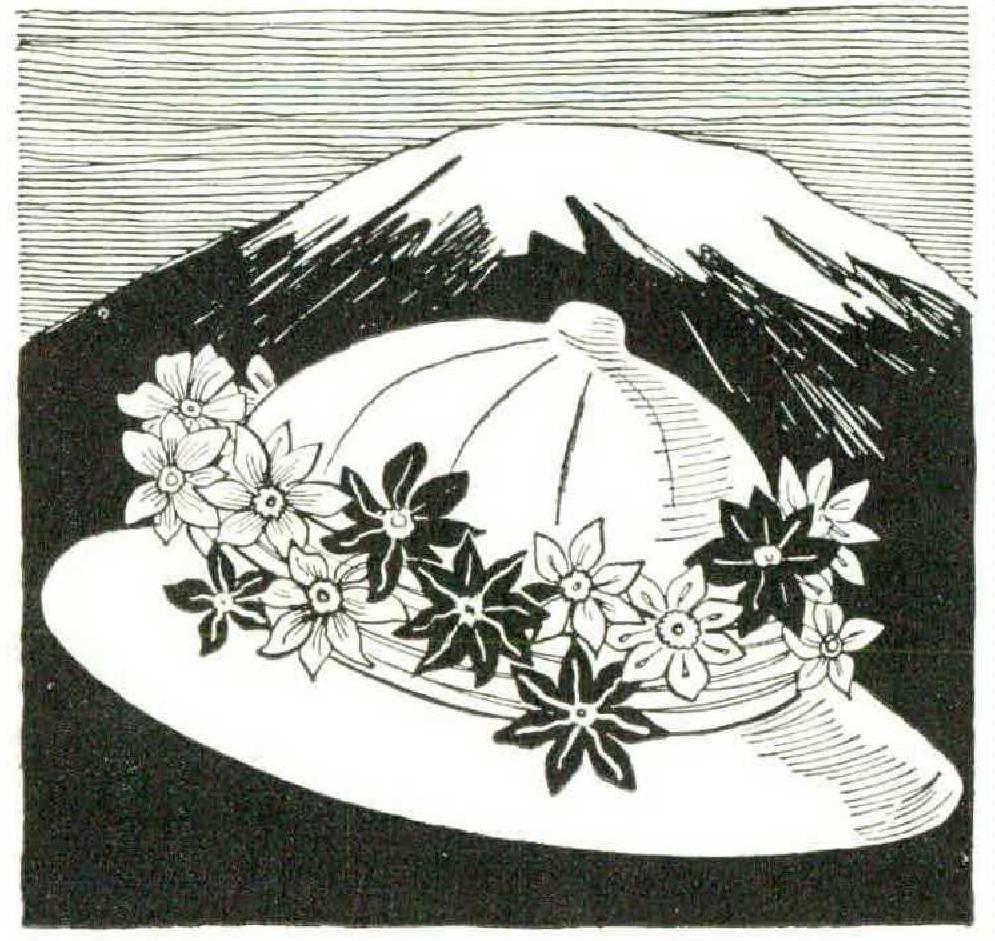
By eleven thirty I was suffering. Thomas had occasionally pointed to the rocks at the top and said, “Gilman.” Gilman’s Point was the place, at approximately nineteen thousand feet, where climbers could stop and officially claim to have climbed Kilimanjaro. There were slightly higher points along the edge of the crater, but if you got to Gilman’s the porters would crown you with mountain flowers when you re-entered the altitudes where things could grow. I had long since decided that if I could get to Gilman’s I would not worry about anything higher. The question now was whether I could even do that. My heart was going like a trip hammer, and I remember wondering if it would give one particularly loud bang and stop beating. The lava dust on the windy, sunny slope had turned my mouth into a piece of rubber. Every time I tried to swallow, I choked. Up ahead on the slope Thomas sat and watched me struggle.
At twelve thirty I pulled myself up out of three thousand lcet of gravel and lay down beside Thomas on the yellow rock. Mawenzi seemed like a hillock across the cloudy Saddle, and Kibo hut was indistinguishable in the distance below. I had been climbing for eleven hours.
Two days later we came into the garden of the Kibo Hotel. Thomas was limping badly, the girls had blisters on their feet, and my unshaven face was so sunburned it was bloody. The only person in the garden was the old Englishman, who was sipping his tea as he read a book. He looked up and regarded me with a vague smile.
“Got to the top, I take it,” he said, looking at the circle of flowers around my sun helmet.
“Yes,” I said out of a dry throat, as the porters passed by under their loads.
“Not too bad, was it?”
“Not too,” I said, and followed the girls into the hotel.