Chief Luthuli
Alan Palon and NADINE GORDIMER are the two most gifted novelists now writing about the divided world of theUnion of South Africa . A native Johannesburger, Miss Gordimer here describes a valiant and honorable native leader who has refused to be crushed by apartheid. Her latest novel. A WORLD OF STRANGERS, was published by Simon and Schuster last fall.
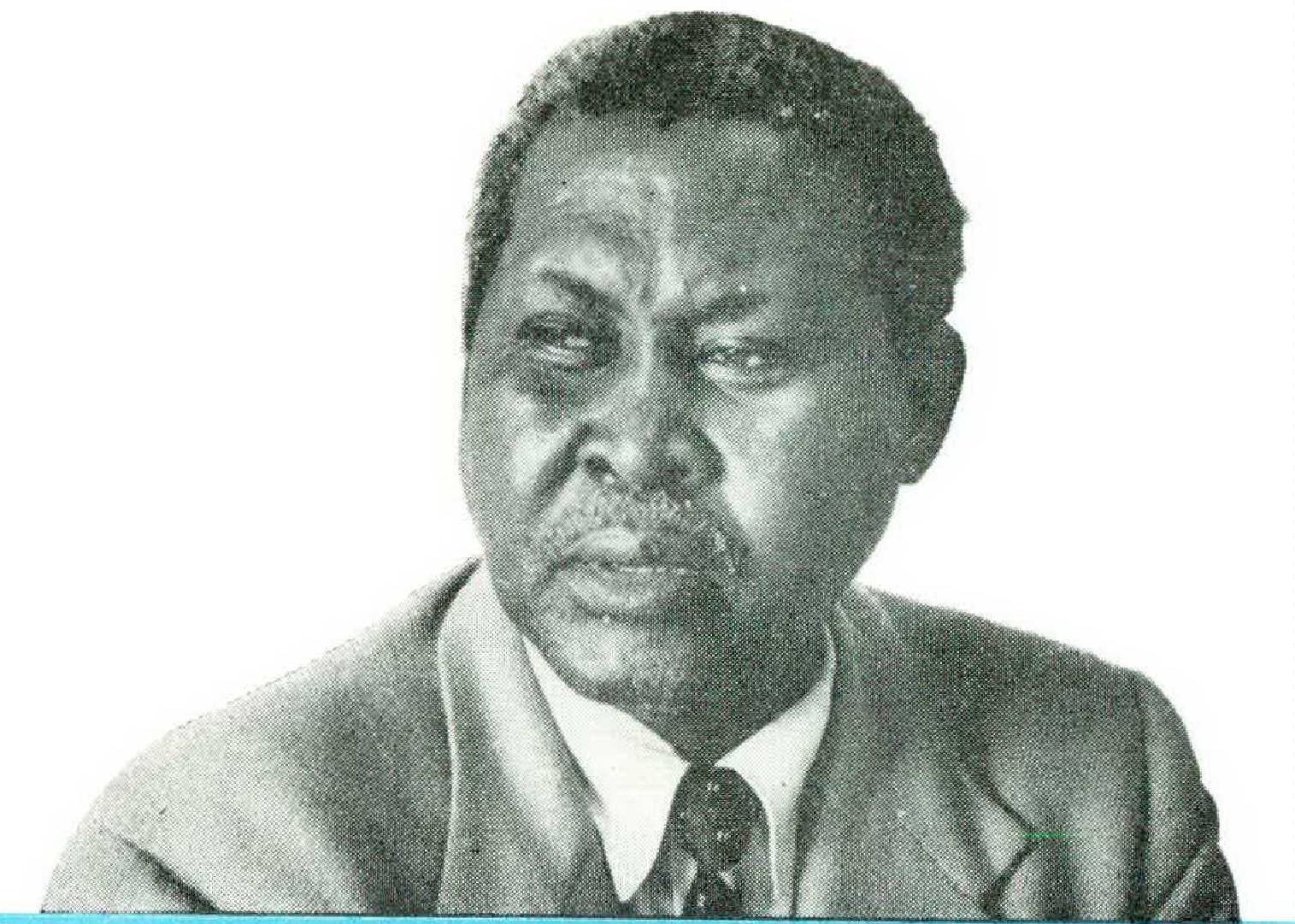
THERE are three million white people and more than nine million black people in the Union of South Africa. Only a handful of the whites have ever met Albert John Luthuli. He has never been invited to speak over the radio, and his picture rarely appears in the white daily press in South Africa. Yet this government-deposed African chief—who, far from losing his honorable title since he was officially deprived of it, is generally known simply as “Chief”—is the only man to whom the nine million Africans (“African” is becoming the accepted term for a South African Negro) give any sort of wide allegiance as a popular leader. He is the one man in black politics in South Africa whose personality is a symbol of human dignity which Africans as a whole, no matter what their individual or political affiliations are and no matter what state of enlightenment or ignorance they may be in, recognize as their dignity.
Luthuli is a sixty-year-old Zulu and an African aristocrat. His mother was a Gumede—one of the most honored of Zulu tribes — and his grandmother was given, as was the custom with the daughter of a prominent tribal chief, to the court of the famous paramount chief of unconquered Zululand in the eighteen seventies, Cetshwayo. Luthuli has a number of those physical characteristics which are regarded as typical of the warrior Zulu and to which even the most ardent supporter of apartheid would pay grudging admiration. His head is large and set majestically back on a strong neck; he has a deep, soft voice; and although he is not a tall man he seems always to look as big as anyone else in the room.
Among his less obvious characteristics is a sense of repose; sometimes a monumental quiet. If more white South Africans could meet him, or even hear him speak on a public platform, they would be astonished (and perhaps even a little ashamed — he makes that sort of impression) to measure the real man against the bloodthirsty demagogue that is the African leader as they imagine him. Luthuli is, of course, a full-blooded African (people of mixed blood are known as “coloreds” in South Africa), and he speaks English with a distinct American intonation, acquired along with his education at schools run by American missionaries.
Luthuli’s ancestral home is Groutville Mission, in the Umvoti Mission Reserve on the coast of Natal, near Durban, and his personality stands sturdily upon this little corner of Africa. He has never, even as a child, lived in a kraal (the collection of thatched mud huts in which tribal Africans usually live) because Reverend Grout, an American missionary who came to South Africa in 1835, had planned his mission village on the European pattern, with houses; and if as a child the young Luthuli did his share of herding cattle, he did it after school hours, because Grout had seen to it that there was fenced common that would free the children to attend school. As the Umvoti Reserve is a mission and not a tribal reserve, the chiefs are elected, and there is no dynasty in the hereditary sense. Yet ability has tended to create a dynasty of its own; a number of the elected chiefs have been members of the Luthuli family. When Luthuli was a child, his uncle was chief, but after 1921 the chieftainship went out of the hands of the family until 1936, when Luthuli himself, then a teacher at Adam’s Mission Station College, was elected.
Luthuli was educated at various mission schools and at Adam’s College, and in 1921 he qualified as an instructor in the teachers’ training course and joined the staff of Adam’s. He could look back on a gentle, almost sheltered childhood in the protective shadow of his uncle’s house and the mission at Groutville. The one had given him the confidence that comes to children who belong to an honored family; the other, which provided his first contact with the world of whites, did not impose the harsh impact of the color bar too early on his young mind. Perhaps as a result of this, even today, when the white government of South Africa has deposed him as chief of his people, several times banned him from free movement about the country, and arrested him — as PresidentGeneral of the African National Congress and a leader of the liberation movement of Africans in South Africa — on a charge of treason that kept him in court through almost a year of inquiry, he has no hate in him. He has never been anti-white and believes he never will be. He started off his life by seeing human beings, not colors. It is a very different matter today for the urban African child who is born and grows up in the slum areas of big cities in South Africa, cheek by jowl with the whites in the paradox of the color bar; he is made aware, from the start, that his blackness is a shroud, cutting him off, preparing him to be — as the Africans often describe themselves as feeling — “half a man.”
Luthuli seems to have come to politics through an ideal of service fostered by religion rather than by way of any strong ambition. As early as his primary School days, what he calls the “Christian ideal" of service captured his faith and his imagination. Many politically minded Africans deplore the influence the missions — which brought education to Africa and which have continued, because of government neglect of its obligation, to dominate African education — have had among their people in the past. The cry is that the missions have used their influence to reconcile the people to white domination rather than to encourage them to demand their birthright as free human beings. But Luthuli’s experience has been that mission teaching gave him a sense of the dignity of man, in the sight of God, that he wants to see made a reality for all colors and creeds.
The truth probably lies somewhere in the fact that for those, like Luthuli, who had eyes for it, there was a glimpse of freedom in the gospel of humble submission to a discipline greater than man-devised. Out of that glimpse, more than any reasoning of politics and experience, a man may come to say, as Luthuli did when he gave up his chieftainship under government pressure in 1952, “Laws and conditions that tend to debase human personality — a God-given force — be they brought about by the State or any other individuals, must be relentlessly opposed in the spirit of defiance shown by Saint Peter when he said to the rulers of his day, ‘Shall we obey God or man?’ ”
LUTHULI’S consciousness of the disabilities of the African people awoke as soon as he began to teach. “Before that,” he explains, “when men like myself were children at school and college students, we didn’t have much chance to compare our lot with that of white people. Living in a reserve and going to a mission school or college, far away from the big white cities, our only real contact with white people was with the school principal and the missionary, and so if we suffered in any way from discriminatory treatment by white men, we tended to confuse our resentment with the natural resentment of the schoolboy toward those in authority who abuse him.” But the moment he was adult and a teacher, the normal disabilities of being a black man in South Africa, plus the disabilities of being a black teacher, plus the special sensitivity to both that comes about through being an educated and enlightened person, hit home. Through church work and the activities of the teachers’ association, he busied himself with trying to improve the world of his people within the existing framework that the white world imposed upon it; he was too young and, in a sense, too ignorant to understand then, as he came to later, that the desire and the context in which it existed were contradictory.
In 1936, after some deliberation and misgiving, for he loved to teach, Luthuli left Adam’s College and teaching forever and went home to Groutville as chief. The duties and responsibilities of chieftainship were in his blood and his family tradition, so from one point of view the change was not a dramatic one. But from another aspect the change was to be total and drastic. His thirtyeight years as a nonpolitical man were over; he found himself, as he puts it, “plunged right into South African politics — and by the South African government [then Smuts’s government] itself.”
The year of the Hertzog Bills was 1936. They were two: the Native Representation Bill and the Native Trust and Land Bill. The Native Representation Bill took away from all nonwhites in South Africa the hope of an eventual universal franchise that they had been told since 1853 they would someday attain. It offered Africans in the Cape province representation through the election, on a separate voters’ roll, of three white members of parliament. It offered Africans in the rest of the Union the opportunity to elect — not by individual vote but by means of chiefs, local councils, and advisory boards, all acting as electoral colleges — four white senators. Finally, a Natives’ Representative Council was to be instituted, to consist of twelve elected African representatives, four government-nominated African representatives, and five white officials, with the Secretary for Native Affairs as chairman. Its function was to be purely advisory, to keep the government acquainted with the wants and views of the African people.
The Native Trust and Land Bill tightened once and for all an earlier land act whereby Africans were prohibited from owning land except in reserves. The bill provided 7.25 million morgen of land to be made available for African occupation and a trust fund to finance land purchase. (Twenty-two years later, this provision has not yet been completely fulfilled.)
Once the bills were law, Luthuli had vested in his authority as chief of the Umvoti Mission Reserve the collective vote of his five thousand people. White men and black canvassed him eagerly. He, who had scarcely talked politics at all, found himself talking scarcely anything else. For him, the reserve and its troubles had come into focus with the whole South African political scene. At the same time, he took up his traditional duties as chief — that combination of administrator, lawgiver, father-confessor, and figurehead. He found his chief’s court or ibandhla, held under a shady tree, “a fine exercise in logical thinking,” and the cases on which he gave judgment, according to a nice balance of tribal lore and the official Code of Native Law, varied from boundary disputes to wrangles over the payment of lobolo (bride price). He could not make the land go around among his people — not even the uneconomic five-acre units without freehold which were all that Groutville, a better reserve than most, had to offer — but he tried to help them make the best of what they had; he even formed a Bantu cane growers’ association to protect those among his tribesmen who were small growers of sugar. “The real meaning of our poverty was brought home to me,” he says. “I could see that the African people had no means of making a living according to civilized standards, even if they belonged, as we did in Groutville, to a civilized Christian community, so far as African communities go.”
From 1945 until 1948, Luthuli himself sat on the Natives’ Representative Council. The council proved to be a toy telephone, and no one regretted its passing when the first Nationalist government to come into power, Dr. Malan’s government of 1948, abolished it. No one was much surprised, either, when it was not replaced by something more effective, for this was the first government actually dedicated to apartheid instead of merely committed to the bogus paternalism of Smuts. What the Africans got in place of the council was yet another act — the Bantu Authorities Act, which, like many others affecting his people, Luthuli knows almost by heart and can reel off clause by clause. “It was a velvet-glove act,” he says, “designed to give Africans in the reserves some feeling of autonomy, of a direct hand in their own affairs, while in fact using the decoy of their own chiefs to attract them to accept whatever the apartheid government decided was good for them. Under the act, the chief becomes a sort of civil servant and must cooperate with the government in selling the government’s wishes to the people.”
IN THE late forties, Luthuli went to the United States at the invitation of the American Missionary Board to lecture on Christian missions in Africa. (The church had provided him with a chance to get to know other countries and peoples once before, when in 1938 he had gone to Madras as the Christian Council delegate to an International Missionary Council meeting.) He spent nine months in the United States, and he enjoyed his visit tremendously despite one or two incidents, those moments—a door closed in one’s face, a restaurant where a cup of coffee has been refused — that jolt the colored man back to the realization that, almost everywhere he travels, race prejudice will not let him be at home in the world.
The same year in which Luthuli took up his seat on the Natives’ Representative Council, he had joined an organization to which, in time, no government was to be able to turn a deaf ear. This was the African National Congress. The Congress movement began in 1912, just after the Act of Union that made the four provinces of South Africa into one country, when the Africans realized that the Union’s motto, “Unity Is Strength,” was to refer strictly to the whites. “When the ANC started,” Luthuli says, “it had no idea of fighting for a change in fundamentals. It was concerned with the African’s immediate disabilities—passes, not issues. The question of the fight for political rights may have been implied, but was not on the platform at all.”
Other Africans would not agree with him about this. Be that as it may — the history of Congress, a movement shrinking and spawning, according to the times, over the years, is not very well documented except perhaps in the secret files of the Special Branch of the South African police — the first meeting of Congress laid down at least one principle that has characterized the movement to this day: it was to be “a greater political and national body, uniting all small bodies and the different tribes in South Africa.” It has since pledged itself to the goal of a multiracial society in South Africa with equal rights for all colors. “But it was only after 1936,” says Luthuli, “when the Hertzog Bills acted as a terrific spur, that Congress began to show signs of becoming a movement that aimed at getting the government to bring about changes in policy that would give equal rights to nonwhites in all fields.” At this same time, Luthuli’s new responsibility as chief was proving to him the futility of any attempt to secure human rights without political rights; experience was shaping him for Congress, as it was shaping Congress for its historic role to come.
When he joined Congress in 1945, he was elected to the executive of the Natal Branch at once, and he remained on it continuously for the six years during which the movement felt its way to effectiveness, leaving behind the old methods — deputations, petitions, conferences that enabled the government to “keep in touch with the people” without having to take their views into account—that had failed to achieve anything for the Africans. Finally, in 1949 Congress drafted a program of action that was based on the premise that in South Africa freedom can come to the nonwhite only through extraparliamentary methods. A year later, when Luthuli had just been elected Provincial President of Natal, Congress decided to launch a full-scale passive resistance campaign in defiance of unjust, color-bar laws. “This decision,” he comments, “had my full approval.”
The official-sounding, platitudinous remark covers what was the result of considerable heartsearching on Luthuli’s part. Luthuli sees it and, for himself, used it as Gandhi conceived it — not only as a technique but as a soul force, Satyagraha.
In 1952 the African National Congress, the South African Indian National Congress, and other nonwhite associations organized defiance groups all over the country. Thousands of Africans and, in lesser numbers, Indians, and even some whites, defied the color-bar laws and invited arrest. Africans and Indians entered libraries reserved for white people, sat on railway benches reserved for white people, used post office counters reserved for white people, and camped out in open ground in the middle of the white city of Durban. Black and white, they went to prison. Luthuli was everywhere in Natal, addressing meetings, encouraging individuals, carrying with him in the most delicate situations, under the nose of government ire and police hostility, an extraordinary core of confidence and warmth. All his natural abilities of leadership came up simply and strongly.
The defiance campaign went on successfully for some months before it was crushed by the heavy sentences imposed upon defiers under new legislation specially devised by the government, which fixed the high penalties (up to three years’ imprisonment or a fine of £300) that may be applied to anyone protesting against any of the racial laws or inciting others to do so.
On Wednesday, November 12. 1952, the Native Commissioner announced that Chief A. J. Luthuli was dismissed by the government from his position as chief of the Umvoti Mission Reserve. In reply to this, the African National Congress issued a statement by Luthuli under the title, “Our Chief Speaks.” It is a statement that has been much quoted, in and out of South Africa, both in support of those who believe that right is on the side of the Africans in their struggle against racial discrimination and in support of those who regard the black man’s claim to equality of opportunity with the white man as a fearful black nationalism that aims — to quote, in turn, one of the favorite bogies of white South Africa — “to drive the white man into the sea.”
The lengthy statement is written in the formal, rather Victorian English, laced with Biblical cadence and officialese, that Luthuli uses — the English of a man to whom it is a foreign or at best a second language, but impressive, for all that. “In these past thirty years or so,” he said, “I have striven with tremendous zeal and patience to work for the progress and welfare of my people and for their harmonious relations with other sections of our multiracial society in the Union of South Africa. In this effort I have always pursued what liberal-minded people rightly regarded as the path of moderation.
“Insofar as gaining citizenship rights and opportunities for the unfettered development of the African people, who will deny that thirty years of my life have been spent knocking in vain, patiently, moderately, and modestly at a closed and barred door? Has there been any reciprocal tolerance or moderation from the government, be it Nationalist or United Party? No! On the contrary, the past thirty years have seen the greatest number of laws restricting our rights and progress until today we have reached a stage where we have almost no rights at all: no adequate land for our occupation, our only assets — cattle dwindling, no security of homes, no decent and remunerative employment, more restrictions to freedom of movement through passes, curfew regulations, influx control measures; in short we have witnessed in these years an intensification of our subjection to ensure and protect white supremacy.
“It is with this background and with a full sense of responsibility that I have joined my people . . . in the spirit that revolts openly and boldly against injustice and expresses itself in a determined and nonviolent manner. Viewing nonviolent passive resistance as a nonrevolutionary and therefore a most legitimate and human political pressure technique for a people denied all effective forms of constitutional striving, I saw no real conflict in my dual leadership of my people.”
A month after his deposition as chief, Luthuli was elected President-General of the African National Congress and became leader of the entire Congress movement in South Africa. Wherever he went, he was greeted by cheering crowds of Africans; at last they had a leader who had shown himself a leader in places less comfortable and closer to their lives than conferences and conventions.
THE government found that ex-Chief Luthuli seemed to be more of a chief than ever. A ban was served on him under one of those new powers that had been legislated to deal with the defiance campaign, a ban which debarred him for a year from all the important cities and towns in South Africa. The day it expired, Luthuli opened the South African Indian Congress in Durban and, guessing that his time was short, left at once by air for Johannesburg to attend a protest meeting in Sophiatown about the Sophiatown removals. It was his first visit to Johannesburg since he had become President-General, and the people of Sophiatown, under arbitrary orders to quit their homes and move to a settlement further away from the white city, were heartened at the idea of having him among them as champion of their protest.
As he stepped off the plane at Johannesburg, the Special Branch police served him with a second ban. And what a ban! This time he was to be confined for two years to a radius of about twenty miles around his home in Groutville village. During the long period of confinement he suffered a slight stroke, and while he lay ill in his house in Groutville, his wife had to beg permission from the police to let him be taken to a hospital in Durban, sixty miles away. Permission was granted, and he was rushed to Durban. There he spent two months in the hospital, and from the second day Special Branch men hung about his ward in constant attendance. Despite these unwelcome presences, who, he says, day after day used to inquire sheepishly after his health, Chief made a complete recovery except for a barely perceptible droop that shows itself in his left eyelid when he is tired.
His ban expired in July, 1956. He was free to move about the country again; but not for long. About four in the morning of December 5, there was a loud knocking at the door of the Luthulis’ house in Groutville. The Luthulis struggled out of sleep. Four white Special Branch Men were at the door; they had come to arrest Chief on a charge of treason. He was flown to Johannesburg and taken straight to prison at the Johannesburg Fort. And there he found himself accused of treason with one hundred and fifty-five others. Some were his respected colleagues over many years; some represented ideologies that were largely or partly distasteful to him; some he had never heard of before.
The preliminary hearing of the Treason Trial (the first in the history of peacetime South Africa) began in January, 1957, and the trial has been in progress, in one form and another — nine months of preliminary hearing, several sessions of the trial itself, with a number of adjournments — for two years. “Treason” is a word with ugly associations. They have become uglier still during the years since the war, now that the word has become part of the vocabulary of the witch hunters of the world. Like “Communist,” “treason” may be used, in certain countries and circumstances, to blot out the name of anyone who puts up any sort of opposition to race discrimination and the denial of freedom of movement, opportunity, and education.
Among the hundred and fifty-six of the original accused, there was a sprinkling of ex-Communists and fellow travelers — almost exclusively among the twenty-three whites — but the great majority were simply people who abhor the injustice and misery of apartheid and want all races in South Africa to share freely in the life of the country. At various stages in the trial, the number of accused has been reduced, and the government has not yet succeeded in formulating a satisfactory statement of the charge against them; but the trial drags on, and at the time of writing, the Attorney General has just made a statement that he intends to draw a fresh indictment against the remaining accused.
The first list of those against whom charges had been withdrawn was announced in December, 1957, when the preliminary inquiry was in recess. Among the names was that of Chief A. J. Luthuli, President-General of the African National Congress. Chief was at home in Groutville after the nine-month ordeal in court, preparing for the wedding of his medical student daughter, when the news came, followed by a paper storm of congratulatory telegrams. His feelings were mixed: he could not see why he should be freed while his colleagues in the liberation movement were held; on the other hand, he was glad to be able to get on with Congress work outside the Drill Hall. A few weeks later, charges were withdrawn against some more accused, bringing down to ninety-one the number of those who were committed for trial for high treason in January, 1958.
The particulars of the “hostile acts” which were read under the charge of high treason included “the hampering or hindering of the said Government [of the Union of South Africa] in its lawful administration by organizing or taking part in campaigns against existing laws.” The laws named included the Native Resettlement Act and the Group Areas Act, which involve the uprooting of African, Indian, and colored communities in order to move them out of white areas; the Bantu Education Act, which has lowered the standard of education available to African children; and the Bantu Authorities Act.
The defense applied for the discharge of the ninety-one, saying that the Crown, by the way it had formulated the charges, had established “nothing other than a desire to put an end to any form of effective opposition to the Government of this country — a desire to outlaw free expression of thought and ideas which people in all democratic countries of the West assert the right to hold and utter.” The application for discharge was refused. In the public gallery of the Drill Hall (divided down the middle by a token barrier of low chains and posts to ensure that whites sat on one side and blacks on the other) Luthuli heard the magistrate’s decision. Why he was not still among the accused in the dock was as much of a mystery to him as to anyone else. Perhaps government ears had picked up what the Africanists — an anti-white group which, up till then, had failed to penetrate Congress — had to say about the original accused: “The government’ll be doing us a favor if they hang the lot. Then we can take over.” Whatever the reason, Chief sat in the Drill Hall as a spectator and a free man that day, and many heads, black and white, turned to look at him. When the court adjourned, he walked out among the free men. too; free to travel about the country and address meetings and attend gatherings where he pleased. For how long, of course, he could not guess.
So far — a year later —■ he has not been served with a ban again, though he has not minced words, whether on the platform of the small white Liberal Party or at the angry meetings of the Transvaal Branch of Congress in Johannesburg, where the Africanists brought off a crude coup in the first half of 1958 and battled all year without success (though by the beginning of 1959 they had caused a serious split in Congress ranks and a certain loss of African confidence in Congress) to oust Chief and his kind from leadership and commit the African National Congress to what he calls “a dangerously narrow African nationalism.” There has been at least one protest against his appearance on a public platform, a brutal unofficial protest: a few months ago he was beaten up by white hooligans while he was addressing a white audience.
But that day at the beginning of 1958, when he walked out of the Drill Hall, the sudden release of his freedom was fresh upon him, lightheaded, like a weakness, though the weight of the ordeal of trial to which his colleagues were committed oppressed him, and he even looked a little lonely. And such are the paradoxes of human behavior that, as Luthuli crossed the street, two of the white police officers who had become familiar figures on duty in the Drill Hall all through the preparatory examination came around the corner and called out, forgetful, across the barrier of apartheid that seeks to legislate against all human contact between black and white and across the barrier of hate that the pass and the baton have built between the police and the black man in South Africa, “Well, hullo! You look fine! What are you doing around here? Can’t you keep away from the old Drill Hall, after all?” And rather gingerly, Chief was amiable in reply.