The Slip
A native of Chicago, ESTHER WAGNERdid her undergraduate work at Bryn Mawr and taught there before getting her Ph.D. Now married, she is living in northwestern California, where she devotes full time to the writing of her novel and short stories. In April, 1958, we published “ Beat Down Frigid Rome,” which won first prize among our Atlantic “Firsts.”
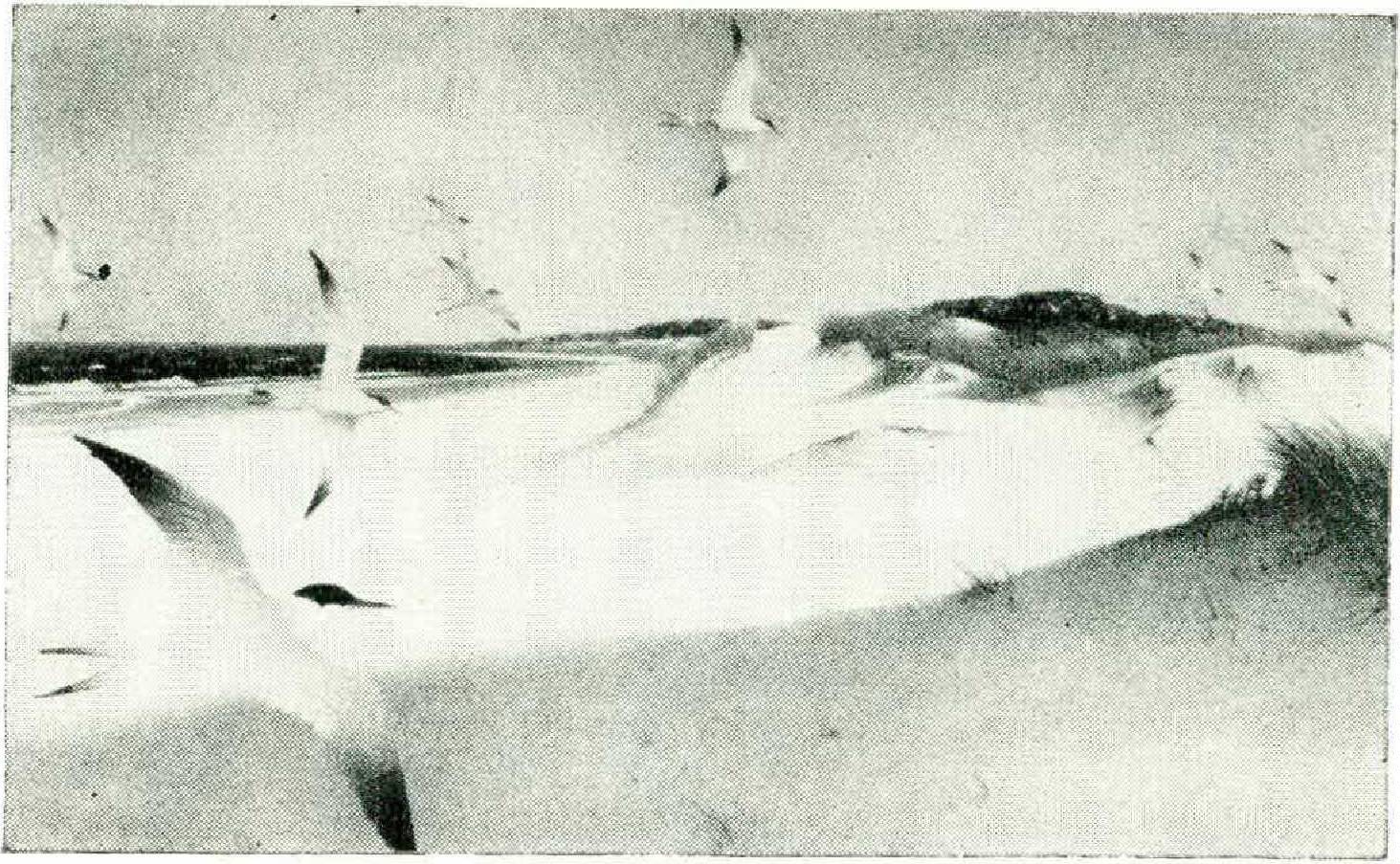
AT THREE o’clock in a cobalt afternoon, looking down on a wide rock-studded North Pacific beach from the little sun deck of her sister-in-law’s house, Caroline decided to slip. At the last meeting of Alcoholics Anonymous back home, before she had come out for this visit, the great dark eyes of Bernie Rose had leveled into hers, and his long droopy face, full of deep lines and odd bumps, had looked more rabbi than ever as he said softly, fervidly, “Caroline, you’re just going out there on purpose to slip! Come on, now!” He coaxed, pleaded, warned, like so many others. But she denied everything and sweetly begged him not to be silly.
Truly, she had not counted on the blue sky’s being so blue, the blue sea so streaked with purple and with lovely flying foam, the dark pines all around so green, with bright little early-autumn wandering birds darting in and out of them. The afternoon tide was half in. Two white gulls down there were playing tickle-tummy as she and her brother had long ago on the inland beaches: the gulls let themselves float out on the receding water from one wave until their bellies dragged on a little sand bar; then hoisted themselves up, waddled back again to ride in on the next wave, out again on its receding wash. Caroline gave a laugh of pure delight as she watched. In a couple of minutes she went in to grope around in her sisterin-law’s cupboards.
Marianne would have gin and only gin, lots of it and nothing else, Caroline said in her mind. In the old days she had liked to do the thing right, every so often, with bourbon: starting in the morning when Henry, her husband, left for his train, with a milk punch — two thirds of a glass of bourbon, one third of milk, and some innocent-looking little nutmeg sprinkled on the top. Then a short highball or two before lunch, with one of her neighbors; then the good hours before the kids got home, the little slugs getting darker and darker in the bottom of the glass; at the last, collapse, her delicate features sunk in great puffs of alien tissue, her eyes awash with watery red, her slim body suddenly encased, hydropic, pulsating feebly. She didn’t know what happened then, and she didn’t care.
Now she found herself some Coke, fixed herself a good solid ice-clinking glassful of a weird potion, and went out onto the sun deck again. She closed her mind against what Marianne would say when she got home from her library job. Who ever heard of being a librarian, anyway, and how had Bart married Marianne, war or no war? None of them had ever known. Bart had not survived to make anything clear. But Caroline’s mother and Caroline’s husband felt they knew Marianne, and they trusted and respected her. What Caroline was doing out here on this visit was sometimes less than clear to Caroline; but God knows, she had wanted to come and had taken advantage of her mother’s willingness to buy her a plane ticket, cope with her children. That kind and energetic gentlewoman had a curious faith in simple little prescriptions: if you could just get away for a month, or at least for two weeks; if you could just have a full-time maid, or at least your cleaning woman for three days instead of two; if you could move to a house with four bedrooms instead of three, or at least a downstairs bath. A little burst of happy laughter welled up in Caroline’s throat. Well, she had been here now for a week, a week of this blind blue beauty and the wheeling gulls and no telephone calls in the evening at all, for Marianne seemed to do her telephoning while she was at the library and of course Caroline’s Henry didn’t, and wouldn’t, call long distance.
Calling up long distance just to talk was one of the many things Henry thought you should outgrow, and how many there were! For ten years now, he had talked about outgrowing. She saw his point, but just seeing it didn’t do much good, and see it was all she could do, frankly.
The gulls were gone. Two boys drove their car slowly out onto the beach, far out, too far — Caroline knew they were on the sticky tide flats before they stopped, their front wheels sunk in alarmingly. Strangers, students perhaps from the little local college, taken in by the smooth firm dark look of that sand. “I’m a stranger here myself,” said Caroline, who frequently talked to herself, generally in quotations. Slowly, voluptuously, she drew down into her throat her first drink in many months.
The cool, dark-tasting first minute passed, and the lovely little explosion, so gentle, so farreaching, along all her tingling nerves up into her ringing ears, down into her curling toes, occurred faithfully, as if the long months of nothingness, and before that the long months of drearily diminishing returns, had never been. Each separate, delicate, dark needle, chartreuse-tipped, stood out on the bough of spruce which swung close to the deck. “Skoal, Bernie! Skoal, Bernie Rose!” she said aloud. She drank and drank, her senses sharpening. The far-off cry of gulls, the solid pound of each wave, succeeded by its liquid rush, the roar of the struggling motor down there rang clear and lovely in her new-found ears. A great delicious wave of scent swept round her — fir and redwood, not just the foliage but the very wood, aromatic in yet another way; salt, wet sand, the meadowy smell from the green slopes across the road, and again far-off, piercing, exquisite, the faint kelpy smell of the beach itself.
More swallows, another glass, and a new explosion of lucidity sent its brilliant rays up through her head to match the explosion of sense impressions earlier. “Brain damage!” After the attack, and the cirrhosis, and the long weeks in hospital, they had kept talking about brain damage; it was on the basis of all this talk that she had joined AA, made promises to her doctor and to the others. They all thought the danger of another, worse, maybe fatal attack was guarantee of sage conduct, or they would not have let her come away.
But now she thought that the brain damage must have come in the months of abstinence; surely she had never seen so much, either with her eyes or her mind, as now, this minute. Even Bernie Rose couldn’t very well have been expected to grasp this gift of intelligence that alcohol gave her; people who were intelligent without alcohol, and it seemed to Caroline that everybody she knew well was very intelligent, never could understand.
How she could see! The noble mass of the great cliff to her right rose august and awesome; the big pointed rock which dominated the rock cluster on the beach just below the house looked like some beautiful guarantee that there could be both stability and grace in one monumental form. She turned and looked back, away from the beach, toward the highway. The Texaco gas station and the insurance advertisement, with its crude painting of a little boy in an unbuttoned drop-seated pajama and its black lettering — ARE YOU FULLY COVERED? —well, these weren’t so good. They were ugly and undignified, but she could see their place, could see the humor and earthiness of them through their ugliness.
The months of sobriety and discipline imposed from within and without were ugly. The attack itself — that long plummeting fall down the stairway in the store, with her poor friend Addie Hill shrieking and pattering after her, devastated at this turn that a routine shopping trip had taken — well, why did it have to be in Sears, Roebuck? Why not at least Saks? The image of the fine, wrought-iron staircase, carefully carpeted, and the deep-piled supercarpet at the bottom, onto which she might have rolled, stamped itself sharply on her mental field of vision. A little poetry there, in front of the collar-and-jabot counter, with glinting costume jewelry to the left. But Sears, and those mops and buckets she and Addie had been going to look at — well.
SHE went down to the beach to catch up on her poetry, for it was there. As she climbed carefully, very carefully, down the long steep wooden stairway that led to the little road, she muttered verse to herself. She had once known much poetry, for memorizing had come easy to her. It had been the kind of poetry you find in school anthologies: April, April, laugh thy golden laughter, or
As buttercups and daffodils do.
This appealed to her, and she said it over and over as she walked down the road.
As she came out onto the beach, wishing she had on something besides these city-type black velveteen slacks and a red cashmere sweater, the full wash of the sea air, the blue light, the refraction of sun from whitecaps hit her so hard she stood there just swaying, her mind emptied for a moment of all impressions that could ever be put into words. She saw the boys, struggling with their problem; they were digging frantically, putting down little platforms of boards they had dragged from the driftwood piles at the edge of the beach; they kept nervously looking out to sea at the progress of the tide. As she stood there, they thought they had it; one rushed to the wheel, the motor roared, the car rocked, there was a splintering sound, and the wheels dropped almost to their tops in the deep ruts, crashing through the boards. The sea grew darker blue, for the sun was on its way down; sunsets were early these days, with daylight saving gone. The seal rocks out from shore had a faint violet line along their summits if you looked squarely at them against the sky.
Caroline turned her back on that scene of frenzied activity in which all the effort just sank you deeper, and walked rapidly, lightly down the beach, muttering verses to herself and treading on inverted clamshells to hear the sweet little crunch.
She knows so much that she did not know!
the poem went. A long snakelike form writhed in front of her: one of the unbelievable forms of this beach life, a seaweed so devoid of any leaf or branch that it looked just like some great big lost rubber hose. Caroline laughed and picked it up, whirled it round her head like a whip, and let it fly and drop. She picked up a long, strange crab claw, detached from the skeleton it had once been joined to, looked studiously at its toothy edges, felt how fragile and unthreatening it was, scrunched it in her hand, and got rid of it.
But something pulled her back. She made a little circle in the sand, turned and started back toward the foundered, struggling car. The boys rose slowly to their feet, still holding shovels and a jack handle. The stunned, suffering look on their young faces struck her to the heart.
“Done everything you can think of?” asked Caroline as she came up to them. They nodded. Their jeans were caked with the mudlike sand in which they had knelt and heaved and crept and dug. Their car was not new, but it was not old; black and shiny, well cared for, it listed in its ruts and waited for the tide.
“Look, boys,” she said eagerly, “go up the road and turn right, you’ll come to old Merman’s gas station. He’s lived here since aught eight and knows all about this. There might be somebody there who could help you. Anyway, the tide doesn’t come in as fast as you think. It’ll be at least an hour more.”
They asked her if she could stay to watch the car. She looked inside and saw they had clothes and coats in there. She laughed and told them it wasn’t necessary.
“There’s never a soul on the beach at this hour, boys. I’ve got to get back up to my house, there; my husband may be calling any minute now.”
Nor damn likely, she added in her mind, as they thanked her and set off at a lope, nor likely either they would get any help from crabby old Merman. But there was always the chance that some good truck driver would just be there, getting gas, and the chance that Henry would have had to call her about something at home. Getting up the stairs was harder than getting down; she had seemed to float, now she seemed to be climbing a ladder — only at the top did she dare put her hand on the railing instead of putting both of them down like paws on the steps above her. She paused for a moment, panting, and looked up at the shadowing sky. A huge buzzard hawk passed over her, a gaping hole in one long motionless wing through which she could see, right through him, the blue. “Old buzzard,” she murmured and laughed gently, for she often referred to her Henry in this way, though never without affection.
He wouldn’t call — he never called. He had called often enough in the old days, though; and for a sad moment she swayed even further to one side, listed against the little fence, thinking of the phone bells screaming in her college dormitory, the girls yelling Caroline, Caroline! through the halls, and herself pattering swiftly down in her red dressing gown, never sure which of them all it would be, but always praying quietly to herself that it would be Henry. How she could call the tune, then ! The blast of clarinets in college gymnasiums, the swinging face of partner after partner, doorbells, phone bells, the pleading, begging tone in Henry’s boyish voice — but
She knows so much that she did not know!
Henry’s boy-face merged in his man-face, urging her, urging her, “Grow up!” Yet at one time you would have sworn that all he wanted in the world was for her never to change. She hadn’t, really: not much. The black hair was the same, the slender body kept slender even in the worst years— by malnutrition once, now by rigid diet. And her gaiety and sweetness were still appreciated, by some at least. But the trouble was, there was nothing to the appreciation by others unless you could tell Henry and bring him back, back from his recent-Henry world where he sat detached and critical, controlling annoyance. And Lord knows, when she had had a little bit to tell, she had told; but he hadn’t even asked what really happened, and he hadn’t cared.
She shut off this train of thought with a small inward click and moved very rapidly and accurately across the little flat lawn to Marianne’s back door. She picked up the binoculars from the kitchen window sill as she passed through on her way to the deck, and indeed she needed them, for there was some trouble with the light. Her eyes . . . could it be getting dark that fast? She felt the sun on her face, a little bit warm still for all the wind of evening, as she went out; but she could barely see the car down there, could only see it shine in the lengthening rays. She peered at it and hoped very hard that the boys would have some luck at Merman’s.
But for someone with all that brain damage, she was pretty clear about things. She was not surprised when she saw them come out on the bottom of the road, their arms hanging wearily by their sides: unaccompanied. They dragged some more driftwood boards from a pile at the edge of the beach, for they were not going to go down without a struggle. She watched them with all her mind and heart, as they ran about with shovels, boards, jack, at a new, desperate tempo. At times the scene flickered, and she had to take the glasses away and rest for a minute.
“I’m up here, caring, caring like mad,” she told them softly, shaking her head a little. How they struggled, consulted, struggled again — but the point was, they shouldn’t have driven the poor thing out there to begin with! But she had to think about doing something to help.
So with swift, light steps alternating oddly with slow and dragging ones, Caroline went back into the kitchen, squinted at the clock — knew they had a quarter hour or so of tide, she had a quarter hour or so of no Marianne — took out a great full bottle of gin, not just a fifth but a whole quart; trust Marianne to buy in quantity, even if it wasn’t just the right thing.
The boys looked up to see her, red and black in the deepening sunset light, coming across the sand to them, holding out something large and apparently rather heavy. They stopped fussing and just watched her, for already they knew what was going to happen at their backs; they were glad to keep their backs turned, not to have to watch that creeping thing. They were just killing time with their activity, and they knew it.
She came up to them, pale-faced and quite lovely in the violet glow of the darkening ocean, and held out a great big gin bottle.
“Whose car is it?” she asked, for no one held out his hand to receive the bottle.
“My dad’s,” said one of them.
“Oh, poor thing, poor thing,” said Caroline in a deep and musical tone. The boys put down the things in their hands, and sudden broad grins split their faces. They all stood there for a minute in a helpless little clot, sharing among themselves the awfulness of their situation.
“It’s all I can do,” said Caroline, and gave one of them the gin. They laughed, both of them, nodded at her encouragingly, kindly, thanked her with all their hearts. She turned and left them, walking haltingly across the sand, not wanting to look back any more than they did.
Going up the stairs was really hard this time, almost impossible. But her mind and heart felt soothed somehow. At least she could do what she could — she had learned a lot about some things, a long time ago at Seacliffe Junior College: how to drink gin and Coke without having your speech affected, how to smile and speak low and sweetly, how to put out a little warmth and charm; talk about brain damage, she had not forgotten what she had learned, and wasn’t that at least something? But darkness seemed to be settling down hard, with a queer humming accompaniment.
She threw back her head, put her hand up, and smoothed a long strand of black hair down across her crimson sweater, almost the same color as the hair now and as the great black cliff which towered above, behind the house. “It couldn’t happen in a more gorgeous place,” she thought and smiled feebly. She hoped the boys would think of this: dusk and violet tide and pointed rock did make their dumb predicament, product of their dumb, kids’ mistake, look dignified and beautiful. That word she heard so much of from Henry, her mother, the doctor — “hepatic” — think of it now, here, and it could be the name of some delicate small wood flower, seen under great bare oaks in early spring moments long ago. Put in another syllable, and hepatica changed to hepaticoma, just had a bit more sound, a hum, a new resonance. “Come lovely and soothing . . . come lovely and soothing,” she whispered to herself, quoting from something, something in the books way back, something she would remember better in a minute. “Have none chanted for thee a chant of fullest welcome?” She couldn’t say it, even whispering, any more, just hear it — “husky whispering wave” — it was coming back, always gliding near with soft feet. She swayed again at the top of the stairs, listed, and lay there, waiting for the tide.