Sound the Trumpet
BRITONS,”wrote Dr. Thomas Arne and Mr. James Thomson in 1740, “never, never, never will be slaves !”
This forthright dictum, reinforced with trumpets and drums, carried lively conviction to its first hearers, who were guests of Frederick Louis, Prince of Wales, at a garden-party masque in Maidenhead. It has kept its cogency. It also lias proved to be, through the years and into the foreseeable future, a fairly reliable political prophecy, as perhaps Messrs. Bonaparte and Schicklgruber could best attest, if they were around to do so.
The paradoxical thing is that Dr. Arne, so far as concerned his own art, was wrong. For five or six generations after his, Britons were to be, if not quite slaves, at least subservient to foreigners in music.
This applied partly to performance but mainly to creation. Symphonies were made in Austria or Germany, operas in Austria or Italy, ballets in France or Russia, and nothing — by common consent — in Britain. At least, this was the accepted belief, and it spread. It spread into British dominions and the United States, and it spread into a generalization: not only nineteenth-century British music was deemed inconsequential, but all British music.
Such beliefs, however false, die hard, because they can feed on themselves. Britain and America, in all humility, imported German and Italian musicians. And they, quite naturally, proceeded to dispense German and Italian music and musical opinion. Other Continental flavors entered in too, of course. But there was no slightest sniff of anything British.
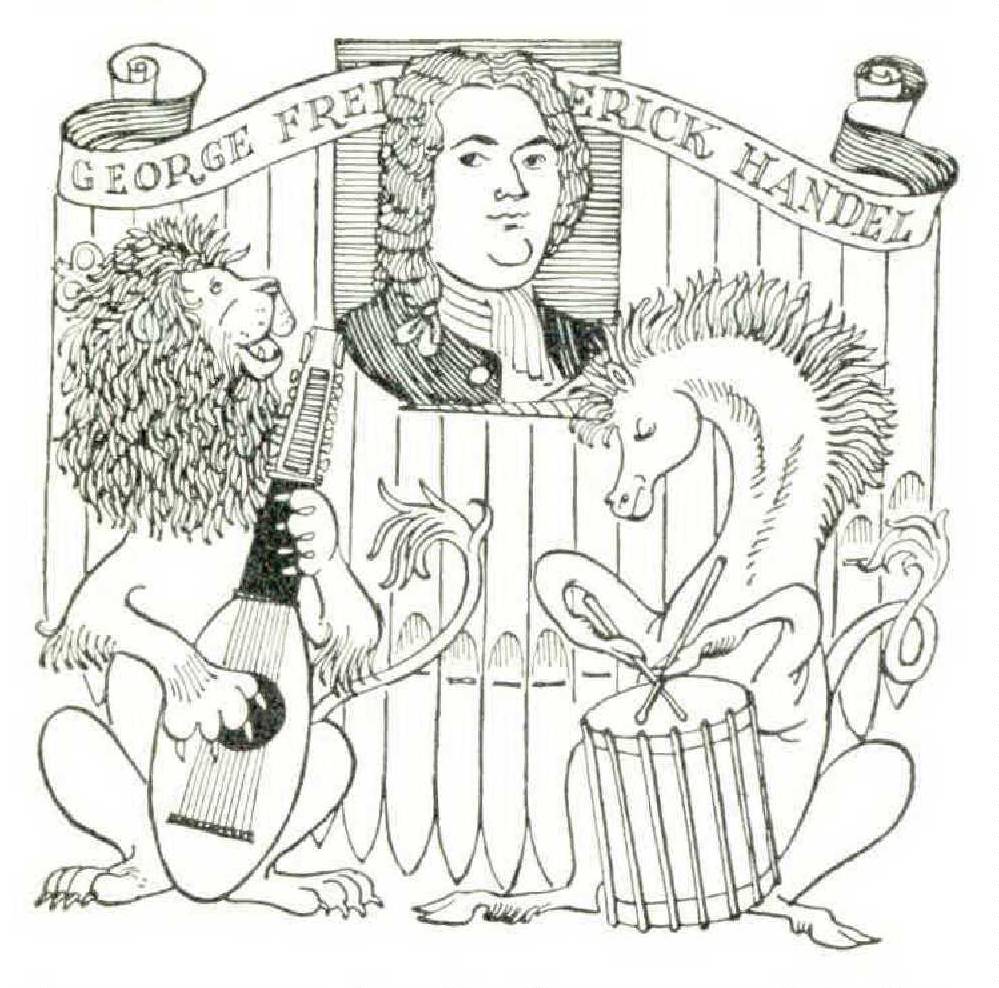
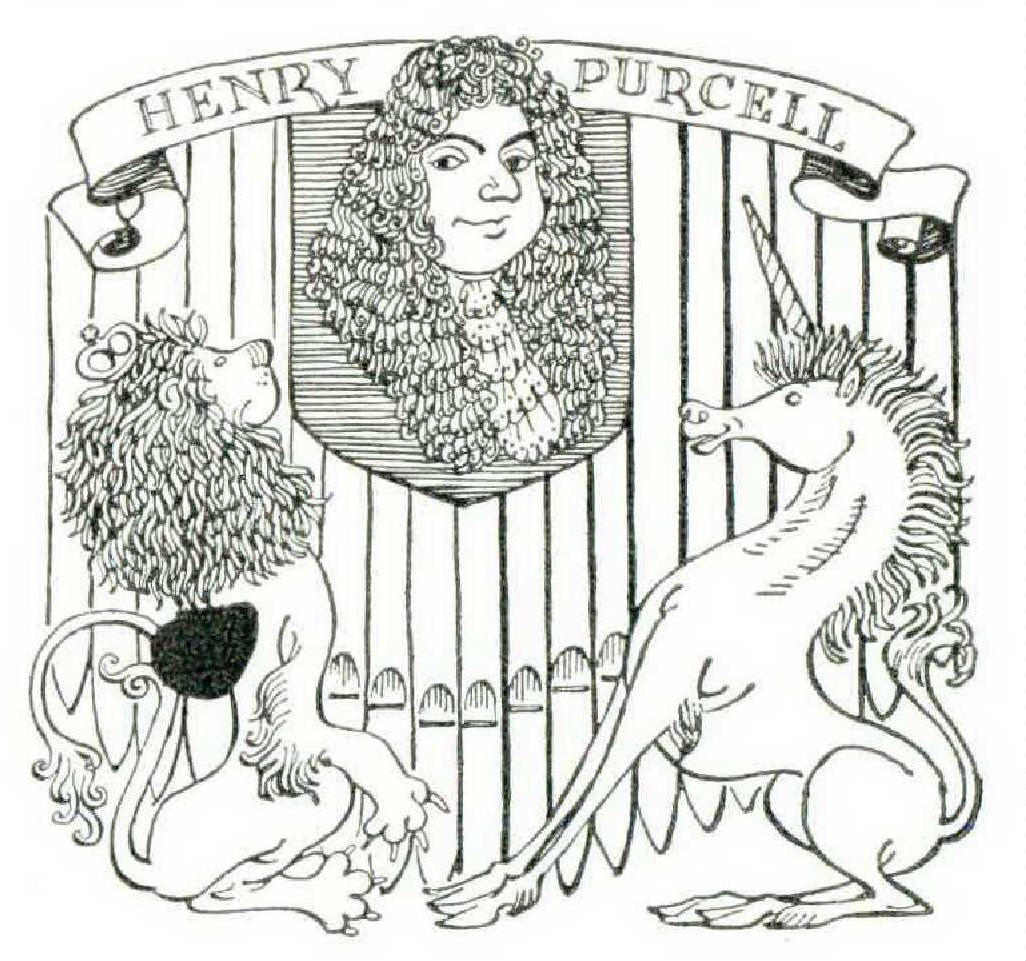
This may be a good year to start setting things aright, since it stands as a sort of dual century marker. In 1759 George Frederick Handel died. A hundred years earlier, Henry Purcell was born. Quib biers may argue that Handel was not born in England at all, and Purcell may not have been born in 1659. We do not really know much about Purcell. There is doubt not only about his birth date but about his parentage, because he may have been adopted by an uncle. Apparently it never occurred to him that his origins might be of historical interest, so he kept no records. Maybe he was too busy. We do know when his voice broke, since he was a chorister in the Chapel Royal, which did keep records. This affords some notion of his age and makes clear that he became an official composer for the Chapel while still in his teens.
It also sets his death in his third decade, and thus assures his inclusion in an inexplicable quartet, a group at once pathetic and glorious, the four young men who in their half-lives wrote for us our greatest treasure of melodic beauty beyond description or analysis. They stand, in order, Mozart, Schubert, Purcell, Mendelssohn. And they comprise a coincidence which can put one to thinking about miracles.
About Handel I will not say there is nothing miraculous, but there is not much mysterious. Without doubt he was born in Halle, Saxony, in 1685 of a barber-surgeon father. Technically, then, he can be called a German. By the same logic Joseph Conrad could be called a Polish novelist. The one appellation is no sillier than the other. The British adoption of George Frederick Handel, born Georg Friedrich Händel, was as complete as it was mutual. When he died, the London headlines spoke of no foreigner. The man gone and mourned was The Great Mr. Handel. His main and final style was British. It owed to British sources, including Purcell, and was to be for two centuries the chief model and criterion of Anglo-Saxon music.
We will come back to the two great men, and some others, but it makes sense to look first at what it was they embodied, the shape of England’s special musical genius, and at what shadowed it in later years.
The origins of music are, like those of languages, debatable. However, the elements in debate are never mutually exclusive; the question is always how much of what entered in — song, dance, martial rhythm, nature sounds, instrumental invention, sonic mathematics, and the like. When one element is weak or obstructive, another will dominate. In England, I am sure, it was the tongue that won: the language. Languages differ. German is balky. French is too linear for emphasis (for song it needs spurious syllables). Spanish is sweet but monotonous. Italian is wonderful, but leaves all the initiative to the music. Ancient Greek I think may have worked much like English, but we shall never know.
What English does is to challenge. It is a language at once stubborn and endlessly flexible, born of a war of tongues: Latin, Gaelic, French, Anglo-Saxon. The last-named won out (mostly) during the reigns of Elizabeth I and James I, in part through the decisions of one of the earliest of all governmental cultural committees. Results showed promptly, for instance, in the King James Bible and the writings of William Shakespeare.
They kept on showing, and helped largely to shape several centuries of civilization; one need only think of Burke and Lincoln. The rhetoric was music in itself, and of great power. Moreover, it lent itself to musical simulation, in style and in content. There grew a sort of alliance between the word and the note.
By this I do not mean that song was dominant. Song had its part, but what really dominated was speech, which has both a wider reach and a straighter function. Obeying its obvious and highest duty, British music became specific and circumstantial.
It did not demean itself in so doing. Sometimes it served merely to decorate an occasion, the Prince of Wales’s garden party or George H’s victory at Dettingen. Oftener, though, it took upon itself a joint role with poetry, which is the art in which the British Isles excel. Even when the music was occasional, it had an excellence which ought not to be disregarded. There is no brass band music in the world, even Sousa’s, that can compare with the British battle-front product or with its jolly home counterpart, full of folk tunes, joyfully militant even when peaceful.
If there is to be a villain’s part in this plot, I am afraid it must be ascribed to a man who would have hated to assume it. He thought very well of the Islanders, set some dozens of their folk songs to his own inimitable accompaniments, and opined more than once that Handel was the greatest composer that ever lived, Further, he evinced a preference for Londoners over the Viennese as a musical public and incorporated both Rule, Britannia and God Save the King in one of his most popular compositions. This culprit is Ludwig van Beethoven.
What lie did, destructive to the British variety of music, was to convince the world that musical communication, both emotional and philosophical, was most forceful when wordless and abstract. Symphony and sonata became the topmost forms. Opera retreated to a prepared redoubt; so did the art song and the church chorale. Incidental music found itself in a position much like that of the Light Cavalry at Balaklava. It was very nearly wiped out. This would have been drastically contrary to Beethoven’s desires. As evidence, one need only note his own greatest effort in this field, the incidental music to Goethe’s Egrnont. It is a masterpiece, and Beethoven charged no fee for it. He felt privileged. Such opportunities come but once.
For English composers, they came more often, by reason of the felicity of their mother tongue and the consequent abundance of poets. The crossbreeding of the arts began early and reached full flower about a century before Purcell with the madrigalists of Elizabeth’s time. Richard Dyer-Bennet, a singer-student of song, says that never before or since have words and music been more magically wed. This is hard to deny, at least for anyone who ever has heard Tomkins’ When David Heard that Absalom Was Slain, an almost incredible piece of poignancy, or Vautor’s Sweet Suffolk Owl in its exquisite merriness. The great names, long half-forgotten, are coming back to us now — Byrd, Morley, Dowland, Campion, Gibbons, Weelkes, Wilbye. Whatever dimmed them is hard to say. Perhaps it was the general romantic lightness or frivolity of madrigal subjects, which constituted an offense to nineteenthcentury glumness.
There was not much glumness in Purcell’s time, the period of the Restoration and the Glorious Revolution. Neither was there in Handel’s, when the business of empire had begun but had not yet been taken over by the empire of business. It was a time of pageantry, both in the theater and outside it, and in sympathy with it both Purcell and Handel contributed the next distinguishing feature of British music. which may be called, in the best and most innocent sense of the word, pomp. “Sound the trumpet!” wrote Purcell, saluting his Queen, William’s wife, Mary. “Sound an alarm!” wrote Handel, urging forth the Maccabees (for which please read “Englishmen”) to their destined victories. They trumpeted monarchs and other Britons up and down the Thames, in and out of town, and any place else they cared to go, including hostile continents across the water. Never before was there such trumpeting.
The only trouble is, we don t really hear much of this music. There are madrigal groups around. Some are good and some are not. Parent to them all is The Madrigal Society of London, founded in 1741, which holds annual sing meets, bringing in choirboys for the treble parts. We will not hear them; their sessions are absolutely private and for their own delectation. Professional groups are available on records. Best known arc the Deller Consort (Vanguard), with countertenor Alfred Deller as director; Pro Musica Antiqua (various labels), conducted by Salford Cape; New York Pro Musica Antiqua (various labels), led by Noah Greenberg; and the Randolph Singers (mostly Westminster), under David Randolph. The Deller Consort even comes to us in stereo, bringing madrigals by Morley and Wilbye. I wish I could be happier about all their efforts. Most of them seem somewhat sicklied o’er with the pale cast of scholarship, and they exude what has been described as an atmosphere of dismal dedication. They deserve credit, and what they have given is much better than nothing. But this music should be fun. Nearest to making it so are the English Singers on Angel 35461, though even they leave a good deal to be desired. I keep recalling the performances of the Cambridge University Singers, on HMV 78s.
Purcell is not much better served. There is not even a good Dido and Aeneas in the catalogues since the withdrawal of the HMV-Victor with Flagstad (and yet this is a work surpassing, say, Pagliacci). There is, though, one brilliant sampling of Purcell on discs, to make us at once happy and hungry. This is the recent Oiseau-Lyre Fairy Queen, a three-hour adventure into a semiShakespearian wonderland, unflawed by any dull moment and indeed quite unmatched in its special appeal (until someone makes a better Magic Flute than now exists). After delight, it arouses anger. Purcell wrote forty-four scores for plays, and some of the plays were great plays. It would be reasonable to wonder what John Dryden and Henry Purcell, in collaboration, were able to put forth under the title King Arthur. The finished product lies in manuscript and is in the public domain, where it will be passed over in favor of another (stereophonic) Nutcracker Suite. Something is wrong.
Handel has two puissant champions in the two-hundredth year of his absence. Sir Thomas Beecham will essay Messiah again, it is said, and I guess we need this. There is no perfect Messiah, though Hermann Scherchen came close. E. Power Biggs, that admirable Boston Briton, already has made for records the organ concertos, with all their immense joviality, assisted by another knight, Sir Adrian Boult. For these offerings, let there be thanks. But will anyone proffer the great Chandos Anthems? And what happened to Semele and Sosarme, gone from the listings? And are we never to know what else graced Jephtha besides the supernal “Waft her, Angels”?
Englishmen, in 1959, make some of the best records in the world. It seems a pity they must always go abroad for their materials.
Record Reviews
Beethoven: Twelve Scottish and Irish Songs
Richard Dyer-Bennet, tenor; Natasha Afagg, piano; Urico Rossi, violin; Fritz Magg, cello; Dyer-Bennet Records 7
In the nineteen forties Dyer-Bennet made this same assortment of Scottish and Irish songs (arranged by Beethoven at the instance of a good Gael named George Thomson) for Concert Hall records. The issue sold out. The present version is much better, though not as good as it should be. Beethoven loved Celtic tunes, as the Sixth and Seventh Symphonies attest. The songs, militant to romantic, are fine. The performers did well. Only a slight echoic quality prevents all-out recommendation. By the way, two other Dyer-Bennet records came out along with this. One (DVB 5) is called Encores and includes Greensleeves; the other (DYB 6) is directed at young people, it says, and oilers Old Bangum and Aunt Rhody among other treasures.
Haydn: The Salomon Symphonies, Vol. 1
Sir Thomas Beecharn conducting Royal Philharmonic Orchestra; Capitol GCR7127: three records
In 1790 Prince Nicholas Esterhazy died, and Haydn found himself at liberty. Not quite by chance, he was approached by a British impresario named J. P. Salomon, Haydn went to England, became the idol of the Isles, and wrote twelve works now known as the London or Salomon Symphonies. They were all towering successes then and always will be; there is not a dull moment in their course. Here we get the first six (Symphonies 93 to 98; the rest are promised), played by the conductor and orchestra best qualified to play them, t cannot think of a finer way to spend three hours.
Offenhach: The Tales of Hoffmann
Leopold Simoneau, Mattiwilda Dobbs, Heinz Rehfuss. other singers: PierreMichel Le Conte conducting Concerts de Pans Orchestra and chorus: Epic BSC101 (stereo) and SC-6028: three records
This piece of early (1881) fantasy and science fiction has been recorded, so far as 1 know, only twice before and long ago. It is melodious, funny, grisly, and well worth hearing. The cast here is all Gallic in spirit and vocally just right. The orchestra is a little scratchy now and then; nothing to bother about. The stereophonic version is not much more stereophonic than the standard set, but both have good sound.
The Queen’s Birthday Salute
Major S. V. Hays conducting band and gunners of the Royal Regiment of Artillery; Vanguard VSD-2011 (stereo) and VRS-9038
Presumably Vanguard got this scoop at a rehearsal. The Crimean War six-pounders blast off their twentyone shots, Hyde Park echoes nobly, the caissons clatter past, the band plays Bonny Dundee and The British Grenadier, and, if your antecedents are in any part British, your hair stands on end. This is especially so when you hear the stereo edition (the cannon echo so nicely). The overside of the record offers a salad of British band music, good but anticlimactic.
Stereophonic
These are stereo disc versions of recordings issued earlier in monophonic editions.
Prokofiev: Suite from The Love for Three Oranges; Scythian Suite
Antal Dorati conducting London Symphony Orchestra; Mercury SR-90006
The best Mercury stereo record I have heard, a real spectacular: rich, close-up, thunderous, brilliant, and credible.
Schubert: Octet, Opus 166
The Vienna Octet; London CS-6051
What a prosaic way to present an absorbing delight! Here is one of the greatest of all musical triumphs, a triumph tender, poignant, and merry. And, to our extraordinary good fortune, two microphones caught this dedicated performance of it so truly that even strangers to the music arc hushed and entranced.