Two Rivers
NORMAN HALLIDAYwas graduated from Northwestern University after wartime service in Europe. Since then he has been traveling in the United States and Mexico.
“What gars ye rin sae still?”
Says Till to Tweed —
“Though ye rin with speed
And I rin slaw,
For ae man that ye droon
I droon twa.”
Anonymous, 17th century
The Mississippi at its approximate geographic midpoint is the same river that’s at Minneapolis and New Orleans, excepting the turnover of water in it, of course. It carries boats and barges on its back everywhere it’s deep enough, and that’s for most of it. People live by this river and out of it. They die by it and in it.
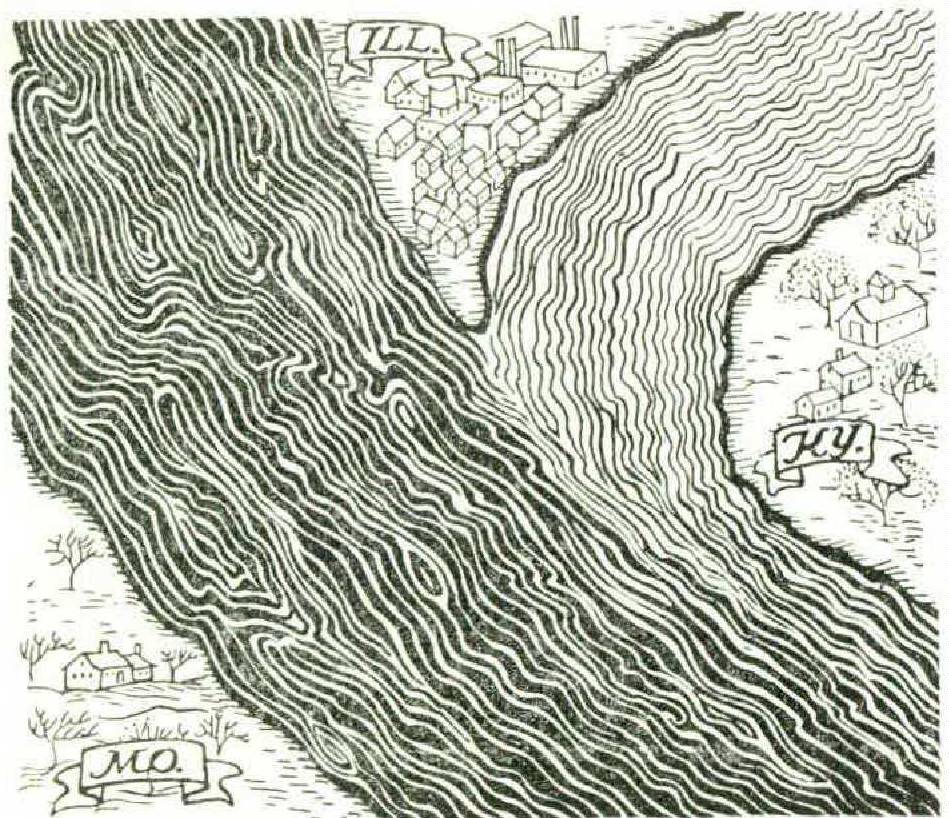
It goes past the back of Cairo. Illinois, that is. I say “back” because people there think of another river as the front one. The Ohio; it ends its name there.
Most people in Cairo have a quiet dread of the Mississippi. Boys will swim across the Ohio, for instance. They won’t try the Old Man, who looks sinister, with eddies and whirlpools all year long — even at low water. Some of them make a sucking sound as they go past your boat, or by where you’re standing on the bank. It’s a muddy caldron, simmering, and it suggests discretion.
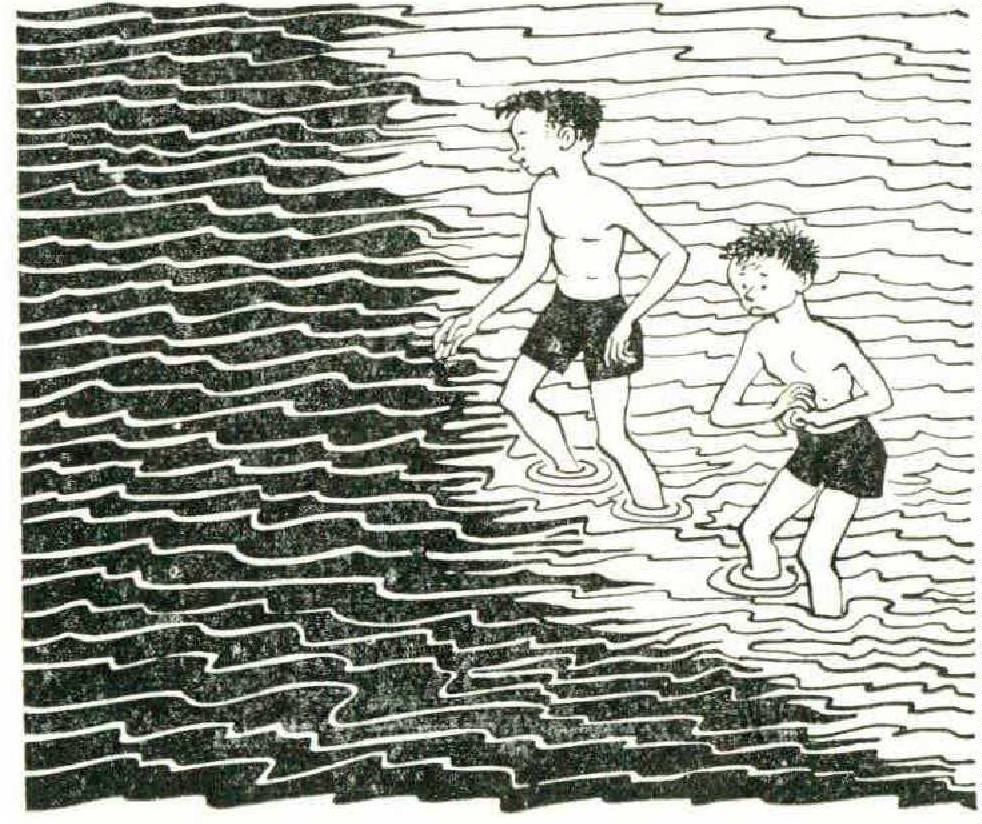
Boys will swim in the Mississippi; don’t get me wrong. But not try it across. There’s a grand sand beach with a gentle slope on the Missouri side of Smith’s Island (called Angelo Towhead on the river charts), with good wading. It’s while wading, you see, that you feel all that current that seems to pull in all directions at once, mainly south and down; the farther out the more the pull. It used to be fun to take some food and a .22 rifle out onto the island, spend the summer day running around naked and shooting and wading. But don’t go out too deep in the Mississippi. It’s muddy and dark and seething all year long. And keep your feet on the bottom.
The Ohio is often a quiet slate blue in the low-water summer, and relatively clear. People in Cairo have a friendly feeling for the Ohio. There are no eddies or whirlpools, and it looks so much cleaner than the other one. Go over to the Kentucky side to the sand bar under the Illinois Central Railroad bridge, spend the day with a bunch and swim out as far as you want. There’s no current to speak of, in the summer.
Once in a while on the steepbanked Cairo side, a boy will drown in the Ohio. Boys are not afraid of that one; they’re not as respectful of it, and not so careful. But in a few days, people feel friendly as ever toward the pretty blue river, and still won’t have much to do with the ugly muddy one.
I liked them both, a thousand years ago. I remember the trips to the towhead with the food and the 22, and the wading, ducking under the water up to my chin to ease the weighted heat of the summer sun. But I kept my feet on the bottom in the Mississippi and never went out very far. I’ve crossed the Ohio two or three times, swimming. I’m a powerful swimmer, as the saying goes. But I defer to the Mississippi.
One of the good places to loaf by the Mississippi back home was on the sand bar on the Illinois side, north of town. To get out to the bar, you had to climb across and along the erosion dikes. They’re vertical to the bank, made of piling bolted together, and they keep a lot of the Middle West from ending up in the Gulf of Mexico. Sometimes out there, between the bar and the bank, were big beds of gumbo mud; it was smooth and cool, and had about the consistency of thick molasses. You could wallow in it like an old hog and then run out and wash it off in the Mississippi, ducking your head under the water. Keeping your feet touching bottom, as I said.
Any river gets high water. There’s been a lot of it go past Cairo, but none of it ever got into town. The worst high water was 1937. That was touch and go. Stand in the street and look up at the boats in the river.
Nobody was sure the town was safe until the water went back down to below the levee. It was kept out by the wall built on top of the levee and by the sandbags and bulkheads added yet on top of that. The water was above the top of the wall itself. About all the other cities in the river valley went under that year. They weren’t ready. But Cairo had always fought the river, building the walls and levees higher and higher all the time. Cairo was ready for the river.
The Ohio. The pretty, friendly river. The front one. People swim across it. The dirty-looking, boiling, muddy back river didn’t bother anybody in Cairo in 1937. The Ohio had it backed up. It was a pond. Corpses, whole houses, great driftwood rafts carrying livestock came down the schizophrenic Ohio in the fifteen-mile current, and somebody said it was nine miles across, going far over into Kentucky.
Starting the very next summer, the Ohio was low and blue once more. People smiled at it again, and swam in it and across it. Some went in the Mississippi. They ducked under to get out of the heat; keeping their feet on the bottom, of course.